June 11, 1982. A chilling wind swept across Mount Longdon, carrying the weight of a conflict that had reached its boiling point.
The Cold Rush
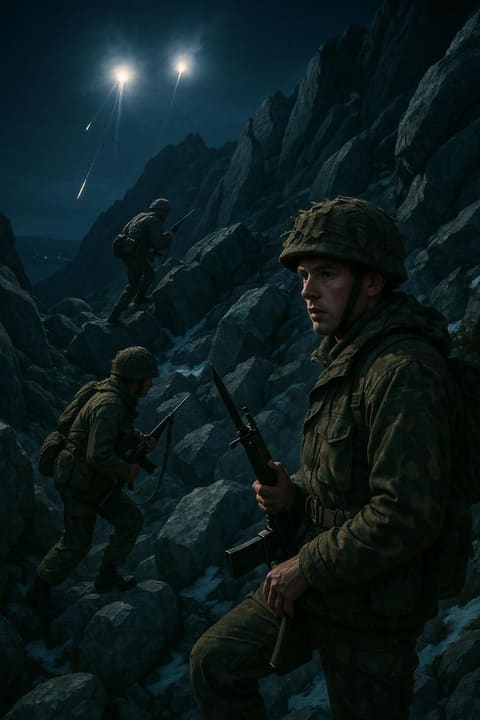
The Falklands War had surged to a crucial juncture by mid-June 1982, with the British Third Battalion of the Parachute Regiment (3 PARA) poised to seize Mount Longdon from Argentine forces. On that fateful night, the plan was to launch a surprise attack under the cover of darkness, aiming to avoid detection by refraining from an artillery barrage that would alert the enemy. The soldiers, led by Lieutenant Colonel Hew Pike, crept towards their objective in silence, bayonets fixed, hearts pounding with anticipation.
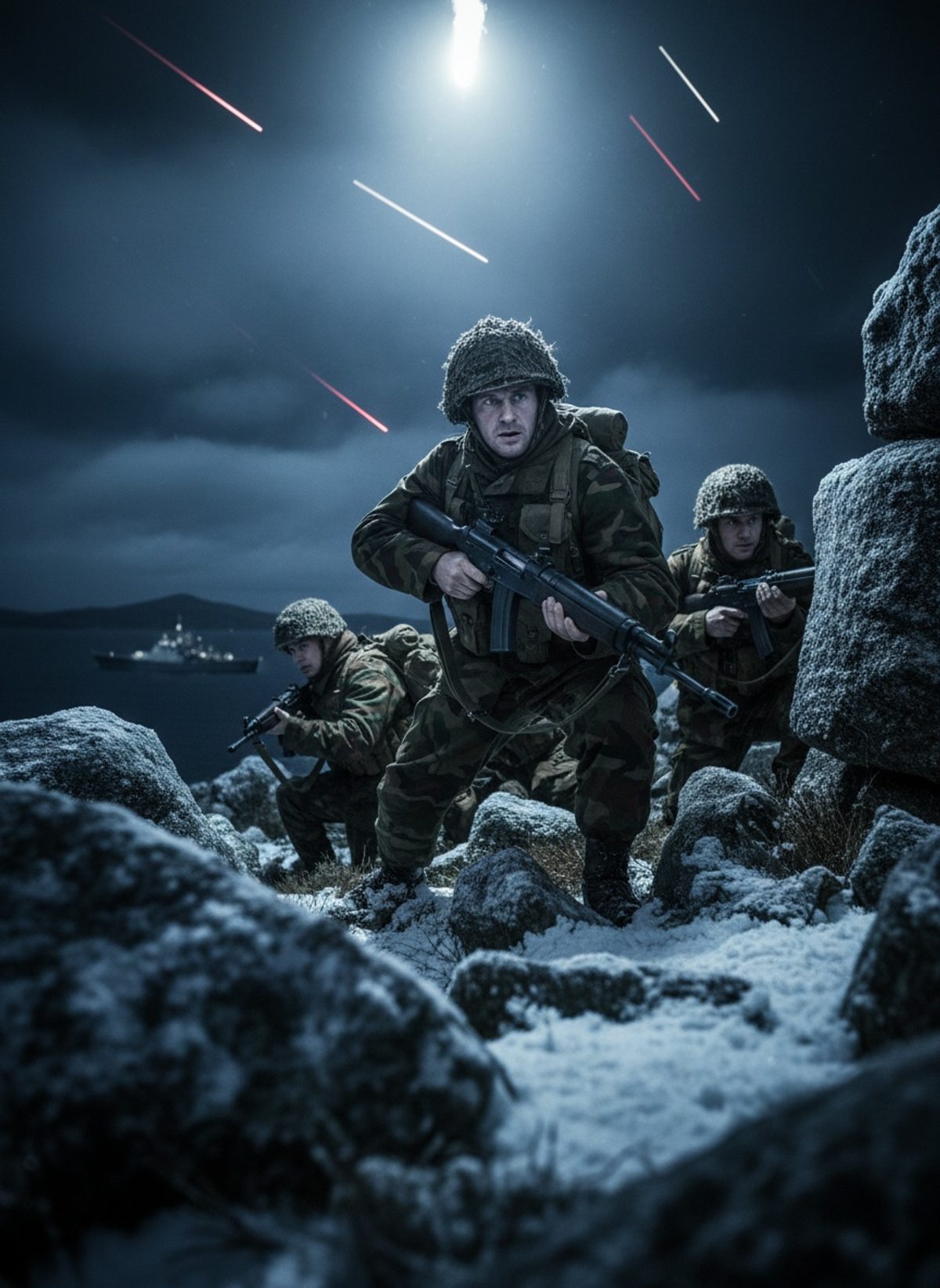
As 3 PARA ascended the slopes, Corporal Brian Milne unwittingly stepped on a mine, lighting up the hillside and shattering the midnight silence. The explosion roused the Argentine defenders from their tents, sending them scrambling in their sleeping bags to repel the British advance. The Argentines, primarily reservists with just a year of training, responded with determined rifle fire, setting the stage for a brutal confrontation.
Among the chaos, B Company found themselves pinned down, as the frozen atmosphere vibrated with gunfire and the clatter of anti-personnel mines, mostly frozen but threatening all the same. The steep, rocky terrain was an additional enemy; its treacherous surface compounded the soldiers' struggle as they fought in biting cold and freezing rain. In the midst of this, Sub-Lieutenant Juan Baldini’s 1st Platoon, part of the Argentine position on the mountain, held their ground fiercely, defended by a multitude of well-placed mines and machine gun positions.
Read next: When Rick Jolly Ran a Hospital Beside Two Unexploded Bombs, 1982
The Brave Stand
As the embodiment of leadership amid chaos stands Sergeant Ian McKay. When Lieutenant Ian Bickerdike, the officer leading 4 Platoon, was wounded, McKay rose to the occasion with unwavering resolve. Faced with his platoon’s predicament — trapped under an onslaught of well-directed Argentine fire — McKay understood that the only chance of breaking free was to advance towards the heavily fortified Argentine machine-gun position.
Accompanied by Corporal Ian Bailey, 17-year-old Private Jason Burt, and another private, McKay spearheaded a daring assault on the bunker. His tactic was one of resolve and audacity, charging uphill under relentless fire. The cold steel of the L2 fragmentation grenades provided a counterbalance to the raging fear — as McKay threw them into the Argentine position, hoping to turn the tide. His advance was relentless, and despite the impending peril, his determination did not waver until he reached the peak — where his life was cut short, his body falling atop the very bunker he assaulted.
For his gallantry and selfless leadership, Ian McKay was posthumously awarded the Victoria Cross, the highest honor for valor in combat. His teammate, Ian Bailey, received the Military Medal, testifying to a partnership forged in the crucible of war.
The Bloody Continuation
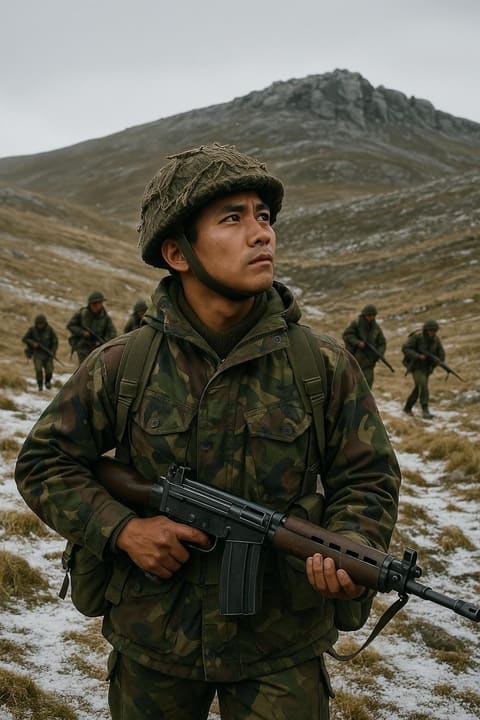
The battle raged through the night and into the morning hours of June 12. The initial shock and harsh engagements transformed Mount Longdon into a deadly arena of close-quarter combat, characterized by bayonet charges and hand-thrown grenades. The British L1A1 rifles clashed with Argentine FN FALs, echoing through the rocks as each side fought for dominance. The untamed, rough landscape was unforgiving to the paratroopers, shelling them with challenges that went beyond human adversaries.
The stalemate only worsened the soldiers’ plight, but their resolve did not flinch. The Argentine defenders, hardened by a year of training and the harsh conditions, stood tall, turning every crevice and outcrop into a fortified bastion. Their persistence demonstrated that, despite the wide-reaching British reputation, the soldiers of the 7th Infantry Regiment were formidable foes determined to maintain their stronghold above Stanley.
3 PARA suffered devastating losses during the engagement. Disabling machine-gun fire, well-timed mortars, and rare but deadly active mines took a heavy toll on the advancing men. By the time the battalion finally took control of the mountain, 17 British soldiers lay dead, leaving behind a legacy of sacrifice etched into the frosty stones of Mount Longdon.
The End of the Conflict
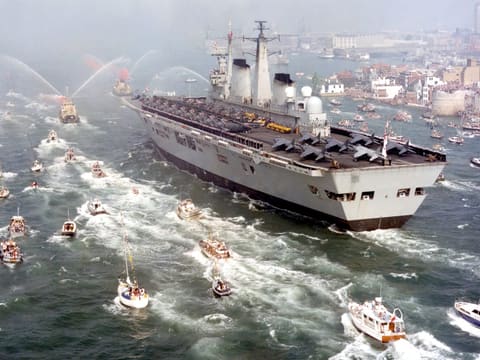
On June 14, just two days after the harrowing events on Mount Longdon, Argentine forces in Stanley surrendered. The capture of key positions like Mount Harriet and Two Sisters, alongside Mount Longdon, cemented the British hold over the island's key terrain. The war's end came swiftly but was undeniably costly, with lives lost and tales of valor, like McKay's, echoing through the passage of time.
Read next: When 2 Para Went Back Into Battle at Wireless Ridge, 1982
Mount Longdon was more than just a battle; it crystallized the essence of conflict, the conjoined fates of men driven to extraordinary acts by the ordinary ideals of duty and honor. The war, often depicted through the lens of naval engagements or strategic politics, proved to be grounded in this very personal and brutal contest. It was won through the unwavering spirit of soldiers who understood that the price of peace was often paid by those who charged forward when others held back.
As the frost eventually thawed on those barren slopes, it left behind a story that was larger than its events: an account of human courage amidst the relentless machinery of war. Sergeant Ian McKay's decisive stand serves as a poignant reminder of the intricate tapestry of courage and sacrifice that underpin the history often simplified in textbooks. His story, like many others, is a testament to the indomitable spirit of individuals in the face of unforgiving adversity, lending a quiet strength to the legacy of those who never returned from that hill, yet shaped the path to peace with their lives.
Tomorrow is Remembrance Sunday. Ian McKay and the men of 3 Para who fell on Mount Longdon will be among those remembered.
Part 23 of 24: One Falklands story a day until Remembrance Sunday