Henry Morton Stanley embarked on a heroic rescue mission into the heart of Africa. Half of his men and most of the mission perished before finding what they sought.
A Wall of Jungle and Uncertainty
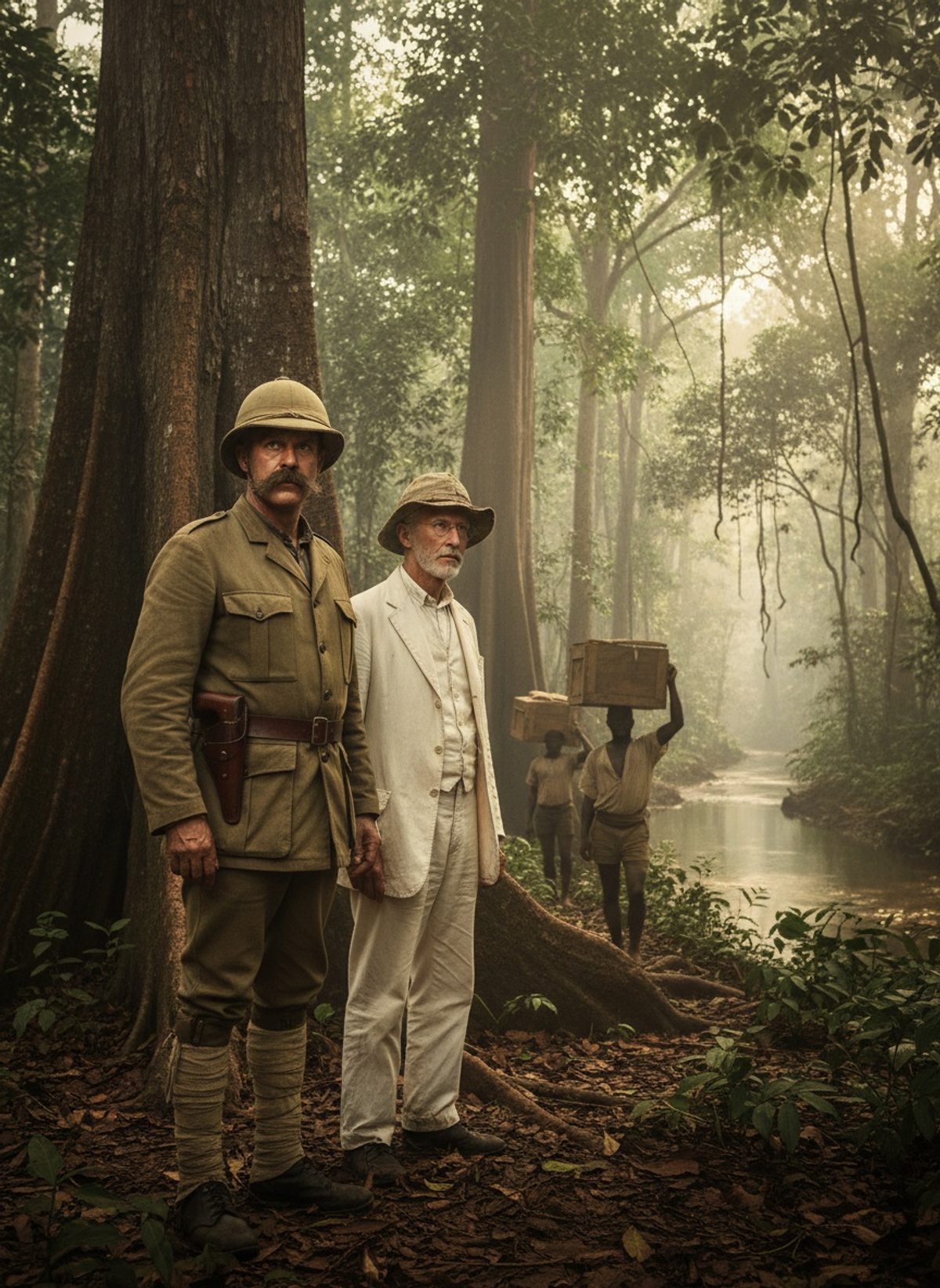
In 1887, the world watched in awe as Henry Morton Stanley carved a path through the dense jungles of the Congo. Tasked with rescuing Emin Pasha, the beleaguered governor of Equatoria, Stanley led an entourage of 1,500 men, facing nature's wrath as well as human challenges of morale and loyalty. The Congo rainforest, often an insurmountable barrier of trees and undergrowth, awaited him like a dark labyrinth. The mission: simple in declaration yet complex in execution.
The two explorers at the forefront — Stanley and his elusive target, Emin Pasha — were enigmatic forces in this high-stakes rescue. Stanley, famed for his earlier "Dr. Livingstone, I presume?" adventure, was no stranger to the unforgiving African interior. But this journey was different. Unlike charts with clear destinations, Stanley ventured with uncertainty cloaked over his maps, a silent testament to the general ignorance of Africa's immense interior.
The Lost Governor of Equatoria
Emin Pasha, a man whose role as governor of Equatoria found itself buried beneath layers of geopolitical chess, had been isolated from the outside world. In Britain's eyes, Equatoria was a far-flung outpost of civilization that could not be lost. Yet, for all their intentions, years of neglect left Pasha stranded. Communications decayed into sparse whispers, word barely escaping the jungle's clutches.
Read next: When James Brooke Became the White Rajah of Borneo, 1841
Far from being the helpless soul that the Western world imagined, Emin Pasha lived with a peculiar independence, viewing European intervention as potentially troublesome. As Stanley cut his way through the Congo, Emin's reluctance surfaced — rescue was not a priority for a man who found a measure of purpose and stability amid his precarious surroundings. Instead, it was a clash of wills and understanding between two European figures finding themselves at the mercy of Africa's vastness.
Starvation, Mutiny, and Death
Venturing deeper, Stanley's expedition succumbed to the Congo's many perils, unraveling morale with each passing feverish day. Starvation took physical and psychological tolls, men crippled by both malnutrition and despair. The twist of irony lay in the plush greenery surrounding them — abundant but untouchable, nature mocking their plight.
Betrayal simmered within the convoy, manifesting as discord and eventual mutiny. Those who followed Stanley grew restless, deterred by the deafening silence of the forest, a far cry from the glorified conquest they envisioned. The expedition resembled an odyssey lost within its own myth, a far cry from the grand traditions of Victorian exploration.
As bodies were buried skyward, leaving only skeletal remains marked by the red soil, the Congo forest had meant to swallow their story, much as it had those of forgotten explorers before them, warriors devoured by an indifferent wilderness.
The Reunion That Wasn't
Finally, when Stanley met Emin Pasha, the culmination of overwhelming labors turned to a paradox. Emin, more cautious recluse than a man in distress, aligned not with the assumptions of besiegement but with ideas of stewardship. Festivities were solemn, hosting a peculiar sense of achievement wrapped in mutual misunderstanding.
Read next: When Shackleton Knocked on the Door at Stromness, 1916
Pasha's feelings of mistrust cast ripples over what Stanley anticipated to be a joyous liberation. His presence wasn’t an extinguished flame but a lantern stubbornly burning on its own means. In essence, Stanley’s arduous journey amounted to handing plans for something neither thought attainable or even necessary.
Nonetheless, he emerged from the jungle heavier with the wisdom of a man who found an expedition's result outshone by its journey. Pasha left with Stanley, but under circumstances hardly identifiable as a rescue.
Why Their Story Matters
The arduous journey through the Congo reflected not only the complex interplay between Western ambitions and the African wilderness but also the dynamic relationship between the rescuer and the rescued. This tale, drowned by time like so many others, carries a lesson of perceptual disparity. While the Victorian era lusted for territory and prestige, those offered rescue sometimes found their salvation in lands deemed inhospitable by civilized standards.
In this complex narrative of discovery and misunderstanding, the Congo reminds us of the intricate layers in quests of imperial grandeur. The roles of saviors and the saved invert and distort — a reminder that sometimes the legends most telling are those unrecorded, most clear in the shadows of history's omissions.