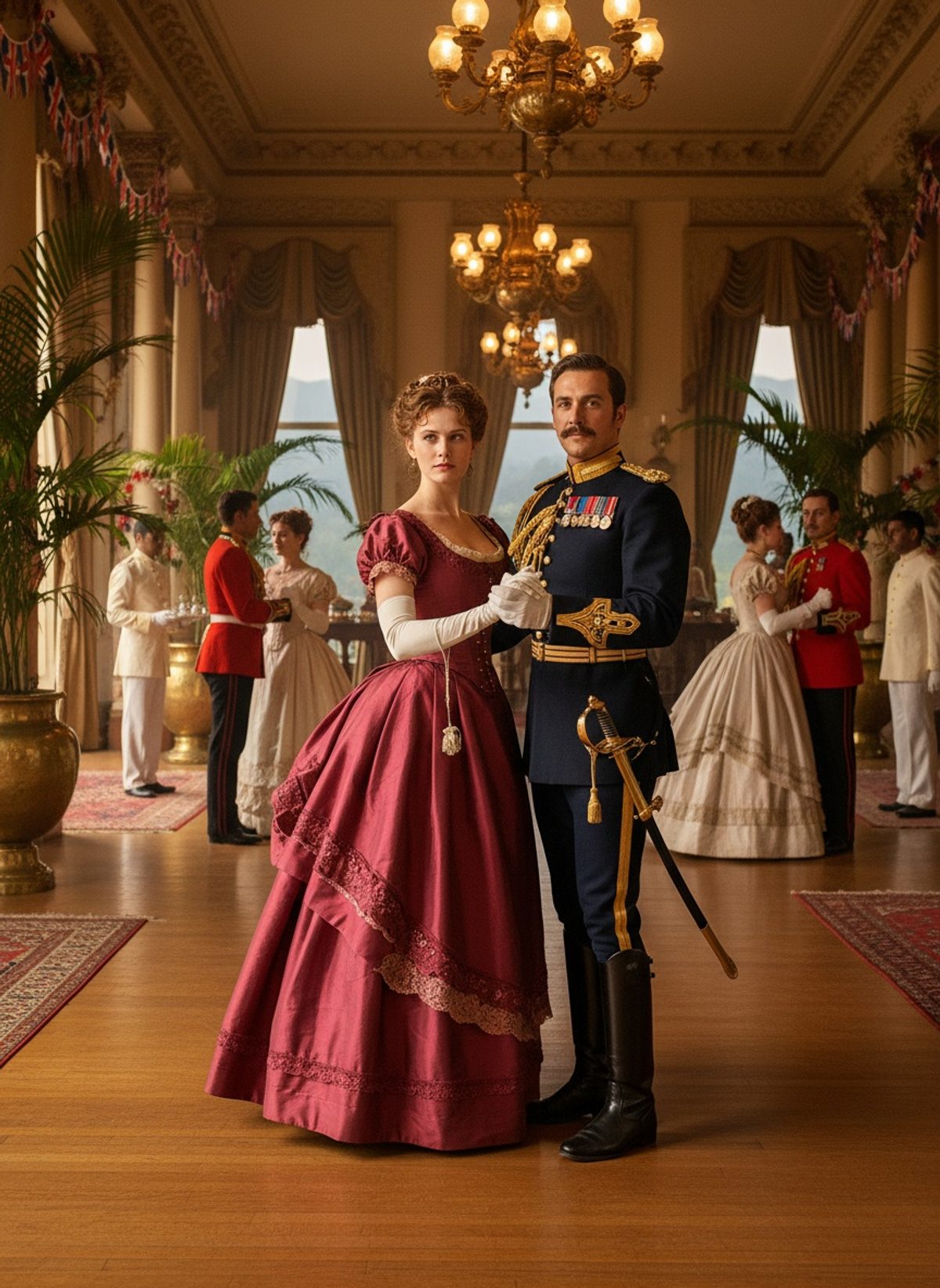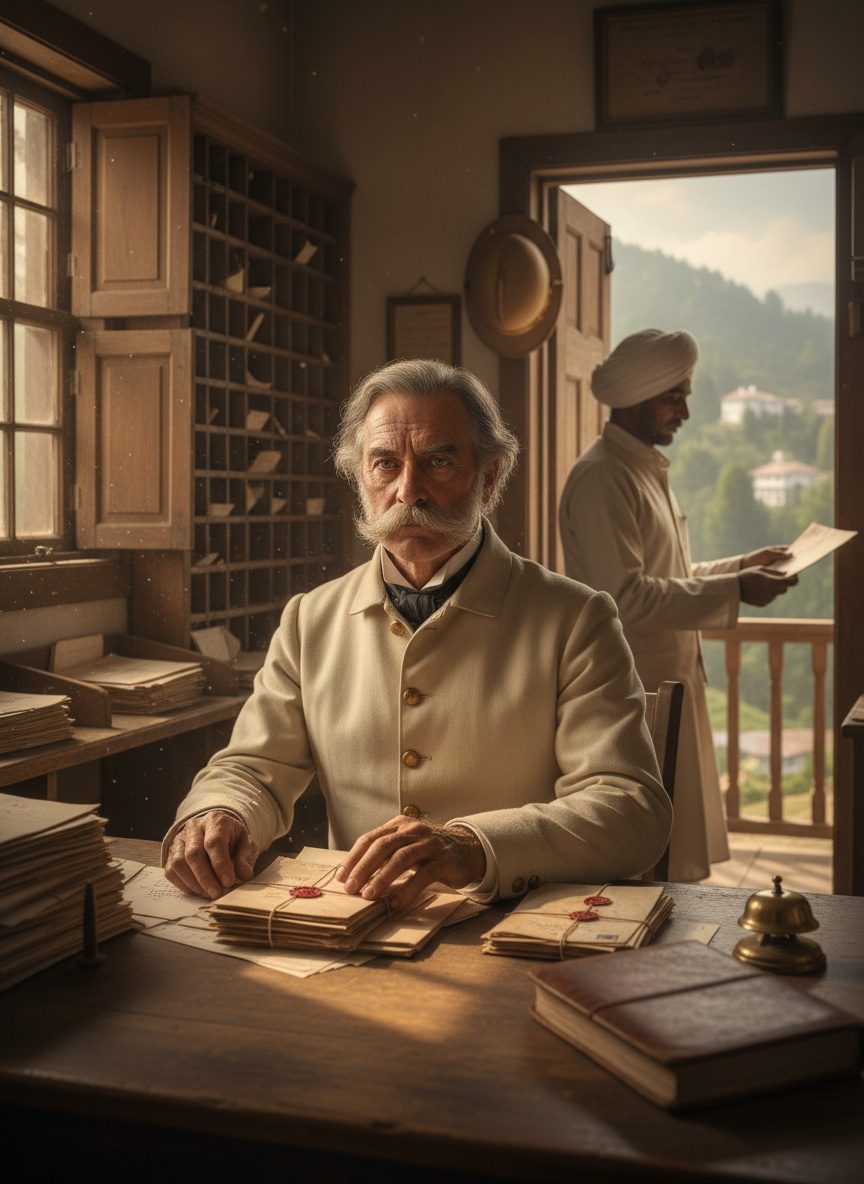
December 14, 1890. The air in Calcutta was cooler than usual, a premonition of rain perhaps.
Beneath the Towering Palms: A Morning Ritual
In the dappled dawn light filtering through the towering palms, a lone figure emerged, navigating the narrow streets with quiet precision. This was the dhobi wallah — a ubiquitous yet unacknowledged fixture of the British colonial tapestry in India. To most, he was an incarnation of the quotidian, yet his task held a remarkable significance. Each morning, with practiced ease, he balanced a laden basket atop his head, bristling with the soiled linens of British officers and their families. Though the streets of Calcutta teemed with life, few paused to consider the dhobi wallah's diligent journey of transformation.
Charcoal Fires and the Dance of the Iron
As dawn broke, fires were stoked and irons fired over glowing coals. The hiss of steam as heated iron met damp cloth was as rhythmic as the dawn chorus of birds stirring from their nests. Here was where the dhobi wallah performed his alchemy, transforming crumpled, sweat-stained garments into starched masterpieces of civilization. The scorching irons weighed heavy in his hands, but through fluid, practiced motions, the collar of a British officer's shirt was rendered crisp and white by breakfast. In the climate of India, where the air seemed as tangible as the heat it bore, appearances were a testament to the Empire's order over chaos.
The Unseen Backbone of the Bureaucracy
The dhobi wallah's meticulous work went beyond mere laundry; it was the unseen backbone of the British administration's daily order. In the bustling colonial offices, paperwork and order reigned supreme. The sharp pleats of a cravat or the unsullied front of a shirt became symbols of imperial stability and respectability. Thus, while the executives and officers pushed forth the wave of paperwork that propelled the Empire, it was the dhobi wallah who ensured the bearer of commands was suitable for the task. His was a role that stitched the fabric of colonial society, essential yet often overlooked.
Stories in the Steam: Community Networks
The practice of dhobi, or laundry work, was not merely a transaction between British residents and Indian workers; it formed a rich tapestry of community within traditional Indian society. Dhobi families often passed down their secrets and skills through generations, maintaining a heritage that transcended occupation. They operated within their own networks, managing and supporting one another, as each step in the washing, drying, and ironing process required precise timing and collaboration. At water banks across Calcutta, dhobi families gathered to wash linens beside the river, singing songs that spoke of their craft and connecting their historical legacy to the future.
The Silent Scribe of Empire's Elegance
In the grand scheme of history, the dhobi wallah remains a shadow, lingering on the periphery of stories dominated by grand deeds and monumental decisions. Yet, it is within these quiet legends of daily labor that a peculiar truth of the British Empire emerges: its might rested not only on military prowess or political maneuvering but on the shoulders of those who absorbed its burdens unrecognized. In their toil, the dhobi wallahs maintained an elegance that clothed the empire's public face. They form part of a forgotten legion of invisible architects, who, without voice or recognition, held sway over the image of an empire.
The dhobi wallah of colonial India serves as a reminder of the interconnectedness that underpins power structures. Through their silent service, they emphasized an enduring truth — that the cogs of history, forgotten as they may be, are perpetually turning beneath the surface. They prompt us to reconsider the obvious, to see beyond the creased history to those who, with a sharp iron and the hiss of steam, starched the empire’s collars before dawn.