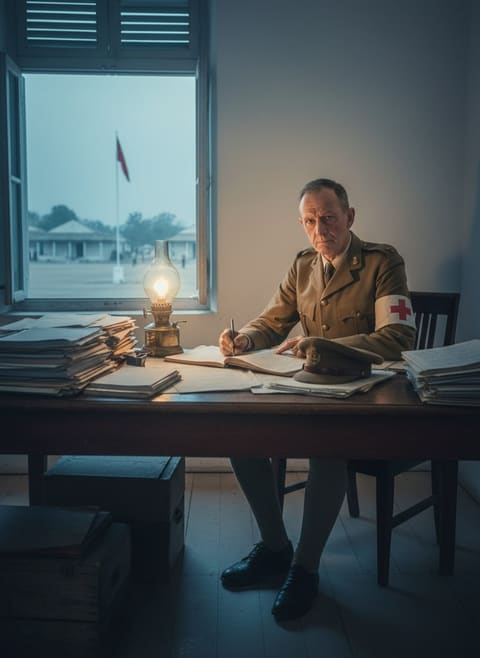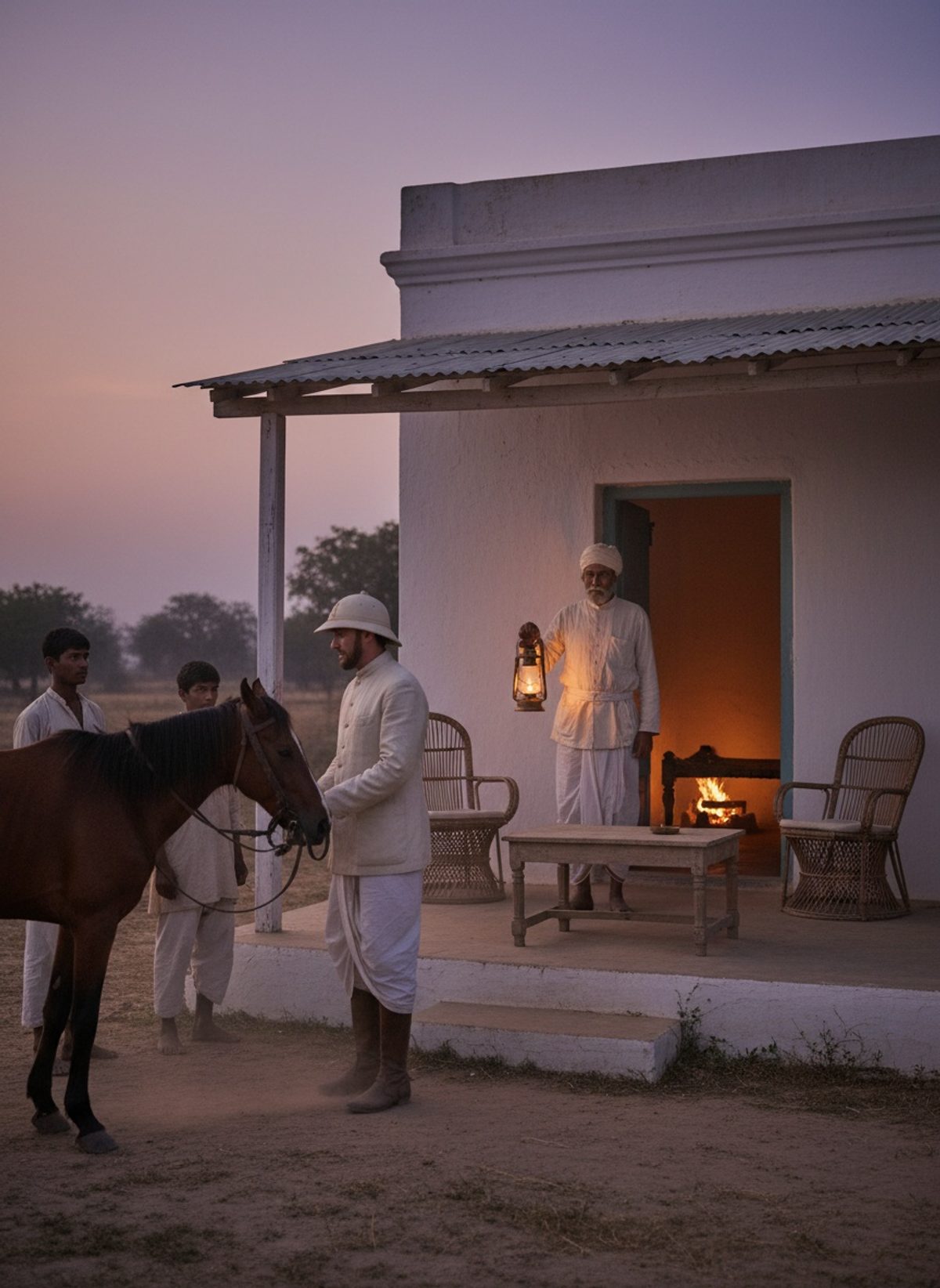
The distant clang of a bell echoed through the ink-black night, swallowed by the expanse of the Indian countryside. An exhausted British civil servant, with fatigue etched into every fabric of his being, strained his eyes toward the horizon. Finally, a flickering lantern materialized as a beacon of hope, guiding him along the dusking pathway to an awaiting sanctuary: a solitary dak bungalow, its walls blush white under the cool gaze of the moon.
A Network of Hospitality
Spanning the vastness of British India, the dak bungalow served as an artery of imperial commerce and governance where no grand hotels or established accommodations existed. These rest houses, scattered like pearls across the land, were the empire’s lifeline. Each was spaced precisely a day’s ride apart, providing shelter and sustenance for those who toiled under the sun in service to the empire. Extending an implicit promise of refuge, the dak bungalows offered one of the few constants in an unpredictable landscape, where the distances were as sweeping as the deserts and forests themselves.
The structure of each dak bungalow was simple. Imagine a small, stark building composed of whitewashed walls and thatched or tiled roofing. Its design was plain but functional, with the sole purpose of offering respite. Within its modest confines, a traveler could find a clean bed for the night and a hot, humble meal. The understated luxury was its dependability—both a necessity and a grace offering amid the unpredictability of Indian terrain.
The Keeper of Keys
At the heart of each bungalow was its keeper, a figure indispensable and often overlooked in the mechanics of empire. This sole custodian, entrusted with maintaining a sanctuary’s condition, played an unwritten role in empire-building. Few know of the countless tales of soldiers using these humble retreats during long campaigns or officers pausing their journey from bustling Calcutta to the distant hill stations for a night's reprieve under a dak bungalow's roof.
Read next: When Halley's Comet Returned and the Empire Watched, 1910
The keeper was the host of many stories, bearing witness to whispered conversations in colonial intrigues and heated debates. These individuals, often natives of the land, navigated between cultural boundaries to ensure the enduring operation of the empire's connective dwellings. Their roles were not congratulated in dispatches or rewarded with medals, yet their diligence was an unsung bedrock of British rule. To every stranger who stumbled into their embrace, they offered the steadfast simplicity and comfort of a home away from home.
The People on the Move
In 1880's British India, destiny often pulled travelers from disparate corners of the earth toward the dak bungalows. Each traveler brought his own story, a thread in the empire's larger narrative. Missionaries chasing spiritual guidance, officers managing territories, civil servants ensuring the machinery of colonial life continued its hum, even adventurers lost on quests less official—all found common ground here, amidst the buzz of cicadas and the distant roar of elephants.
To witness these travelers forging ahead, undeterred by treacherous climates and colossal distances, one understands the profound necessity of such waypoints. The dak bungalow transformed their daunting journey into measured steps, offering brief episodes of solace within the sweep of their vast and unending endeavors. It was a place that demanded no previous introductions or reservations, it stood resilient, open, welcoming each pair of weary eyes that arrived to seek its shelter.
The Silence Between Worlds
Every dak bungalow held its own set of unrecorded chronicles—moments seen only by moonlight. The whispers of the Raj's subjects drifted across the walls that never betrayed secrets. Conversations in languages future partitions would belatedly separate, the mingling smells of curries prepared by local hands, and bhajans hummed quietly by the keepers woven into the tapestry of these abodes. Such scenes reveal a simultaneous complexity and simplicity, a movement frozen in the heat of history yet untethered by it.
Read next: When Mary Seacole Built a Hotel Behind the Front Line, 1855
Though pragmatic in intent, the dak bungalows inadvertently became collision points of cultures, where the British and Indian lives intertwined fleetingly, wordlessly. Here, the ritual of tea was a shared comfort and the simple pleasure of sharing a meal a nod to common humanity. Indeed, under these modest roofs, stories unceasingly intermingled, infusing histories we often overlook with the richness of everyday life.
A Dispatch of Simplicity
In a vast empire built on grand tales of commerce, conquest, and the clash of civilizations, the stories of simple dak bungalows seldom find a voice. Yet these humble outposts, sprinkled across an untamable frontier, possess significance beyond bricks and mortar. They remind us that the great expanse of imperial reach was supported by quiet acts of hospitality—places where divisions softened under a roof shared in generosity.
True, the Empire's stories are often those of might and grandeur, yet the dak bungalow suggests an alternative narrative: one of room, of rest, of strangers welcomed without expectation or precondition. They are echoes of lives less documented but essential to the empire's breath, beating a rhythm of endurance and empathy. For travelers in distant lands, sometimes history's echo reverberates only through the comfort of modesty, in a moment offered without reservation, in the simplest form of human understanding.