April 25, 1915. A gray-blue dawn broke over the rugged cliffs of Gallipoli, illuminating the chaos unfolding on the beaches below. The sound of gunfire echoed off the jagged rocks, and the air was thick with the cries of the wounded, intermingled with the harsh clang of metal and the dull thud of artillery.
In this cacophonous scene of war, a solitary figure stood out—it was John Simpson Kirkpatrick, a man who would carve out a legend amid the violence and desperation of World War I. Kirkpatrick, an unlikely hero, was born in County Durham, England, to a family steeped in maritime tradition. By the time he reached his teens, the call of the sea had already gripped him, leading him on adventurous voyages across the globe. Eventually, disillusioned by the grind of the merchant navy, he found himself in Australia, hoping for a fresh start. Instead of adhering to convention, he opted for a life less ordinary: he jumped ship and, under the pseudonym John Simpson, enlisted as a stretcher-bearer in the Australian Army Medical Corps.
Gallipoli was a cauldron of despair and courage. The Allied forces had embarked on this ill-fated campaign, doomed by strategic missteps, to open up a new front against the Ottoman Empire. But they were met with a formidable defense, ensuring that every inch of ground was contested with blood and toil. It was here, amid the carnage, that Kirkpatrick's story intertwined with that of a small, resilient donkey.
This donkey, a creature whose history was as much a mystery as Kirkpatrick's own future, was found wandering in the midst of battle, an oddity amongst the destruction. In the predawn darkness of one tumultuous day, Kirkpatrick stumbled upon the donkey in a ravine. Whether by intuition or coincidence, he saw in this animal a partner in his audacious mission—a mission he undertook without official sanction or promise of glory.
Read next: When Violet Cowper Stood at the Door and Would Not Move
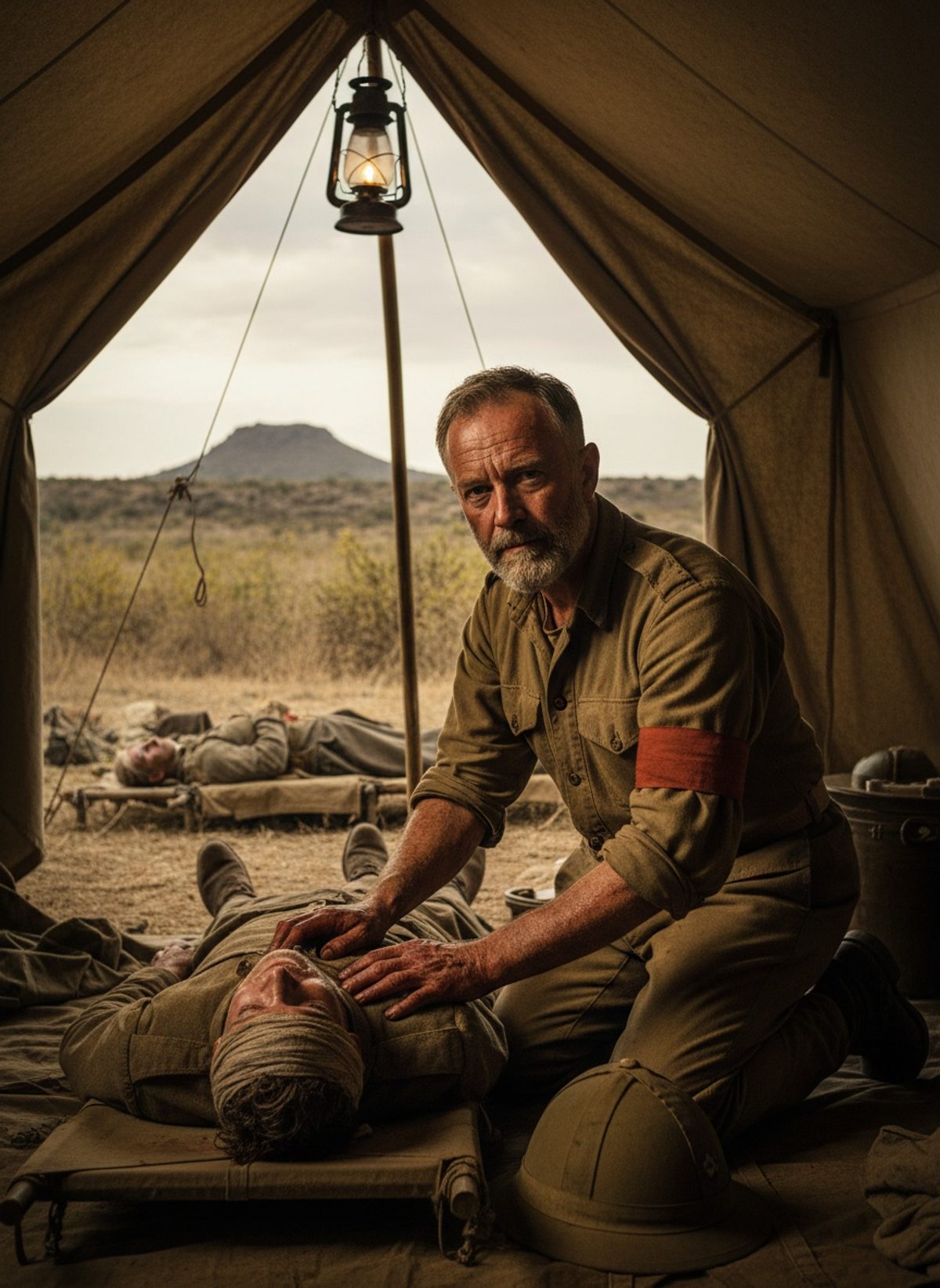
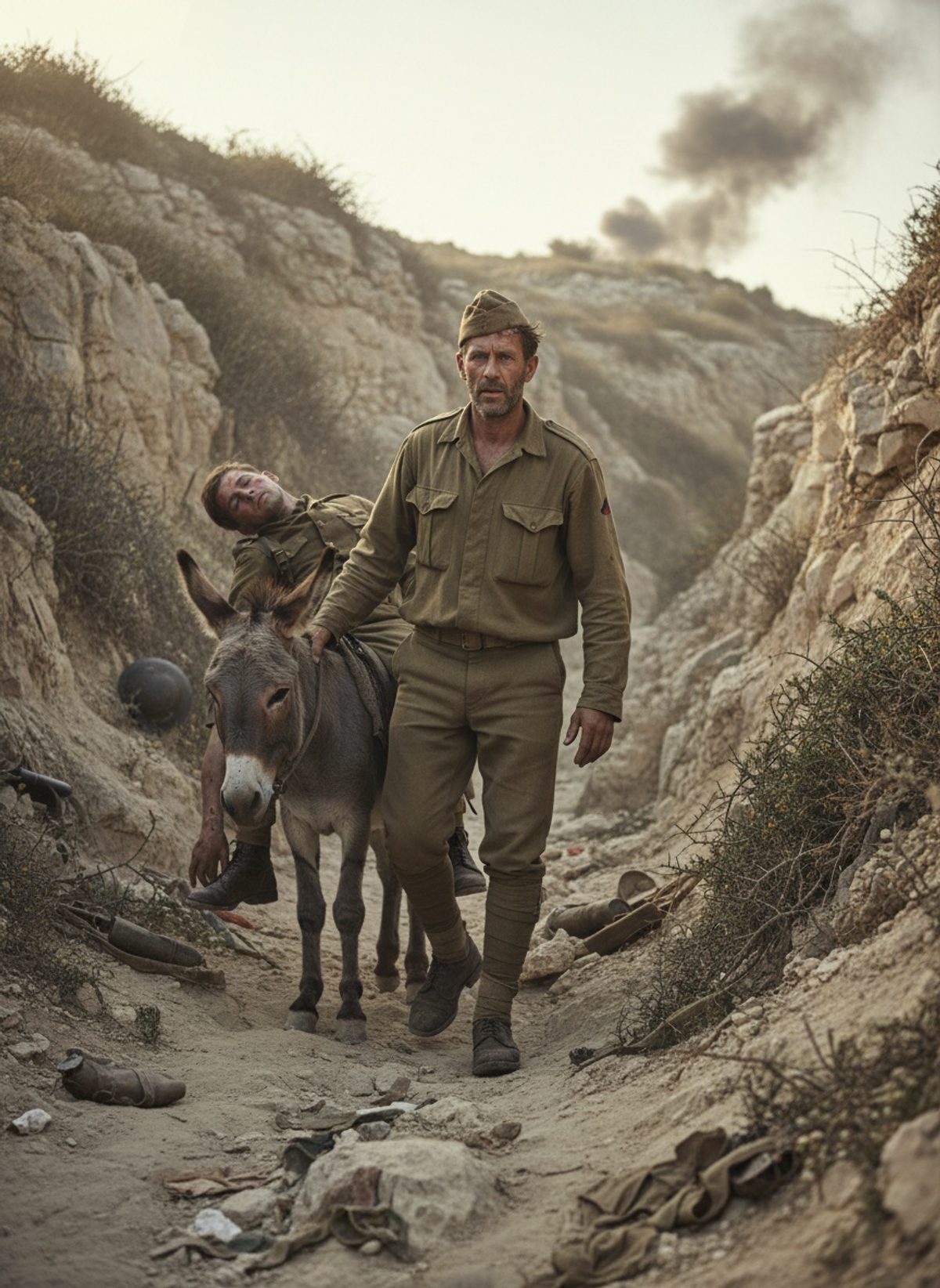
Kirkpatrick named the donkey Duffy, or sometimes Abdullah, depending on whom he was speaking with; regardless of the name, they became inseparable. Every single day, for 24 days, this unconventional team ventured into the hellish landscape of Gallipoli, under the constant threat of artillery shells and sniper bullets. Kirkpatrick, armed with nothing but determination and his unflagging resolve, led the donkey up the slopes to retrieve the wounded men from the battlefields.
What set Kirkpatrick apart was not just his courageous acts, but the way he conducted them—with a gallows humor that endeared him to his fellow soldiers. As they made their way down 'Shrapnel Gully', he would sing or whistle while he coaxed the donkey along, somehow making the terrifying journey more bearable for the men draped across the donkey's back. It is said that his reputation spread quickly through the trenches, his actions providing a beacon of hope and a faint reminder of humanity amidst the grim reality of war.
The ravines and gullies of Gallipoli, a treacherous maze more akin to hell than earth, presented their own unique dangers. The towering cliffs, the harsh, scrubland battered by salt and wind—everything was stacked against the Allied forces. And yet, in the midst of this, a lone soldier and a donkey threaded through the chaos, navigating the perilous paths with a skill that seemed almost preternatural. Kirkpatrick's quiet defiance of protocol and his heart-stirring embodiment of duty provided solace in the face of overwhelming odds.
The psychological toll of war is often immeasurable, but for 24 days, Kirkpatrick's actions provided tangible relief to those engulfed by it. There is a photograph, one of the few ever taken in such times, where the donkey appears serene, its burden slung across; behind him, Kirkpatrick walks stoically, head bent forward, eyes fixed on the ground before them. It's an image that encapsulates the grit and tenacity that defined those days.
But on the 25th day, the precarious balance of fortune tipped against him. Amidst the ceaseless exchange of gunfire, a sniper's bullet found its mark. Kirkpatrick fell, becoming one of the countless casualties on those unforgiving slopes. His death was mourned deeply by the men who had known his bravery and humor, the very qualities that had endeared him to all. The donkey, now a poignant emblem of resilience, was left to wander, a silent witness to the sacrifice made by his companion.
In the annals of history, John's story often merges with legend. The Australian and New Zealand forces (ANZACs) remember him as 'the man with the donkey', a figure who symbolizes the ANZAC spirit—courage, endurance, and sacrifice. And yet, there is an understated lesson in his tale, one of empathy and humanity that transcends the brutal mechanics of war.
In remembering John Simpson Kirkpatrick, we acknowledge not just a hero of Gallipoli, but the enduring spirit of compassion that can thrive even in the darkest corners of human conflict. His actions, unrecorded by official orders but captured in the memories of those saved by his daring, remind us that acts of valor can rise above the binary of victory or defeat. His story, woven with quiet defiance, teaches us about the profound impact one individual can have, reshaping the narrative of war with a simple, selfless act of humanity.