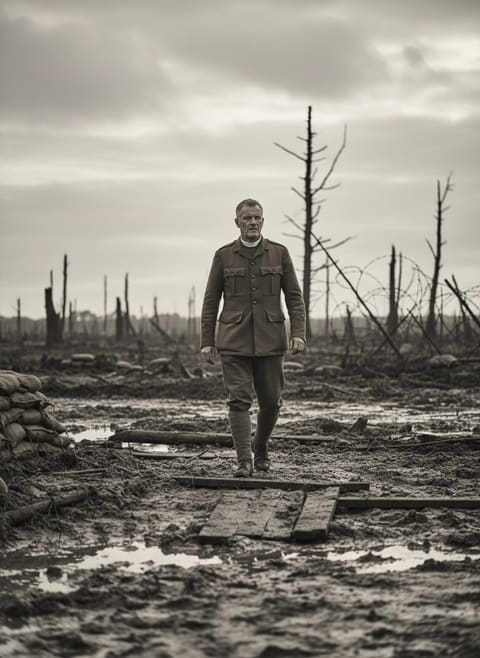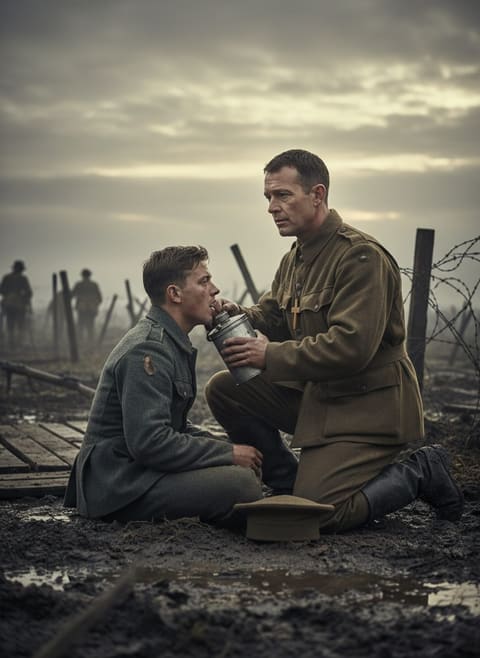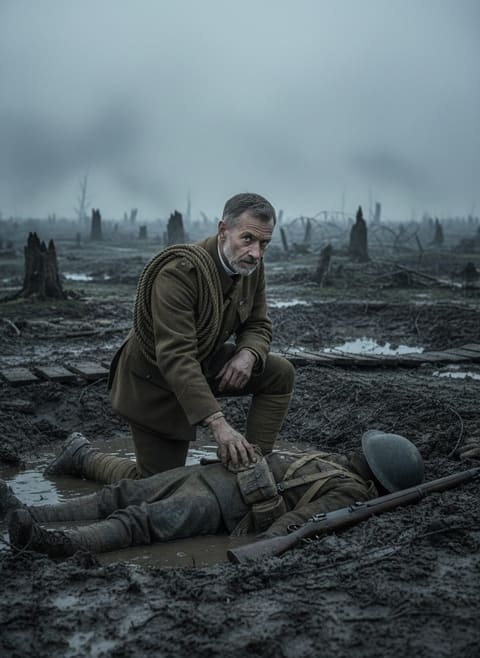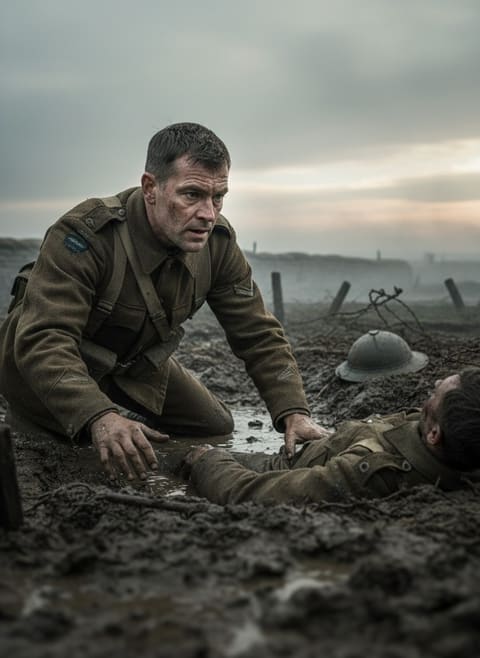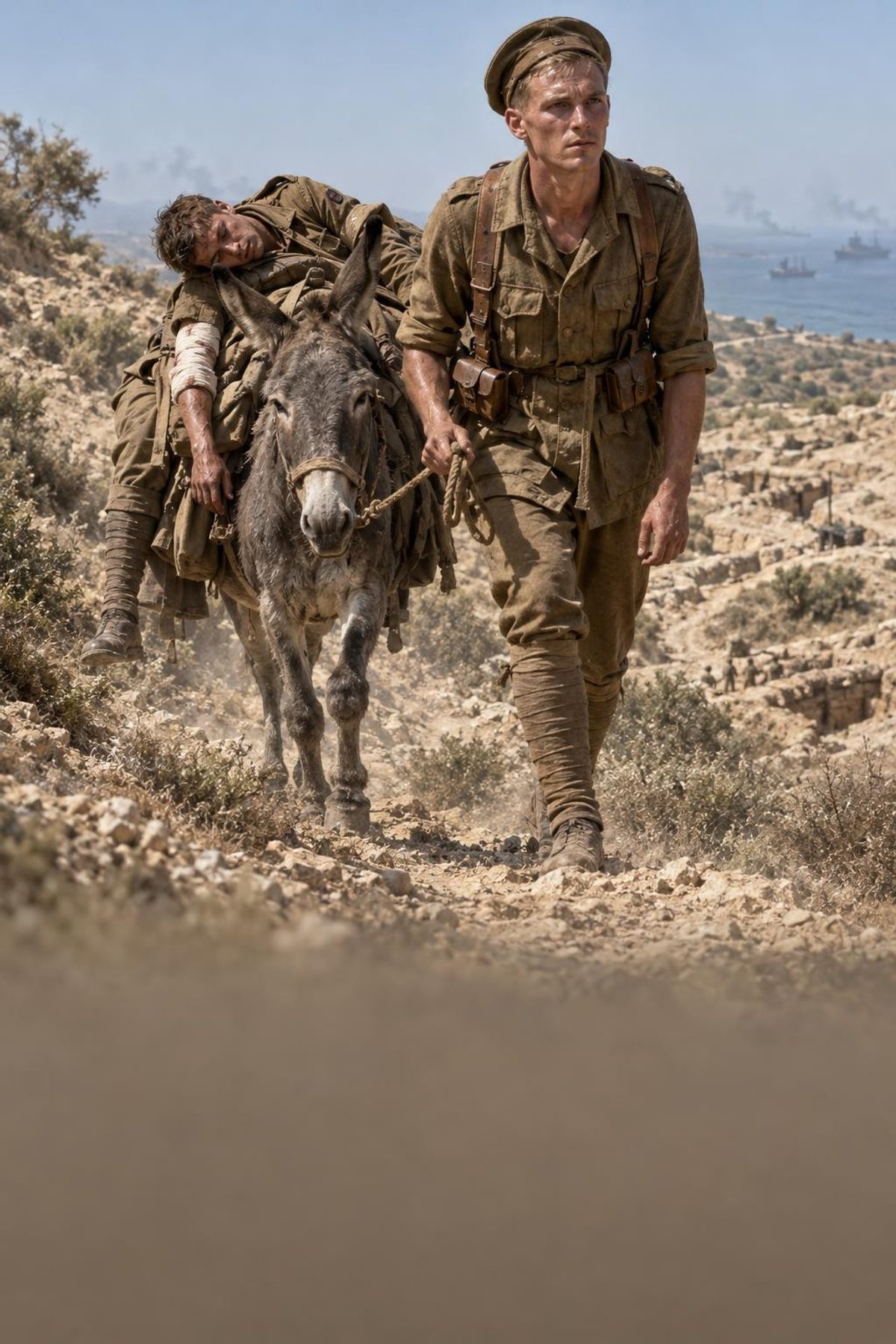
The crack of rifle fire pierced the air as John Simpson Kirkpatrick trudged through the dust and chaos of Gallipoli. His steadfast companion, a donkey, carried yet another wounded soldier away from the deadly confines of no man's land. Together, they moved with an almost ghostly presence, defying the relentless barrage that claimed lives by the dozen. The soldiers around him watched in awe as Simpson, undeterred by the cacophony of war, advanced from the trenches and crossed ground strewn with danger.
The Geordie and His Gallipoli Odyssey
Amidst the fervor of World War One, John Simpson Kirkpatrick found his purpose under circumstances that few could endure. Born on 6 July 1892 in South Shields, County Durham, Simpson was no stranger to hardship. Raised in a family of eight children, he learned to handle donkeys as a young boy, a skill that would later become a lifeline for hundreds of men. After journeying to Australia, undertaking a series of menial jobs, and embracing radical political views, war found him enlisted in the Australian Imperial Force only months after its onset.
Landing at Anzac Cove on 25 April 1915, the ferocity of battle quickly enveloped Simpson and his comrades in the 3rd Australian Field Ambulance. The terrain of Gallipoli was unforgiving—sharp ridges, dusty valleys, and a relentless enemy poised above. With bullets hissing around him, Simpson managed to seize a donkey, setting the stage for his relentless mission over the following weeks. In the dim predawn light, the compelling sight of a stretcher-bearer and his donkey moving towards the smoke-cloaked front lines became a symbol of hope.
A Symphony of Bravery
Simpson and his donkey worked in perfect harmony, threading their way through the devastation. To the men at Anzac Cove, the sight of his familiar silhouette often heralded the thin thread of survival amidst the throes of conflict. Simpson named his first donkey "Duffy", but as the weeks unfolded, he would find himself relying on several others including "Murphy", "Queen Elizabeth", and "Abdul", each carrying more than their share of burden through the incessant bombardment.
Read next: The Tunnellers Who Dug Beneath No Man's Land and Won
A seemingly untouchable figure, Simpson carried on his work with an air of nonchalance, whistling tunes to calm both himself and the wounded soldiers he transported. Many a day, he made multiple trips, an arduous task even without the constant threat of enemy fire. As the legend of his deeds spread, the Turkish snipers trained their sights on this peculiar, defiant rescuer, yet, for days on end, their bullets seemed to find no purchase. It was as if Simpson moved through an unbroken pact with fate—a pact that clung to fragility.
The Courageous Threescore
Through the dense chaos of Gallipoli, it is said that Simpson carried over 300 men to safety. His monumental efforts were not only those of physical strength but of incredible resolve and courage too. The soldiers recalled his fearlessness and open disdain for the personal risk he faced: a young man acutely aware of his mortality, yet dismissive of it in the pursuit of saving others. Donning a military cap, he wouldn’t hesitate to enter the fiercest realms of battle, becoming an indispensable link in the fragile chain of life and hope.
Simpson's compelling presence amid the devastation provoked bewilderment from comrades and respect from foes. He became an anomaly on the battlefield, practically becoming an entity that transcended mortal bounds, if only for a time. In letters home, soldiers spoke of "Simpson and his Donkey" not just as a comforting presence but as an embodiment of fearlessness that seemed superhuman, destined to become indelible in the annals of wartime lore.
Read next: The Flower That Became Britain's Symbol of the Fallen
Immortal in the Chase for Humanity
On 19 May 1915, Simpson’s extraordinary journey came to an end. Amidst the frenzy of offering aid as he had done tirelessly since that fateful April day, his luck expired. A Turkish bullet found its mark, striking him down as he performed his noble task. On that day, the battlefield mourned the Geordie who walked into war unarmed, ultimately leaving a legacy far larger than himself.
The legend of John Simpson and his donkey did not fade away with the end of the Gallipoli campaign. Instead, his story reverberated through time, becoming an archetype of heroism that transcended nationality or creed. In the trenches of Gallipoli, he epitomized an unwavering humanity in a place bereft of it—a story often overshadowed by strategy and politics but richer for the telling in human endurance.
As history unfolded, the ANZAC legend would embrace Simpson as an indelible part of its narrative. Though his time was cut short, the tenacity and spirit with which he carried out his self-appointed duty paint a vivid portrayal of an individual's power to inspire empathy amidst despair. Simpson's story signifies not just a chapter in wartime history but a poignant reminder of the individual's potential to alter the very ethos of warfare through the simplest acts of courage and compassion.