1765. A whisper spread through the bustling corridors of the Royal Palace, its echo resonating with the clinking of porcelain cups and the rustling of silk skirts. In a world dominated by the delicate artistry of Chinese porcelain, an artist from Staffordshire had achieved the unimaginable. The royal commission was not merely another accolade to his name but a seismic shift destined to echo through the ages.
The Lure of Porcelain
For generations, the elite tables of Europe were graced by the translucent beauty of Chinese porcelain. With its near-mythical origins and ethereal craftsmanship, owning such exotic delicacies was both a status symbol and a testament to one's sophistication. The intricate patterns and delicate forms were the envy of nobility, from Parisian salons to Prussian courtrooms. Yet, this luxury was one encumbered by expense, as vast fortunes ventured eastward aboard British East India Company ships, laden with the shimmering white cargo.
The allure of Chinese porcelain was more than skin deep; in it was the careful artistry of kaolin clay, hand-painted in cobalt blue and meticulously glazed until perfection shimmered within its depths. These were treasures of the Orient, crafted by artisans whose techniques and secrets were whispered from generation to generation, tightly held within the walled compounds of Jingdezhen, the famed "Porcelain Capital."
The Rise of a Potter
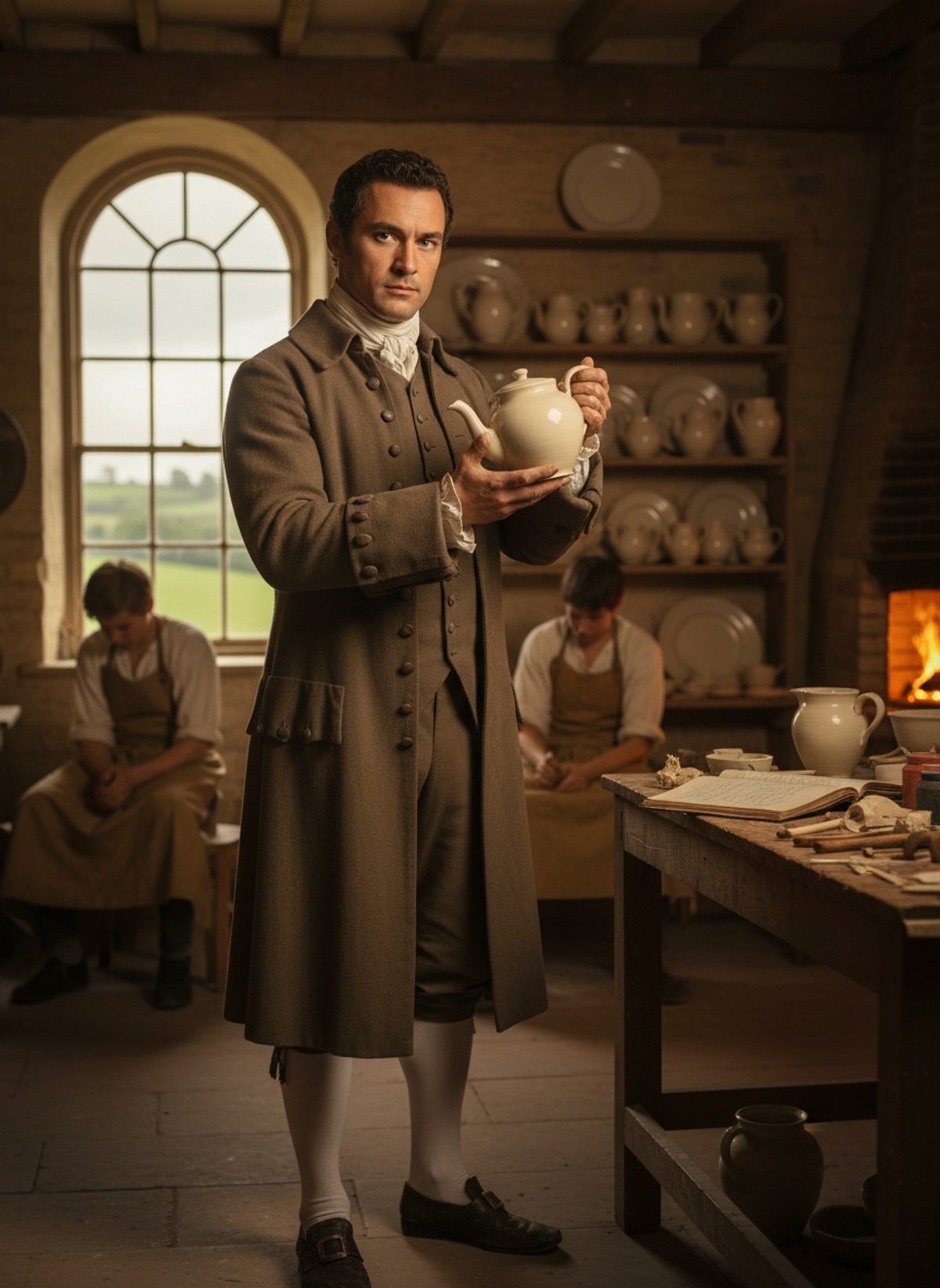
Amidst the verdant hills and recalcitrant winds of Staffordshire lay Burslem, the "Mother Town" of the Potteries. Here, a craftsman by the name of Josiah Wedgwood set his ambitions alight within the confines of a modest workshop. Born into a lineage of potters, Wedgwood was not bound by tradition but driven by innovation. His apprenticeship, despite being beset upon by illness that rendered him unable to work the potter’s wheel, became his crucible of ingenuity and determination.
Read next: When Thomas Lipton Walked Into Ceylon and Changed Tea Forever
Wedgwood's quest was clear: to forge an alternative to the imported porcelain that ensconced the tables of Europe. His dedication bore fruit in the creation of a splendid cream-coloured earthenware—elegant, robust, yet achievable within the workshop. Where Chinese porcelain was ethereal and fragile, Wedgwood's creation was steadfast, refusing to concede beauty to practicality.
His brilliance was not confined to the kiln. An astute businessman, Wedgwood mastered the art of marketing, branding his new tableware "Queen's Ware" in homage to his patron, Queen Charlotte. The royal endorsement proved more potent than alchemy; what Wedgwood offered was not simply pottery, but a touch of regal opulence made accessible to the rising middle class.
The Royal Commission
Imagine the scene: the royal cloakroom, abuzz with the conversation of courtiers, laden with the fragrance of incense, jasmine, and the gentle undertone of freshly smelted silver. At its epicenter, the young but formidable Queen Charlotte carefully inspected the tea service laid before her. On that fateful day, Wedgwood presented not only his creation but his vision—a world unshackled by the confines of Chinese imports.
The queen’s nod plucked at the very strings of commerce. On her approval, word spread like wildfire. From the enclosures of the palace to the merchants of London and Amsterdam, everyone clamored for a taste of this new earthenware. The thriving symphony of European commerce had found a new theme, and it rang with the dulcet tones of Wedgwood's cerulean designs.
This was not merely a transaction of goods but an exchange of ideology. In breaking the Chinese monopoly, Wedgwood injected a sense of nationalistic pride into Britain’s goods, offering a product that was innately English yet universal in appeal.
Read next: When Josiah Child Auctioned the Spice Routes, 1672
A New Age in Commerce
The ripple of this revolution coursed through the arteries of trade, transforming the very landscape of international commerce. In competitive fervor, factories rose, and industry blossomed. The industrial age was dawning, heralded by the smoke stacks of Staffordshire and the rhythmic churning of mill wheels.
The transformation of pottery from artisanal craft to industrial powerhouse was emblematic of a larger shift underway—one of economic independence and innovation. Wedgwood's triumph encouraged other industries to seek self-reliance and innovation, fostering an age of invention and discovery that would redefine Britain’s position on the global stage.
For Wedgwood, each piece was not merely an artifact of art but a statement of skill, of craftsmanship imbued with the quest for perfection. His creations found their place across the courts of Europe, marking the tables of emperors and empresses, nobility, and commoners alike.
The legend of Josiah Wedgwood is one they left out of textbooks—an artist who reshuffled the order of an empire, a visionary who set his sights beyond trade winds and tides to an era that prized ingenuity over tradition. His story is one of relentless pursuit and remarkable achievement, echoing through the ages as a testament to human creativity's capacity to shape the world in unexpected and extraordinary ways.