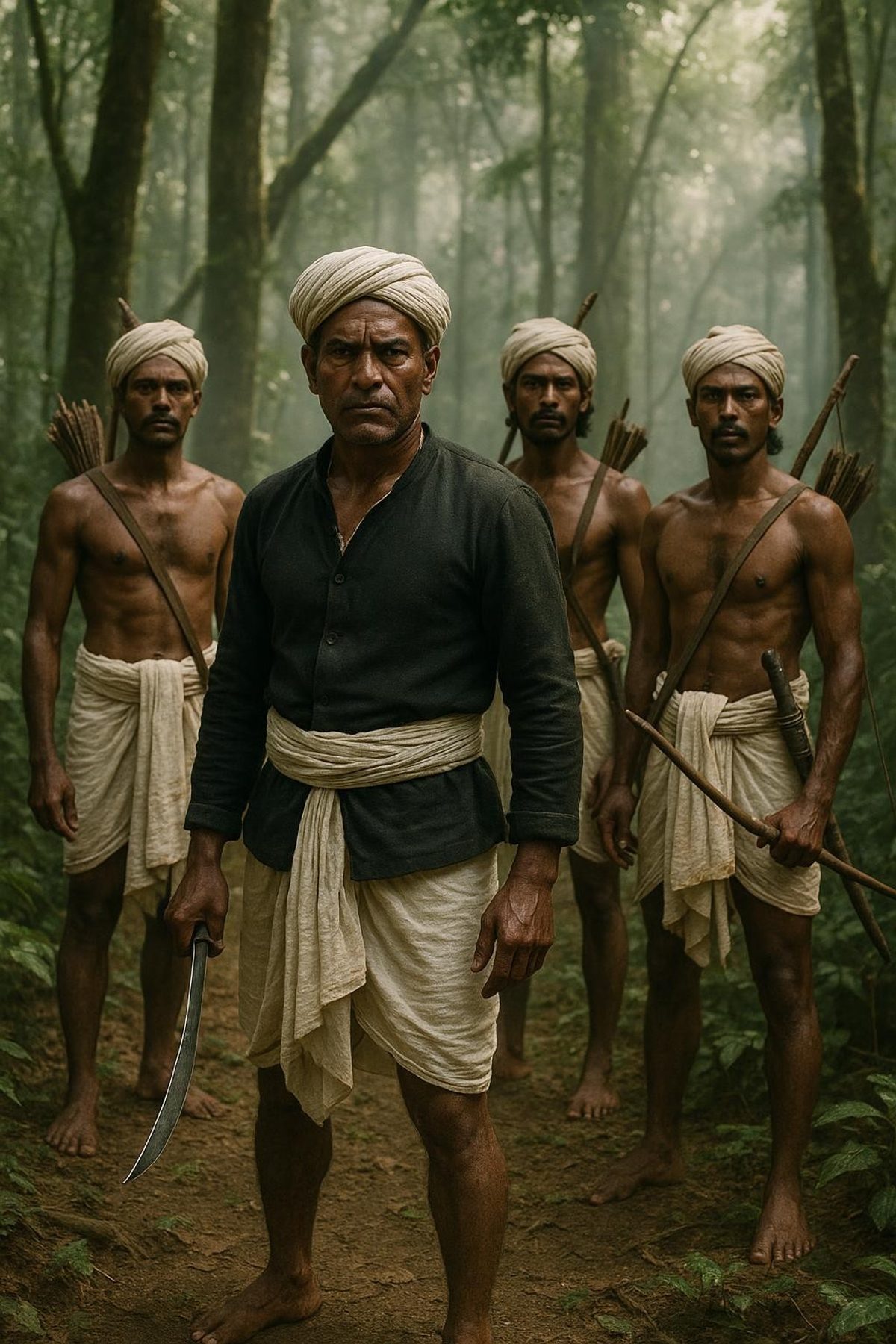
The forest floor crunched beneath his feet as Dedan Kimathi forced his way through the thick underbrush of the Aberdare Range. The air buzzed with tension, alive with the rustle of unseen creatures, as if the earth itself held its breath. Above, the dense canopy barely allowed a trickle of moonlight, rendering the night an all-consuming shadow. In this isolated wilderness, each sound was amplified—every snapped twig and distant cry—reminding him of the price of vigilance. Yet, it was in this very alien landscape that Kimathi had become a symbol of defiance, his mere presence like a forest phantom haunting the dreams of colonial governors.
The Relentless Hunt
For four arduous years, Kimathi navigated this labyrinth of trees and mist, a fugitive hero leading his Mau Mau fighters against one of the most formidable colonial powers of the era. The British, determined to quash the rebellion, launched the most extensive security operation in Kenya’s history, investing significant resources to hunt him down. But the forest was both ally and adversary, granting him the perfect cover yet demanding the utmost endurance from those who depended on its scarce offerings.
Tracker units, composed of Indigenous scouts and colonial soldiers, moved methodically, slicing through the undergrowth with determined precision. Every fallen leaf and bend of grass was a cipher in the cat-and-mouse chase. The British employed sophisticated military intelligence, deploying resources that would've seemed unthinkable amidst the dense jungles of Southeast Asia, perhaps expecting this untamed wilderness to yield yet another victory to crown their waning empire. Yet, the forest offered no easy path, its trails swallowed by the relentless jungle, an accomplice to those like Kimathi who knew its secrets.
A Lone Crusade
Kimathi’s stand in the Aberdares was not just about elusive maneuvers and battle skirmishes, but a deeper narrative of survival against overwhelming odds. His fighters, drawn from disparate backgrounds bonded by a shared dream of freedom, displayed a resolve that transcended the mere capacity to wield arms. Their lives, lived on the razors edge, whispered of camaraderie and sacrifice, often portrayed through the simple yet potent acts of sharing food, laughter, and hope amidst hardship.
Read next: When William Hodson Shot the Last Mughal Princes, 1857
Starvation was a constant specter. Supplies were scarce, and the forest provided little sustenance. This hardship was compounded by a growing sense of isolation as the British chokehold on communication and supply lines intensified. Family and comrades alike were a world apart, either silenced or distant, inaccessible like the stars above hidden by the canopy. Yet, the spirit of resistance flickered unquenchably, burning brightly in the eyes of a few who dared to defy the empire.
The Final Stand
It was in October 1956 when the inevitability of time and circumstance came crashing down upon Kimathi. A twist in the path, a glimmer of steel in the night—a capture that ended the fight of one of Africa’s most enduring freedom fighters but ignited a legacy far beyond the forest’s reach. He faced his captors not as a defeated leader, but as an unwavering figure, accepting his plight, standing unbowed against the forces that sought to dismiss his struggle as a mere insurrection.
He was taken not with words of repentance or regret, but with a silence that roared against the injustices he sought to dismantle. The British authorities had finally subdued their elusive nemesis, yet as they extracted him from his sanctuary of trees and darkness, it was with an understanding that the spirit of Kenya was unconquered.
Echoes of the Past
Though the forest returned to its silent watch in his absence, the echoes of Kimathi’s struggle refused to fade. His defiance underpinned the national consciousness, a narrative of endurance that rippled through the valleys and mountains of Kenya. What the colony marked as an end, history would come to see as a beginning—one man’s captivity reverberating into the emancipation of a nation.
The story of General Dedan Kimathi's stand in the Aberdare forests is not merely an account of warfare amidst the trees but a vivid reminder of human perseverance against colonial oppression. It is a tale of unyielding commitment under conditions that tested the limits of human endurance. Yet, rather than extinguishing the will for freedom, Kimathi’s capture ignited a renewed fervor, stoking the embers of independence that would soon light the path for an entire movement. In the shadows of Aberdare, as Kimathi surrendered to the forest, he simultaneously sowed the seeds of a destiny that would see Kenya rise and claim its rightful place.