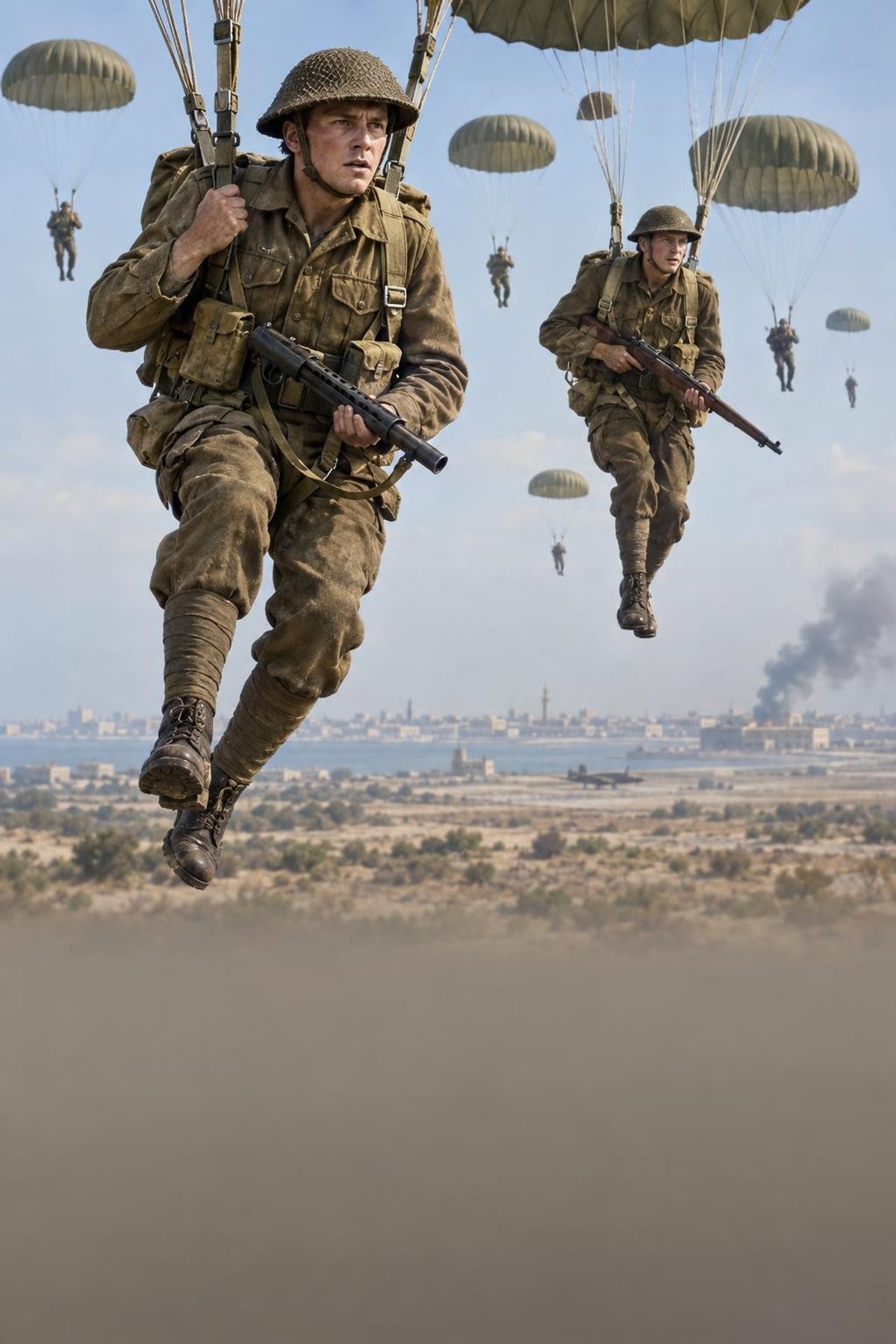
The air was thick with tension and the sound of roaring aircraft engines as Trooper David Simmons leaped out of the belly of the plane. The darkness of the Egyptian night enveloped him, and the cool Mediterranean wind bit through his uniform as he plunged. Thousands of feet below, Port Said sprawled under a shroud of anticipation and uncertainty, its streets and harbor destined to become the focal point of a bold and audacious operation known as Operation Musketeer.
The Crucible of Conflict
At the heart of this operation lay the prize of prizes: the Suez Canal, an artery of commerce linking the West to the East. Owned but no longer controlled by the British, its strategic importance was matched only by its symbolism—an empire’s lifeline slipping beyond reach. The diplomatic chessboard in 1956 was as convoluted as it was perilous. Israel, France, and Britain, each for its own reasons, had formed a tripartite alliance to wrest control back from Egypt.
Israel was to strike first, its forces dashing towards the canal under the pretext of maintaining security in the region. France, with its own colonial interests at heart, was to extend its military might in coordination. And then Britain would seize its moment, the drop at Port Said would be the spearhead. Yet, even amidst the calculated precision of the plan, the iron fist of politics lurked unseen, ready to crush this delicate alliance.
The Silent Jump
Silence fell upon the formation as the last parachutes unfurled in the night sky, silhouetted temporarily against the stars before descending into darkness once more. Trooper Simmons landed with a dull thud, dust billowing around him. The paratroopers moved quickly, shedding their parachutes, securing their weapons, and advancing towards their objectives with practiced efficiency. The streets of Port Said were eerily quiet, yet the tension was palpable, coiling around them tighter than a cobra ready to strike.
Read next: When Britain Handed Palestine Its Silence, 1948
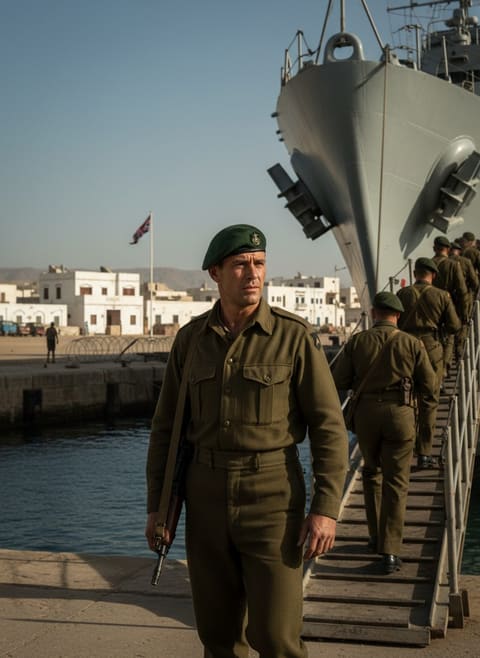
They were the vanguard of an operation that promised to reclaim more than a simple waterway. To these men, it was about restoring pride to a diminishing empire, casting aside the shadows of past humiliations. With whispered orders and silent gestures, they moved into the city, a wave of red berets amidst the labyrinthine alleyways and colonial facades.
The Chess Game Stalled
As dawn broke over the canal, the world watched with bated breath. In offices far removed from the dusty streets of Egypt, diplomatic conversations erupted with fervency. For President Dwight D. Eisenhower, the unfolding crisis was a diplomatic nightmare. A firm supporter of Egyptian sovereignty, Eisenhower viewed the operation as a potential spark to another world conflict, and he wielded America’s economic and political influence with calculated precision.
Read next: When Britain Handed Malaya Its Flag and Walked Away, 1957
Turning the screws through a potent combination of economic pressure and political clout, Washington made its position clear: discontinue the operation or face dire consequences. The steady voice of American diplomacy echoed across the Atlantic, and the British government, caught in an unenviable position, began to doubt its resolve. The presence of paratroopers on Egyptian soil suddenly seemed anachronistic in an era when colonial empires were being re-evaluated in the harsh light of postwar realities.
The Echoes of Ambition
In the space of a single phone call, a precipice was reached. World war was averted, but at a cost that ran deeper than the halted military operation. The paratroopers, their mission incomplete, became pawns in a larger, unyielding geopolitical gambit. As they withdrew, the canal remained Egyptian, a testament to the shifting landscape of power in the mid-20th century.
Operation Musketeer is more than a footnote in history; it is a window into the end of an era. Through the lens of this singular military endeavor, we glimpse the twilight struggles of empire against the dawning light of a new world order. It is a reminder of how swiftly ambitions can unravel when met with the hard edge of political realities, and how the calls of power echo across continents and decades, shaping destinies and redefining the world's horizons—sometimes in the quiet of a single moment.