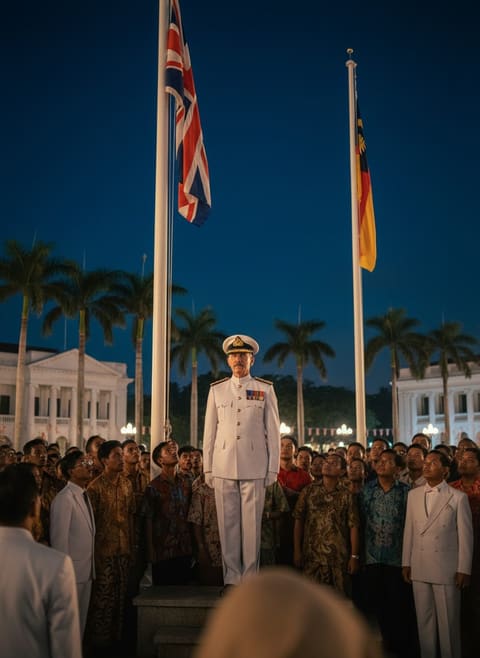
The November winds skimmed lightly across the surface of Aden’s harbor, carrying with them the scent of salt and faint traces of dust from the arid lands beyond. The afternoon sun cast long shadows among the dilapidated colonial buildings, painting an almost tranquil picture that belied the tension simmering beneath. This was not an ordinary day; it marked the end of an era in which the Union Jack, that symbol of imperial authority, would be lowered one last time over these ancient shores. Yet, remarkably, as Britain prepared to leave Aden after 128 years of rule, there was no pomp, no grandeur—a stark departure from tradition, fitting the muted tones of the quickly fading light.
Aden, a port of significant strategic and commercial importance, had been a British bastion since 1839, initially acquired to secure a coaling station for the burgeoning empire’s steam fleet. Over the decades, it evolved into a critical relay point on the maritime route to India. But as the 1960s unfolded, the sands of time shifted, carrying with them the rising tides of nationalism. The streets once echoing with the brisk cadence of British soldiers now vibrated with the explosive charge of gunfire and grenade—a testament to the bloody urban guerrilla warfare that engulfed the territory. By the late 1960s, the situation had deteriorated into a deadly quagmire, with political and military costs spiraling uncontrollably.
The plan to withdraw, conceived under the relentless pressure of insurgency and fiscal pragmatism, lacked the ceremonious flair that often accompanies the end of imperial rule. The departure was neither celebrated nor mourned; it was a quiet closing of yet another chapter in Britain's imperial history. The last British High Commissioner to Aden, whose name faded into obscurity in the annals of history, clung to a differing fate. As he boarded the helicopter that would transport him into the desert air, his silhouette briefly lingered against the setting sun before dissolving into the horizon. The fluttering Union Jack was lowered in silence, a stark reminder of the abrupt choices made at the ebb of empire.
The absence of ceremonial farewell was a powerful symbol in its own right, reflecting the stark reality of imperial decline, a retreat sparked by necessity rather than choice. Adopting a policy of "no ceremony" was practical in the sense that safety could not be guaranteed—a final admission of impotence in the face of insurgent strength. This unacknowledged departure, unlike the grand withdrawals seen in places like India, mirrored the quiet humiliation shrouding this chapter of British withdrawal. It conveyed an understanding of the deep-rooted antipathy sown through decades of colonial dominance and exploitation, with neither local population nor departing rulers inclined towards sentimental gestures.
Read next: When Britain Handed Kenya Its Flag at Midnight, 1963
The tumultuous political climate of Aden was a jigsaw puzzle of factions vying for control, captured within the folds of geopolitical intrigue. Marxist and nationalist ideologies clashed with a ferocity akin to the desert storms that sometimes swept through the peninsula. As the British exit took shape, the question of who would wield power in the aftermath was uncertain. This void left by a retreating empire was not unique to Aden; it echoed throughout former colonies, where independence often came with the bitter taste of upheaval and war.
Against this backdrop, the scene at the harbor was eerily still. A few local figures, important in their own eyes if not to history, watched from a distance as the last vestiges of British authority dissolved into the sky. Conversations were subdued, dominated by the somber realization of the challenges that awaited post-colonial governance. The day's significance was palpable not for the absence of noise but for the weight of silence; a silence that was both an end and a beginning, much like the somnolent repose that follows a storm's fury where the land spins tales of newfound sovereignty mingled with ancient grievances.
Read next: When the Last British Soldier Left Aden, 1967
As the helicopter disappeared beyond the desert dunes, the echoes of empire lingered in memory, and questions of legacy emerged. For Britain, the silent departure from Aden served as a precursor to further dismantling of a once-expansive empire. It highlighted not only the practical limitations of maintaining control over distant lands in the face of local resistance but also signaled a transition into an era where the relationship with former colonies required rewriting and reimagining in terms of equality and partnership.
For the people of Aden, and indeed Yemen as it would become, the day represented liberation unaccompanied by fanfare, leaving behind a mélange of hope, anticipation, and trepidation. The struggle for a cohesive identity and stability would span decades, evidencing the arduous journey many former colonies had to undertake. To the casual observer, the end of British rule in Aden might seem an exercise in bureaucratic restraint, yet, the solemn quietude of that day carries with it an enduring lesson—the end of empires often mirrors their beginnings, subtle yet profound, characterized by upheaval cloaked in shadows, resilient in the face of inevitable change.