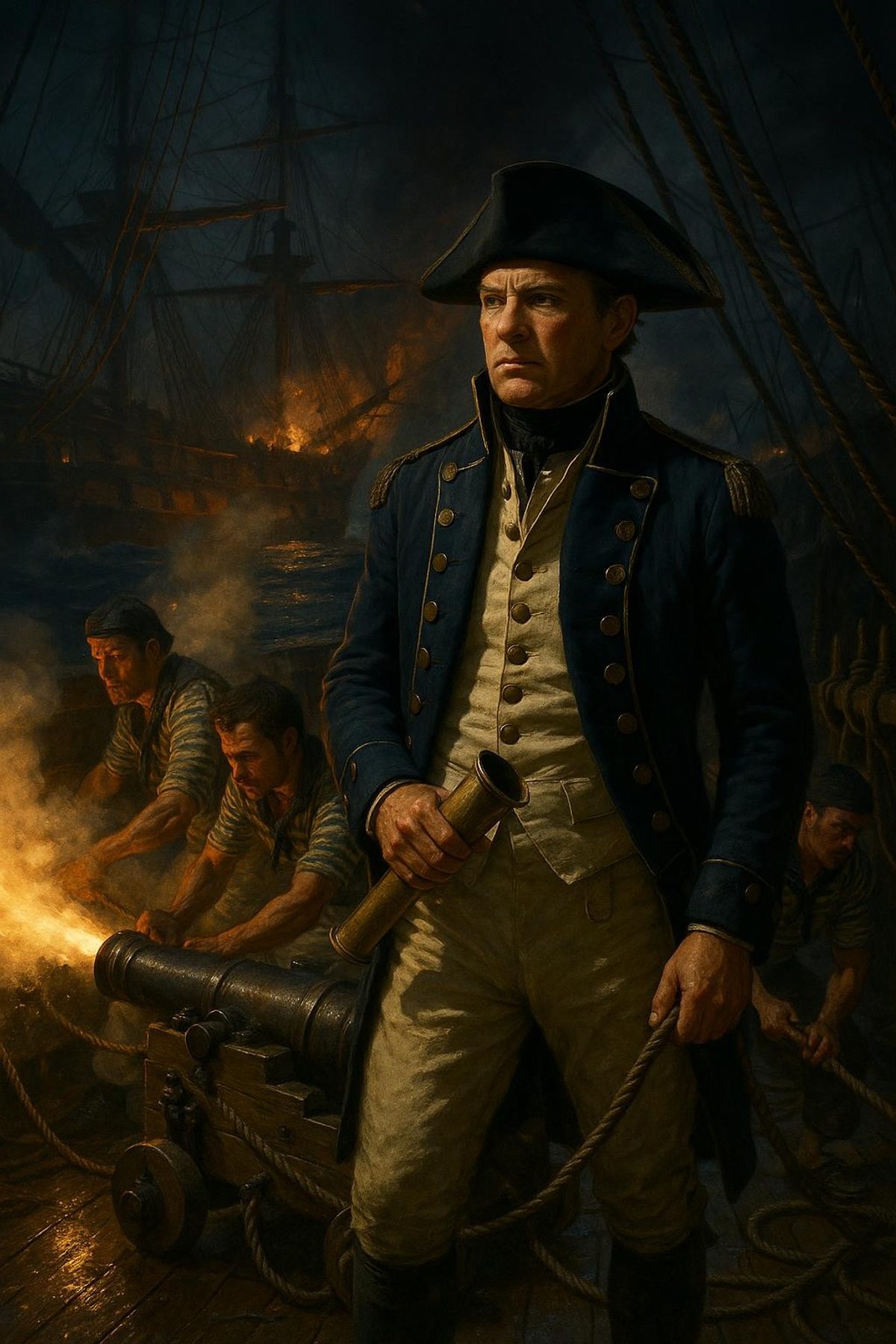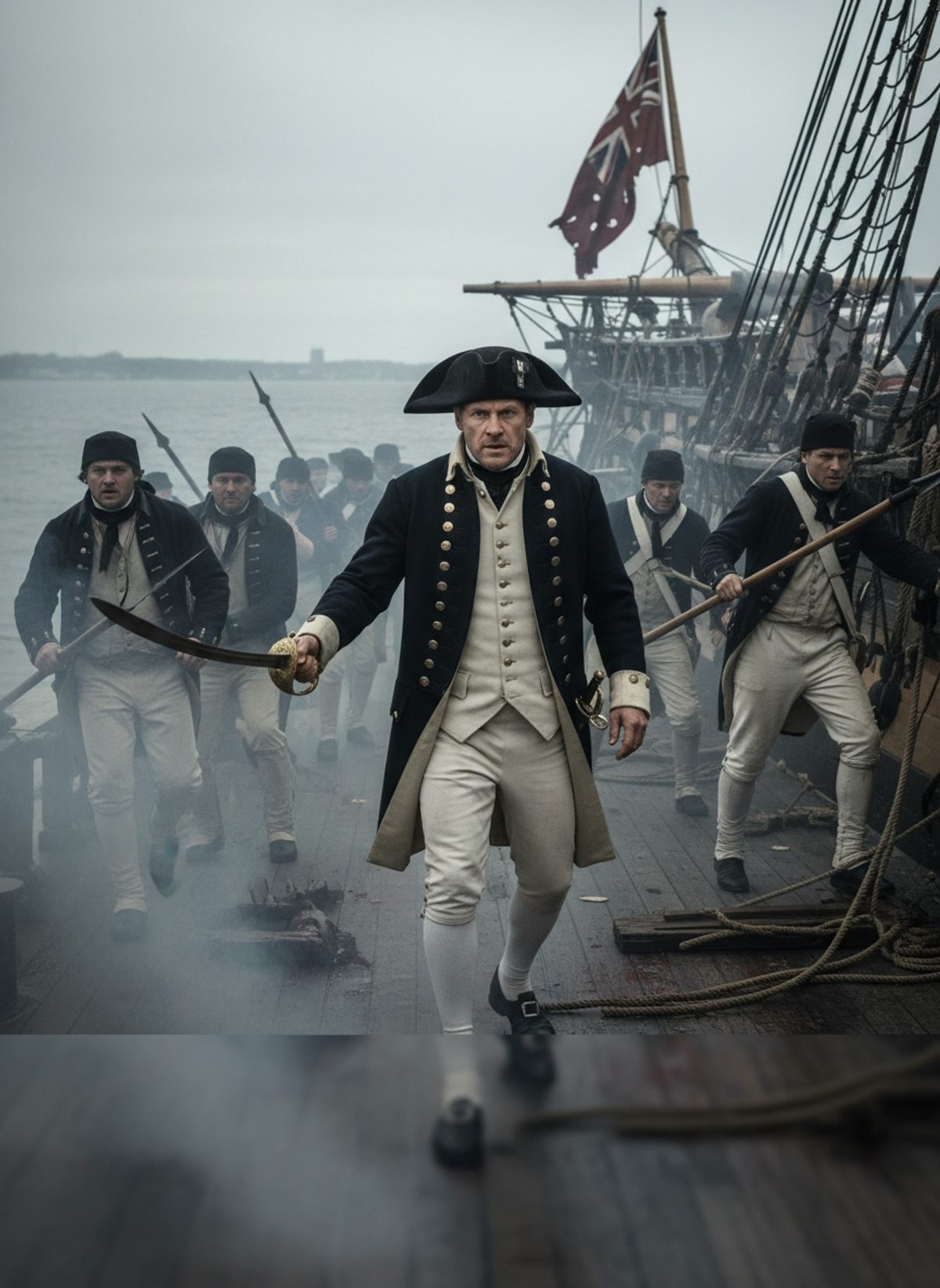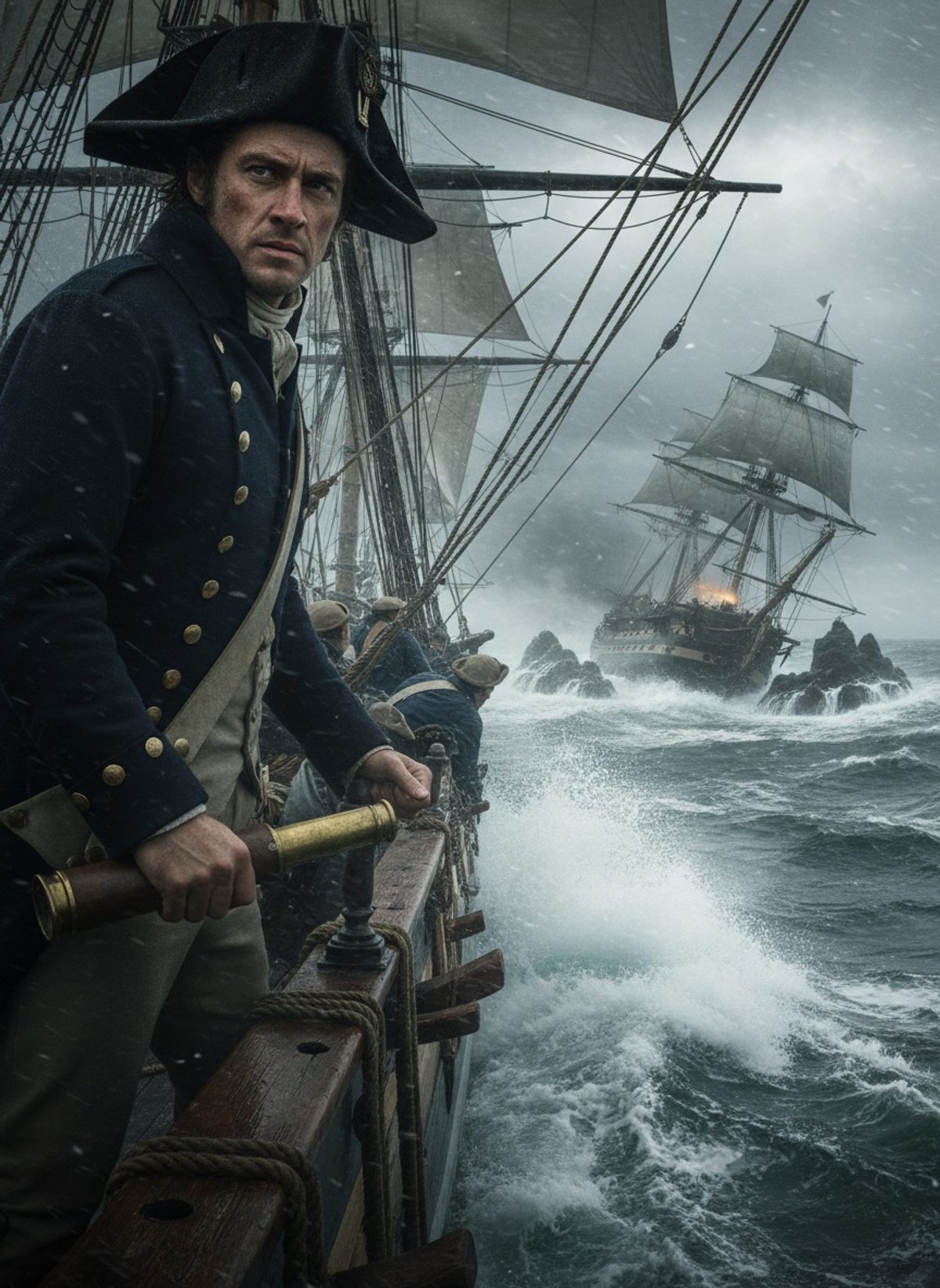
He was known for his audacity rather than his decorum. But Captain Edward Pellew possessed an uncanny instinct for turning chaos into triumph at sea. It was this very quality that led him to one of the most extraordinary displays of naval warfare audacity during the early years of the Napoleonic Wars, when he sailed the HMS Indefatigable through a storm-churned night in pursuit of a much larger French ship of the line, exposing both ships to the unforgiving peril of the rocky coast of Brittany.
It was January 1797 and the wartime winds carried tales of epic sea confrontations, with Pellew's pursuit among the most daring. The French ship, the Droits de l'Homme, was a formidable opponent, boasting 74 cannons and over a thousand men, each one tangled in the ambitions of the French Revolution and its ensuing conflicts. The stakes were colossal, not only in manpower but in ideological fervor. Pellew, commanding merely a frigate, a single vessel amid the royal blue, seemed to be measurably out of his depth. Yet it would be in such challenging disproportion that Pellew found his element.
The chase began under the dour skies of the Bay of Biscay, a region notorious among sailors for its capricious weather and deceitful waves. As the wind swelled and the sea heaved, Pellew ordered full sail. The odds were starkly against him, yet navigation errors, not to mention the weather, were the furious demons he was prepared to confront. The Droits de l'Homme sought sanctuary in the familiar but equally perilous waters near its native Brittany. Pellew, undaunted and devoid of navigational charts, pursued.
Darkness enveloped the two ships as the storm increased its ferocity. The world around them dissolved into a chaotic symphony of howling winds and crashing waves. Lighting the horizon with flashes of godly anger, the storm lacked the killing edge of battle, but its wrath was suffused with just as much danger. For Pellew, without the comfort of stars for sky navigation nor shoreline lights to hint at proximity to destruction, judgment alone served as his guide. Yet, in an ironic twist, it was the very absence of markers that set him apart—the instincts of a seasoned seafarer transcending the deceptive security of conventional wisdom.
Read next: When the Wager's Survivors Turned on Each Other, 1741
The close of darkness and fury brought both vessels treacherously close to the rocky shoals near the Breton coast. Every seaman's nightmare lay beneath the waves—the serrated teeth of rock poised to tear into hulls and seal the maritime fate of all aboard. Yet, for Pellew and the Indefatigable, retreat was an option unseen. Instead, the duel intensified in spirit and ferocity. Cannons fired under desperate circumstances, volleys exchanged in the bleak dimness, indistinct except to those familiar with the echoes of gunpowder and salt air. Such was the courage of Pellew that he maintained the chase within firing distance, despite the dire prospect of his own crew’s mortality.
The Droits de l'Homme's advantage in size and firepower began crumbling under the dual onslaught of storm and the relentless pursuit by Pellew. Hapless in its groping attempt to outmaneuver its adversary with tattered sails and elusive winds, the French ship ran aground—its crew and passengers spared the tempest only to confront the relentless crush of the rocky shore. Pellew, observing the tragedy unfold, broke off engagement and, succored by the graces of fate and seamanship, navigated a retreat through the channel of merciless waves back to open sea. The French ship lay irretrievably coquetted by the coast, the once-idolized glory of 74 guns reduced to the whispered lamentations of the ocean's unyielding embrace.
This story, unrivaled in its depiction of fearlessness and seafaring acumen, is rarely told with the fervor it deserves. The consequences rippled with lasting reach, echoing through the valiant myths of the Royal Navy as a celebrated embroidery of gallantry—embroidered two threads thicker at the hands of Pellew's Indefatigable courage. As an episode lost to many a textbook, it stands as testament to the inexorable human spirit prevailing against odds, dangers, and the elements—a drama enfolded among the waves of history that speaks to lessons more grandiose than flags at half mast for lost ships.
Such tales inspire a retrospective contemplation on the intangible qualities that define great leadership. Pellew's decision to haunt the territory often reserved for folly, at a time when pragmatism belied sensibility, borders on the heroic derivations of myth. Yet, it was rooted in an authentic bravery that treaded no waters softer than victory, compelling history to remember the audacity of a captain who dared to chase giants onto the rocks, compelling a story of indomitable fortitude that still whispers underneath the windswept chapters of naval history.