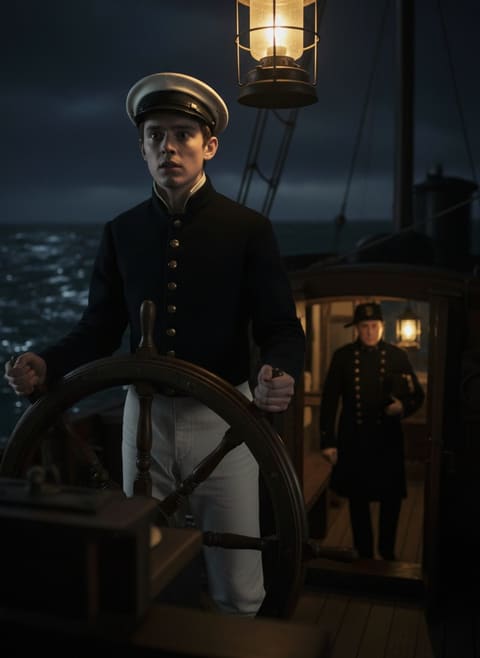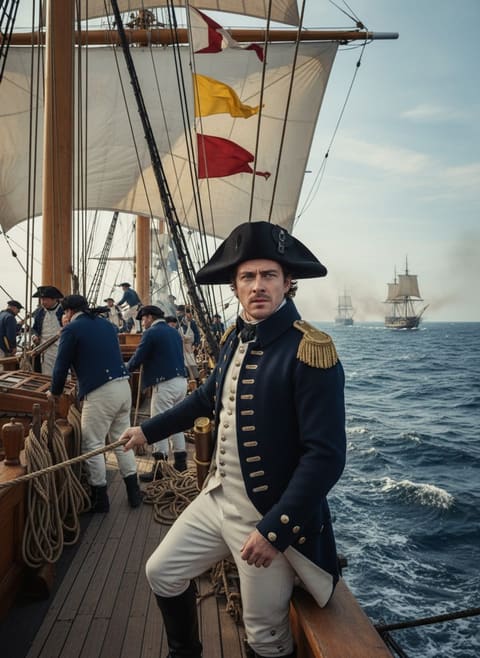
Admiral Sturdee was not chosen for his famed nautical expertise. He had never commanded a battlecruiser squadron before he was sent to the South Atlantic.
The Echoes of Coronel
By December 1914, the British Admiralty was nursing a bruised ego. Just weeks prior, on November 1st, 1914, Admiral Graf Maximilian von Spee had dealt a stunning blow to the Royal Navy off the coast of Chile at Coronel. It had been one of the British Navy’s worst defeats in a century, resulting in the loss of HMS Good Hope and HMS Monmouth.
Shock resonated through Britain. For a nation that prided itself on naval supremacy, the sting of this defeat was harsh, the humiliation deep. Von Spee’s squadron, mainly comprising the armored cruisers SMS Scharnhorst and SMS Gneisenau, cut mightily through the frigid waters, leaving destruction in its wake. That encounter compelled the Royal Navy to dispatch a force safeguarding their honor, with a vengeance fueled by desperation.
Within weeks, the answer was converging toward the South Atlantic: two battlecruisers, HMS Inflexible and HMS Invincible, under the command of Admiral Sir Doveton Sturdee. Sturdee was tasked with a simple mission — to intercept von Spee and bring the might of the British Empire crashing onto his squadron.
Read next: When HMS Dreadnought Slipped Out of Portsmouth and Rewrote Naval War
Yet, this mission was far from ordinary. It promised a collision poised on a knife’s edge between restoring British prestige and further tarnishing it. The stakes were as high as the hostile waters were turbulent.
Sturdee’s squadron, which also included several other cruisers, reached Port Stanley in the Falkland Islands to take on much-needed coal. It was a stop that would prove as strategic as it was serendipitous. As storms brewed both in the weather and among the brass, the British hoped for von Spee’s rapid arrival, for every passing day allowed the German squadron to wreak more havoc and extend its specter of dominance over the South Atlantic seabed.
The Fateful Arrival
December 8th dawned as a day destined to etch itself onto the ledgers of history. Von Spee, emboldened by his victory at Coronel, intended to attack the British base at the Falklands. As fate would have it, the Germans approached just as HMS Inflexible and her squadron were coaling. Hopes high, they expected to catch a defenseless port ripe for destruction. Yet, their ambitions were about to come face to face with an unexpected reality.
The first hint of trouble crept into the horizon when smoke was spotted by the British lookouts. Faint trails against the morning sky soon signaled an impending duel. The Germans, caught unawares by the presence of formidable British capital ships, faced an immediate threat. The tables had turned; the hunter now became the hunted. As von Spee continued with his advance, Sturdee swiftly ordered his ships to set sail.
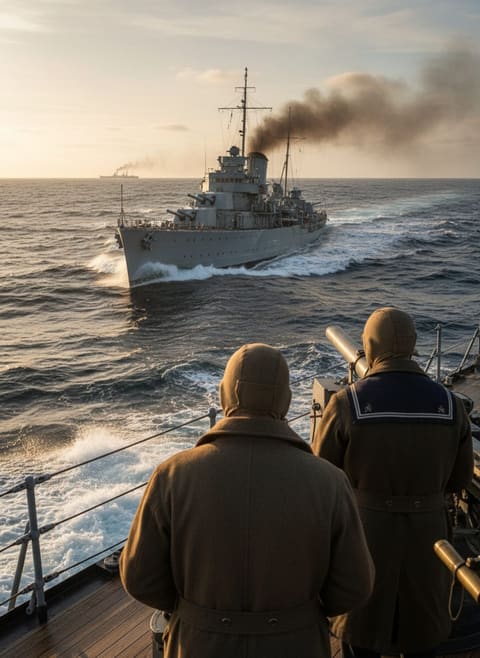
By late morning, the chase was on. The Inflexible, gleaming under the cold Atlantic sun, steamed into action. Her 12-inch guns poised to roar justice for Coronel. The Germans, realizing their misfortune, attempted escape. What followed was a grueling spectacle of maritime prowess.
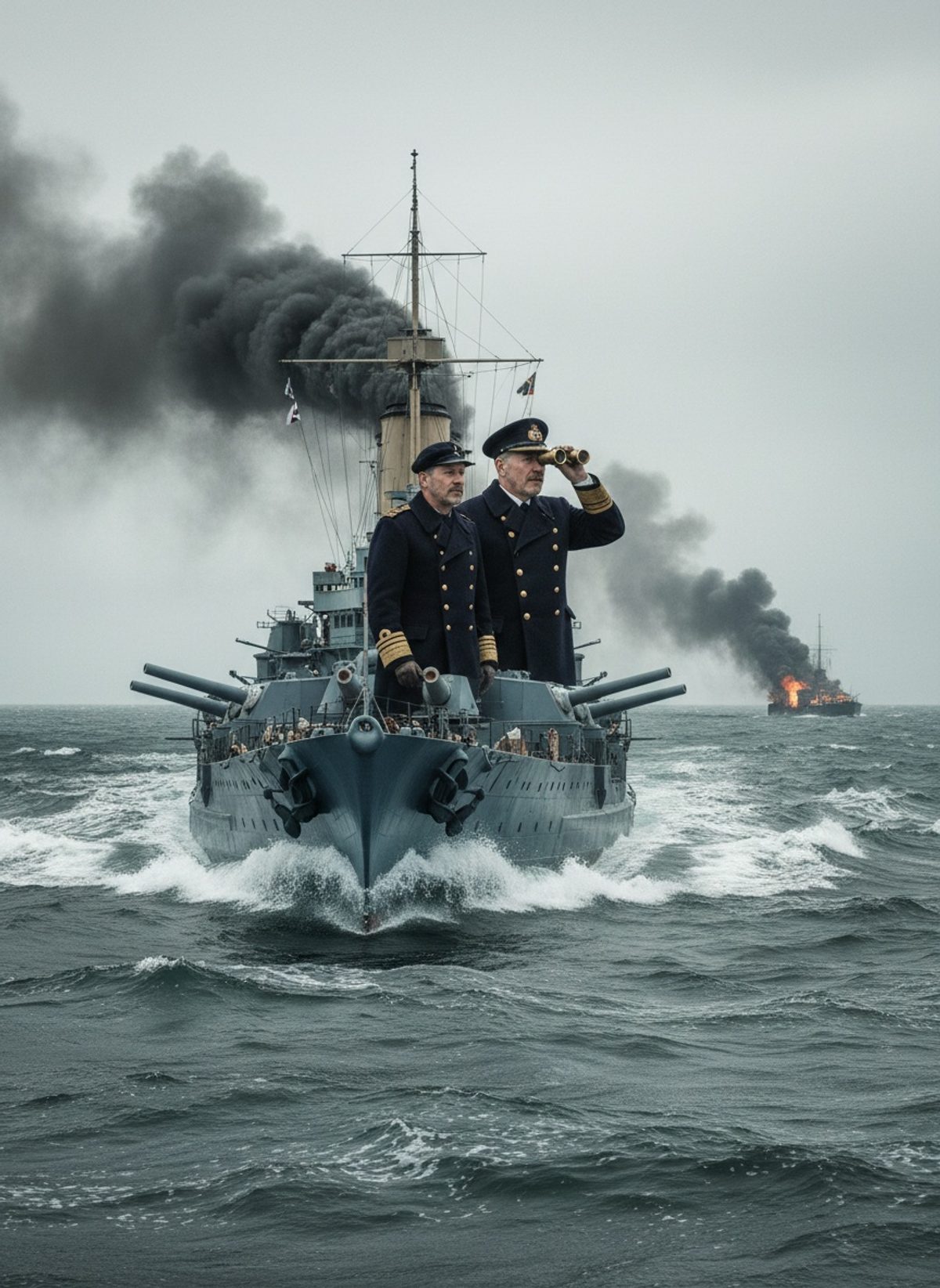
The cacophony of artillery echoed across the waves, gun smoke intermingling with the sea mist in a chaotic ballet of battle. Ship by ship, the German squadron faced obliteration as the mighty British battlecruisers sprang into full fury.
The End of a Squadron
Within hours, the outcome was inevitable. The SMS Scharnhorst succumbed first, sinking with von Spee aboard, a stoic end for a proud admiral. Gneisenau followed suit, battered relentlessly as the British closed in with a renewed fervor.
Read next: When Prince Alfred Sailed Into Cape Town Under Fire, 1867
Though the battle unfolded over the expanse of a day, it served as a merciless conclusion for the German East Asia Squadron. The craggy islands of the Falklands bore witness to an epic display of determination and survival instinct in this tragic naval waltz.
Other ships, like the Nürnberg and Leipzig, attempted to flee or fight back in vain, only to meet their demise or capture. The remnants of von Spee's squadron were hunted down or rendered ineffective. In contrast to the crushing disaster at Coronel, the British morning stretched into triumph as their ships triumphantly returned to Port Stanley.
The clash at the Falklands turned the tide of naval warfare in the South Atlantic. For Britain, it was a staggering redemption, quieting the ghosts of Coronel with a resolve that shook the waves. The events of that December day reinforced the Royal Navy's indomitable spirit, propagating a resonant lesson of resilience and strategy. In warfare, the pendulum of fortune was never static, and within a breath, even the mightiest could fall.
This story speaks through the ages, reminding us how uncertainty can overturn circumstance in the blink of an eye. The seas continue to echo with tales of bravery and fortune, as vivid today as in 1914 — a time when the world's fate was determined not just by the battles fought, but by the deep currents of resolve carried in the hearts of those who dared sail into the unknown.