99 stories
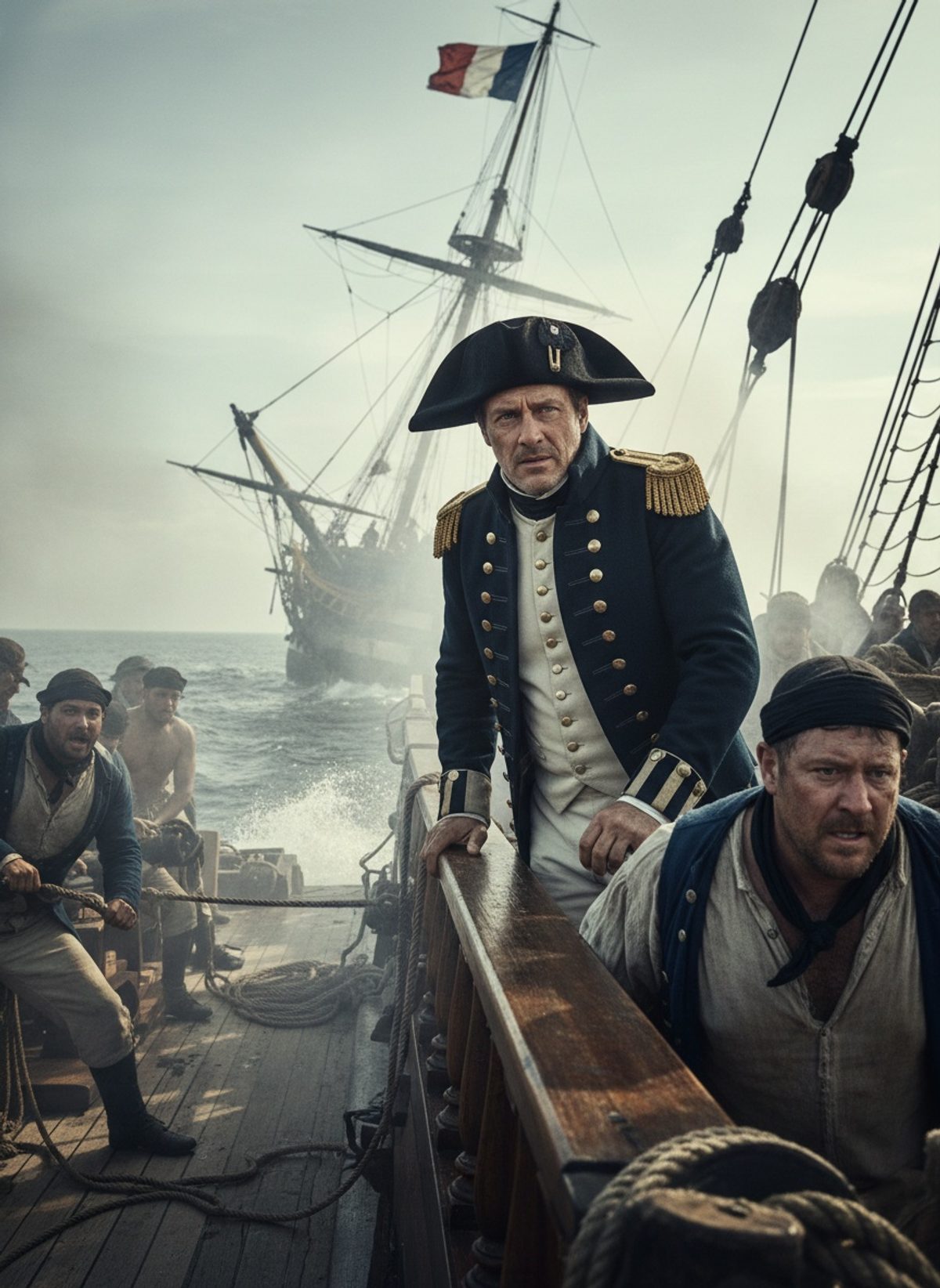
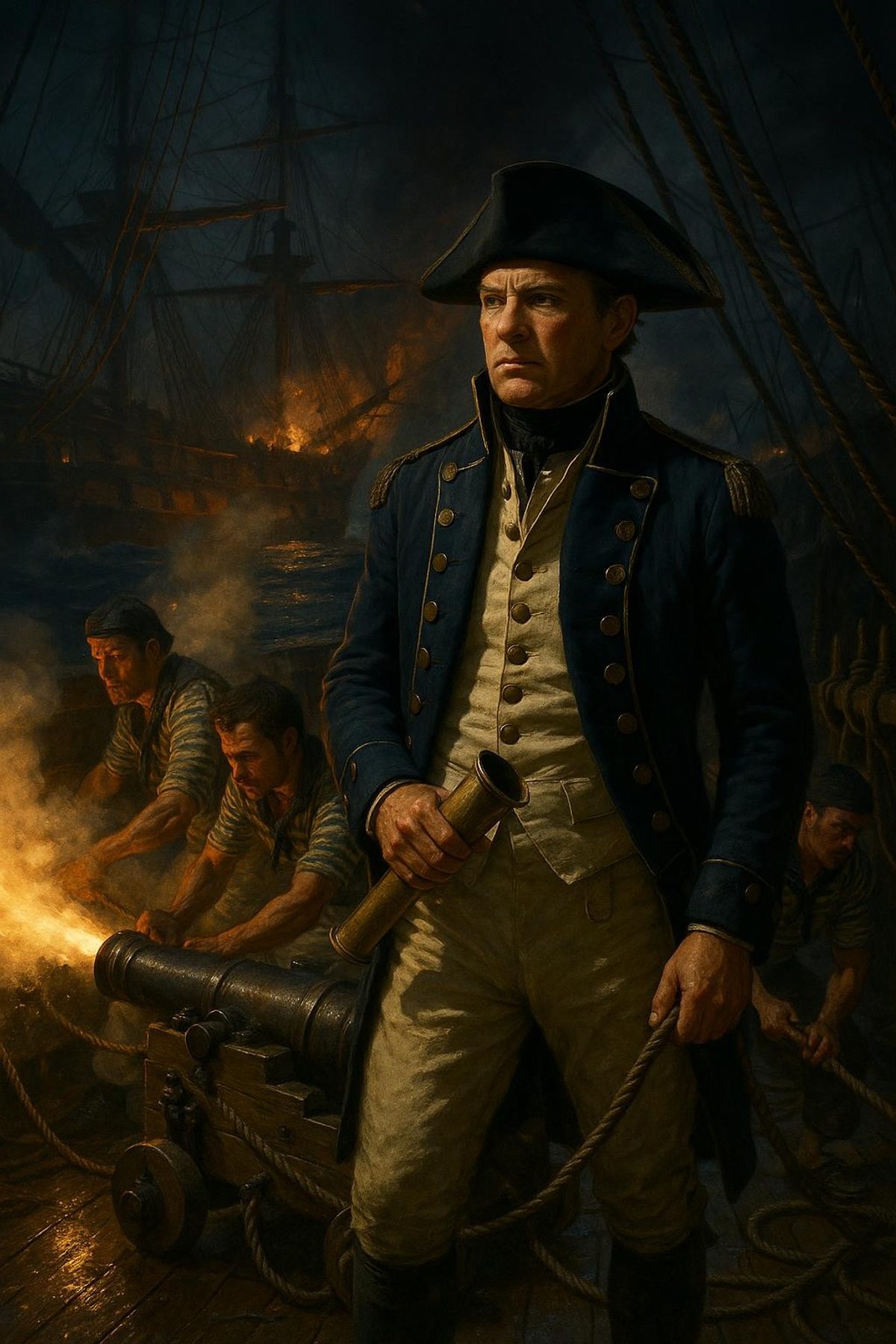
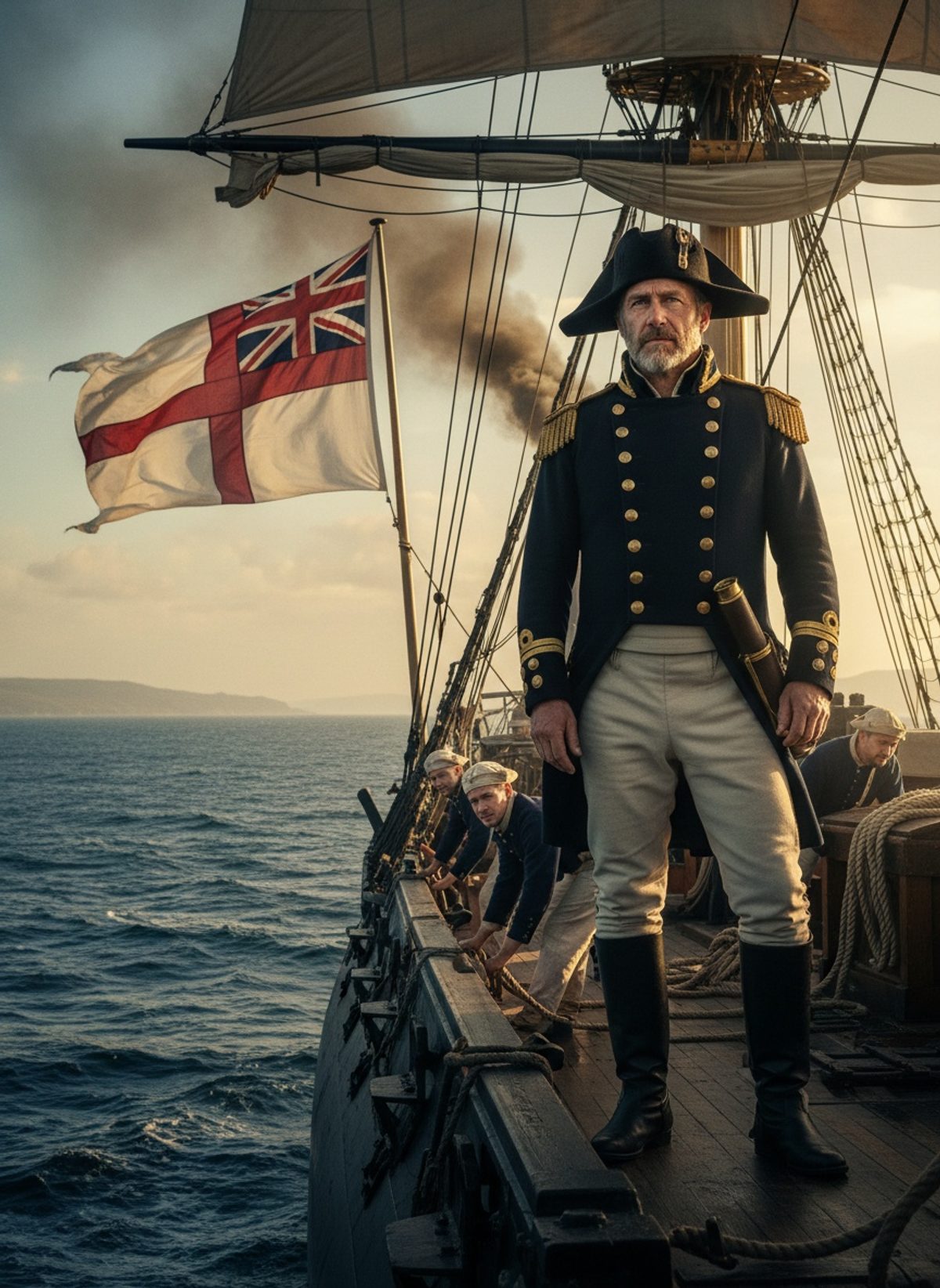
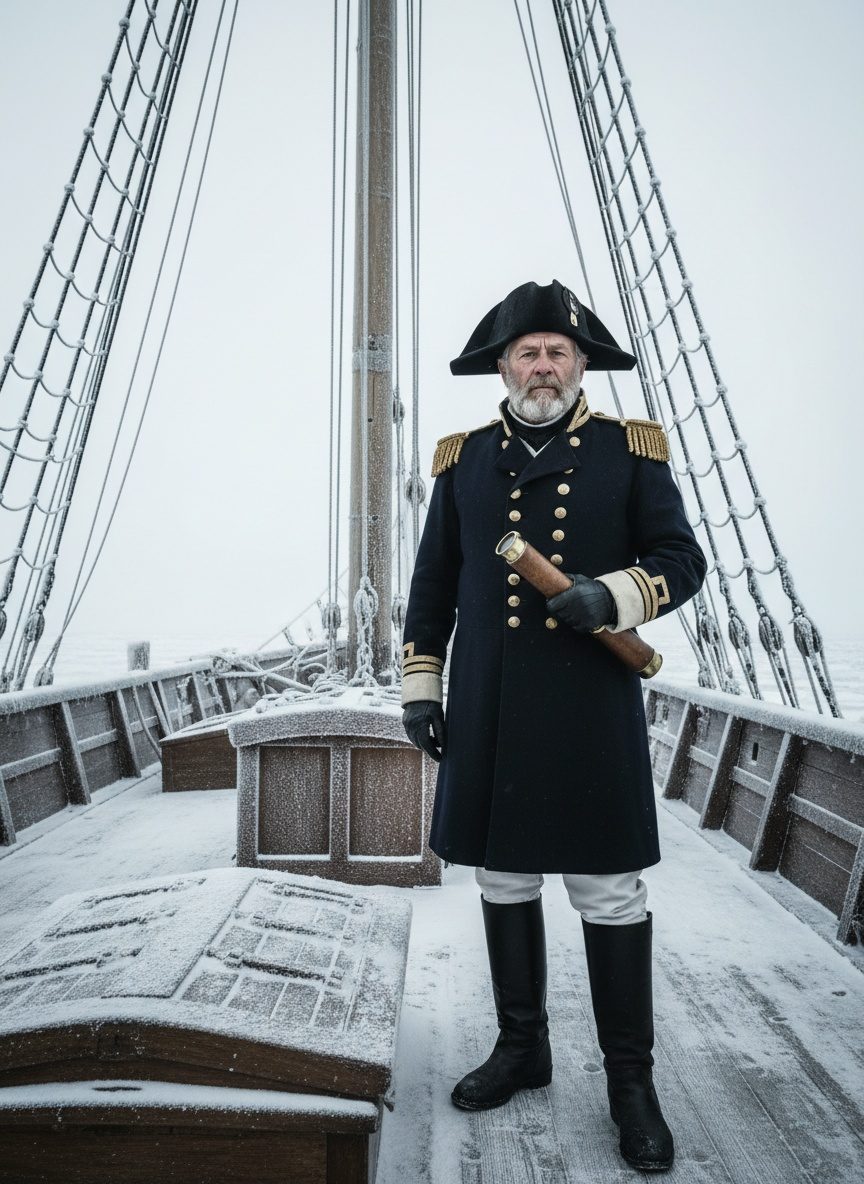
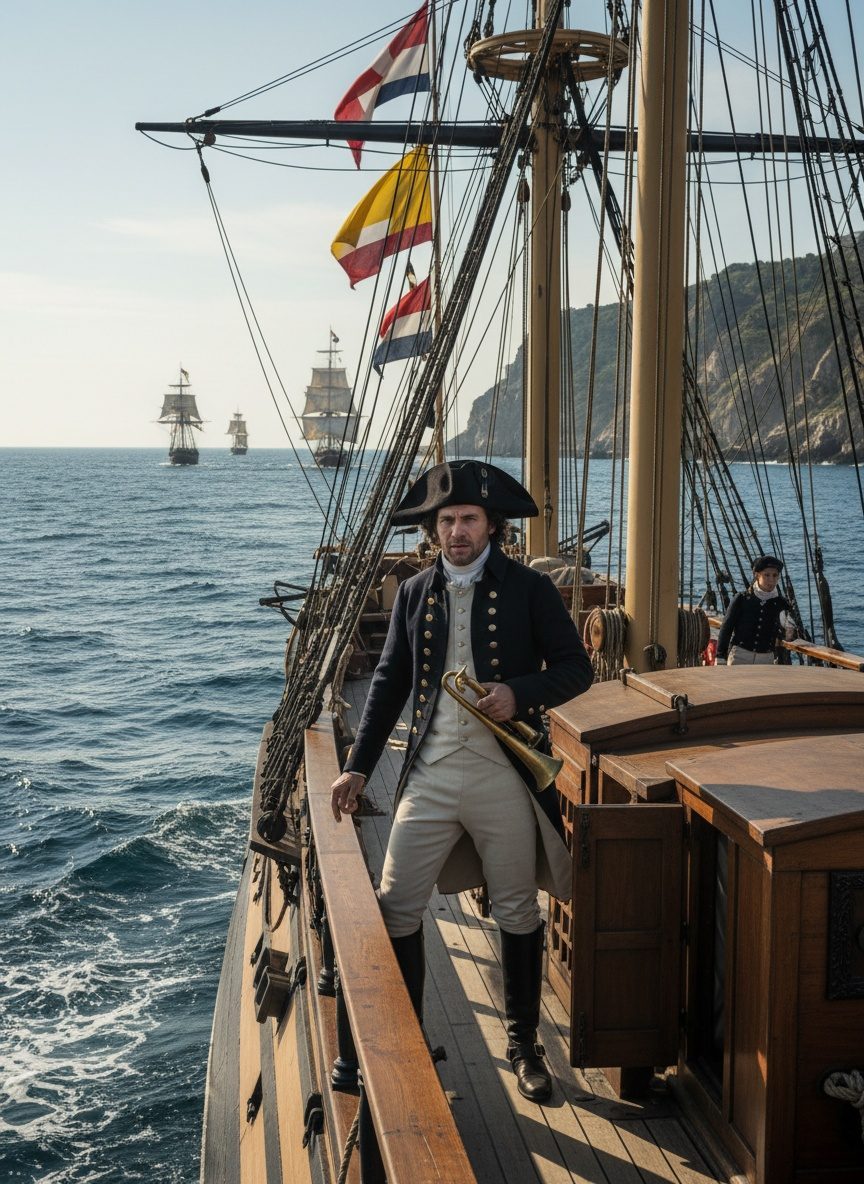
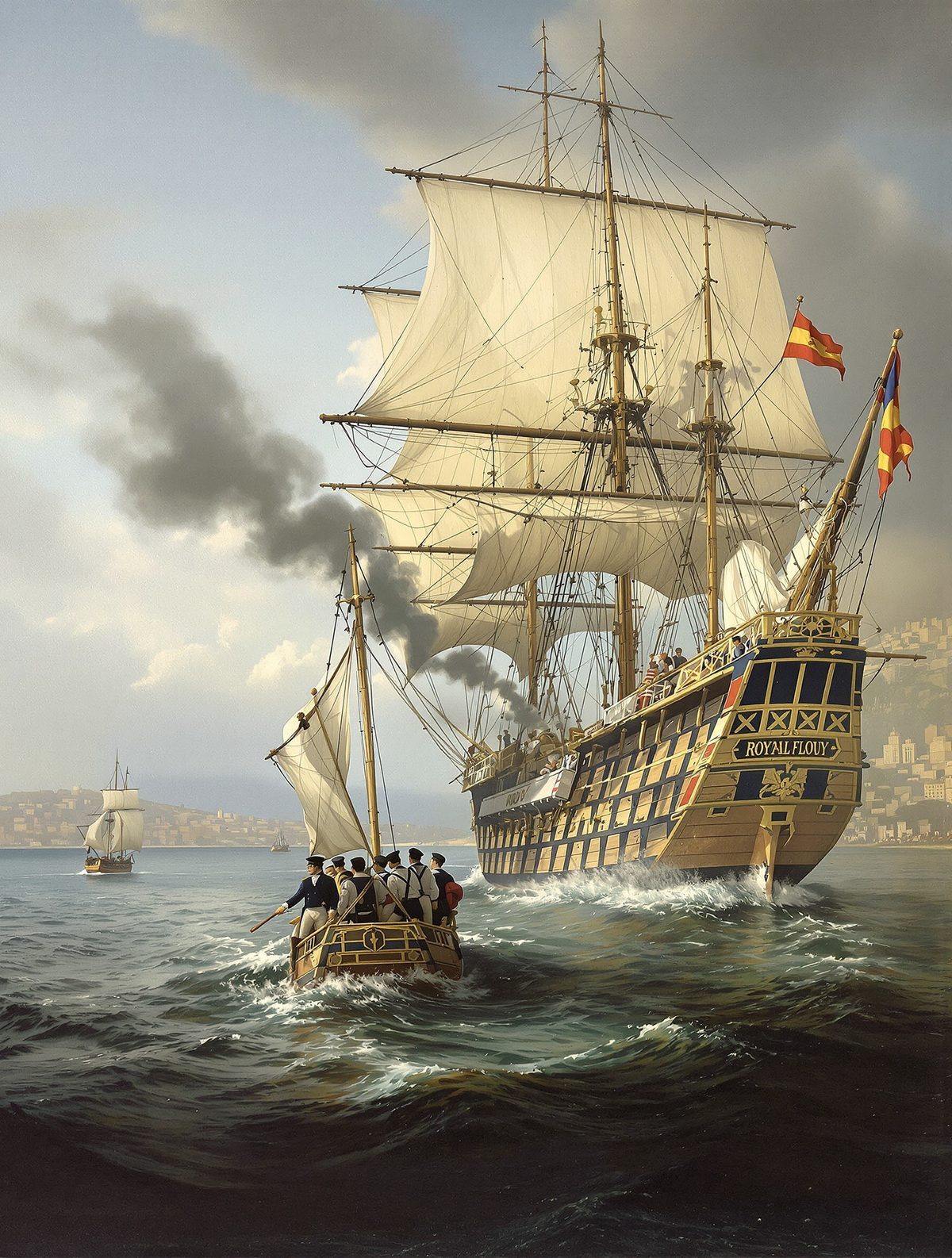
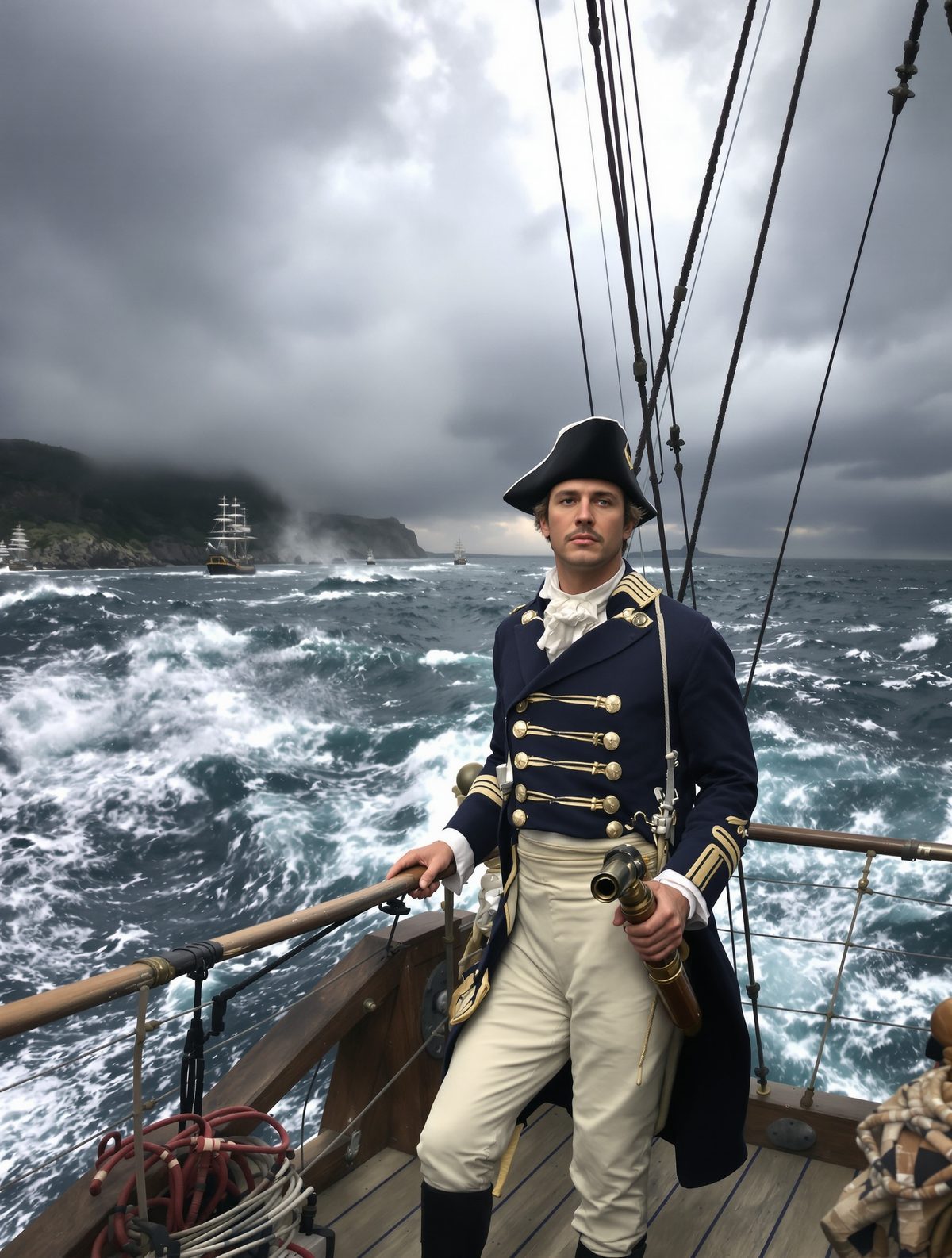
August 1801. HMS Speedy was gone. Captain Edward Pellew had one frigate left. A French squadron blocked his path. He sailed straight at them. They broke first.
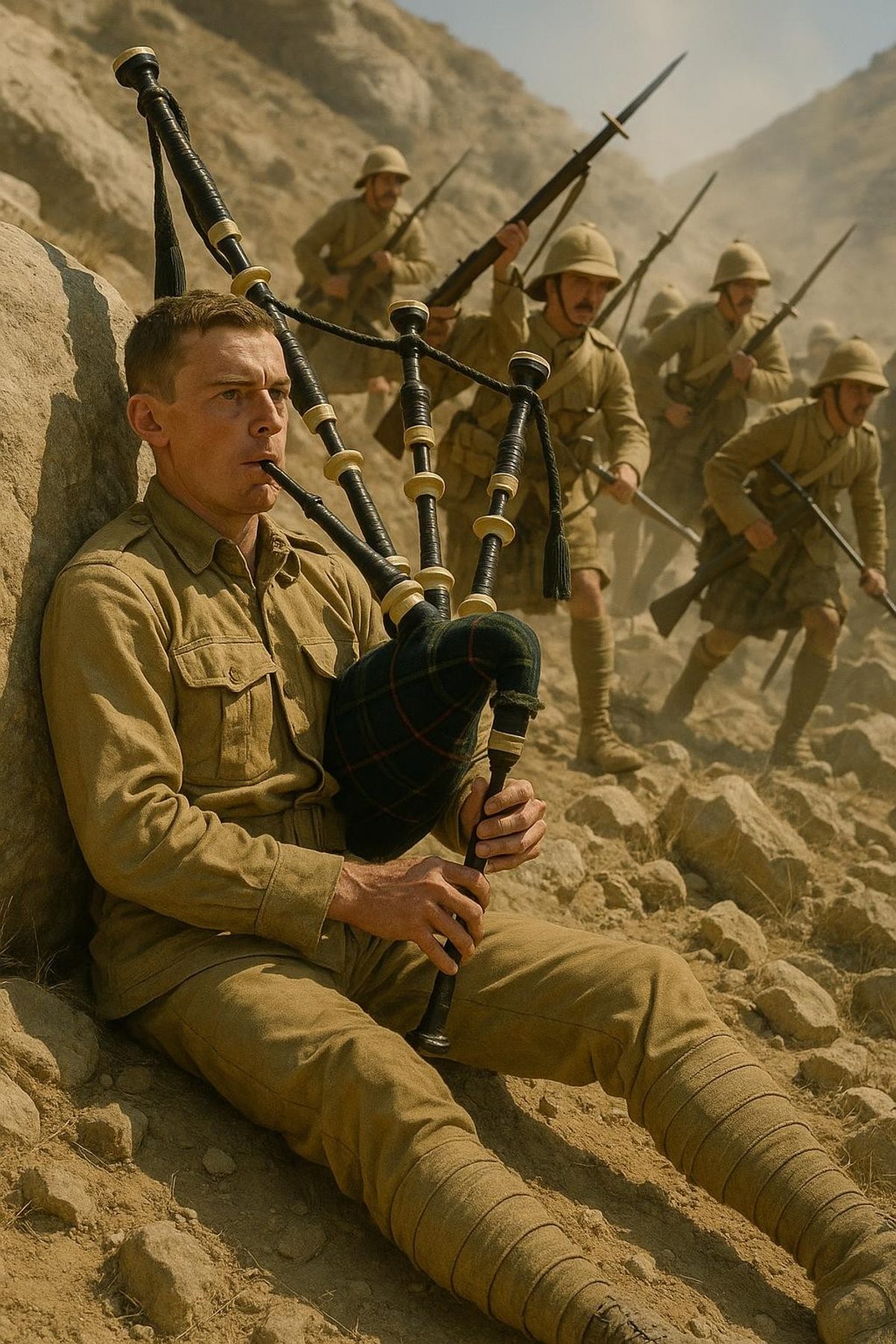
Dargai Heights, 1897. The Gordon Highlanders were pinned down. Piper George Findlater took two bullets through his ankles. He sat up in the open. And played the regimental march. The men rose and charged.
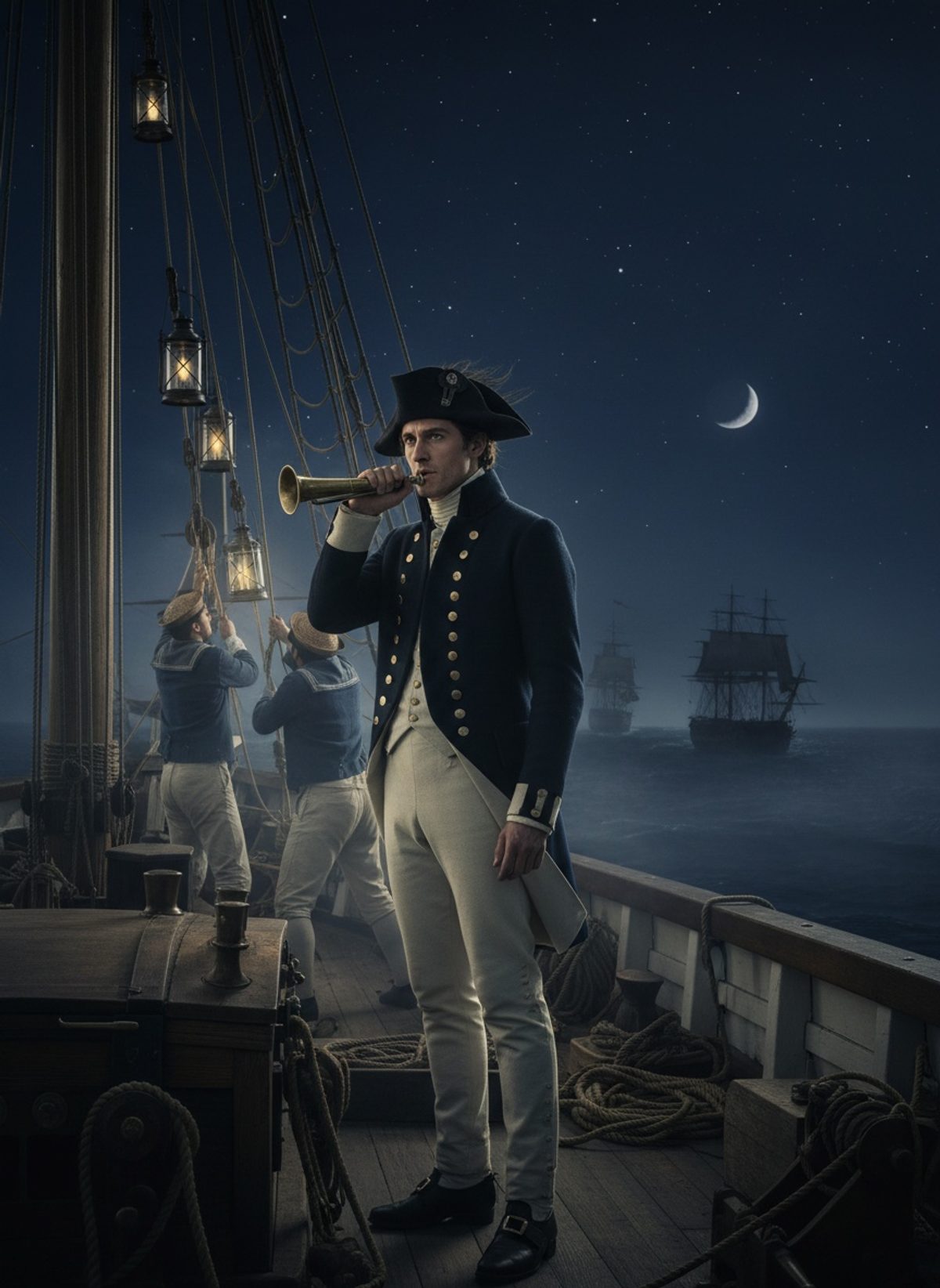
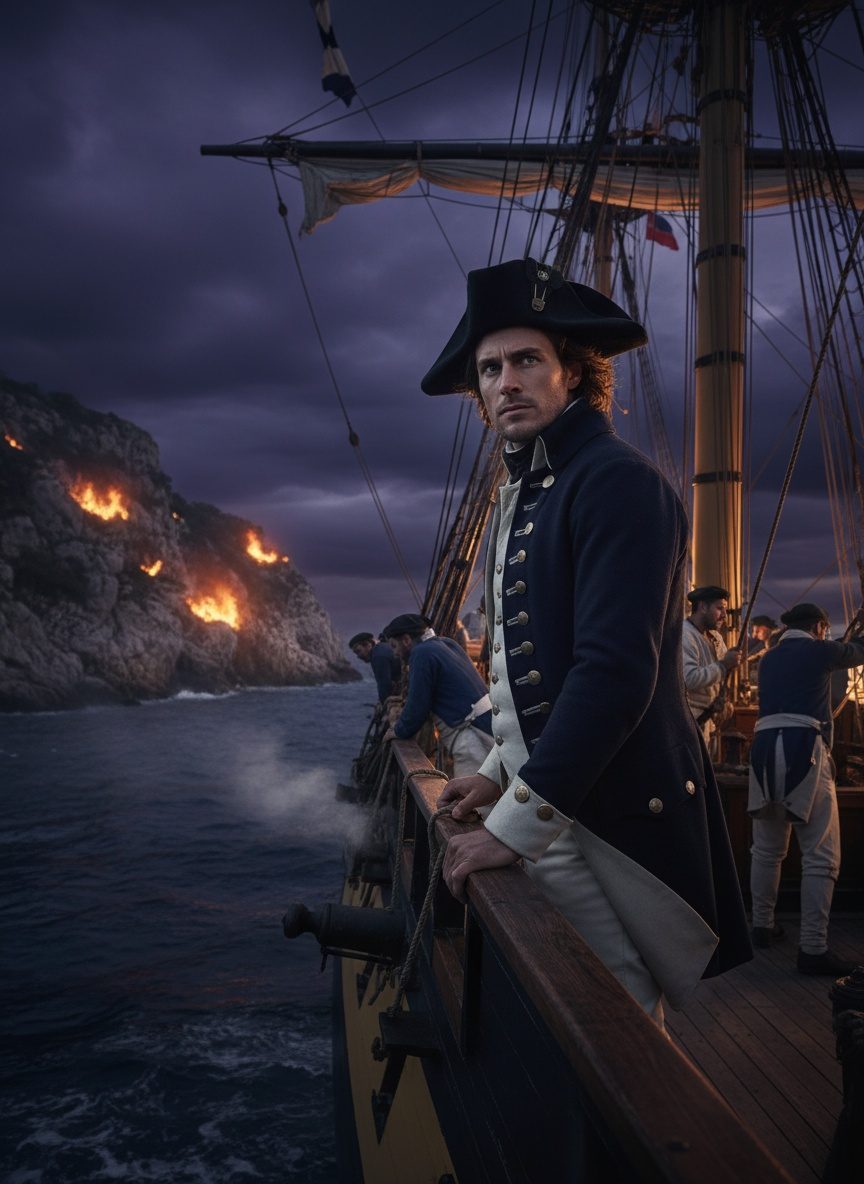
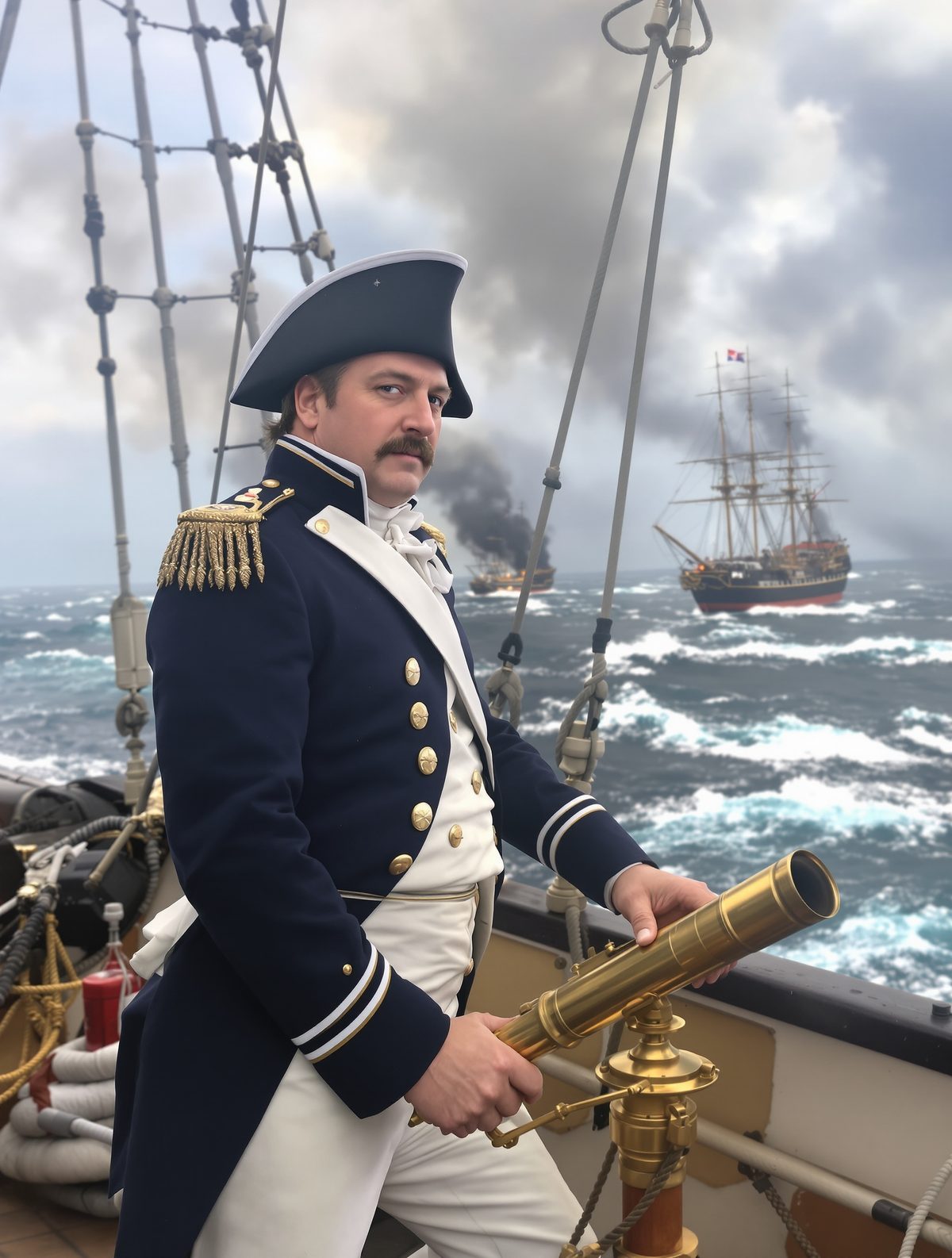
August 1801. HMS Speedy was gone. Lord Cochrane had one small sloop. He lit false signals across the darkness. The French admiral turned his fleet around. One man. Twenty guns. An entire squadron fooled.
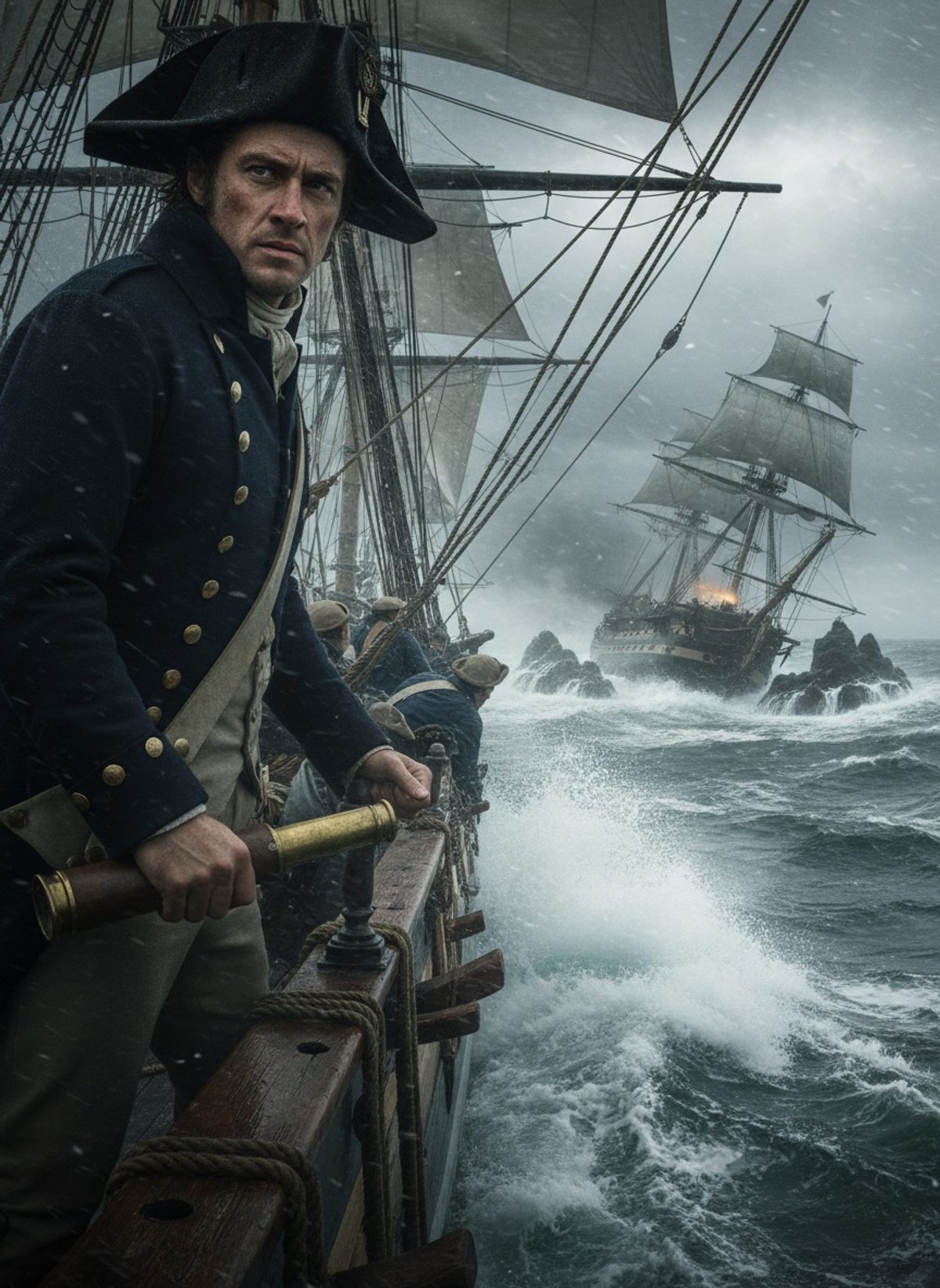
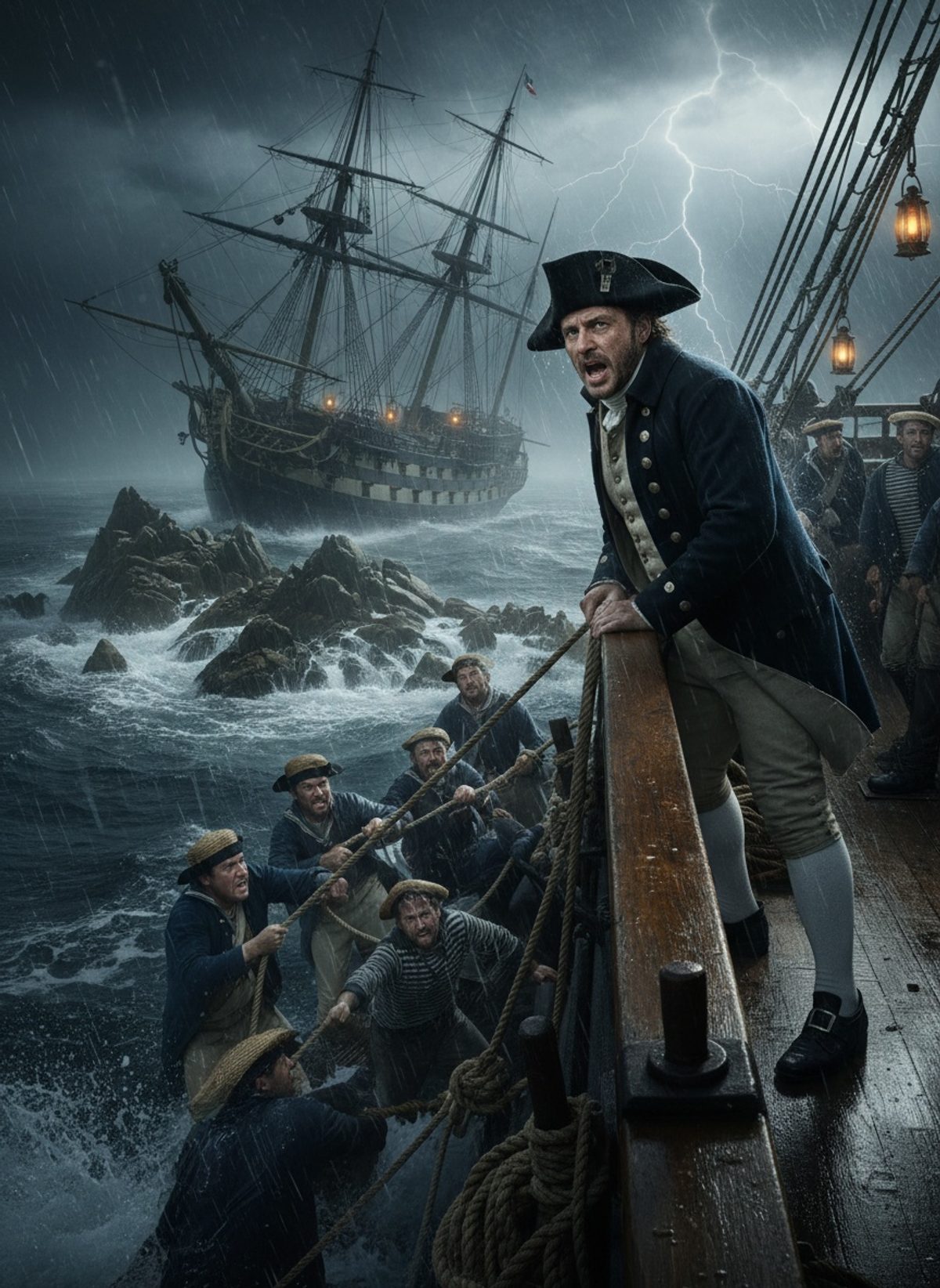
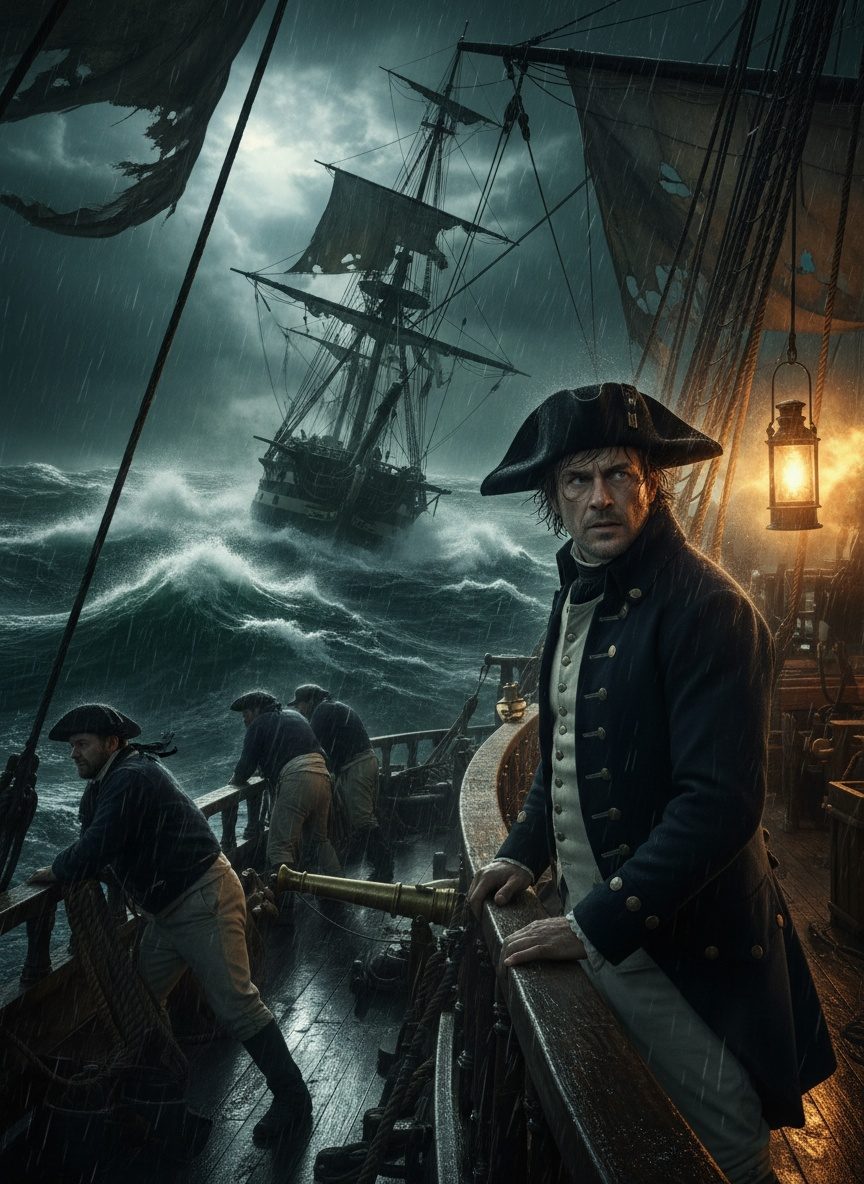
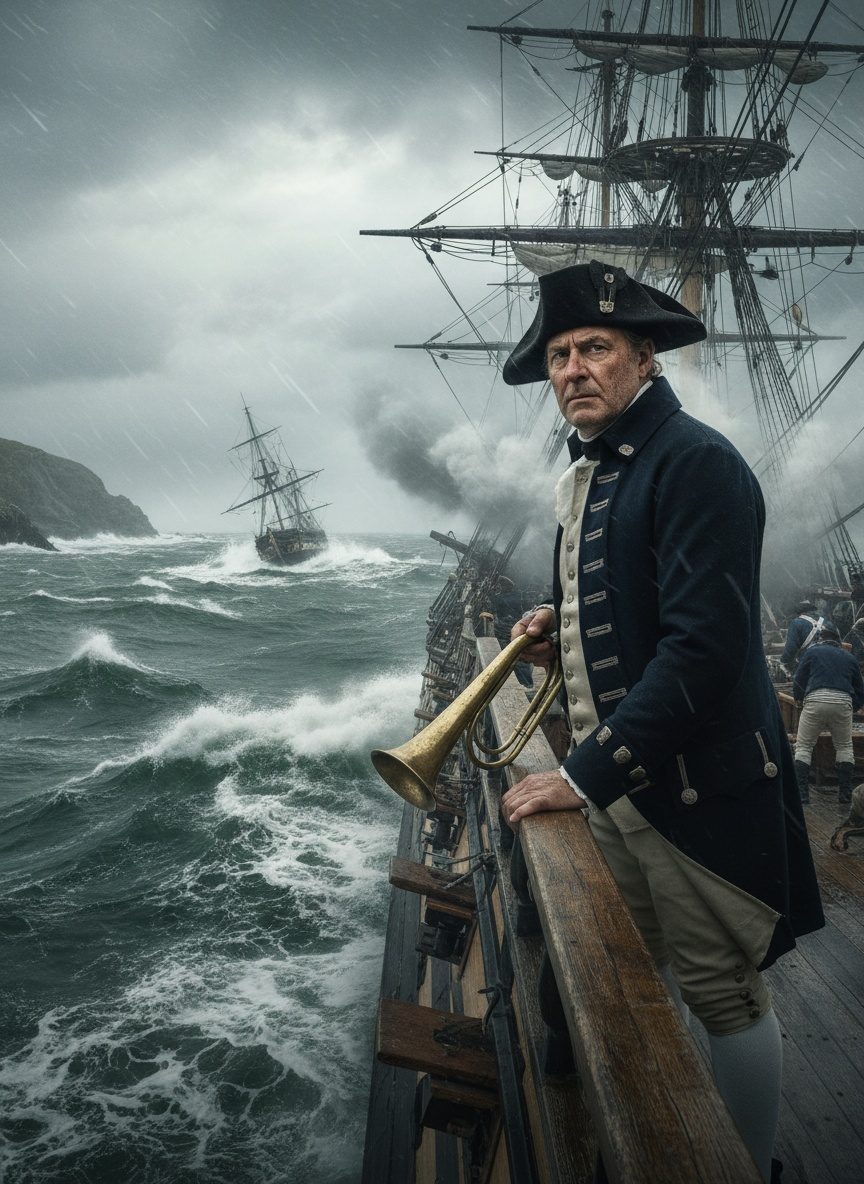
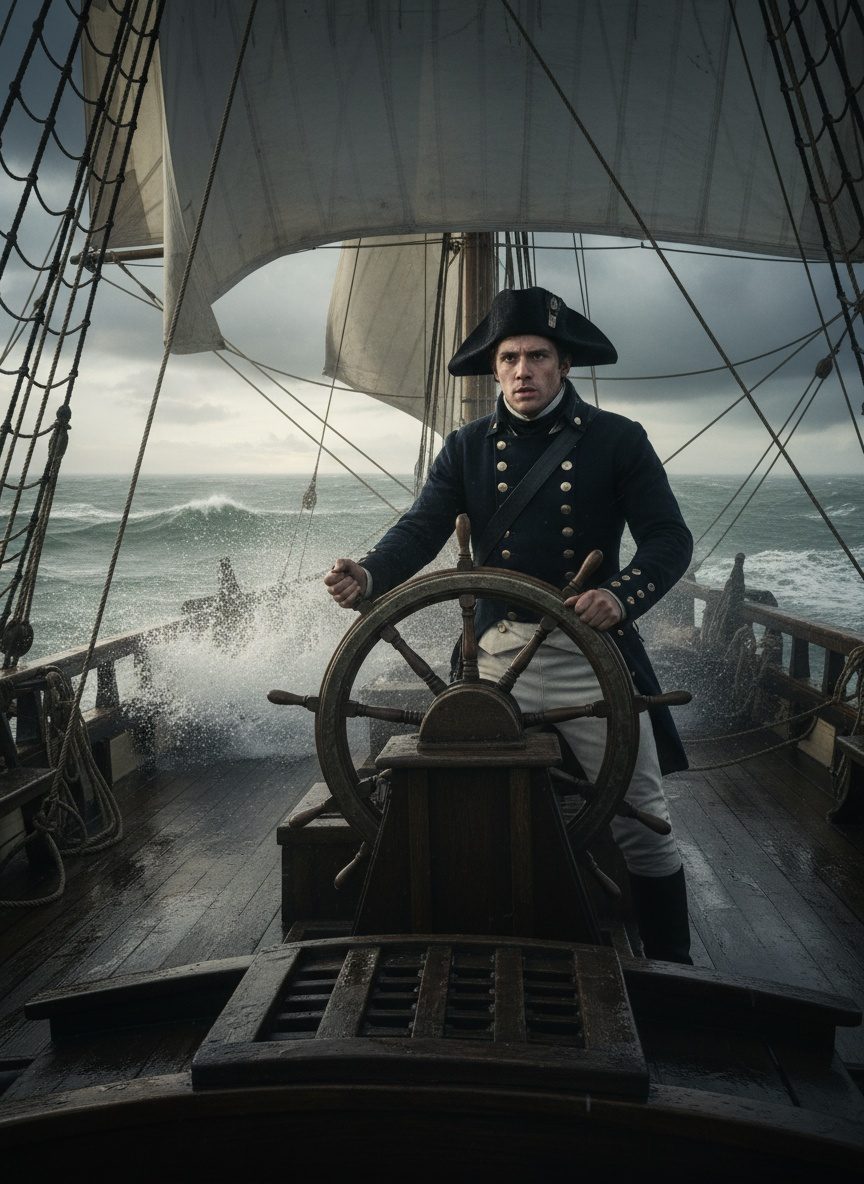
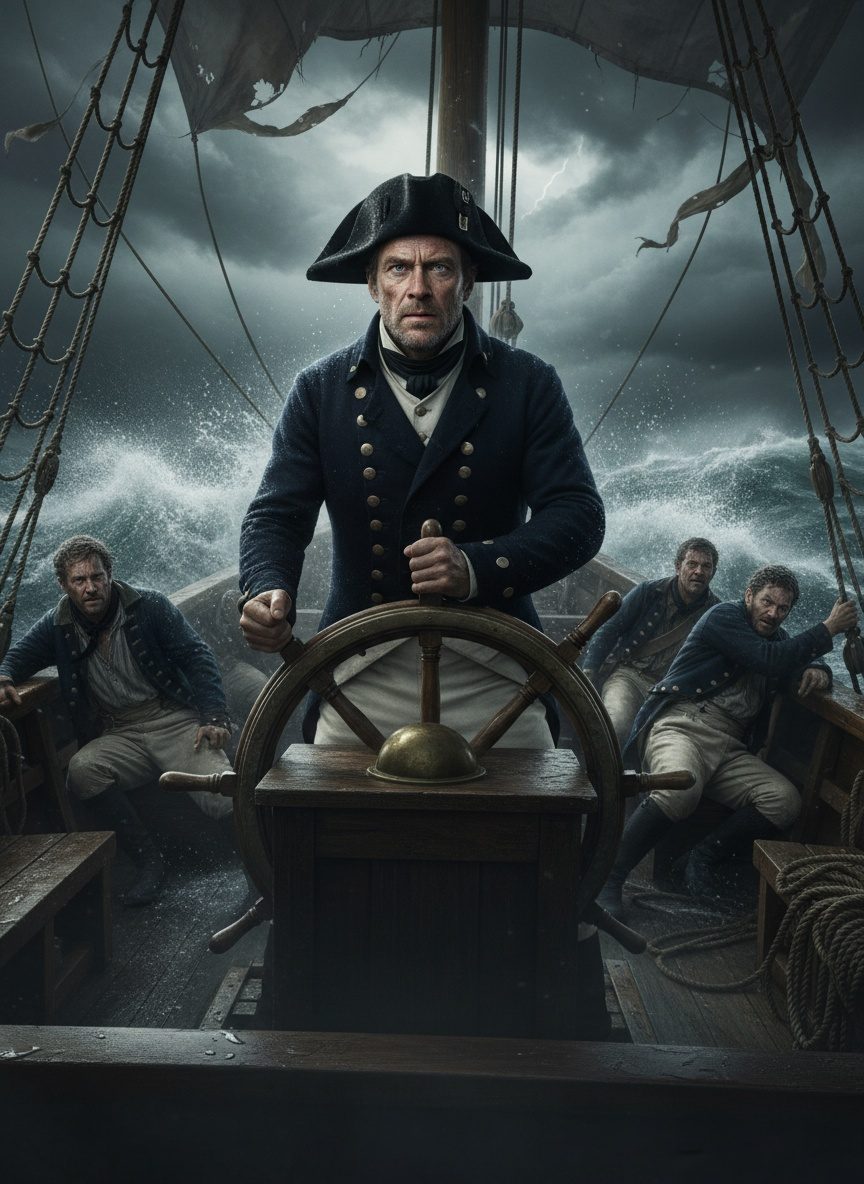
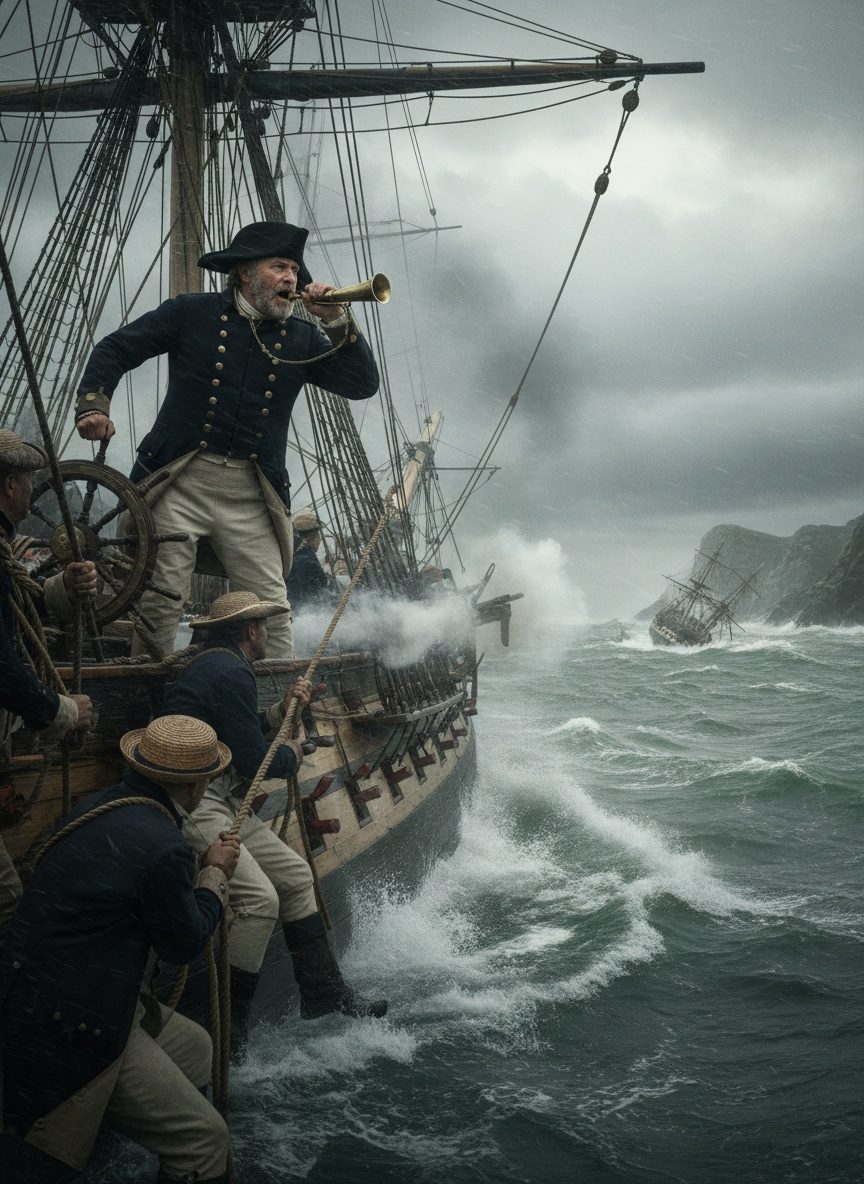
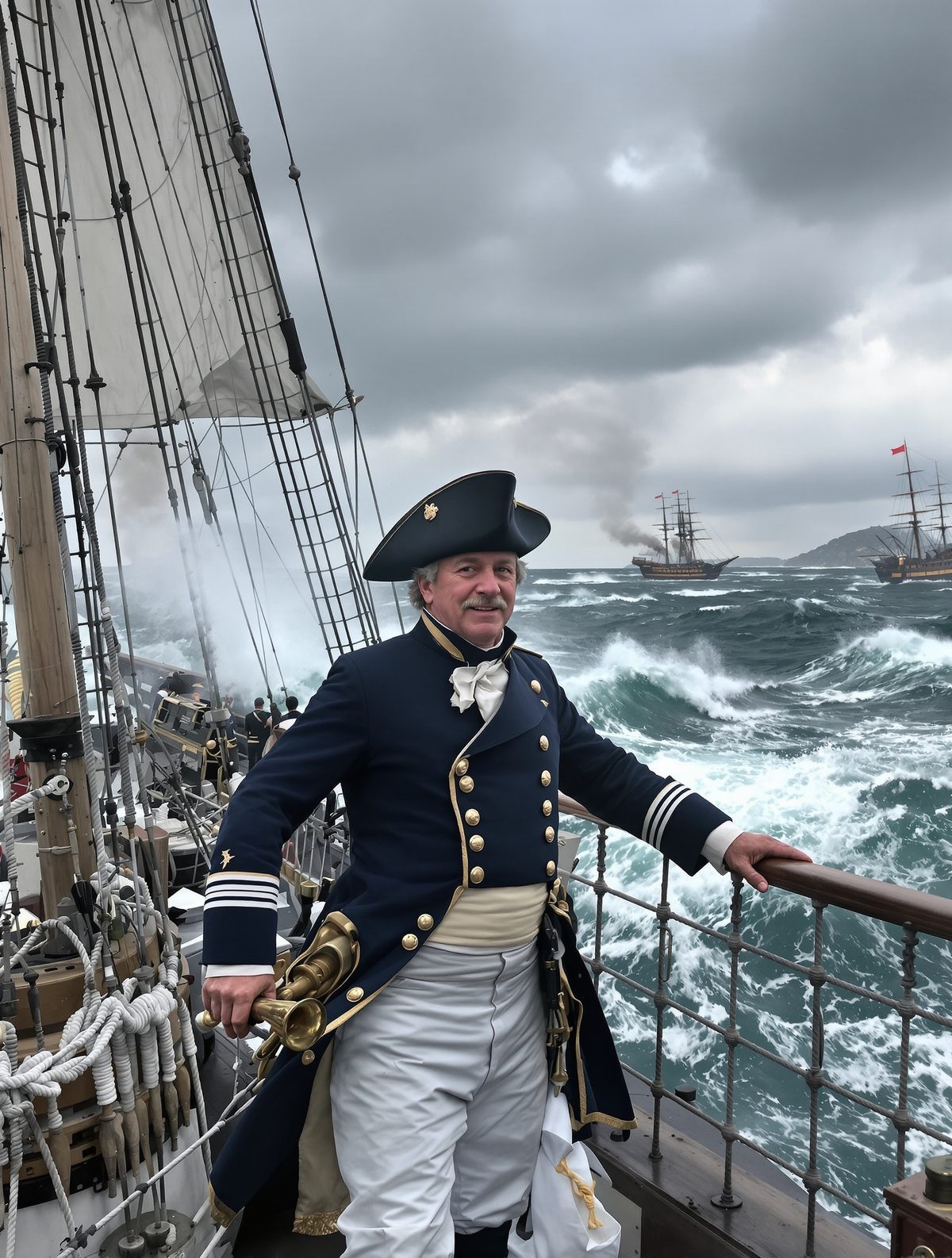
January 1797. A French warship of 74 guns fled for Brittany. Captain Edward Pellew gave chase through a winter storm. No charts. No lights. Breakers ahead. He followed her in anyway.
One ship. One night. One battle that stranded Napoleon's army in Egypt forever. HMS Agamemnon was there when Nelson shattered the French fleet at the Nile — and nothing was ever the same.
Britain's Navy dominated the seas. Then the Admiralty started scrapping perfectly good warships — and losing millions in the process. The numbers were staggering. And almost no one was held accountable.
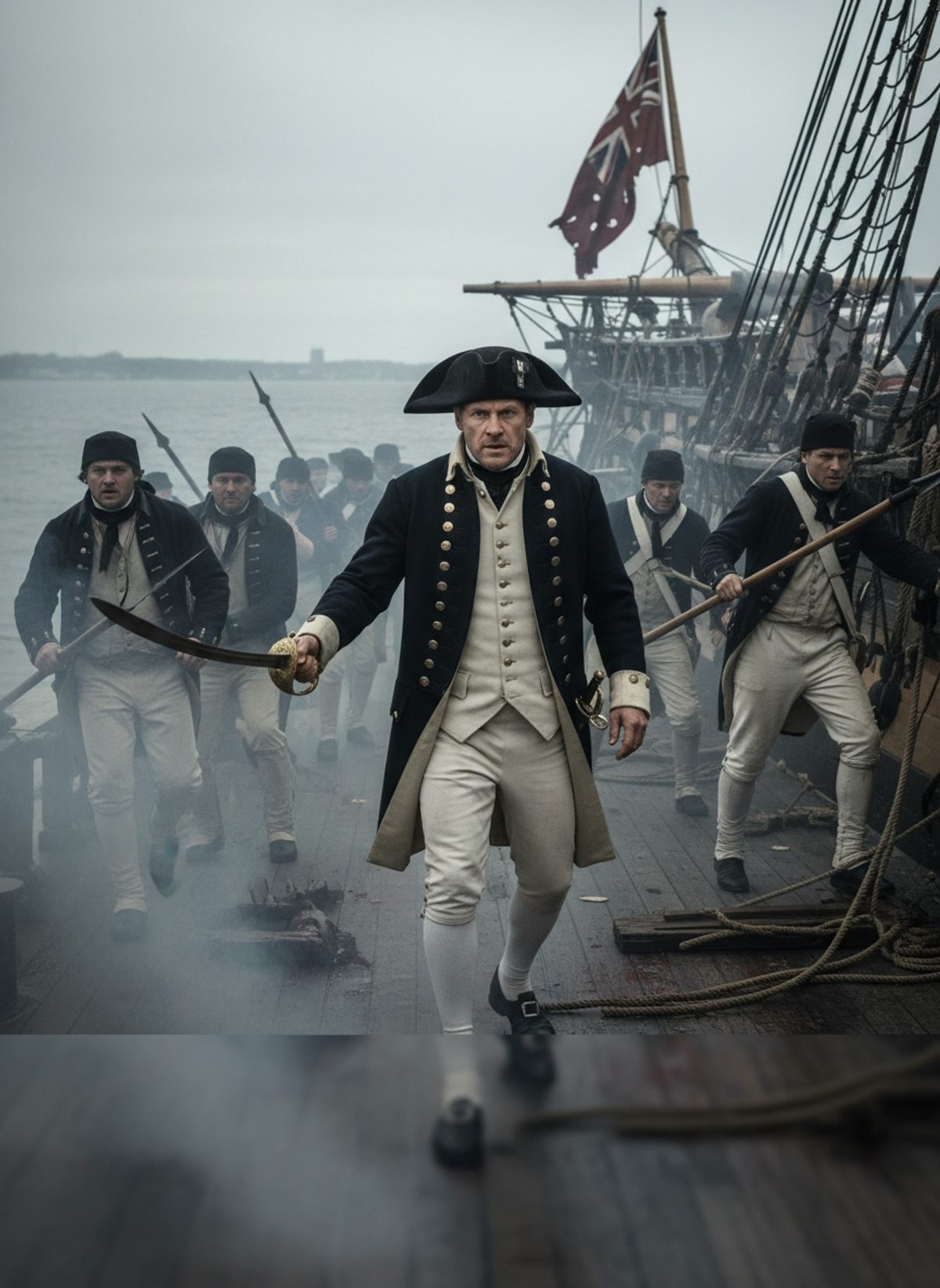
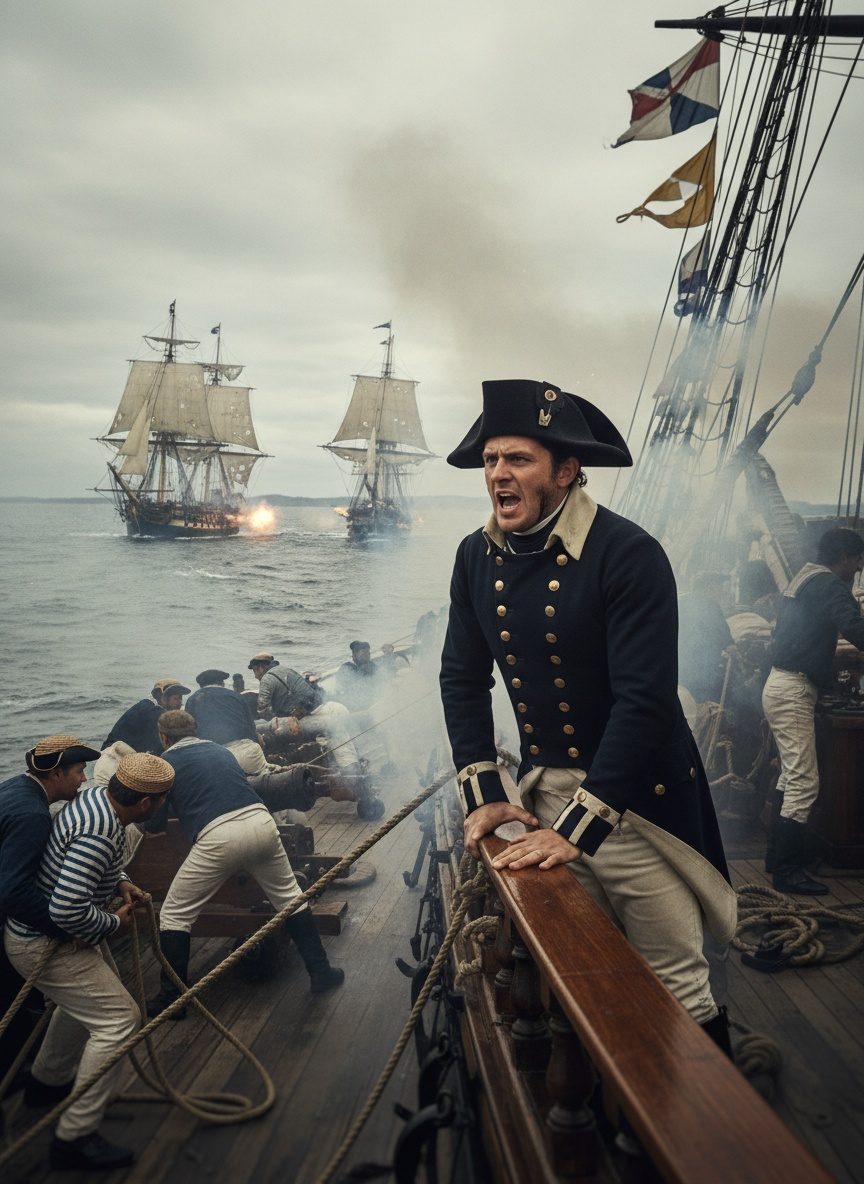
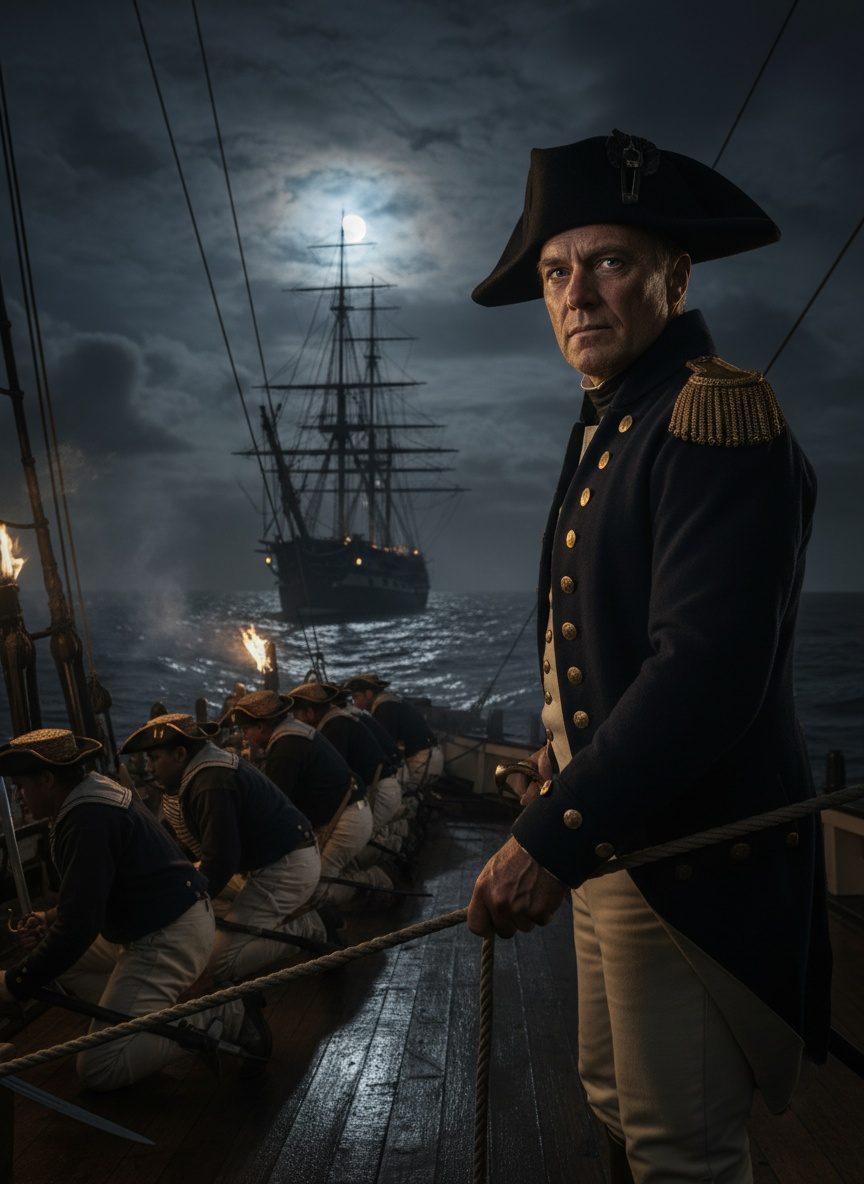
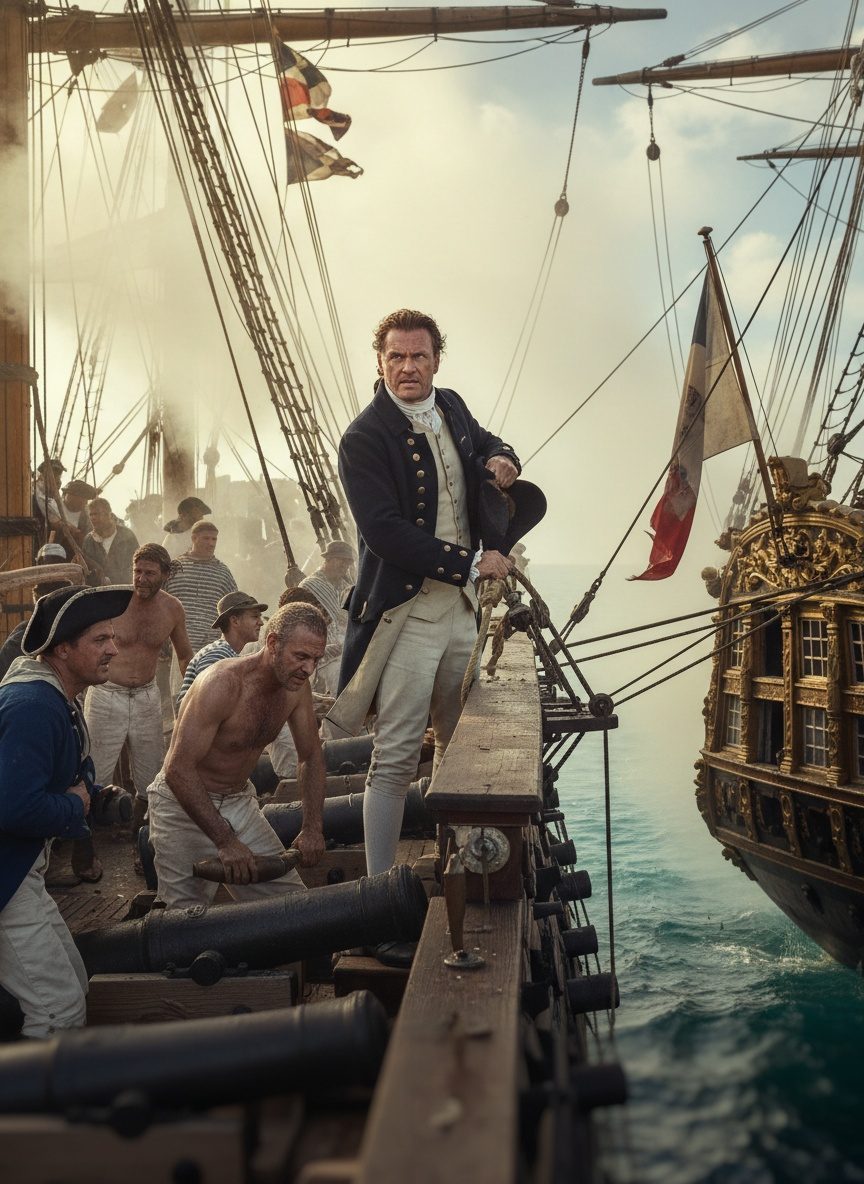
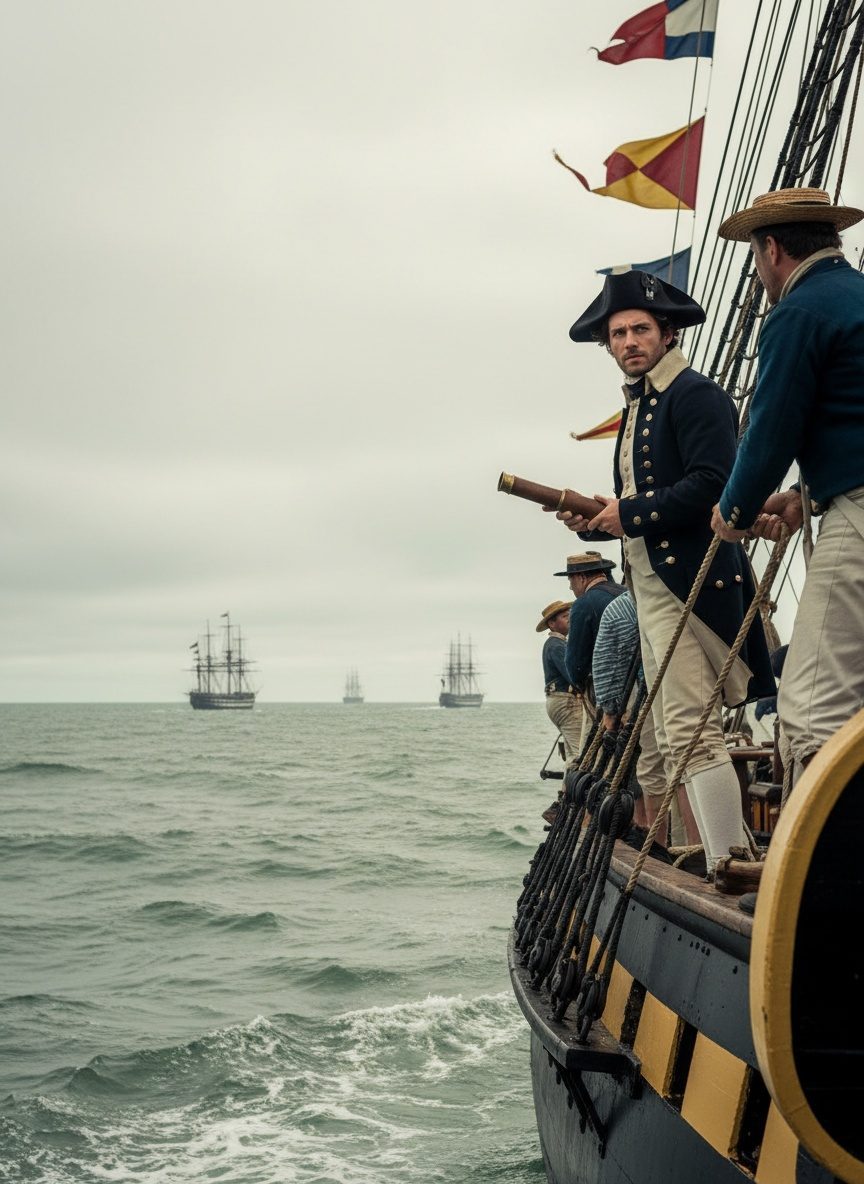
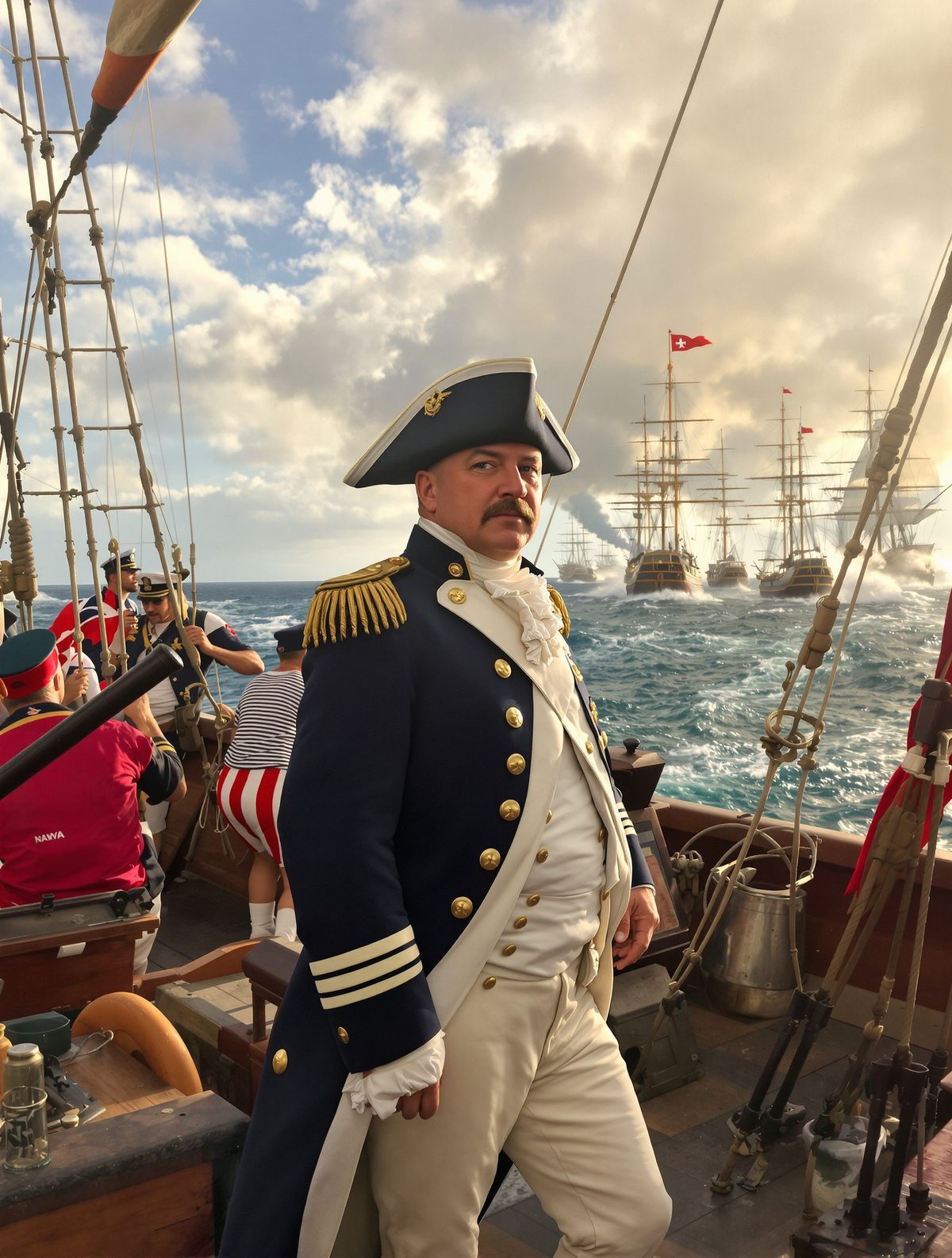
June 1813. HMS Shannon lay off Boston Harbour. Captain Philip Broke sent a personal challenge to the American frigate Chesapeake. The Chesapeake came out. Thirteen minutes later, she was taken. Broke led the boarding party himself. Steel met steel on the deck. Britain ruled the waves.
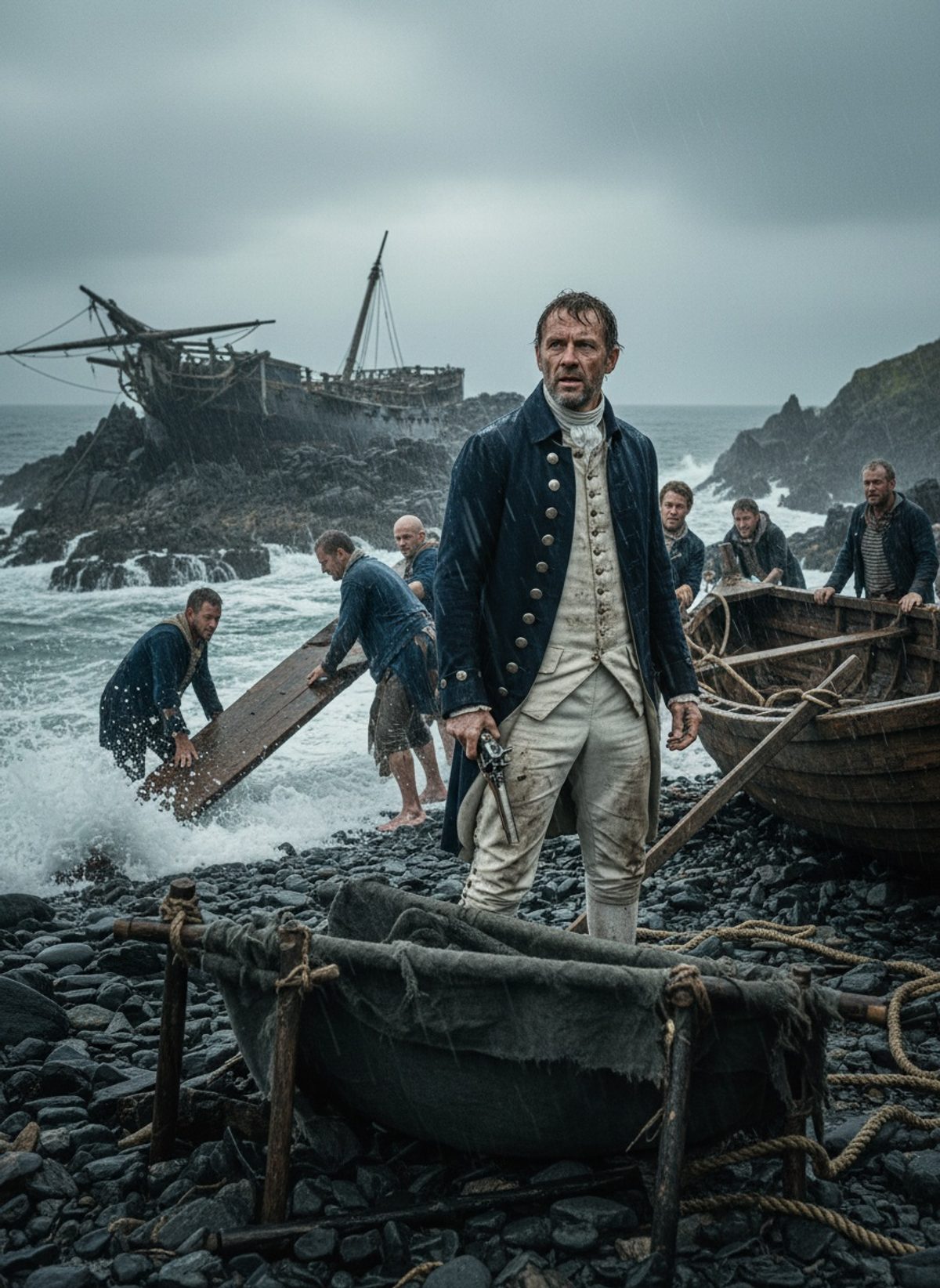
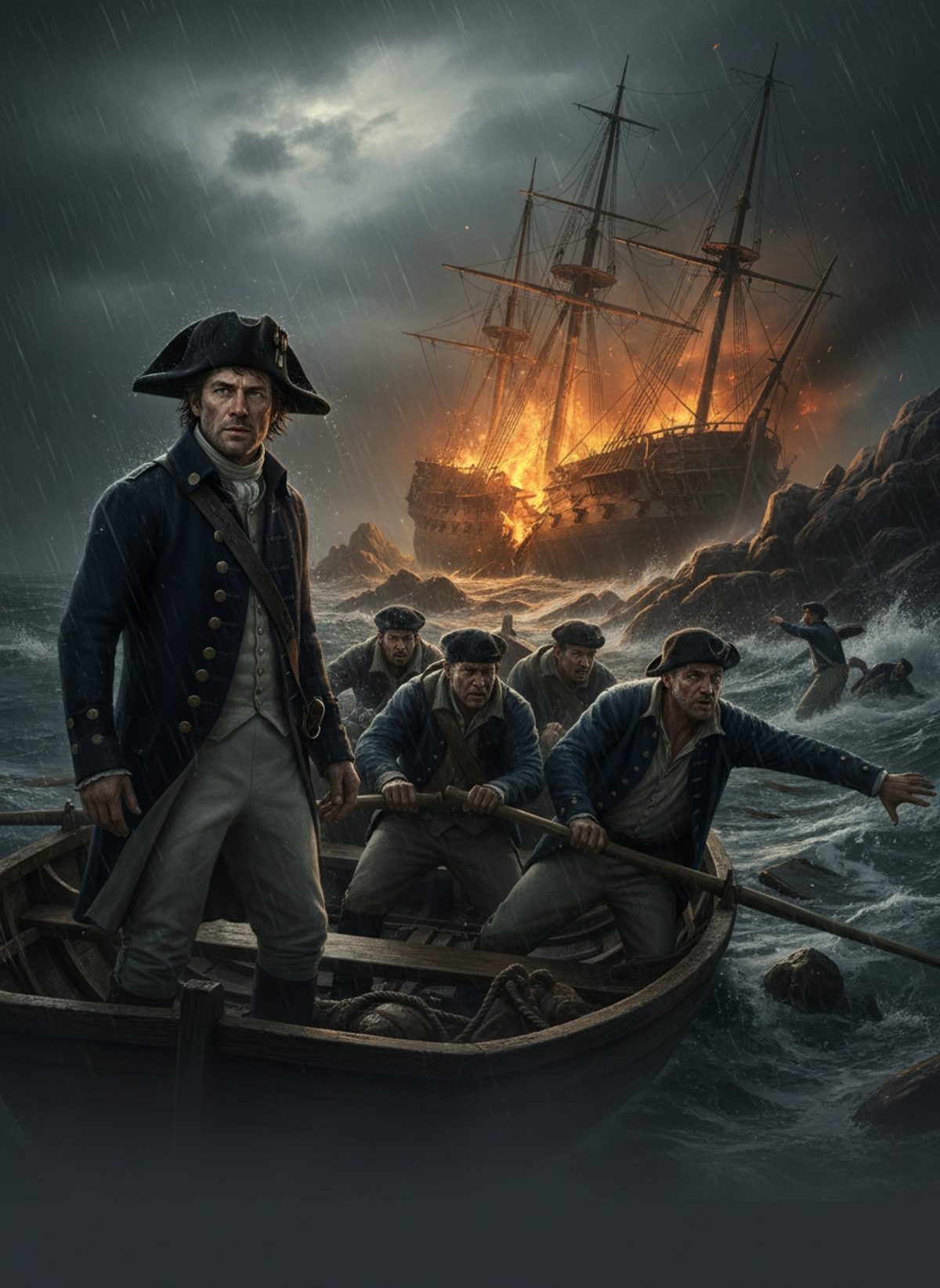
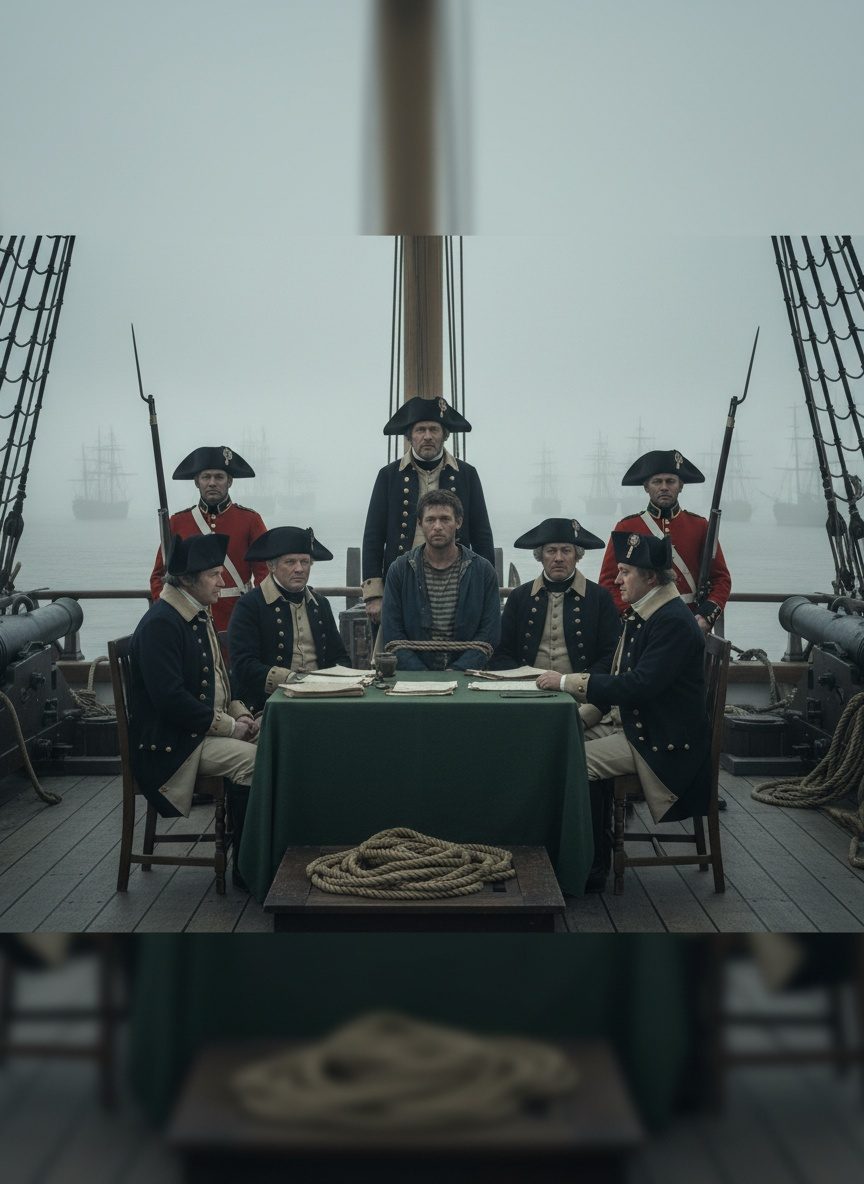
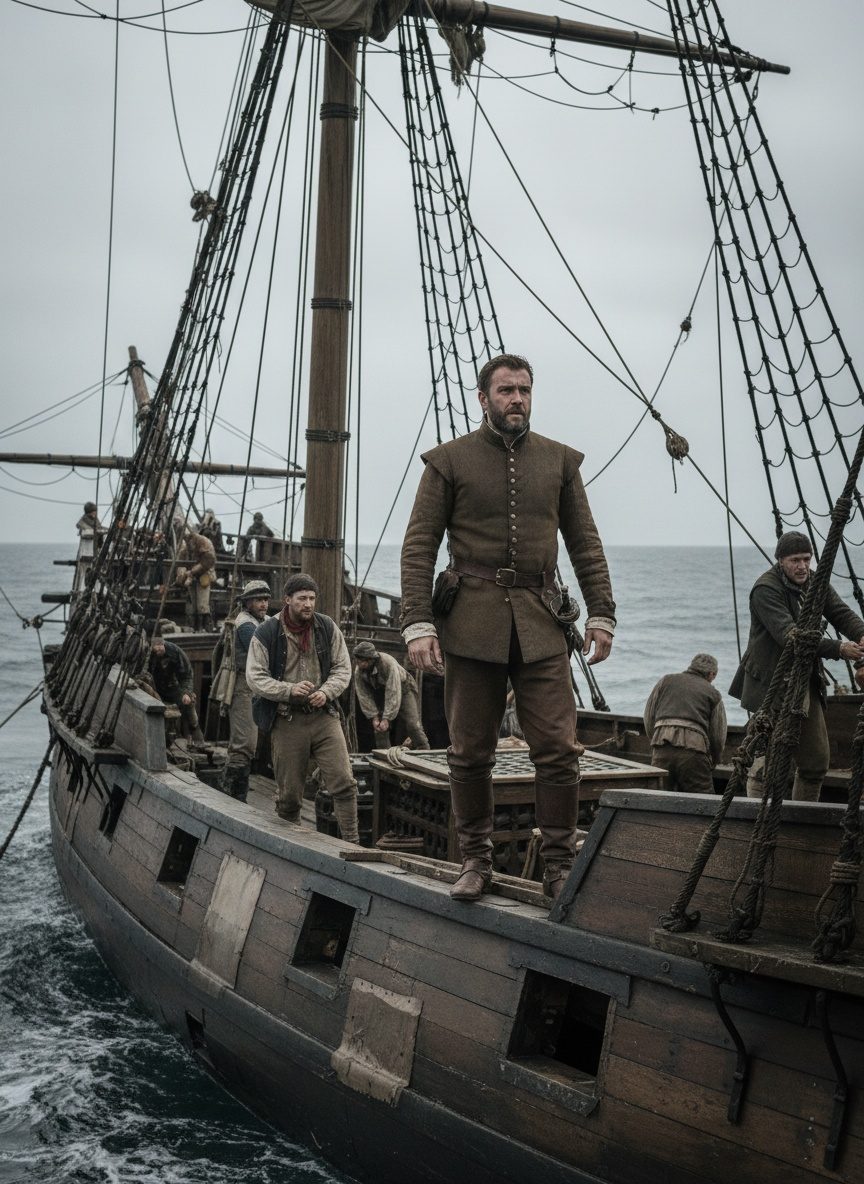
Their warship broke apart on a Patagonian rock. 140 men made it ashore. What happened next would end in mutiny, murder, and a court martial that shook the Royal Navy to its core.
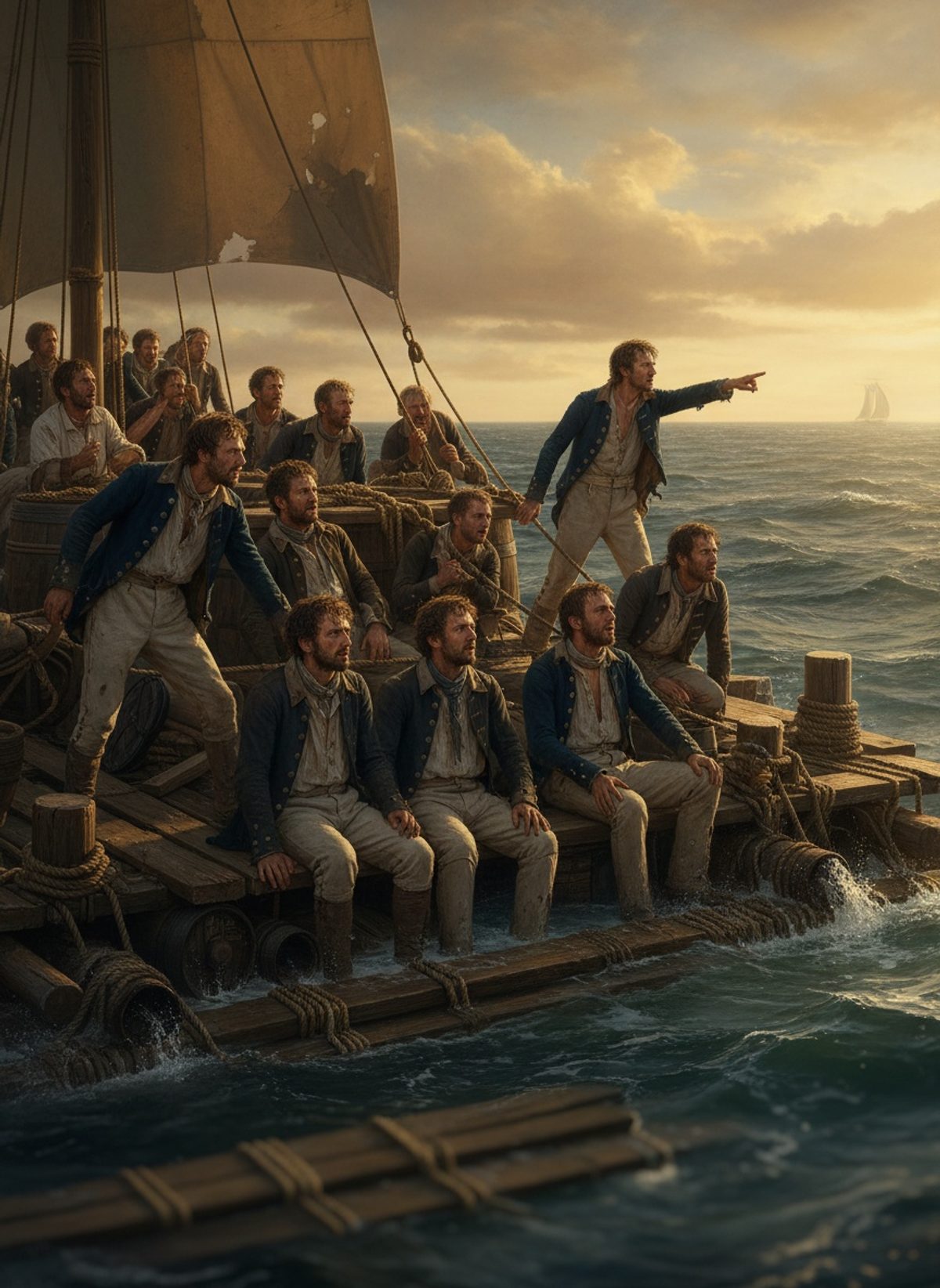
July 1816. The French frigate Medusa ran aground off West Africa. The captain abandoned 147 men on a raft. They had food for days. They survived for thirteen. Britain watched — and the world never forgot.
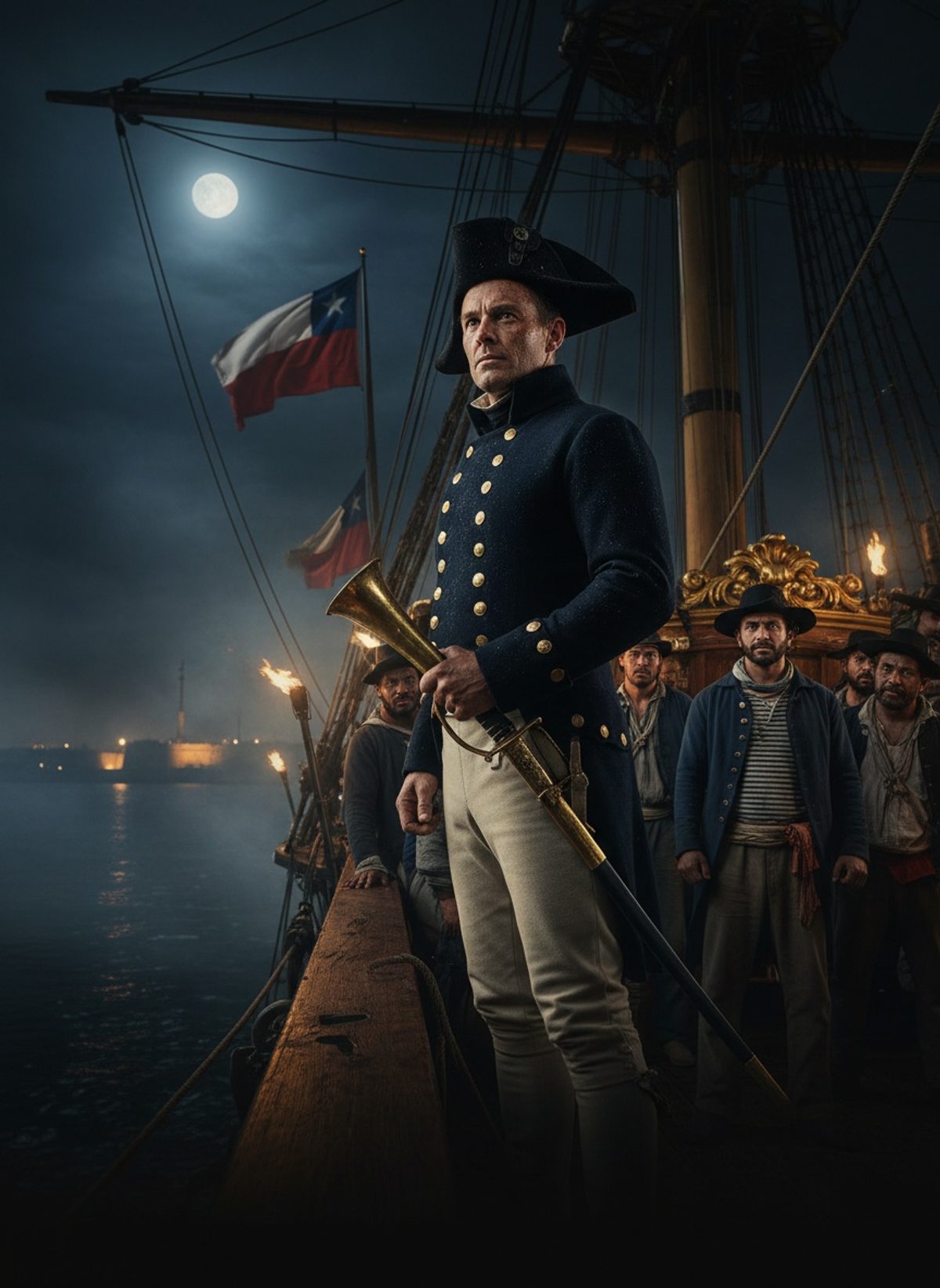
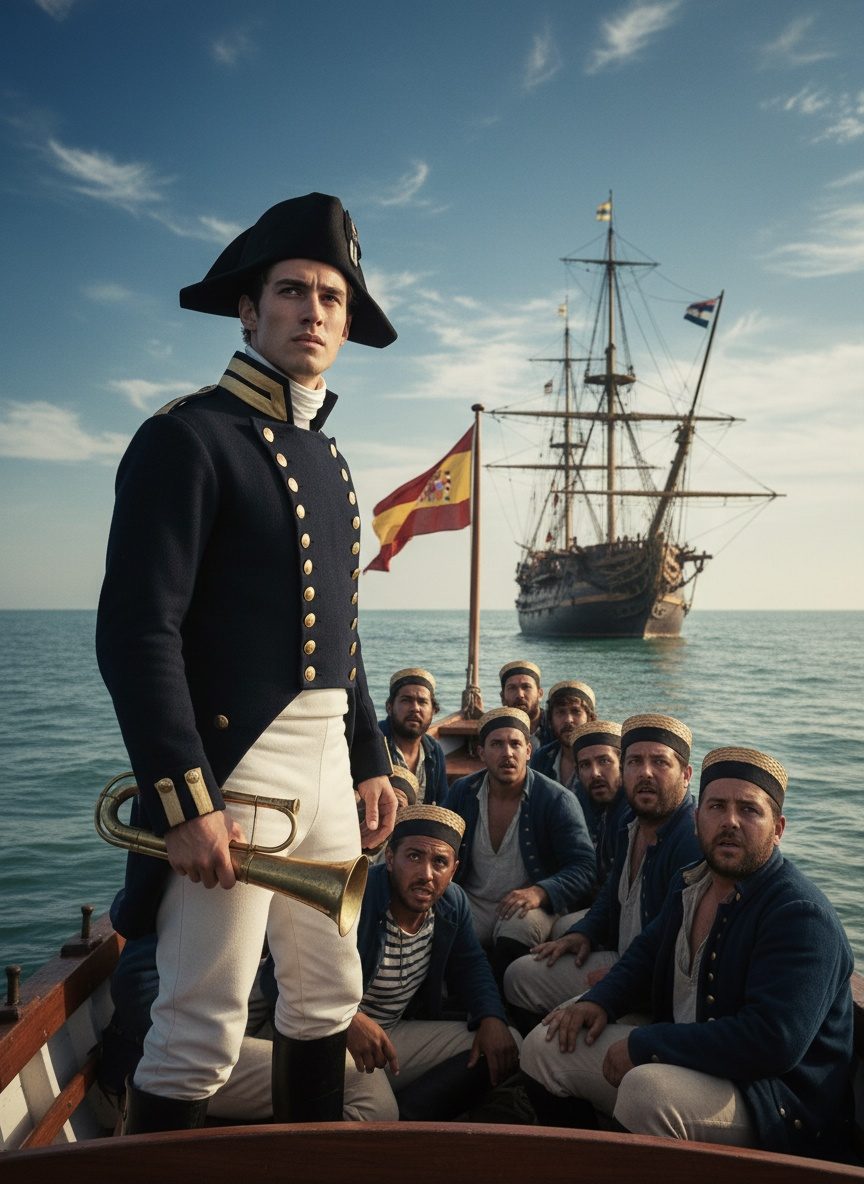
1820. Chile was fighting for its life. Lord Cochrane had one frigate and a plan. He sailed into Callao harbour alone. Boarded the Spanish flagship. Took her without a shot. The Pacific changed hands that night.
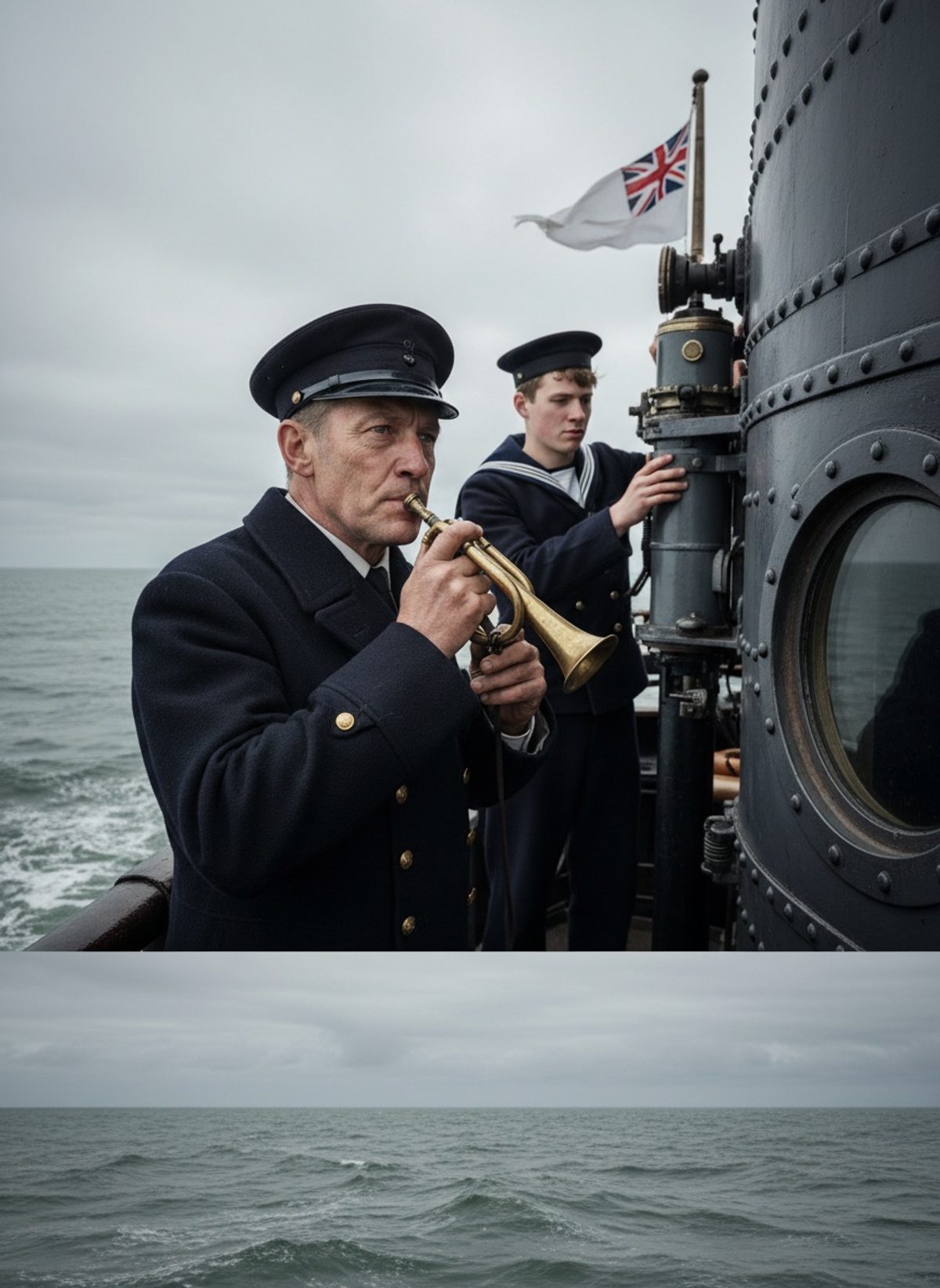
Britain's Royal Navy had a rule: one third of its submarines always operational. By late 1914, that rule was already broken. Too few boats. Too many missions. The North Sea would not wait.
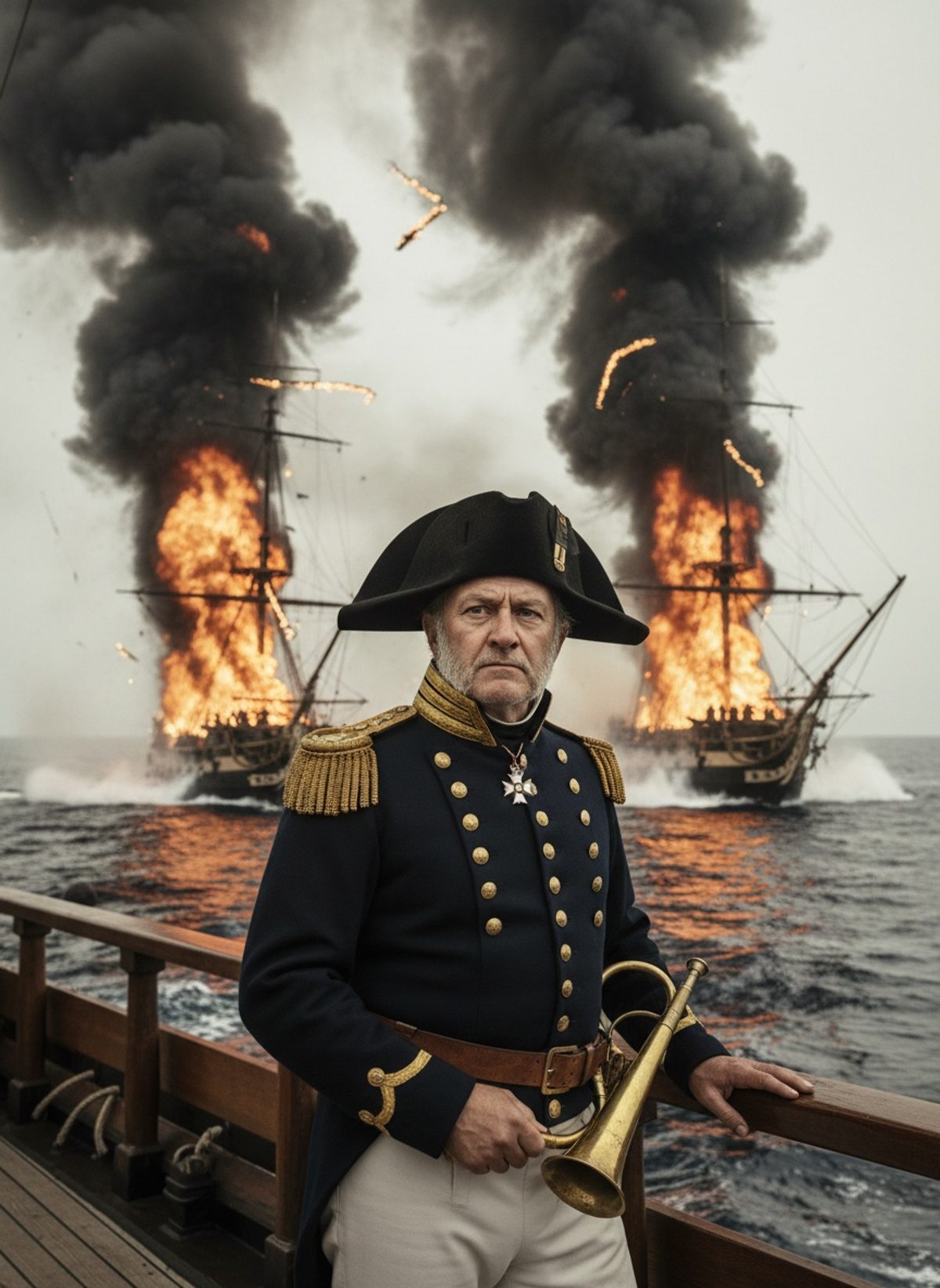
Britain was not at war. No orders said 'attack.' But Admiral Codrington sailed into the bay, and by nightfall the Ottoman fleet was ash. London called it an accident. History called it empire.
March 1915. The last German warship from the Battle of the Falklands was cornered in Chilean waters. HMS Glasgow opened fire. Within minutes, the Dresden was gone — and so was Germany's last Pacific raider.
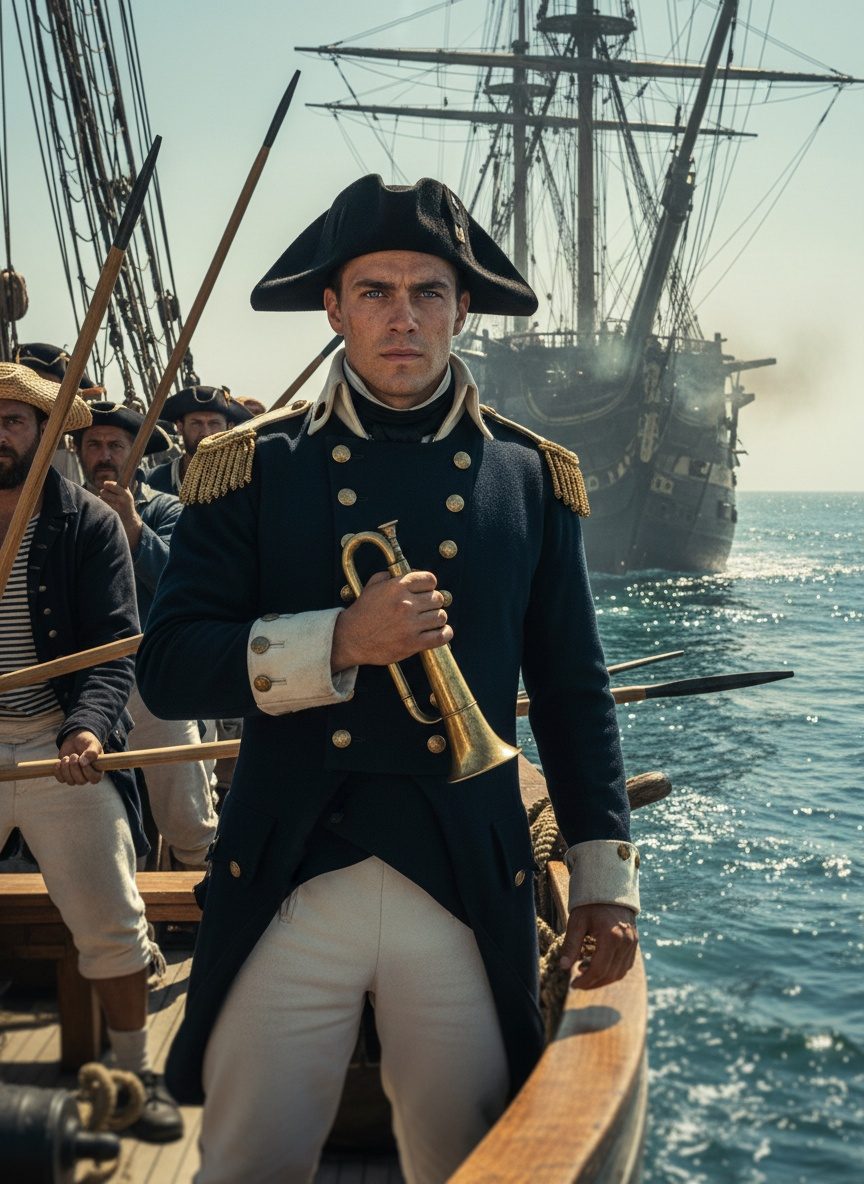
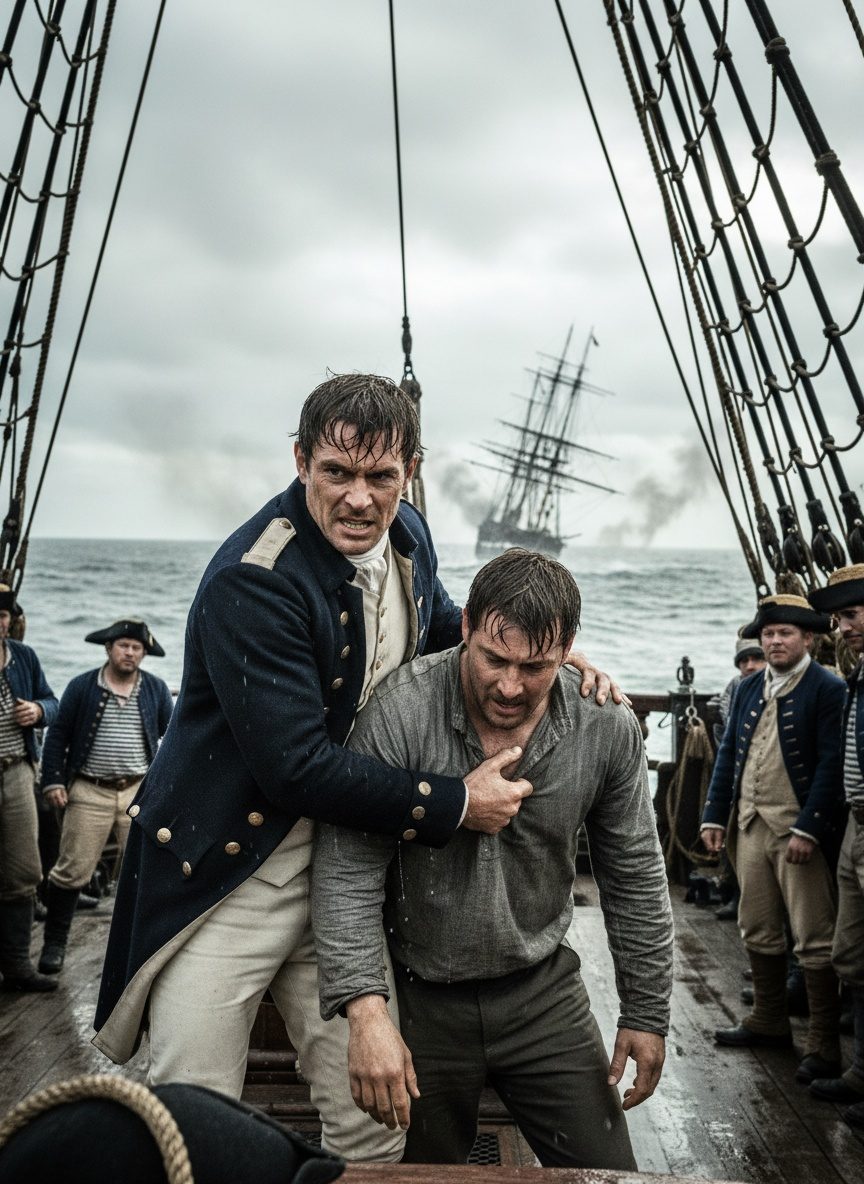
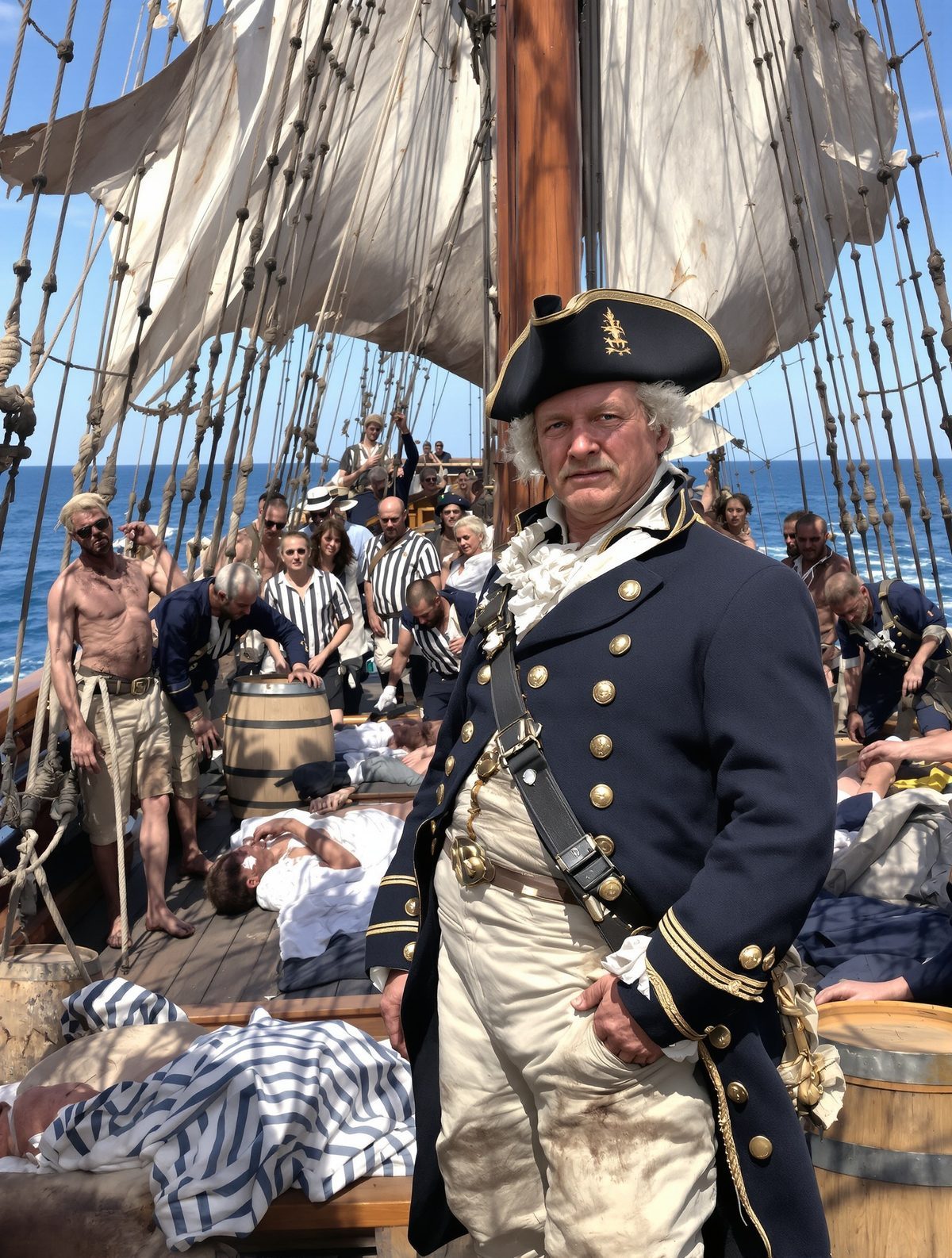
January 1796. HMS Indefatigable found a French ship of the line. Pellew drove her onto the rocks. Then he turned back. He pulled 547 French sailors from the water. His enemy. Saved.
Britain scrapped warships it had just refitted. Sold others for pennies. And called it progress. The Navy that ruled every ocean quietly gutted itself — and the bill was paid in blood.
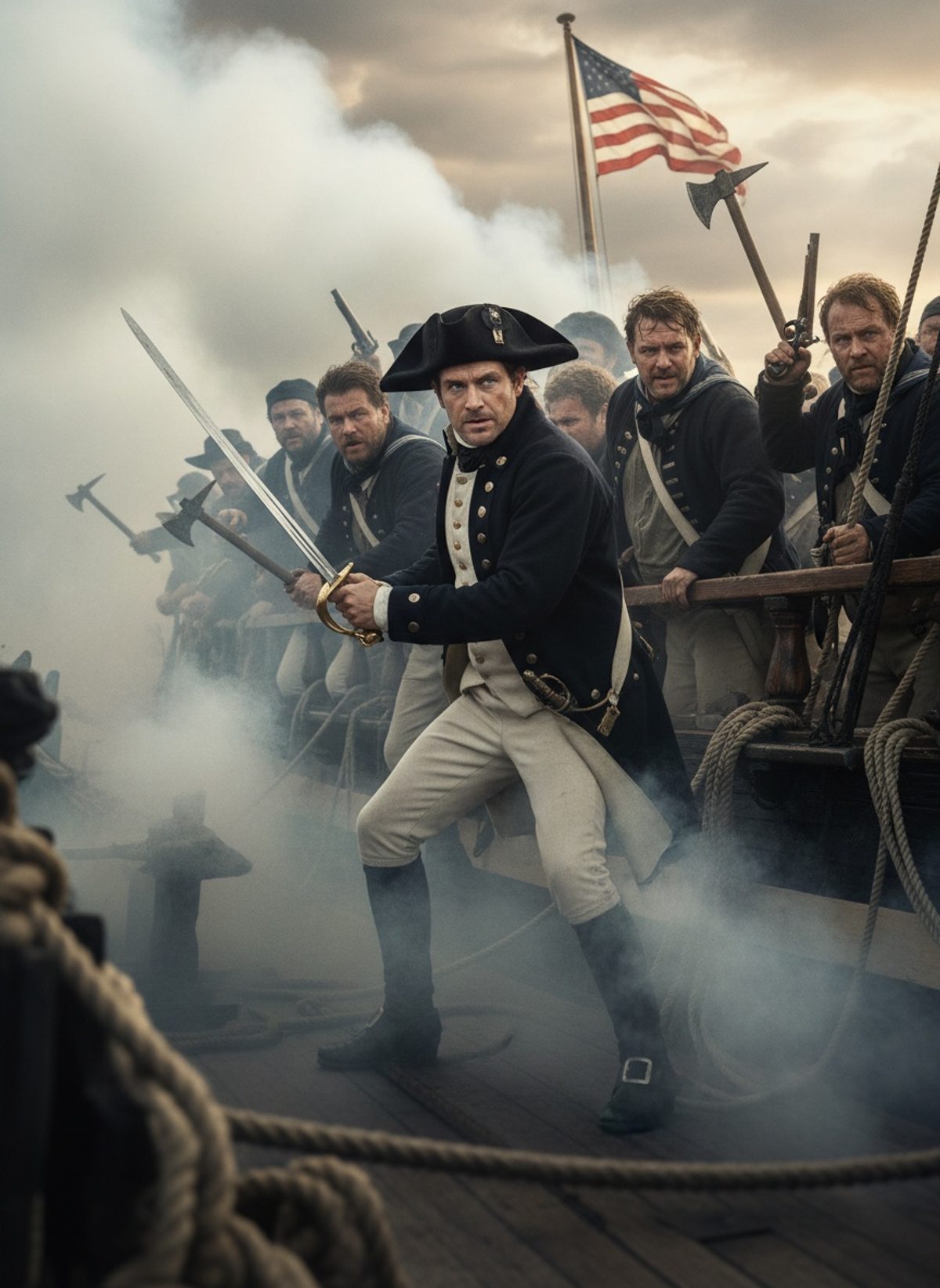
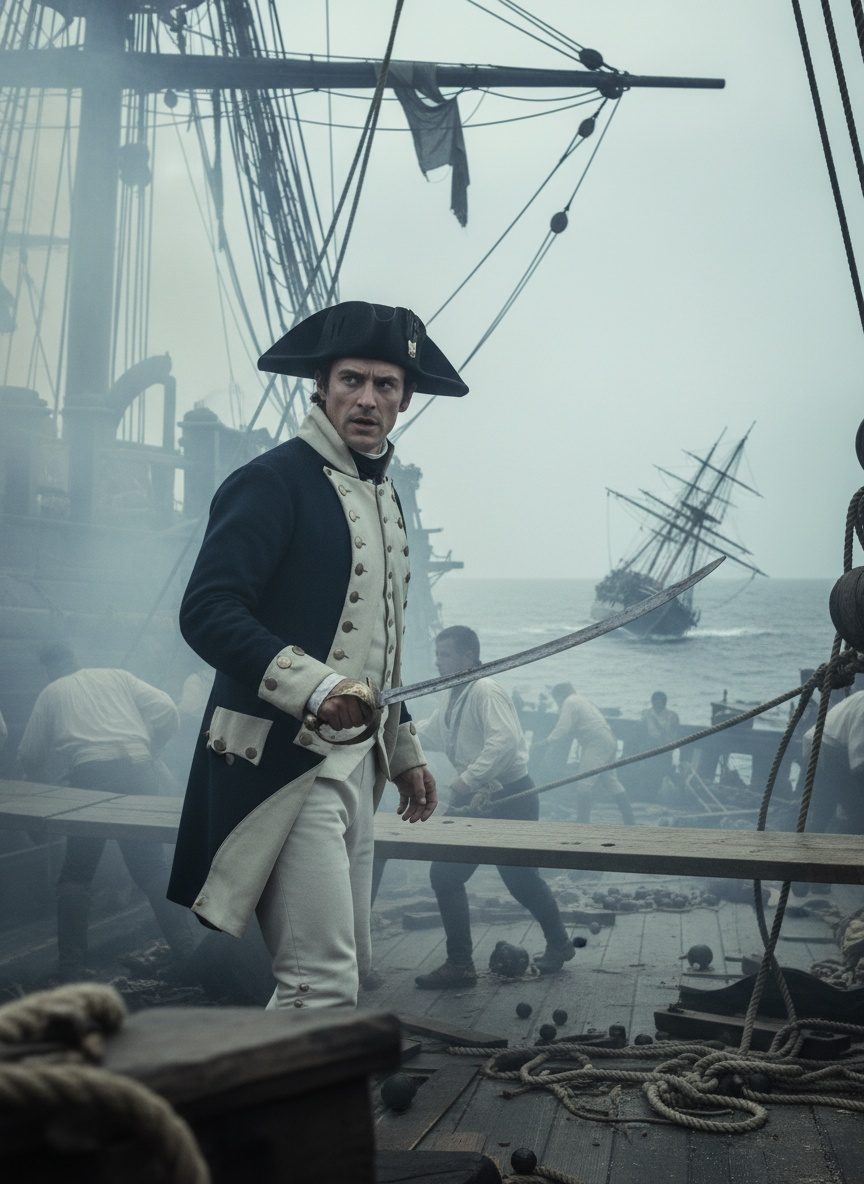
June 1813. HMS Shannon fired one broadside. The USS Chesapeake was crippled in four minutes. Captain Philip Broke leapt aboard himself. Sword in hand. The deck was his. Britain cheered for a week.
In 1620, a Dutch inventor submerged a leather-wrapped craft beneath the Thames. King James I reportedly rode inside. England nearly funded the world's first military submarine — then walked away.
October 1797. HMS Indefatigable found a French warship wrecked and burning on the rocks. Pellew ordered his men into the surf. They saved 278 souls. From a sinking enemy ship. In a winter storm.
March 1811. Captain William Hoste faced a Franco-Venetian fleet of eleven warships. He had four frigates. He signalled one order. 'Remember Nelson.' Then he attacked.
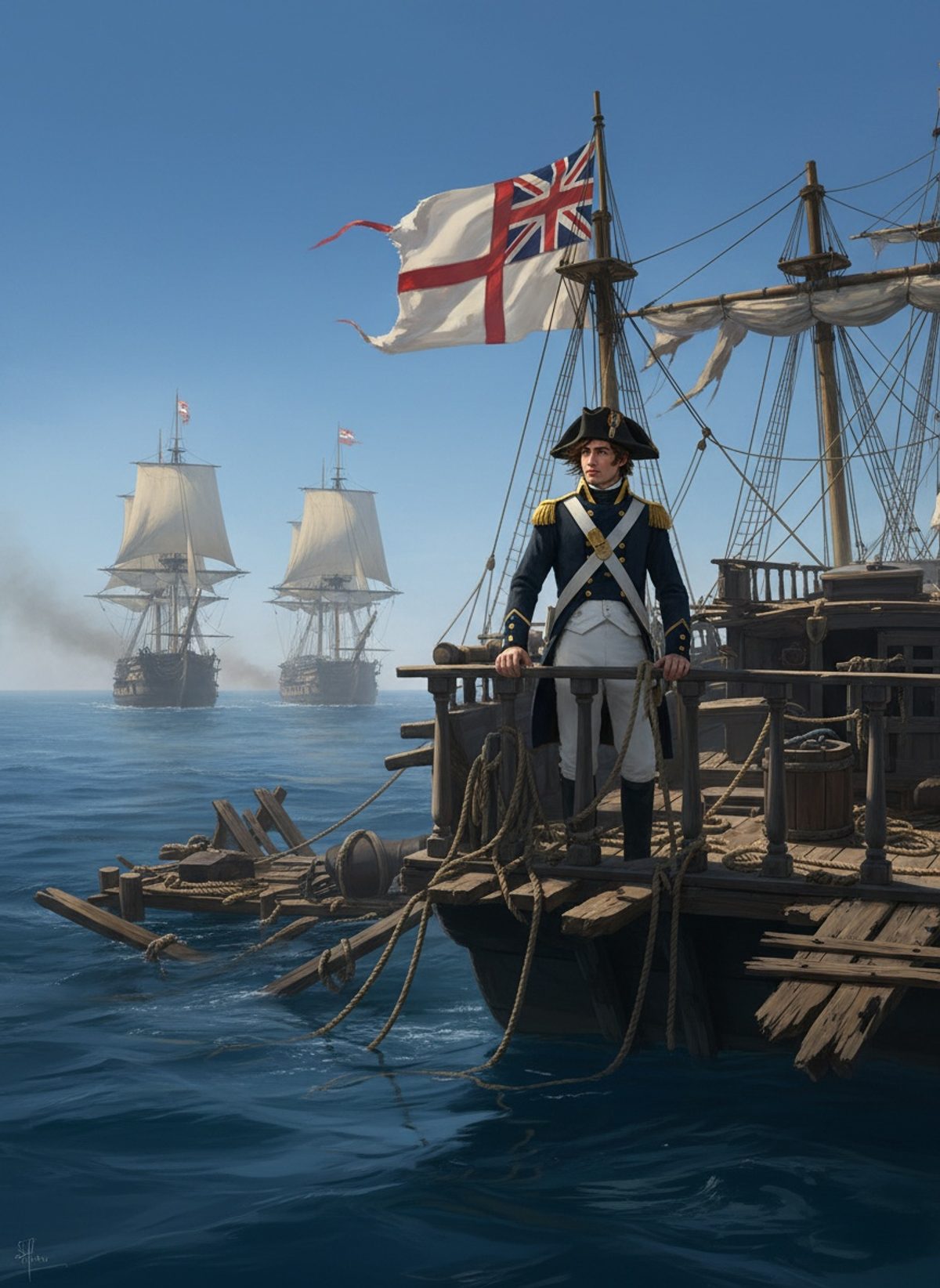
August 1801. HMS Speedy was done. Cochrane had no ammunition left. Three Spanish warships circled. He refused to lower his flag for two hours. Every minute bought his crew a chance.
After Waterloo, Britain policed every ocean on earth. Alone. The Royal Navy's budget dwarfed every ally's contribution combined. Britain paid. The world traded safely. Nobody said thank you.
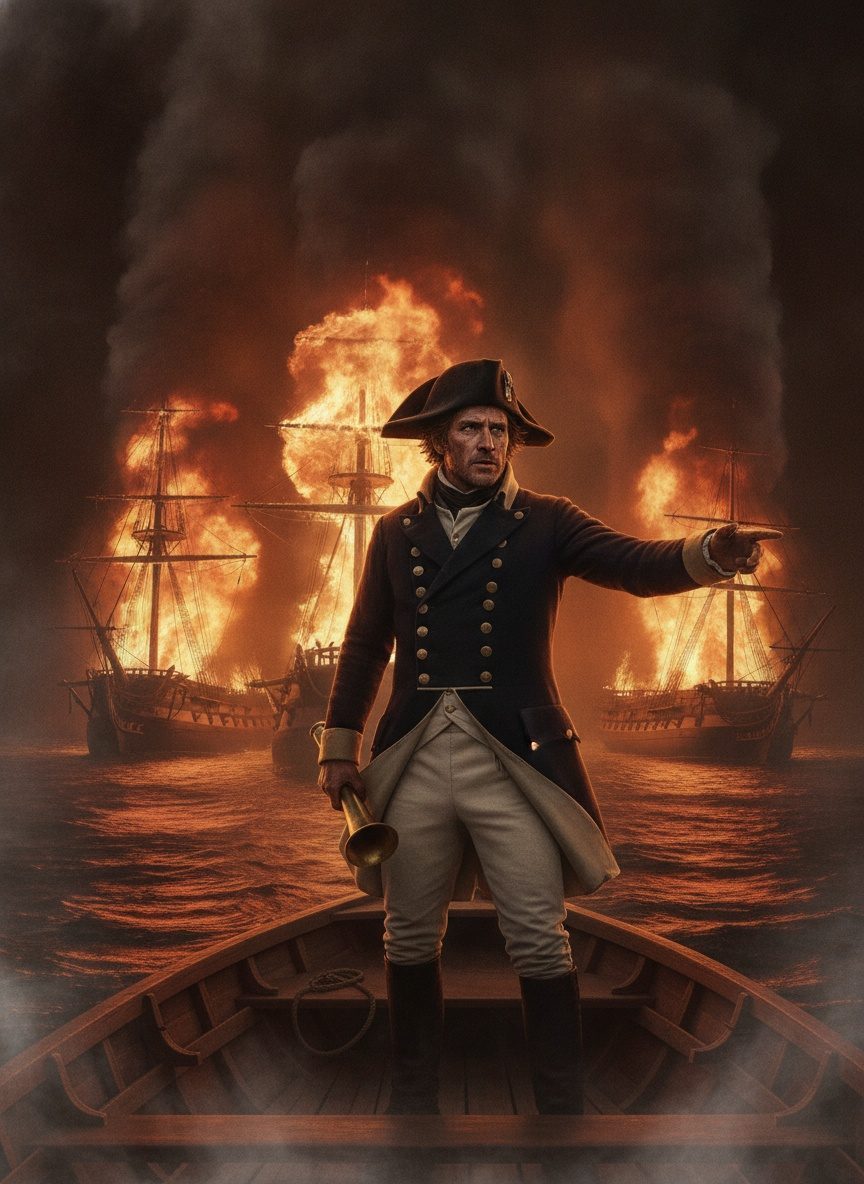
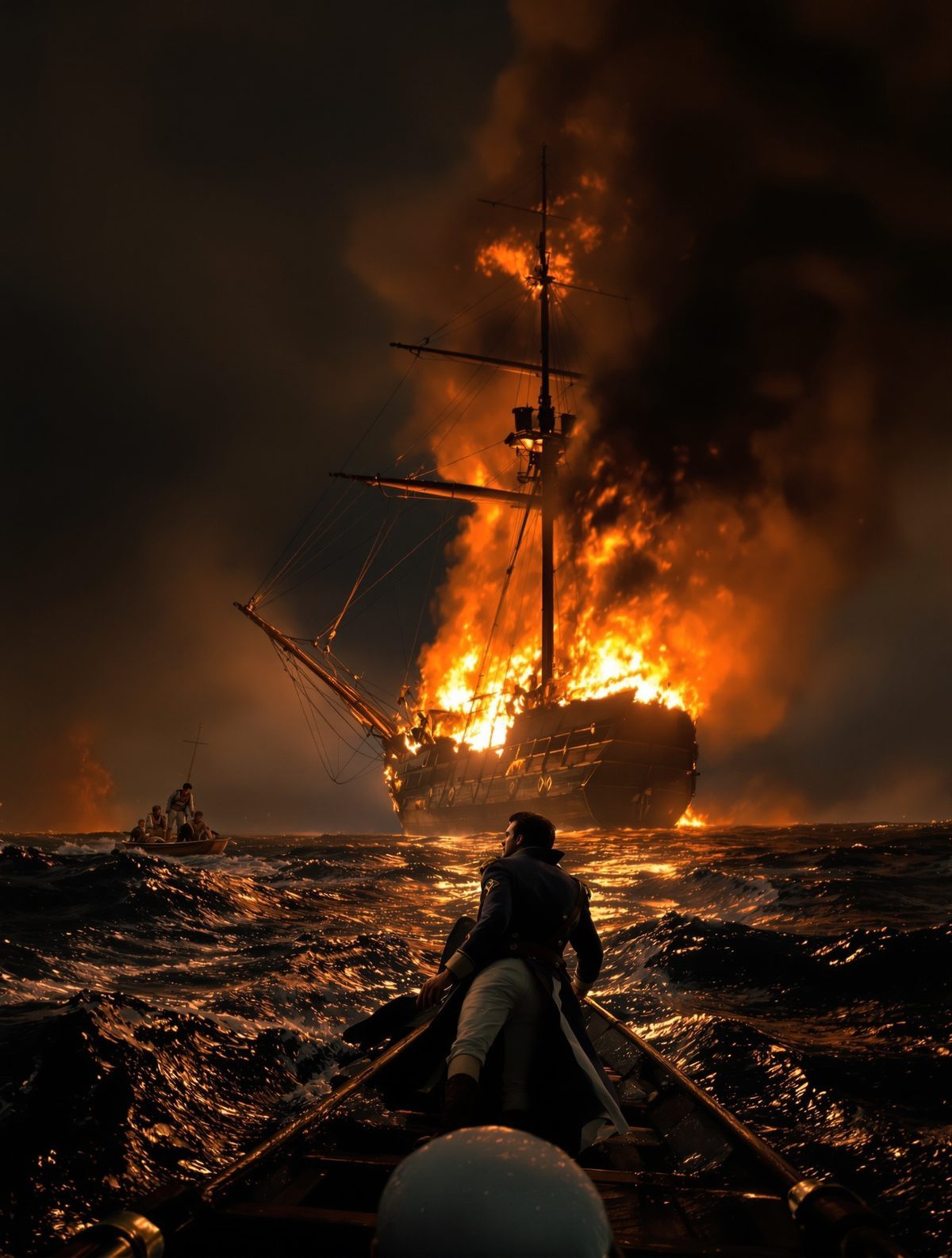
April 1809. Napoleon's fleet sheltered behind a boom at Basque Roads. Lord Cochrane lit his fireships and sailed them in alone. The French cut their anchors and ran. One man broke a fleet.
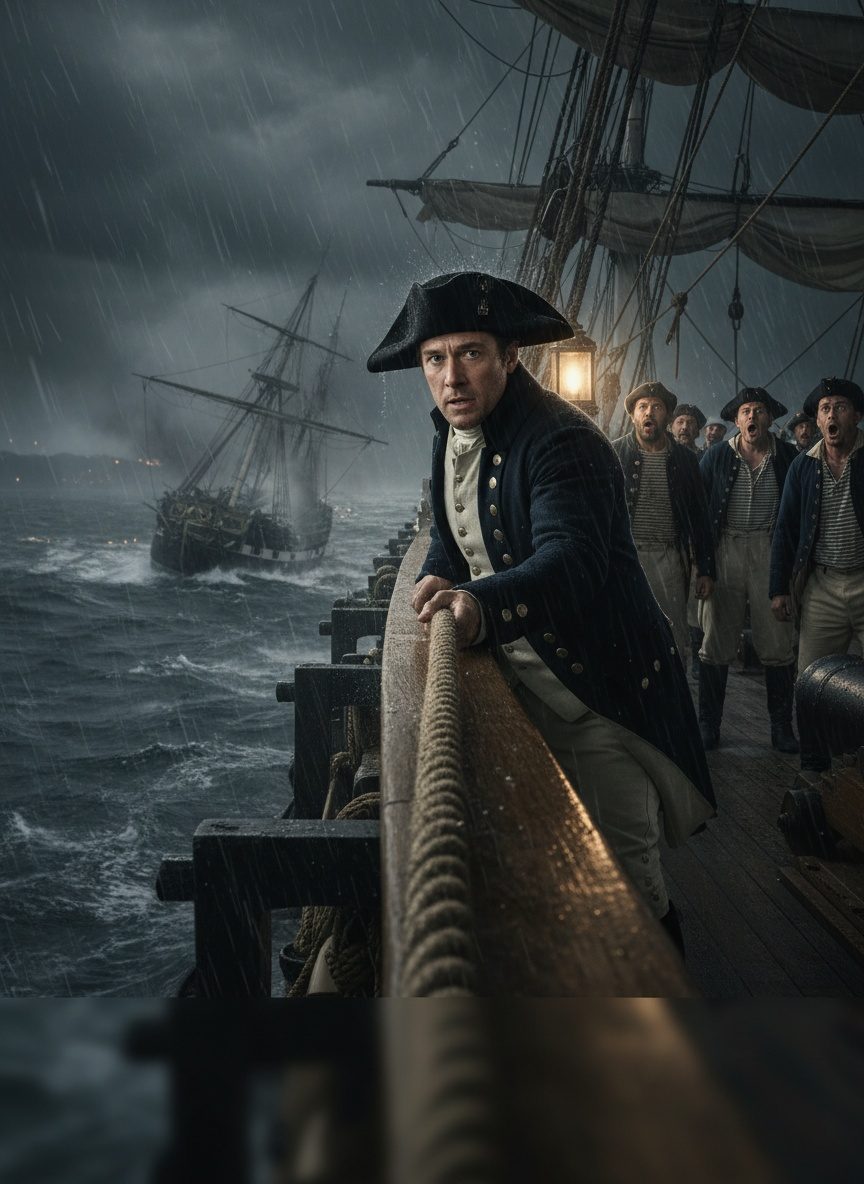
January 1797. HMS Indefatigable had just wrecked a French warship on the rocks. Hundreds of enemy sailors were drowning in the Atlantic surf. Captain Edward Pellew turned back into the storm. He saved every man he could reach.
Napoleon controlled half of Europe. One thing stood between him and the rest. Not an army. A fleet. Remove it — and the world looks unrecognisable.
June 1813. HMS Shannon lay off Boston harbour. Captain Philip Broke wrote a letter to the USS Chesapeake. A formal challenge. Ship to ship. Come out and fight. She came. Thirteen minutes later, she was British.
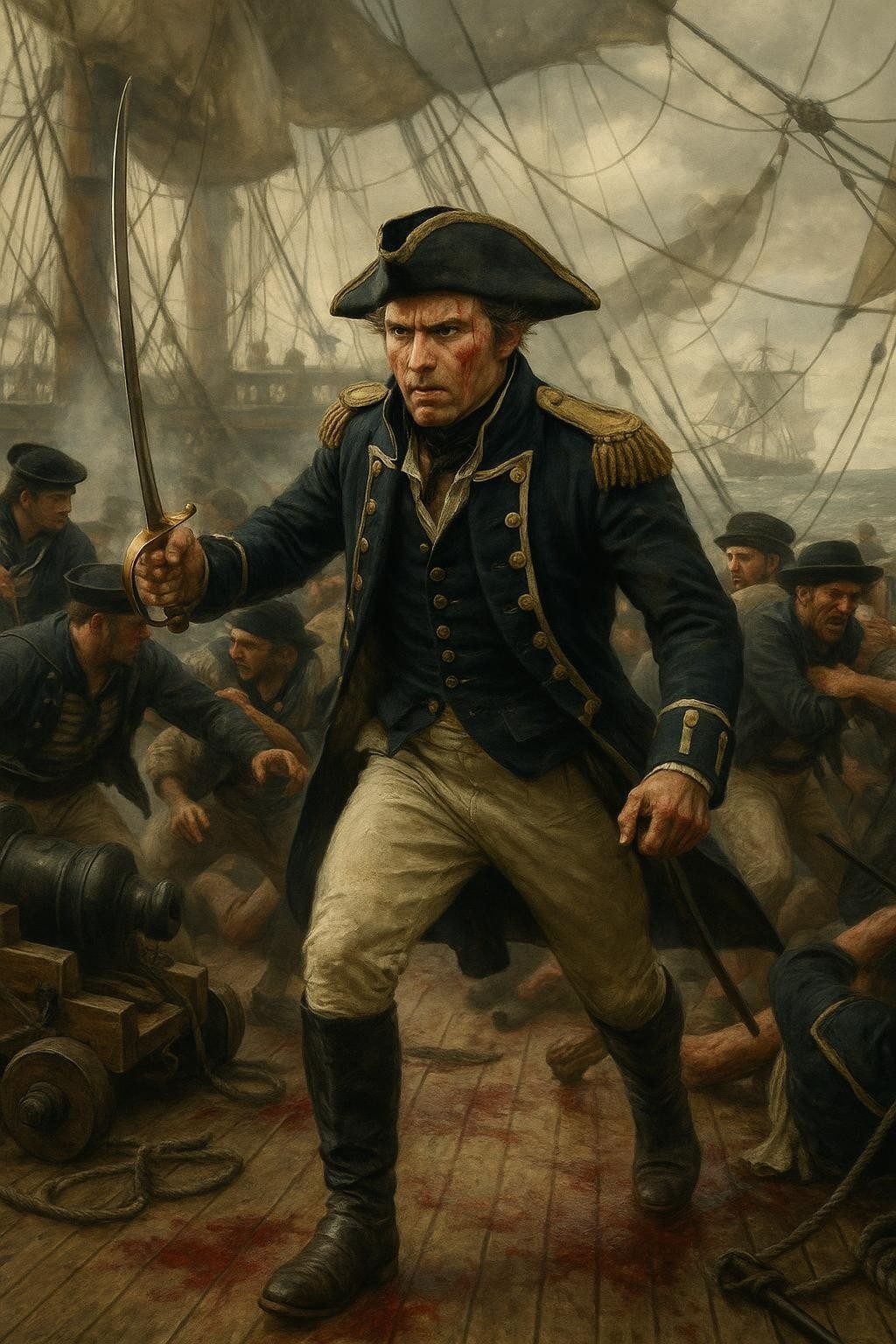
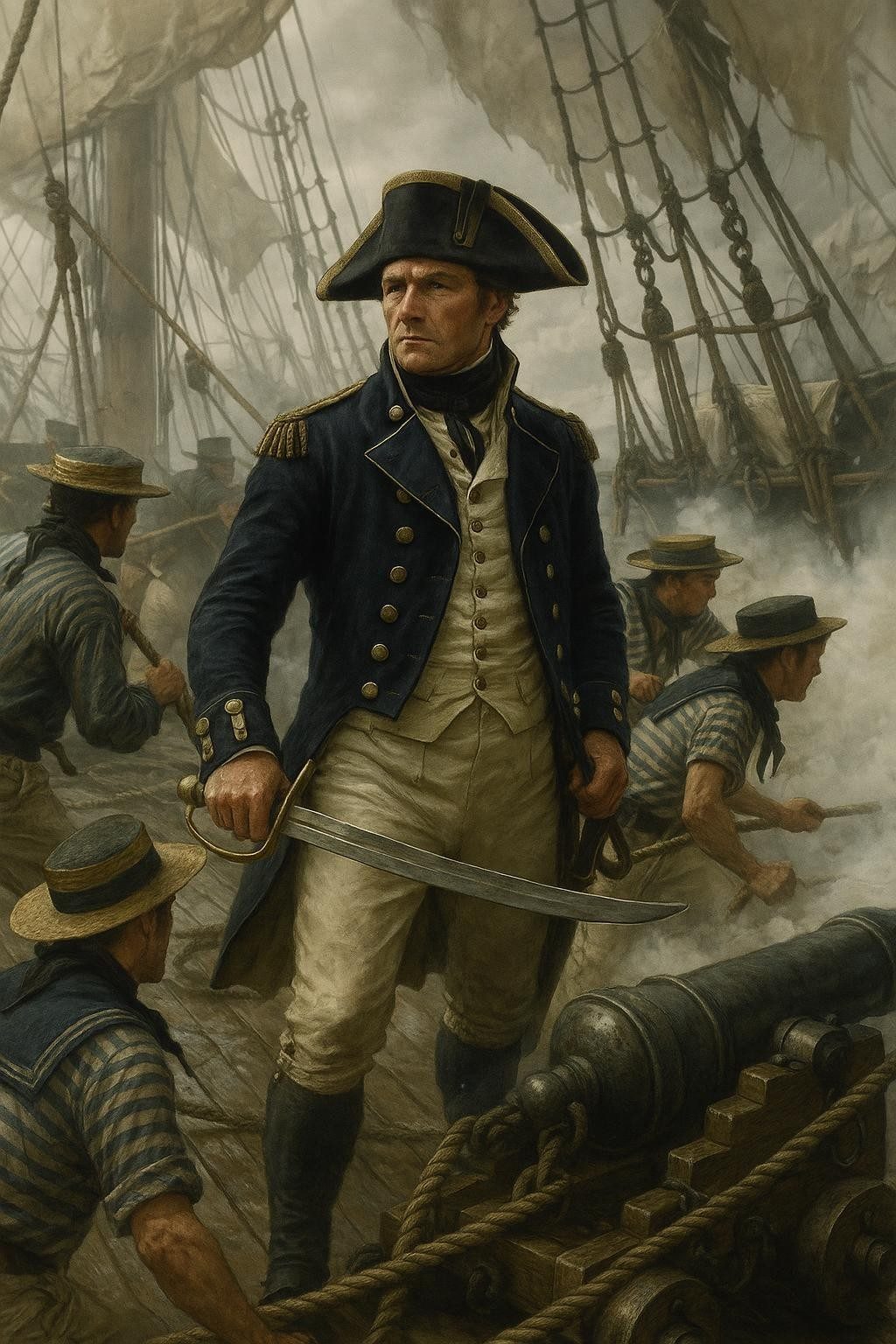
May 1801. HMS Speedy had fourteen guns. The Spanish frigate Gamo had thirty-two. Captain Cochrane attacked anyway. Fifty-four men boarded a crew of over three hundred. They took the ship. Cochrane lost three men.
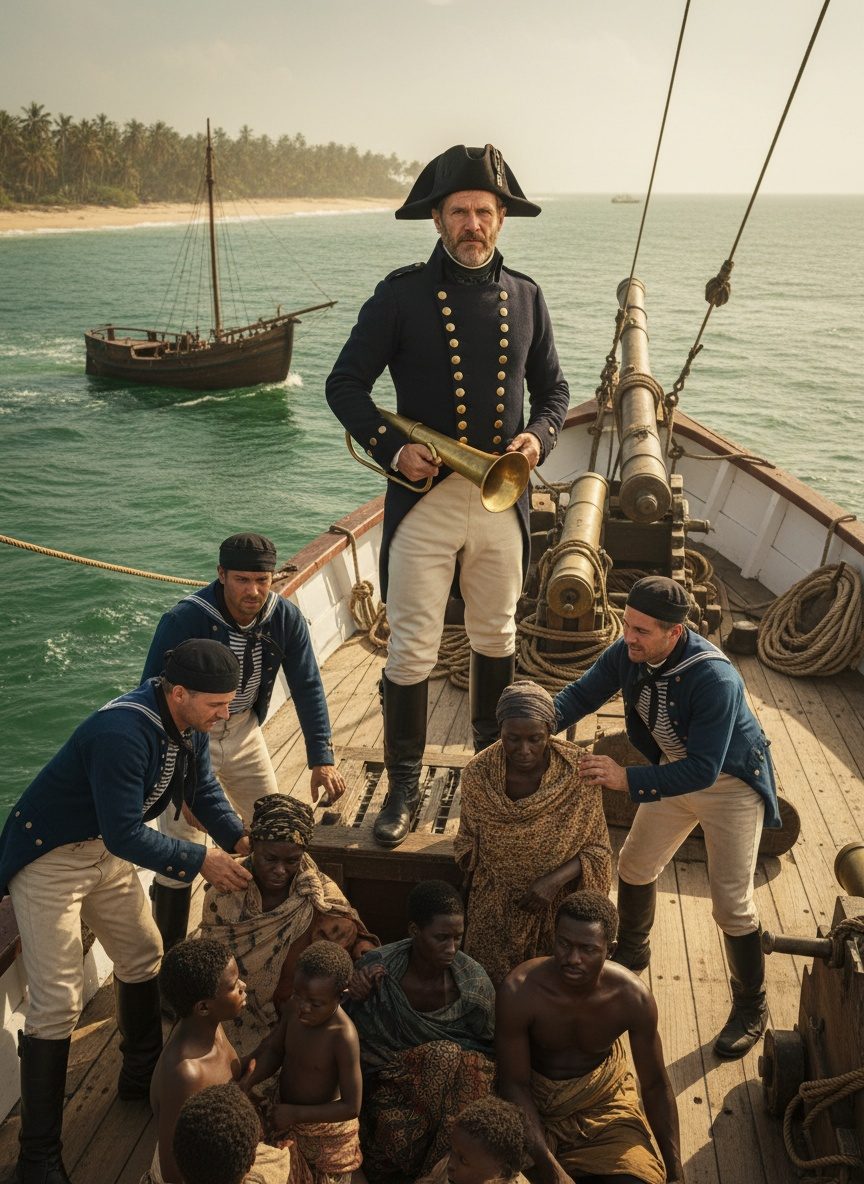
Britain outlawed the slave trade in 1807. Then sent its navy to enforce it for sixty years. Over 1,600 ships seized. 150,000 Africans freed. The West Africa Squadron lost more men to fever than to cannon.
June 1813. HMS Shannon lay waiting off Boston Harbour. Captain Philip Broke sent a written challenge to his American rival. The USS Chesapeake came out. Thirteen minutes later, it was over. Broke had taken her with his bare sword.
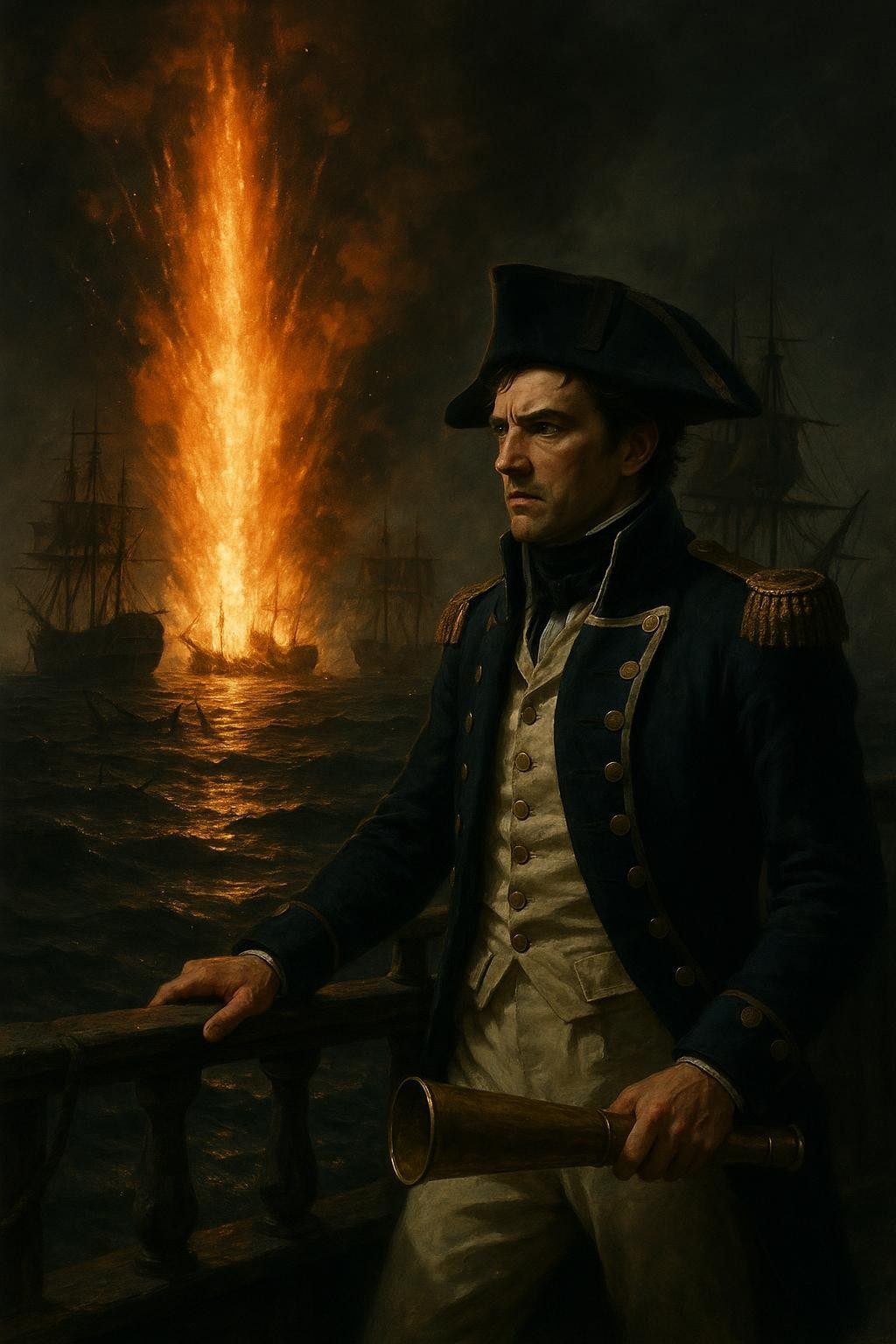
April 1809. Lord Cochrane had one chance. He loaded three ships with explosives and aimed them at the French fleet at anchor. The night erupted. Eleven French warships ran aground in panic. One officer had terrified an entire navy.
January 1797. A single British frigate chased a French 74-gun ship of the line into a winter storm. HMS Indefatigable pounded her through the night. Dawn broke over a beach strewn with wreck. Sir Edward Pellew had done the impossible.
March 1811. Four French frigates. Three British. Captain William Hoste was outnumbered. He signalled his squadron. Four words. 'Remember Nelson.' Then he attacked.
August 1801. HMS Speedy was gone. Lord Cochrane had just one tiny hired vessel and fourteen men. A 32-gun Spanish xebec-frigate bore down on him. He raised an American flag. Bluffed. Held. And sailed away free.
1796. The French frigate Virginie had just struck her colours. She was sinking fast. Captain Edward Pellew dove into the Atlantic. He pulled a French sailor from the waves. His enemy. His prisoner. His responsibility.
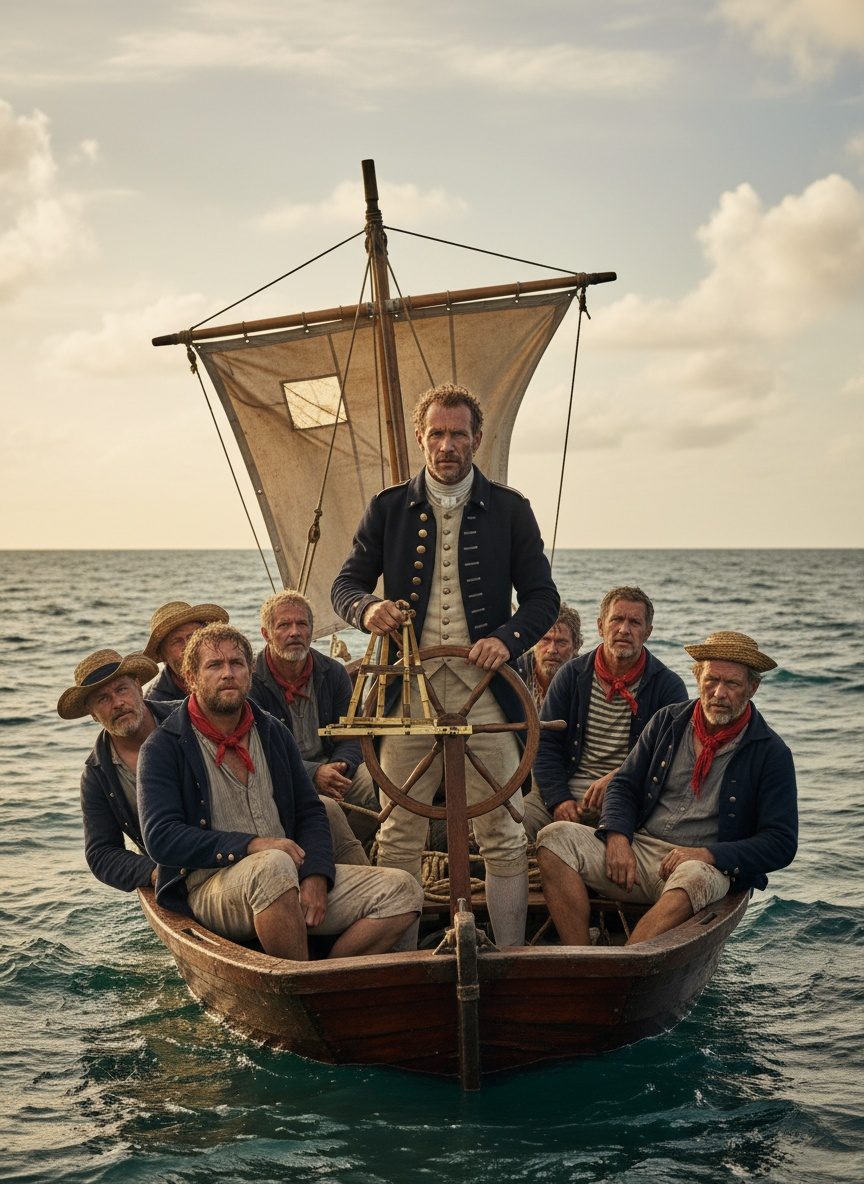
Cast adrift with 18 men in a 23-foot launch. No charts. Hostile islands on every side. Bligh sailed 3,618 miles to Timor using only a sextant and memory. Not one man was lost at sea.
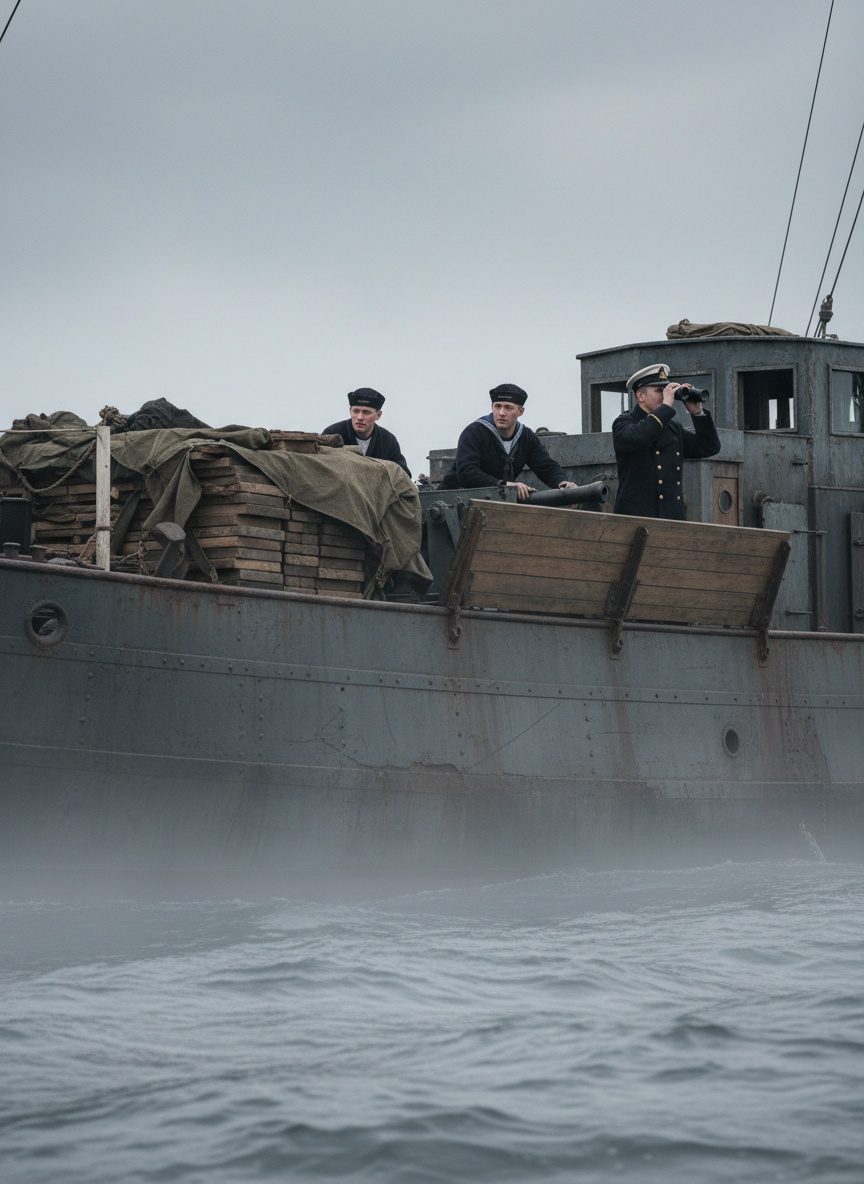
She looked like a rust-streaked merchant freighter. She was a death trap — for submarines. HMS Saxifrage carried hidden guns behind false plating. U-boat captains surfaced to sink her. They never surfaced again.
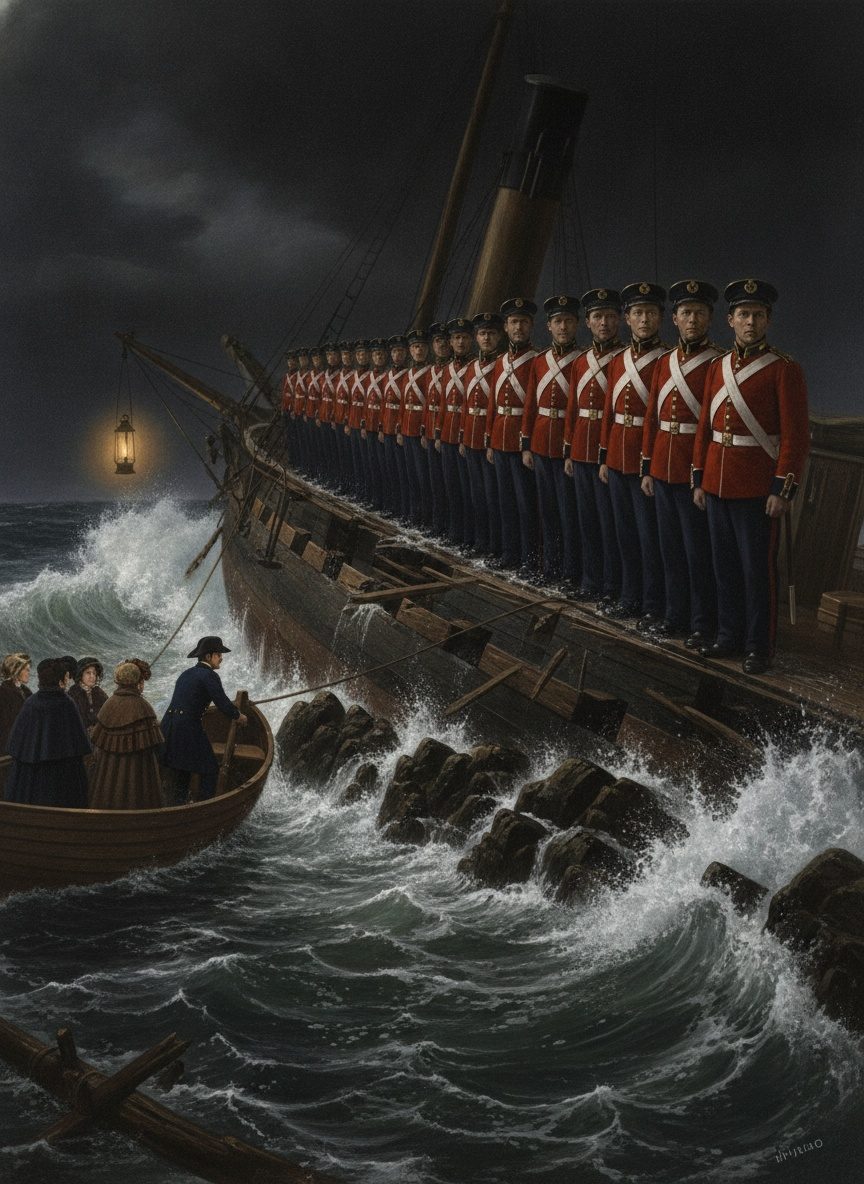
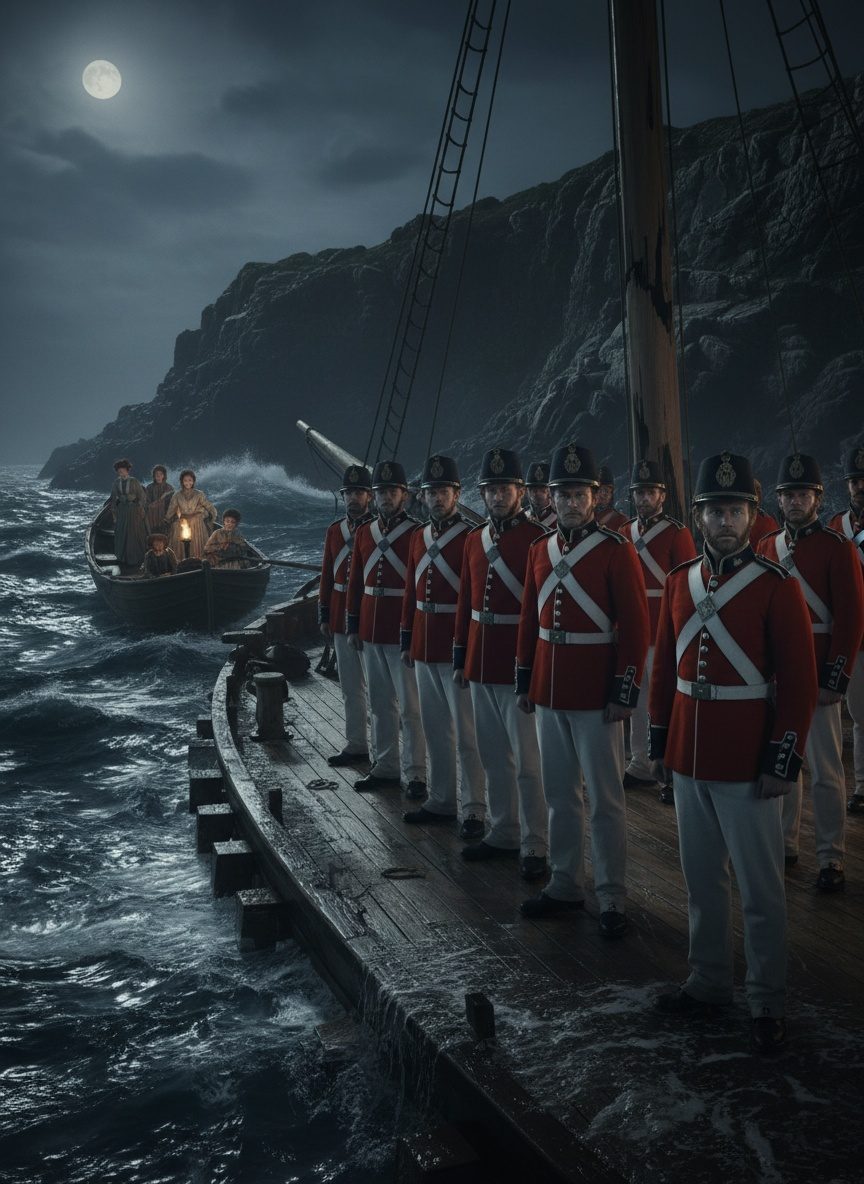
She struck rock off South Africa at 2am. The soldiers stood in rank on a sinking deck. They never broke. 436 men drowned so 193 women and children could reach the boats. The drill has never been forgotten.
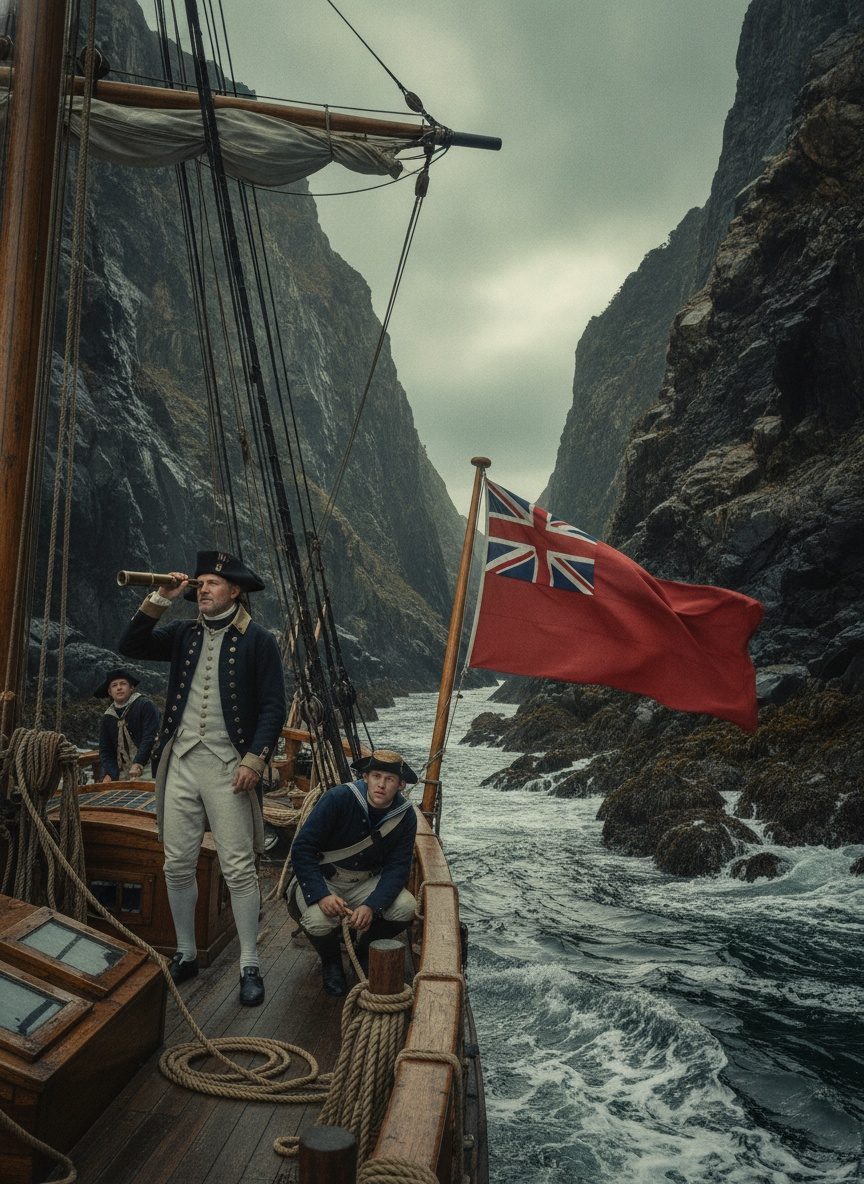
Spain controlled it. Britain sailed it. Argentina didn't exist yet. When Royal Navy ships first passed through the Strait of Magellan, they weren't asking permission — they were asserting a right no nation could legally deny.
He led 100,000 sailors in mutiny. The Admiralty wanted him hanged. Instead, they did something far more brutal: they stripped his rank in front of every ship in the fleet.
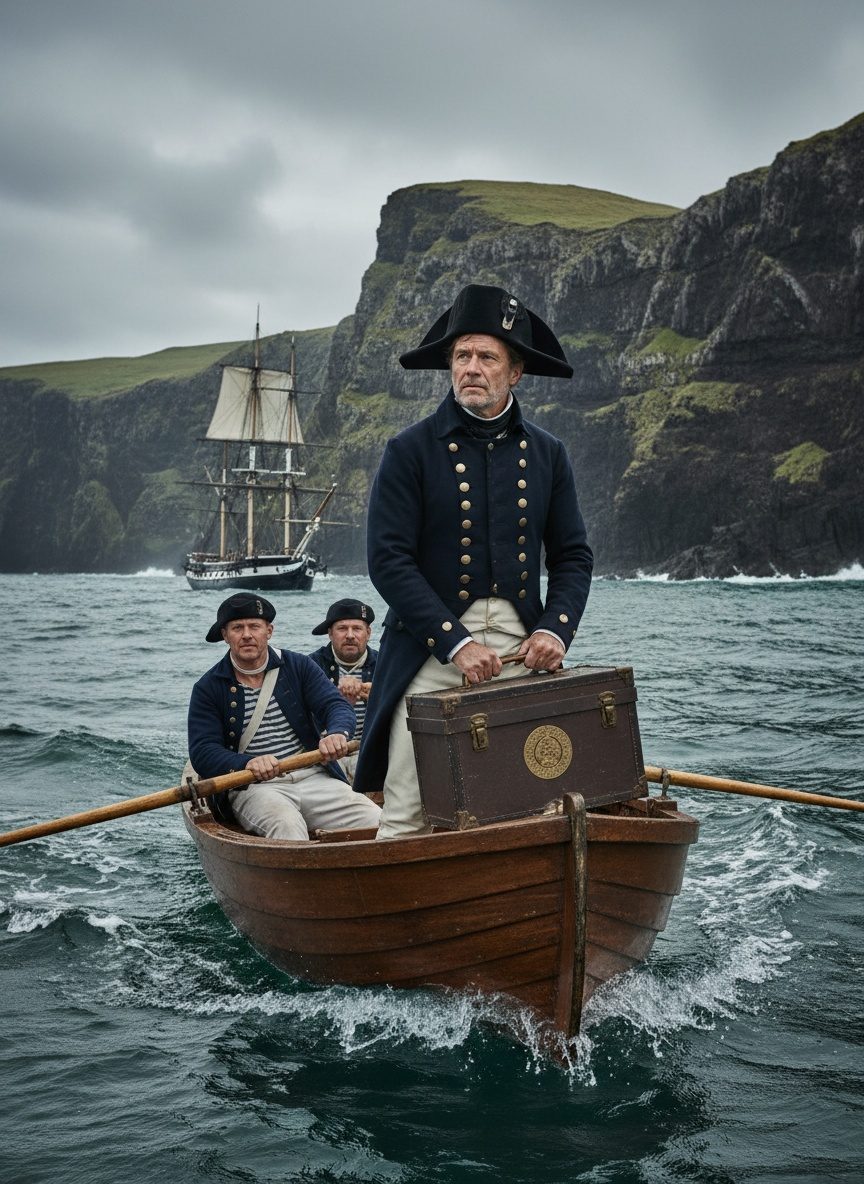
1797. HMS Nymphe lay at anchor off Plymouth. Forty sailors refused to sail. No officers were armed. Captain Edward Pellew walked alone onto the deck. He spoke. They picked up their ropes. The ship sailed.
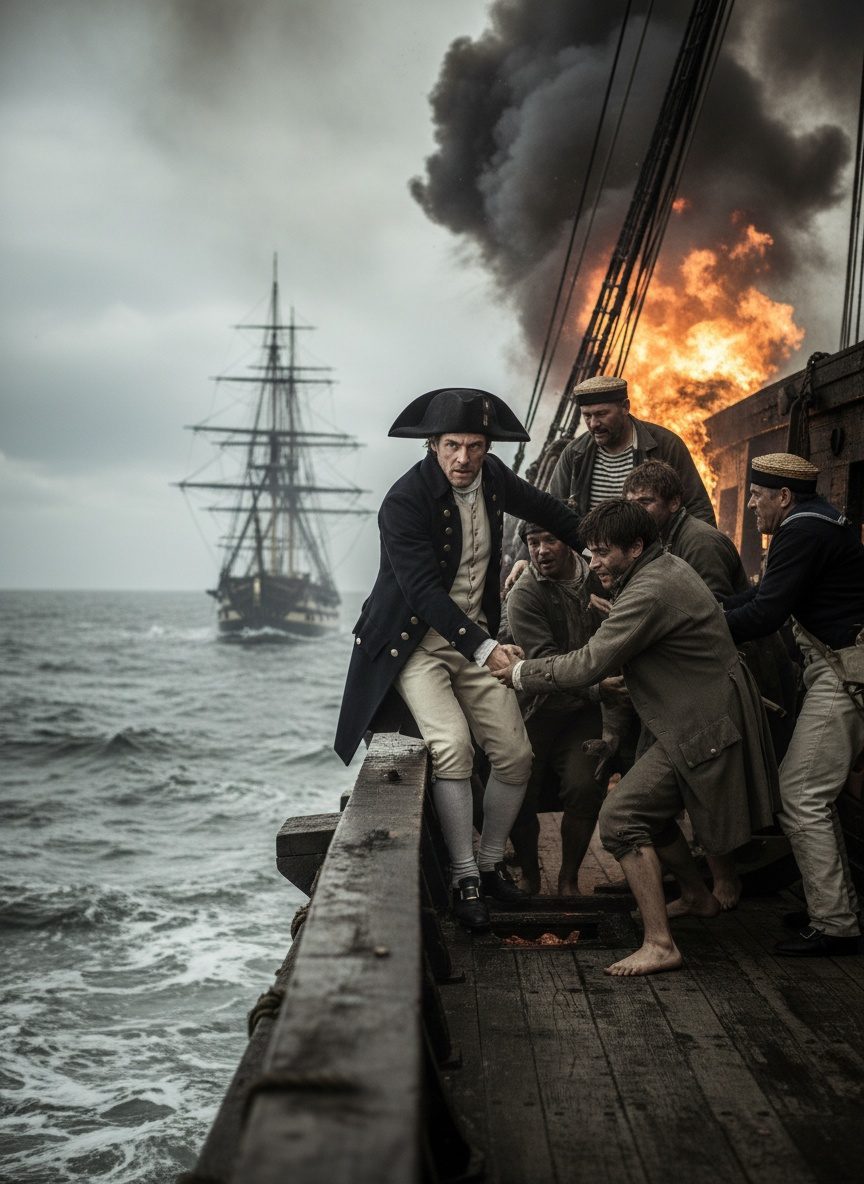
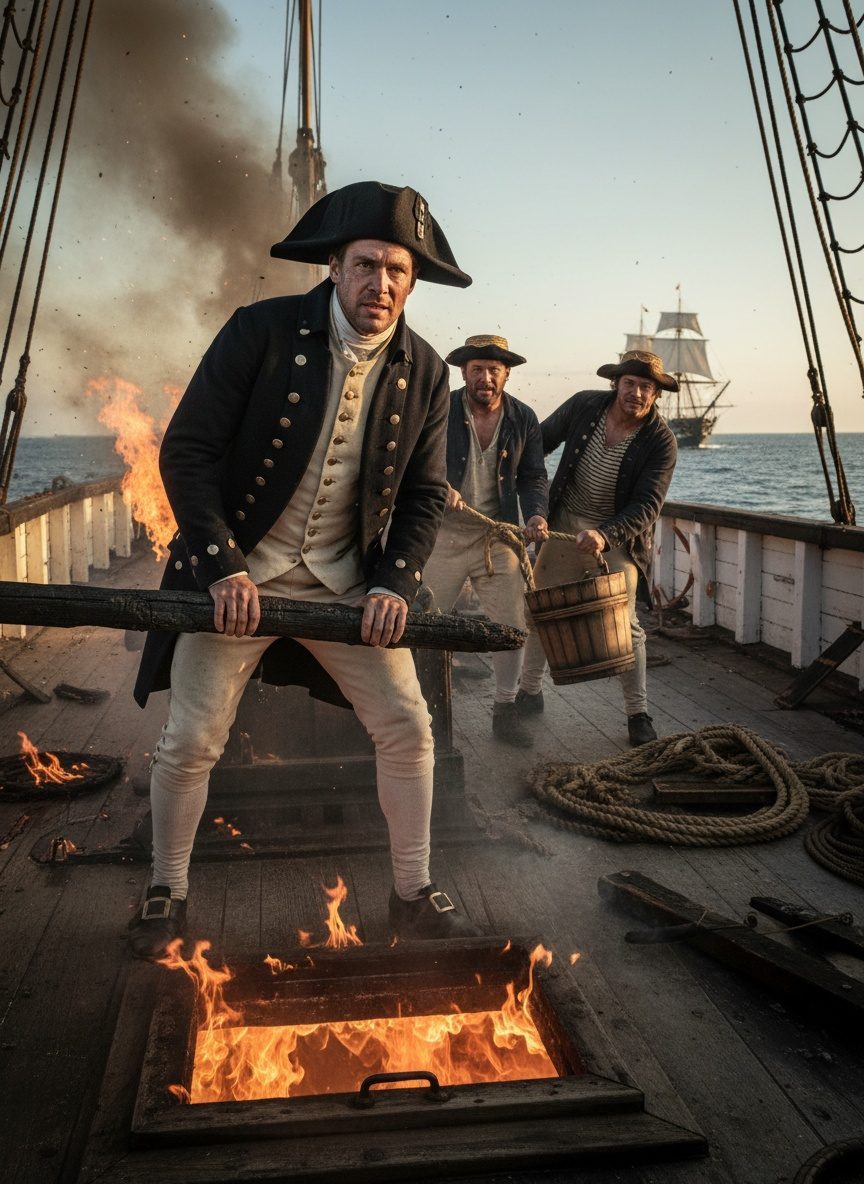
1796. HMS Indefatigable had just captured a French corvette. The prize caught fire. The prisoners were locked below. Pellew went back. He opened the hatches himself. Every man came out alive.
June 1797. HMS Indefatigable had just crippled the French frigate Droits de l'Homme. Her crew were exhausted. The French captain was drowning. Pellew threw him a rope. An enemy. A man.
February 1797. HMS Indefatigable had just sunk a French frigate. The sea was black and freezing. Pellew ordered every boat lowered. He pulled 278 enemy sailors from the Atlantic. Men he had just tried to kill.
Tristan da Cunha. No harbour. No doctor. A Royal Navy sloop with orders to help. Commander Moore had one chance to land men and supplies — before the Atlantic swells made it impossible.
1801. HMS Lively had taken a French corvette off Toulon. The prize crew was aboard when fire broke out below decks. Captain Israel Pellew went back. He fought the flames with his bare hands. He brought every man home.
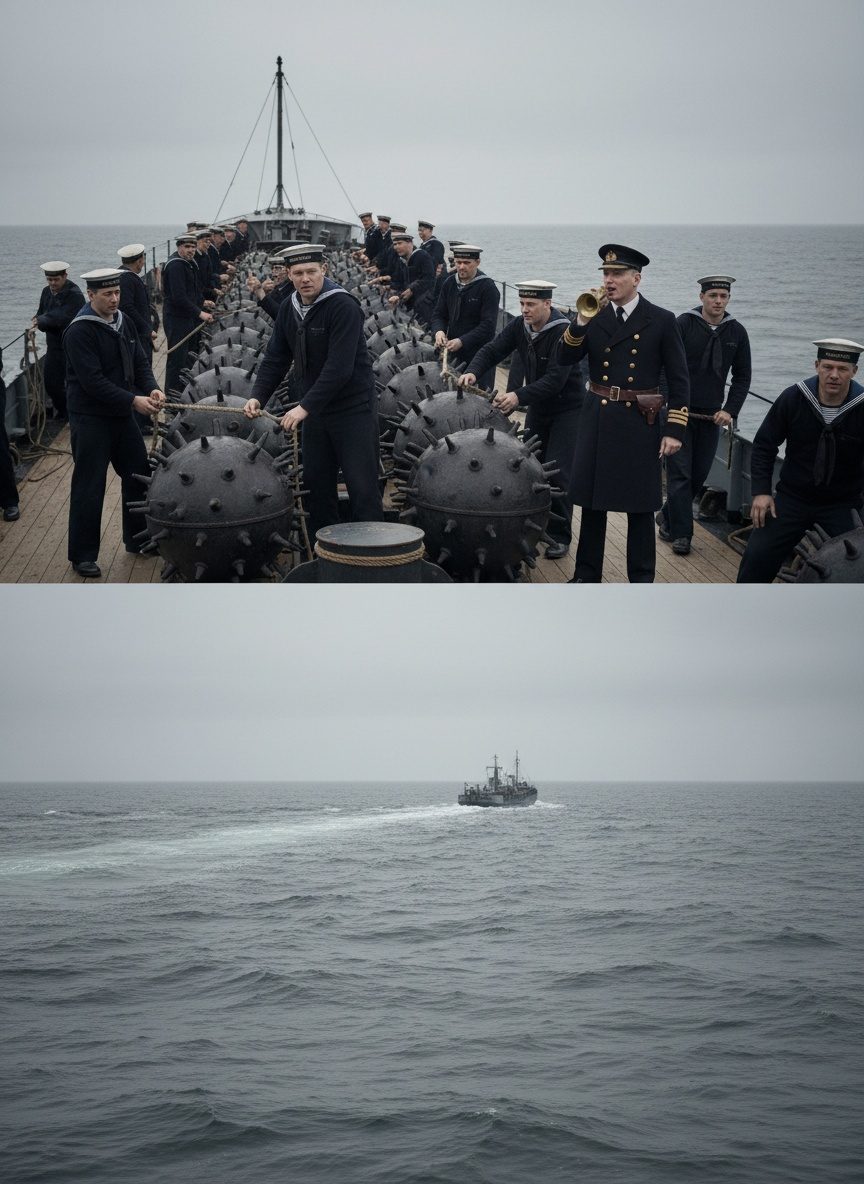
By 1917, German U-boats were sinking 300 ships a month. Britain's answer: 70,000 mines stretched from Scotland to Norway. The North Sea Mine Barrage — history's largest naval minefield.
One ship. One mission. Find the Northwest Passage from the west. HMS Blossom pushed past Alaska's icy rim — and waited. Franklin never came. But what they mapped changed everything.
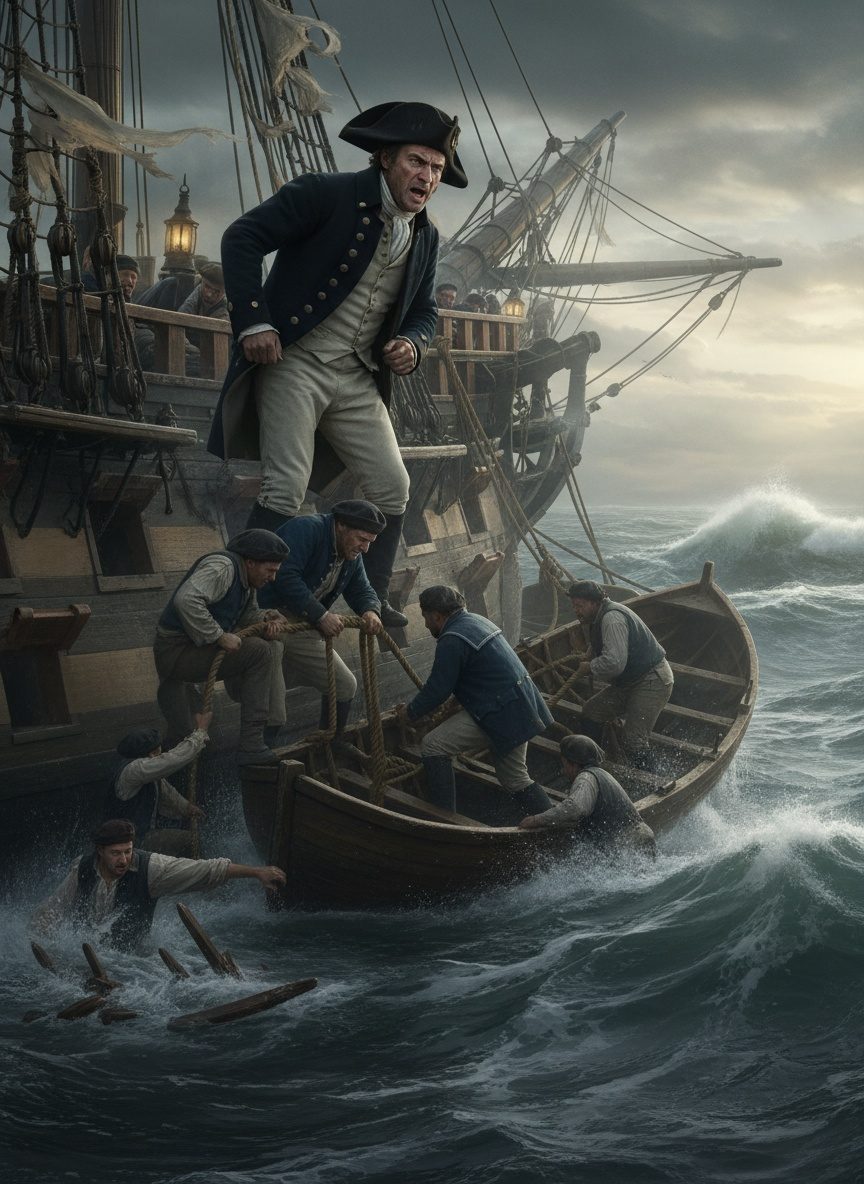
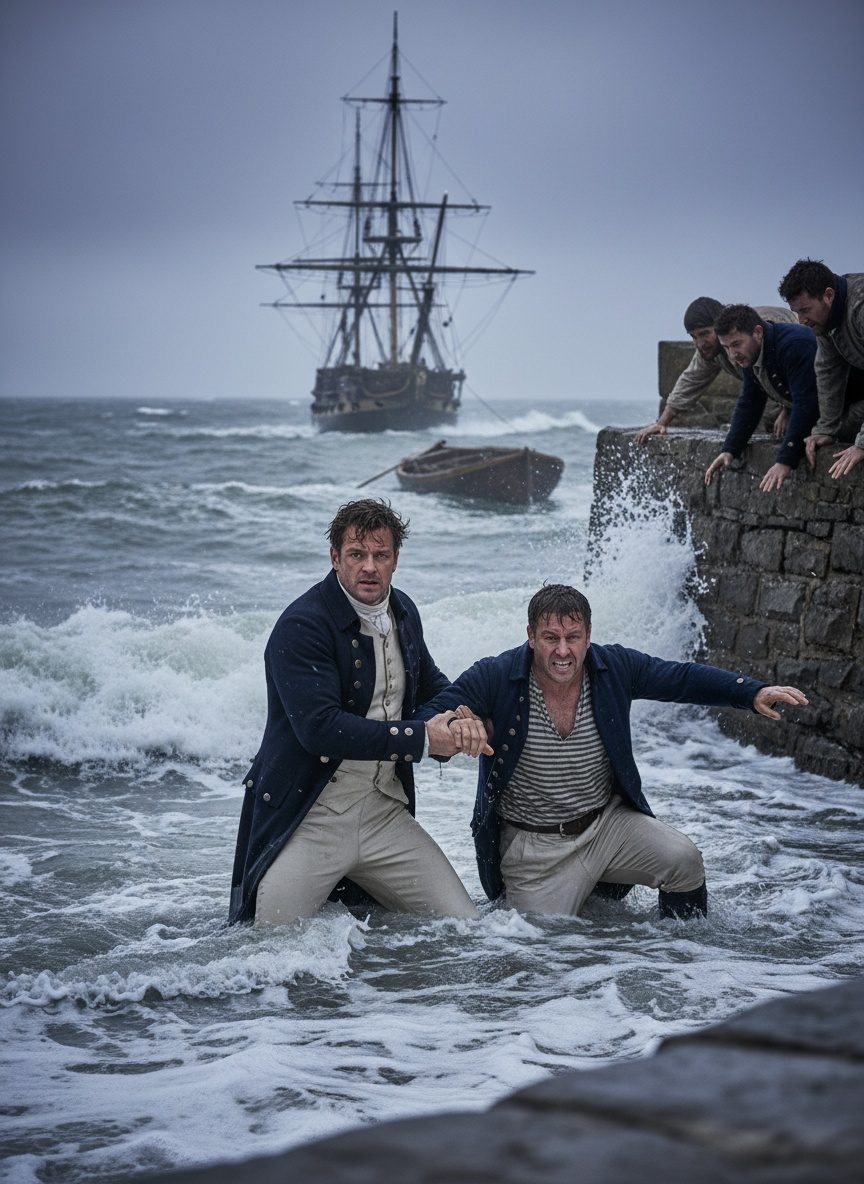
January 1796. HMS Indefatigable lay at anchor off Falmouth. A longboat capsized in the freezing surf. One man jumped in without hesitation. That man was Captain Edward Pellew. He saved every soul aboard.
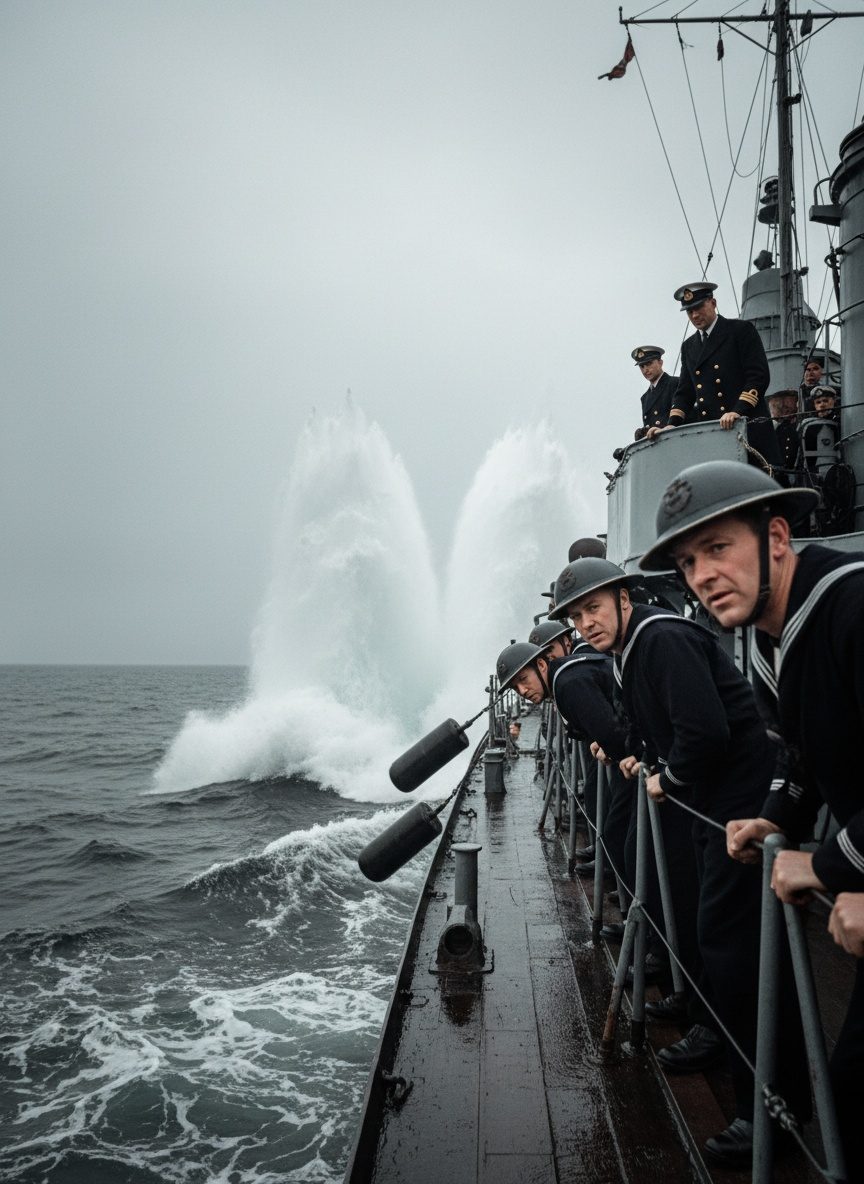
March 1941. U-99 had sunk 35 Allied ships. HMS Walker forced her to the surface with depth charges. Otto Kretschmer — the Reich's deadliest U-boat commander — surrendered at sea.
February 1797. The British fleet faced 27 Spanish ships of the line. Admiral Jervis had fifteen. He attacked anyway. Commodore Nelson broke formation without orders. He boarded two enemy ships by hand. Britain ruled the Atlantic that night.
1820. Thomas Cochrane had one aging frigate. Spain held the most powerful warship in the Pacific. He sailed straight at her. Alone. At midnight. The Esmeralda fell in twenty minutes.
April 12, 1782. The Battle of the Saintes. Captain Lord Rodney's fleet faced France's finest. Then Captain Alan Gardner of HMS Duke drove straight into the French line. The gap broke everything. Britain ruled the Caribbean that afternoon.
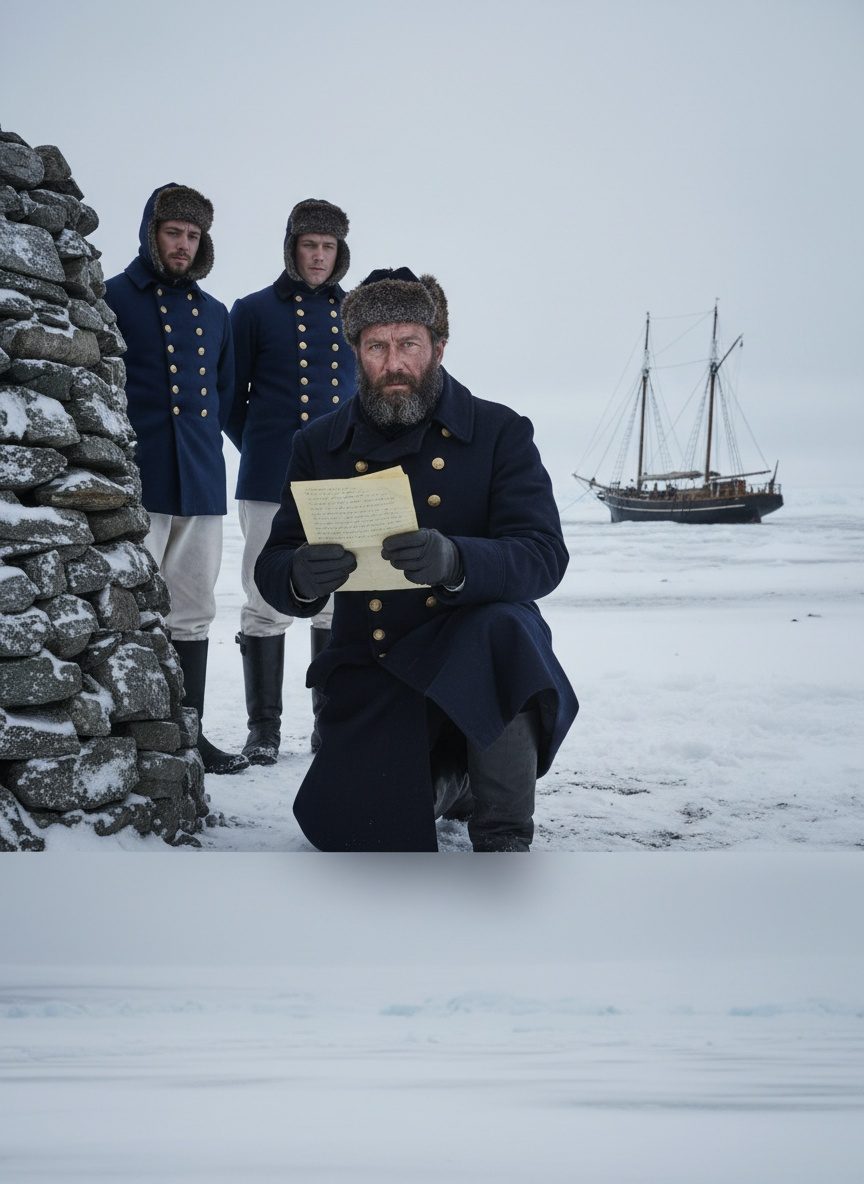
Franklin's ships vanished in 1845. For 14 years, Britain found nothing. Then one small yacht, one fox-fur sledge, and a cairn note written by a dying officer cracked the Arctic's silence forever.
The ship hit a rock. The lifeboats held only women and children. So 480 British soldiers stood in formation on the sinking deck and did not move. They drowned in silence. The world never forgot.
In 1845, HMS Erebus vanished with 129 men searching for the Northwest Passage. For 171 years, the Arctic kept its secret. Then an Inuit hunter remembered a mast in the ice — and the wreck appeared in hours.
April 1806. One British frigate. Thirty enemy ships. Captain Lord Cochrane raised false signals and sailed straight through them. Not a shot fired. He walked free.
November 1759. A French fleet of 21 ships of the line raced for Quiberon Bay. Admiral Hawke gave chase through a raging Atlantic storm. His captains followed into the rocks. France never invaded Britain again.
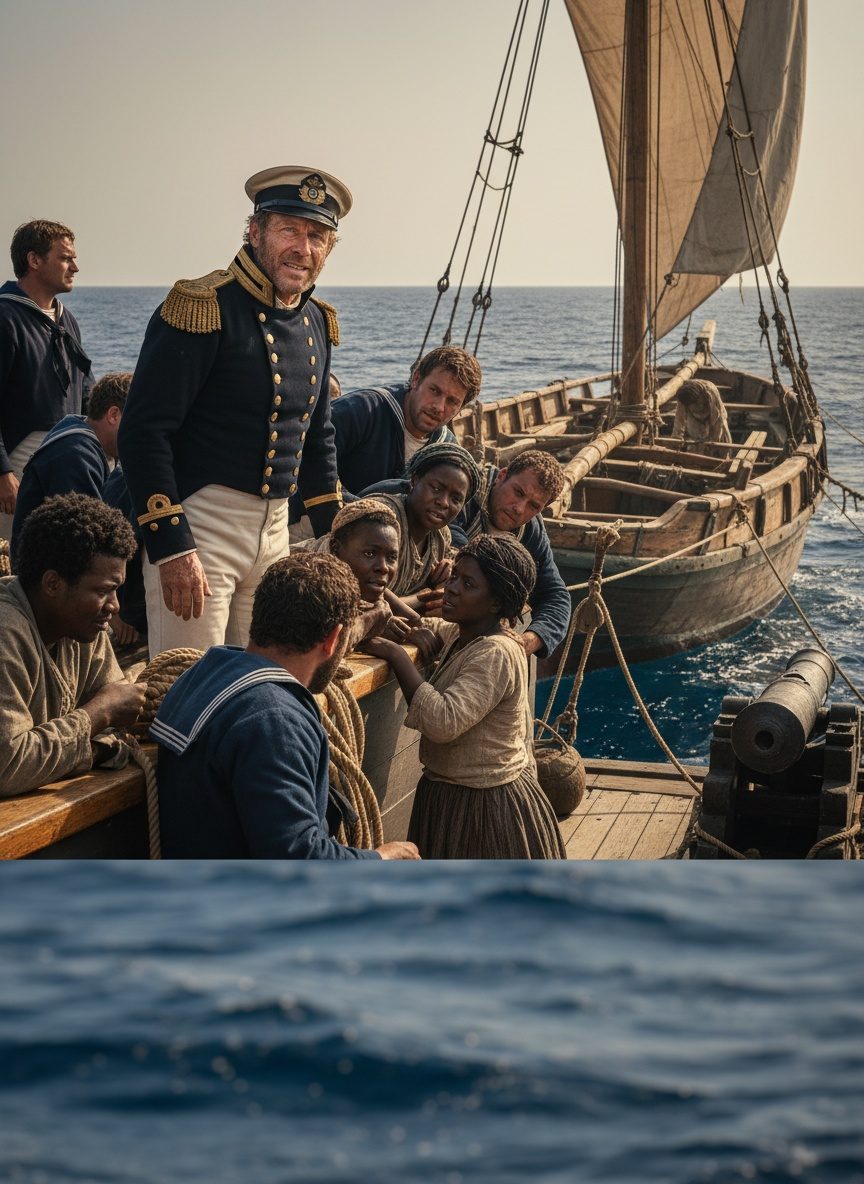
In 1868, a Royal Navy sloop stopped a dhow carrying chained men and women off East Africa. The crew of HMS Daphne pulled them aboard. Britain had been doing this for sixty years — at enormous cost.
April 1808. Lord Cochrane had three small ships. A French squadron of fifteen vessels blockaded Catalonia's coast. He raised false signals. They ran. One British captain scattered a fleet without firing a single shot.
April 1809. Napoleon's fleet lay at anchor in Aix Roads. Lord Cochrane lit his fireships alone. The French cut their cables in panic. Four ships of the line ran aground. One captain had shattered an empire's navy.
October 1805. HMS Pickle was the smallest ship in the fleet. Trafalgar had just been won. Nelson was dead. Lieutenant Lapenotiere sailed 1,000 miles in eight days through Atlantic storms to bring Britain the news.
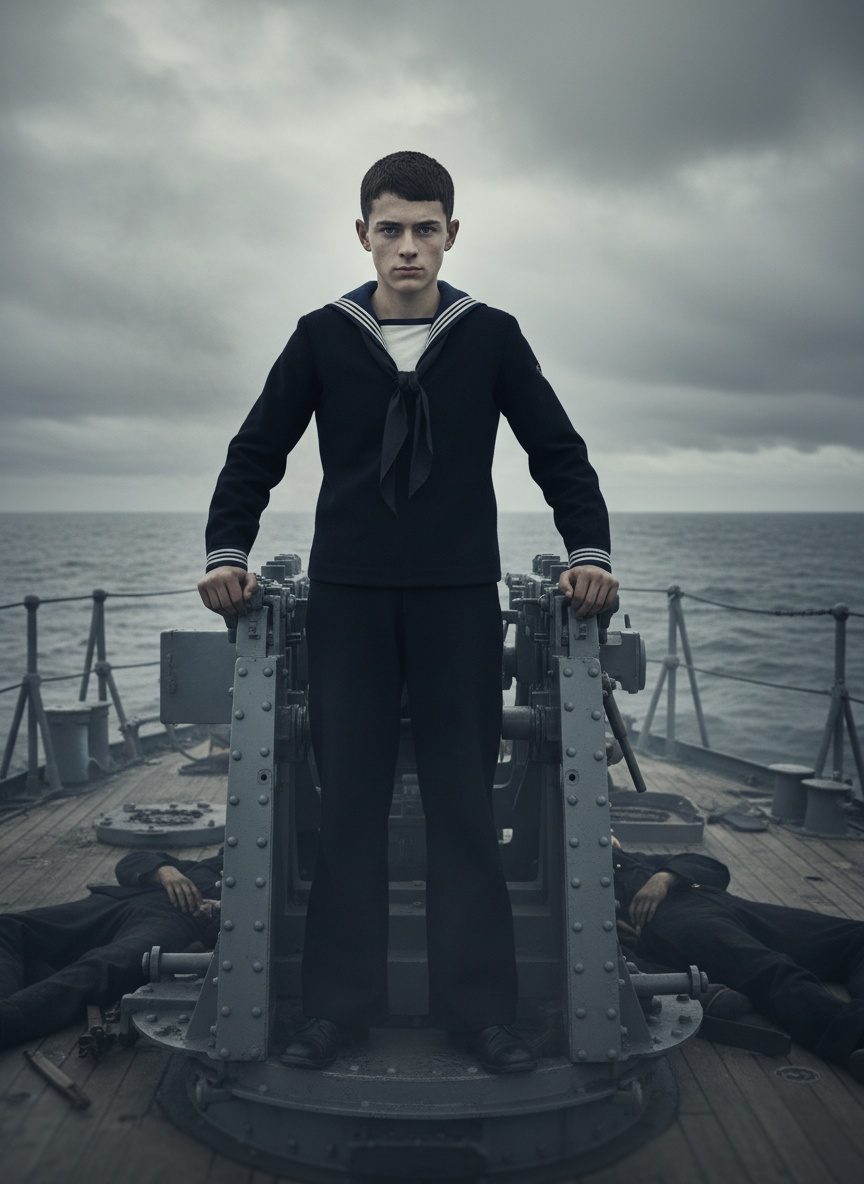
May 1916. HMS Chester sailed into the Battle of Jutland. Every man at Jack Cornwell's gun was killed. He was sixteen. He stood alone at his post. Waited for orders that never came. They found him still standing.
September 1568. John Hawkins had 600 men and no ships. The Spanish had ambushed his fleet at San Juan de Ulúa. He loaded 300 men onto two battered vessels. Too many to survive. He made the cruellest choice. He left 114 men on a Mexican beach. He sailed home anyway.
1807. One British frigate. Six hundred miles of French coastline. Captain Thomas Cochrane lit fake signal fires across the cliffs. Napoleon's coastal garrisons panicked. Thousands of troops rushed inland. One ship had paralysed an army.
October 1805. HMS Pickle carried the news of Trafalgar. Just a tiny schooner. Sent ahead of the fleet. Lieutenant Lapenotiere drove his crew through Atlantic storms for nine days. Then walked into the Admiralty at midnight. 'Sir. We have won a great victory. But we have lost Lord Nelson.'
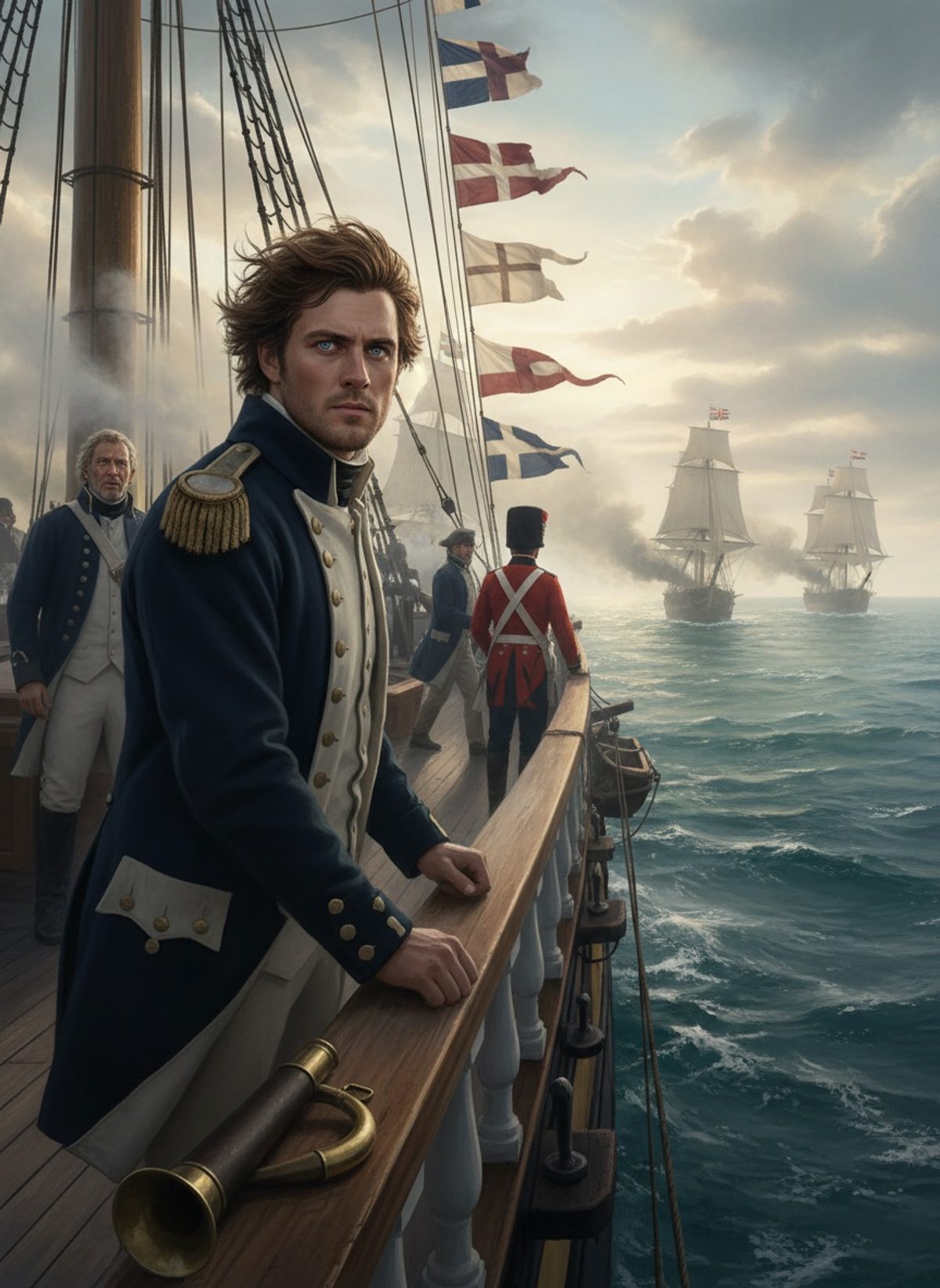
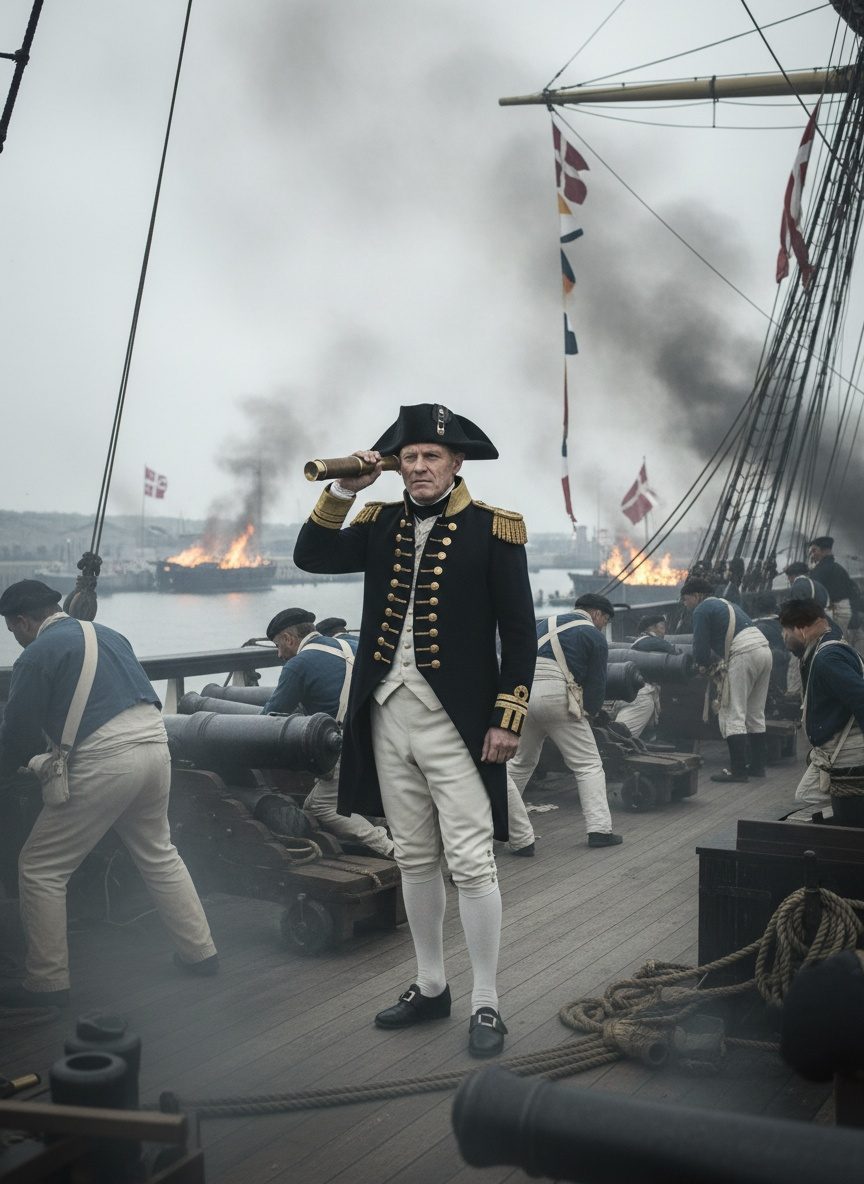
April 1801. Nelson's fleet was being torn apart. His commander signalled retreat. Nelson raised his telescope to his blind eye. 'I see no signal,' he said. He fought on. Denmark surrendered within hours.
She fought at Trafalgar under a French flag. Then she fought for Britain. By 1949, she was the second-oldest warship afloat. The government sent her to the bottom anyway.
Atlantic Ocean. 1801. HMS Speedy carried just 14 tiny guns. The Spanish warship Gamo carried 32. Captain Cochrane attacked anyway. He took her. With 54 men against 319.
In 1895, the Royal Navy ruled the world's oceans. It also had more admirals on its books than it had battleships ready to fight. The numbers told a story nobody wanted to hear.
May 1916. HMS Chester came under fire from four German cruisers. Boy First Class Jack Cornwell was sixteen. His gun crew died around him. He stayed at his post. Wounded. Alone. Waiting for orders that never came.
November 1759. A French fleet was sailing to invade Britain. Admiral Hawke gave chase into a howling Atlantic gale. His captains thought it madness. He flew into Quiberon Bay anyway. France never threatened invasion again.
In 1869, HMS Rosario intercepted the schooner Daphne in the Pacific. Below deck: dozens of islanders taken by force. One Royal Navy crew, one condemned ship, one verdict that changed the Pacific forever.
June 1813. HMS Shannon had been at sea for seven years. Her captain drilled his gunners every single day. When USS Chesapeake sailed out to fight — it was over in thirteen minutes.
1757. The Royal Navy shot one of its own admirals. Not for cowardice. Not for treason. For failing to try hard enough. His name was John Byng. And his death changed how Britain fought every war that followed.
1801. HMS Speedy had 14 tiny guns. El Gamo had 32. Her crew numbered 319. Cochrane had 54 men. He attacked anyway. In 45 minutes, he took her.
November 1759. A storm was raging. Any sane admiral would have turned back. Edward Hawke did not. He chased France's entire invasion fleet into shallow, reef-strewn waters. And destroyed it in an afternoon.
January 1796. A French warship explodes in Plymouth Sound. One British captain dives into freezing water without orders. He saves 400 men from the flames. His name is Edward Pellew.
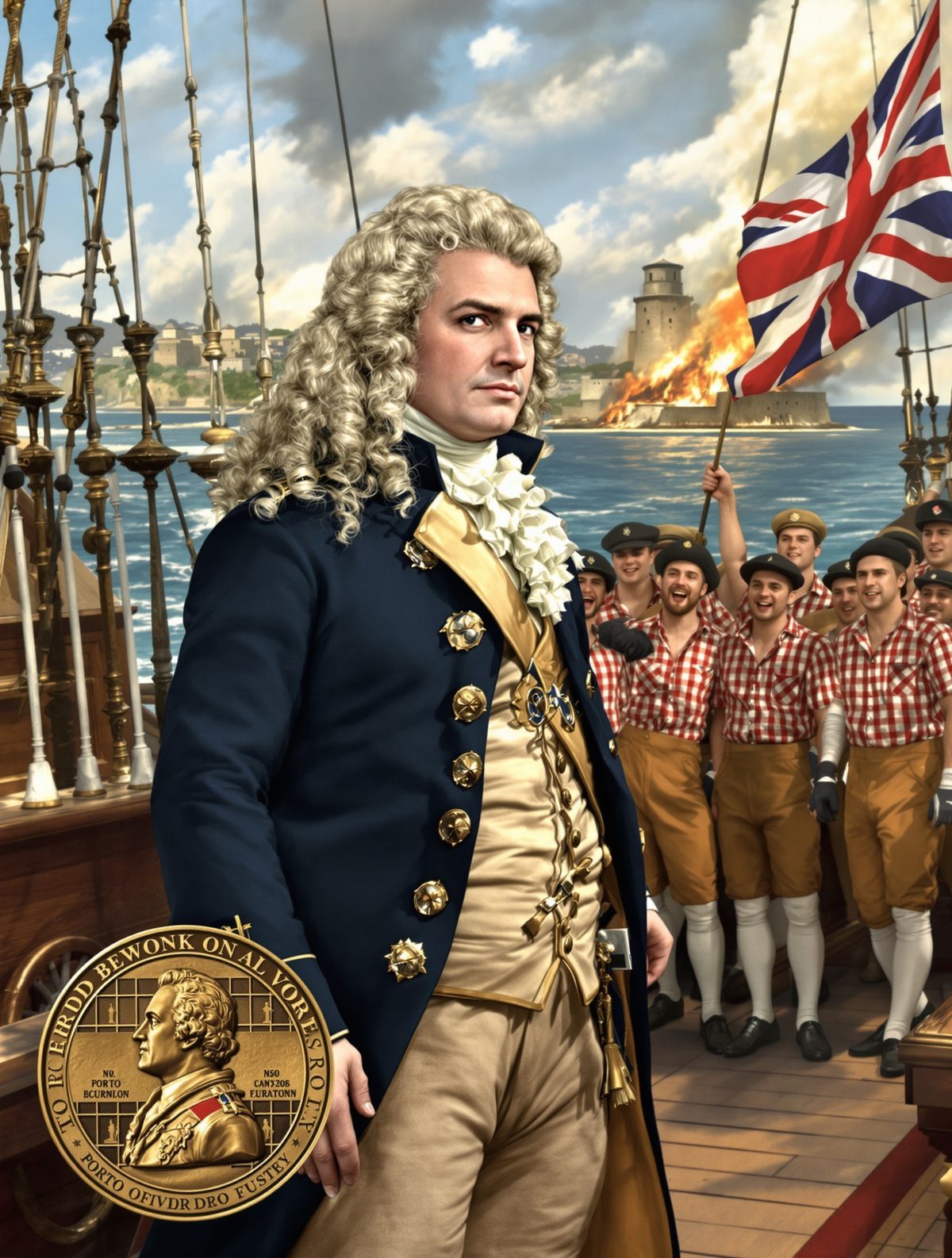
Admiral Vernon's victory at Porto Bello sparked Britain's first mass-produced commemorative medals. Thousands wore his bronze portrait. A naval hero cult was born that would define British identity for two centuries.
November 1759. Admiral Hawke pursued the French fleet into Quiberon Bay. His captains warned of rocks and rising gales. "I'll follow them to hell," he replied. The hurricane that should have saved France destroyed her navy instead.
Captain Pellew's HMS Indefatigable spotted two French frigates off Brittany. Outgunned and alone, he should have fled. Instead, he sailed straight between them. Four hours later, both enemy ships surrendered.
Captain Anson's squadron sailed from England with 1,900 men in 1740. Four years later, only 500 returned. Scurvy killed more sailors than Spanish cannons ever could. But Anson brought home £400,000 in Spanish treasure.
Admiral Rodney's fleet bore down on the French line off Dominica. His flagship broke through their formation. A maneuver no admiral had attempted in 200 years. The victory saved Jamaica and secured British rule of the Caribbean.
1779. Admiral Augustus Keppel faced the hangman's noose for losing a battle. His crime? Refusing to risk his fleet in a hopeless fight. Britain's greatest naval heroes rallied to save him. The verdict would decide the Navy's fate.
November 1759. French Admiral Conflans sailed 21 warships toward Britain's undefended coast. Admiral Edward Hawke gave chase into Quiberon Bay. A hurricane struck. Hawke pressed his attack through the storm.
Captain Edward Riou watched Nelson's signal flags through the smoke of Copenhagen. 'Leave off action' fluttered from the flagship. But Danish guns still thundered. Riou chose duty over survival. His frigates stayed to shield the fleet's retreat.
Frobisher returned from Baffin Island with 200 tons of black rock. Queen Elizabeth's assayers declared it gold. Three expeditions followed. The ore was worthless iron pyrite. England's first gold rush was built on fool's gold.
June 1770. HMS Endeavour strikes the Great Barrier Reef at full sail. Water pours through a gaping hole. Cook's crew throws 50 tons overboard. Six cannons. Barrels of food. Everything but hope.
August 1704. Admiral George Rooke's fleet anchored off Gibraltar's towering cliffs. Just 1,800 marines faced Spain's 'impregnable' fortress. In six hours of thunderous bombardment, they cracked open the Mediterranean's greatest prize.
Admiral George Rooke stared at Gibraltar's towering cliffs in July 1704. His Anglo-Dutch fleet had just been defeated at Toulon. He needed one victory to save his career. In four hours of bombardment, his guns breached the fortress walls. 1,800 marines stormed ashore. Britain had won the Rock forever.
September 1591. The Spanish treasure fleet surrounded HMS Revenge off the Azores. Captain Grenville refused to surrender. For 15 hours, one English ship battled the entire Spanish armada. Grenville died at his post. His last words became legend.
1740. Admiral Vernon faced a crisis. His sailors were drinking neat rum and collapsing on duty. His solution? Mix it with water and lime. He saved the fleet. And accidentally created the world's most famous drink.
Captain Woodes Rogers found Alexander Selkirk on a Pacific island in 1709. The Scottish sailor had survived alone for four years and four months. He'd forgotten how to speak. His story became Robinson Crusoe.
May 31st, 1916. Admiral Jellicoe commands 151 British warships. The German High Seas Fleet approaches. One tactical decision will decide who rules every ocean on Earth. The weight of the empire rests on his next signal.
Admiral John Byng sailed to save Minorca. His fleet retreated after one skirmish. Court martial found him guilty of cowardice. He faced a firing squad on his own quarterdeck. Britain never shot another admiral.
November 1914. Admiral Christopher Cradock knew his old cruisers couldn't match German guns. His orders were unclear. He could have waited for reinforcements. Instead he sailed straight into battle off Chile. All hands lost.
HMS Warspite was meant for scrap. Her steering was broken. Her engines failing. But on D-Day morning she sailed anyway. The old battleship fired 300 shells at Nazi bunkers. Her final battle at age 30.
Captain Frederick Walker hunted Nazi submarines in the Atlantic. In three years he sank 20 U-boats. More than any other commander. He saved thousands of merchant sailors. Then died of exhaustion at his desk. Age 48.
September 1779. The Scottish-born American captain sailed his burning ship straight at HMS Serapis. Both ships locked together in deadly embrace. Jones fought on as his deck collapsed beneath him. At dawn, the Royal Navy captain surrendered.
May 1915. The Royal Navy's most brilliant admiral faced his greatest enemy. Not the Germans. The politicians. Admiral Jackie Fisher stormed into Downing Street. His ultimatum would rock the Empire.
February 1779. The world's greatest navigator returns to Hawaii for ship repairs. A stolen boat sparks violence on Kealakekua Bay. Cook tries to take the Hawaiian chief hostage. A stone strikes Britain's master of the Pacific.
Hand-picked from Britain Untold's archive. The stories you weren't taught at school. 3-minute read.
No spam. Unsubscribe in one click. We hate spam too. Privacy Policy.