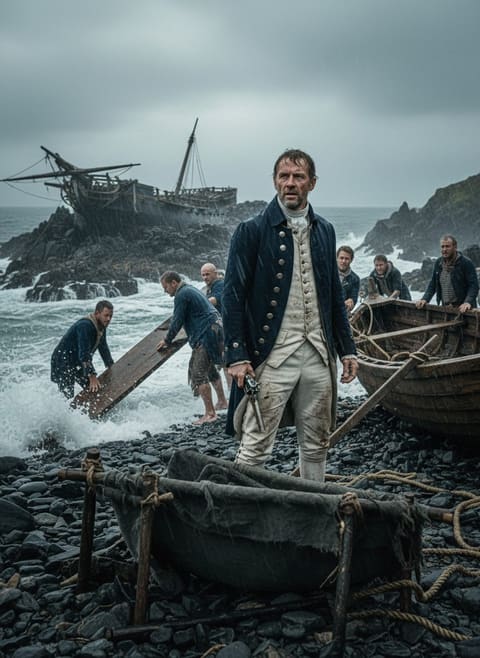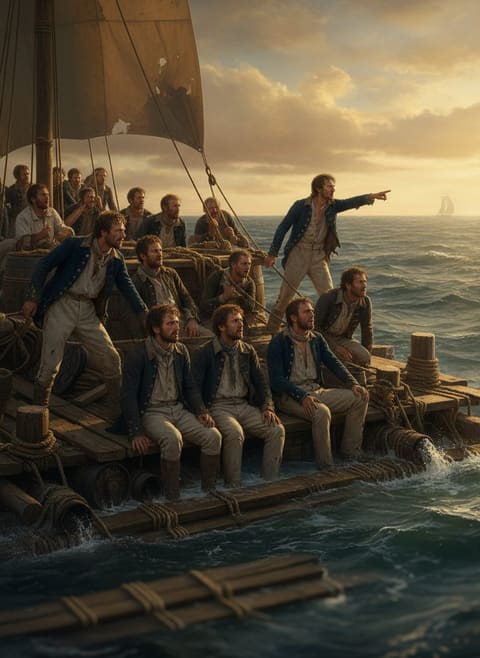
He was known for his daring exploits and fearless command on the high seas. Yet, as a young man, Captain Edward Pellew had been a mere tailor's apprentice, learning the intricacies of needle and thread. His proven valor and strategic genius in the Royal Navy would carve a name that resounded through the annals of maritime history.
The Tempest and the Tide
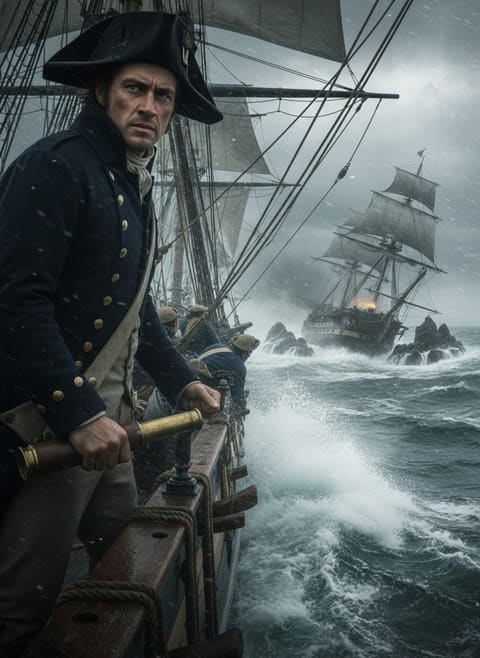
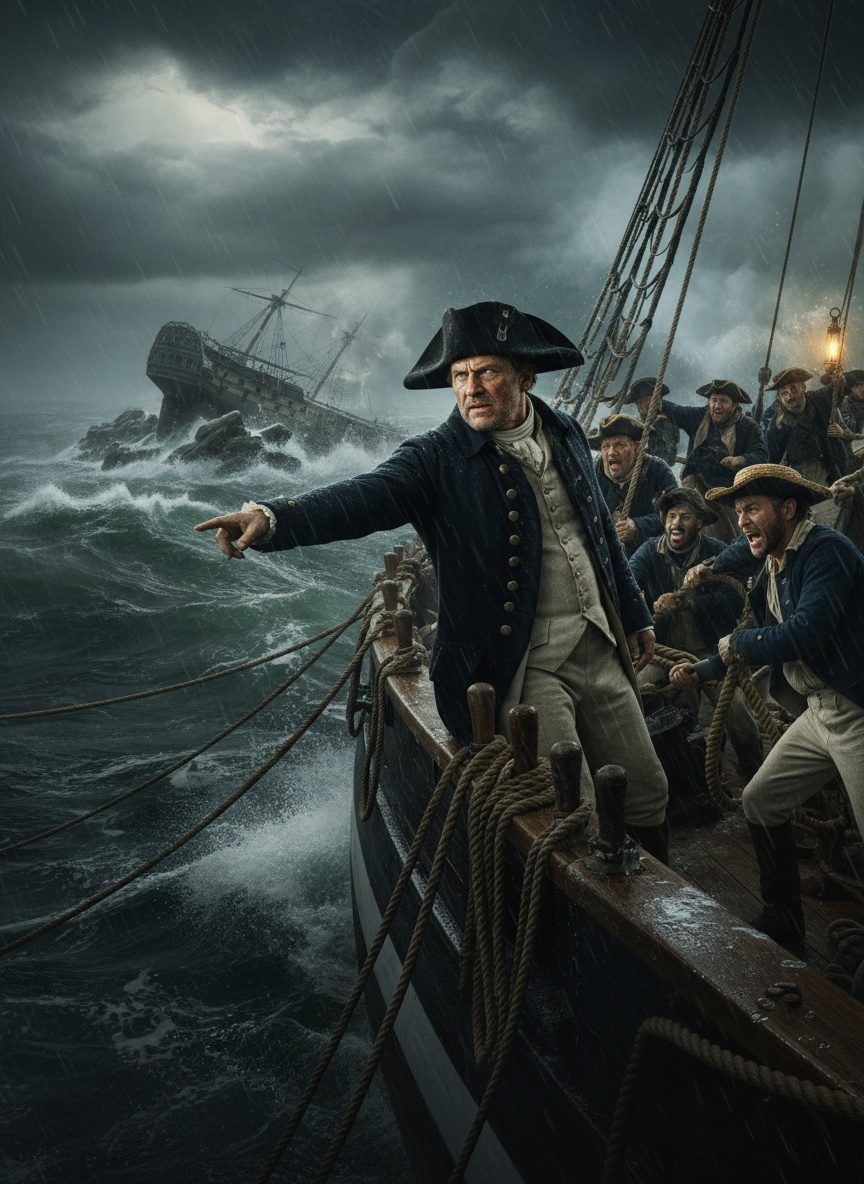
January 1797, the dead of night cloaked the Atlantic with a thick, impenetrable shroud. The roar of the storm was deafening, its winds howling with an eeriness that struck fear even into the most seasoned sailors. Amidst this chaos, Captain Edward Pellew navigated the HMS Indefatigable with exceptional skill and uncanny precision, his eyes focused on his adversary—a formidable French ship, the Droits de l'Homme.
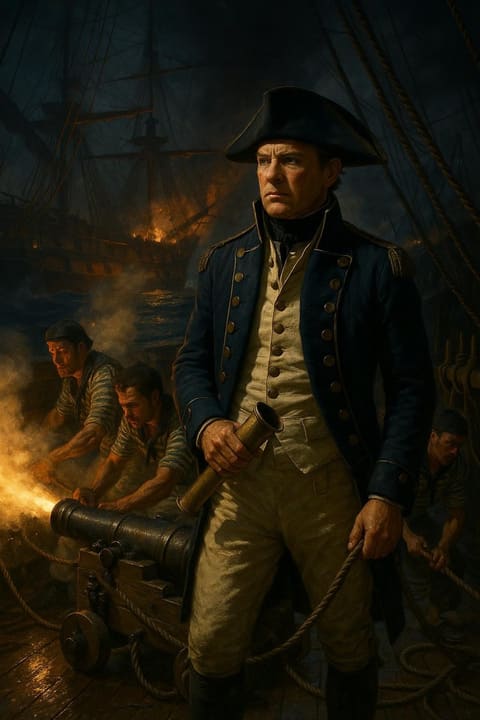
Pellew, a man of brilliance and nerve, had earned his reputation through countless engagements, proving time and again the mettle of both himself and his crew. As the battle unfolded, cannon shots echoed across heaving waters, each blast a signal of the ferocious contest between two nations at war. The French ship, a behemoth with 74 guns, struggled against both the English frigate and the relentless storm, its deck awash with the Atlantic’s fury.
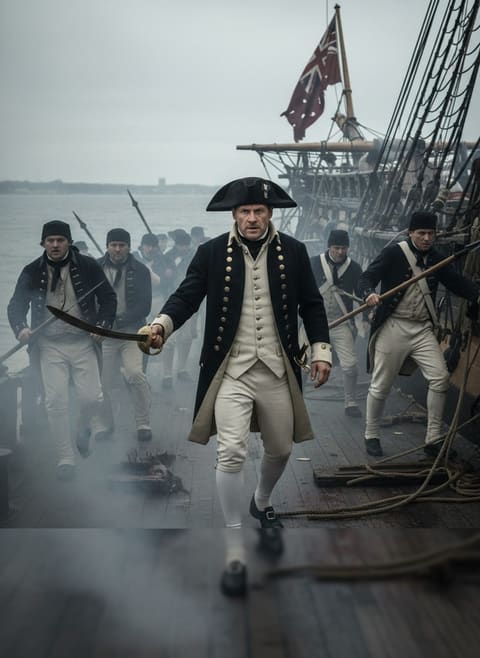
As the hours stretched, Pellew executed a tactical maneuver that outwitted his enemy, driving the Droits de l'Homme onto the unforgiving rocks of the Brittany coast. Darkness, amplified by sheets of rain and the wildness of the sea, cast doubt on survival. Yet, it was Pellew’s capacity for compassion amidst conflict that set what happened next apart.
Read next: When Piper Findlater Played On With Two Bullets in Him, 1897
Turning Back for Humanity
The clash between empire and republic, England and France, was well understood on both sides as a fight for supremacy—brutal and relentless. Yet, as Pellew gazed upon the destruction wrought upon the French sailors, the call of duty was drowned out by a simple principle: humanity. Despite having won the battle, his conscience—honed in the fires of previous encounters—demanded he return, against all odds, to the site of devastation.
The Indefatigable, weather-beaten and battle-worn, was turned back into the heart of the turbulent storm. Pellew rallied his crew, men who shared his commitment and valor, reminding them of the nobility inherent even in war. Together, they braved the elements, navigating treacherous breakers and jagged rocks to reach for the hands desperately reaching from the icy abyss.
It was a scene of pure chaos—a cacophony of wind, crashing waves, and cries for help. The sailors aboard the Indefatigable worked tirelessly, throwing ropes, extending boathooks, and maneuvering skiffs to hoist their erstwhile foes from the clutches of the Atlantic. They did not see enemies; they saw fellow sailors, submerged in dire fortune, and they did what needed to be done.
Many Frenchmen were saved that night, their lives reclaimed from the sea’s perilous grasp. Pellew’s actions, a beacon amidst the storm, taught a powerful lesson—a hero in battle is defined not just by victory but by mercy in its aftermath.
Read next: When Cochrane Bluffed a Fleet With a Single Frigate, 1801
The Unspoken Bonds of the Sea
The metal clinks of anchors being hoisted—yet now attenuated by the horrors seen—left an indelible mark on all present. Once back at port, the rescued French sailors, displaced and yet alive, owed their breath to a man who had been their adversary just hours before. For Pellew, the risks taken were not to be flaunted nor engraved in medals, but rather, understood as an unwritten maritime code—one that transcends even the fiercest nationalistic fervor.
Through narratives reshaped by timeless acts of compassion, Pellew emerged not just as a commander of ships but as a commander of moral clarity—a figure whose legacy sailed beyond gun decks and masts. His decision to save those he had been tasked to defeat resonated deeply, a decision few in wartime would dare emulate or acknowledge.
In his heart, Edward Pellew understood the unfathomable power of the sea—a force that binds those who dare to command it with a silent pact of kinship, irrespective of flag or creed. His is a tale told in spirited whispers among sailors, a story absent from textbooks yet vivid in the legacy of seafaring culture.
In honoring this act, we reflect upon the marine's eternal struggle: to navigate not just the waters of survival, but the deeper channels of our shared humanity. This episode not only frames Pellew as a strategic savant of naval warfare but also illuminates the essence of gallantry—one that listens to the call of courage, long after the last cannon has fired.