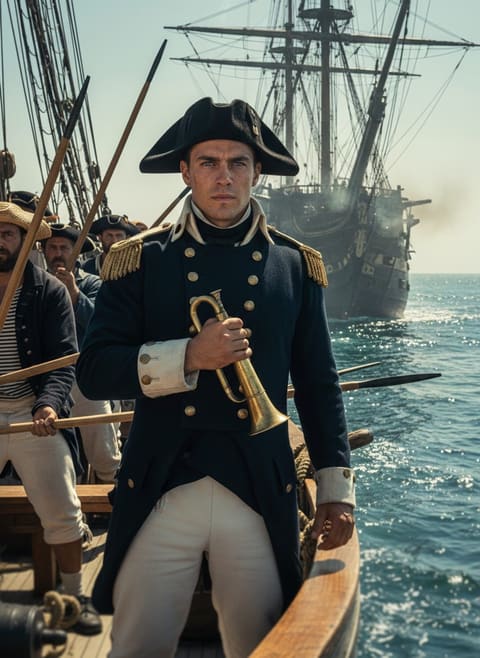
He was a lieutenant, barely experienced in commanding men, yet he was about to step into the heart of chaos. While he expected to lay claim to victory, he instead found himself surrounded by a sea of enemies still thirsting for battle.
The Lie of the White Flag
The Battle of Trafalgar raged with the raw might and determination iconic to the Napoleonic Wars. It was October 21, 1805, a day destined to reshape Europe’s naval landscape. Amidst this tumult, Lieutenant Smith approached a Spanish warship under the mistaken belief she had struck her colors—surrendered to his country’s dominance.
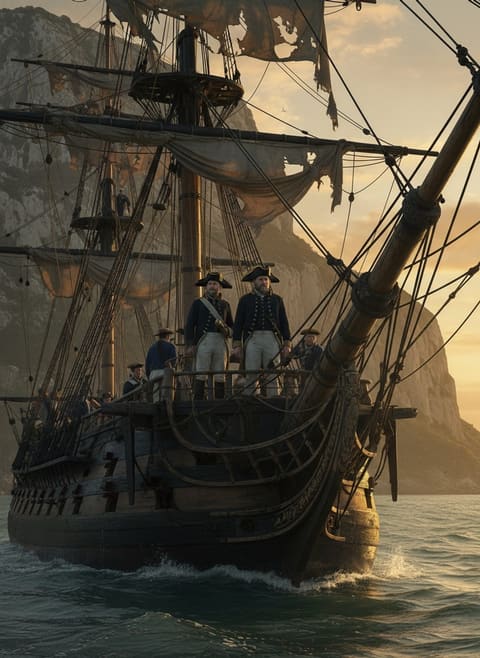
Yet, this towering ship, bristling with the silent menace of heavy armaments, had no such intent. Her deck buzzed with the frantic pace of war, the Spanish crew far from defeated.
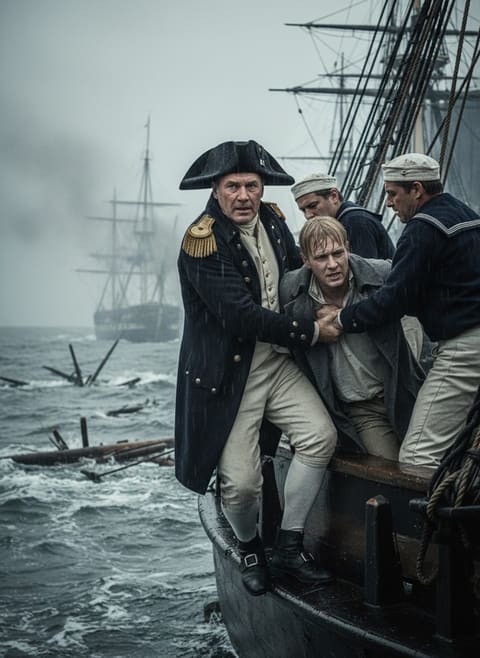
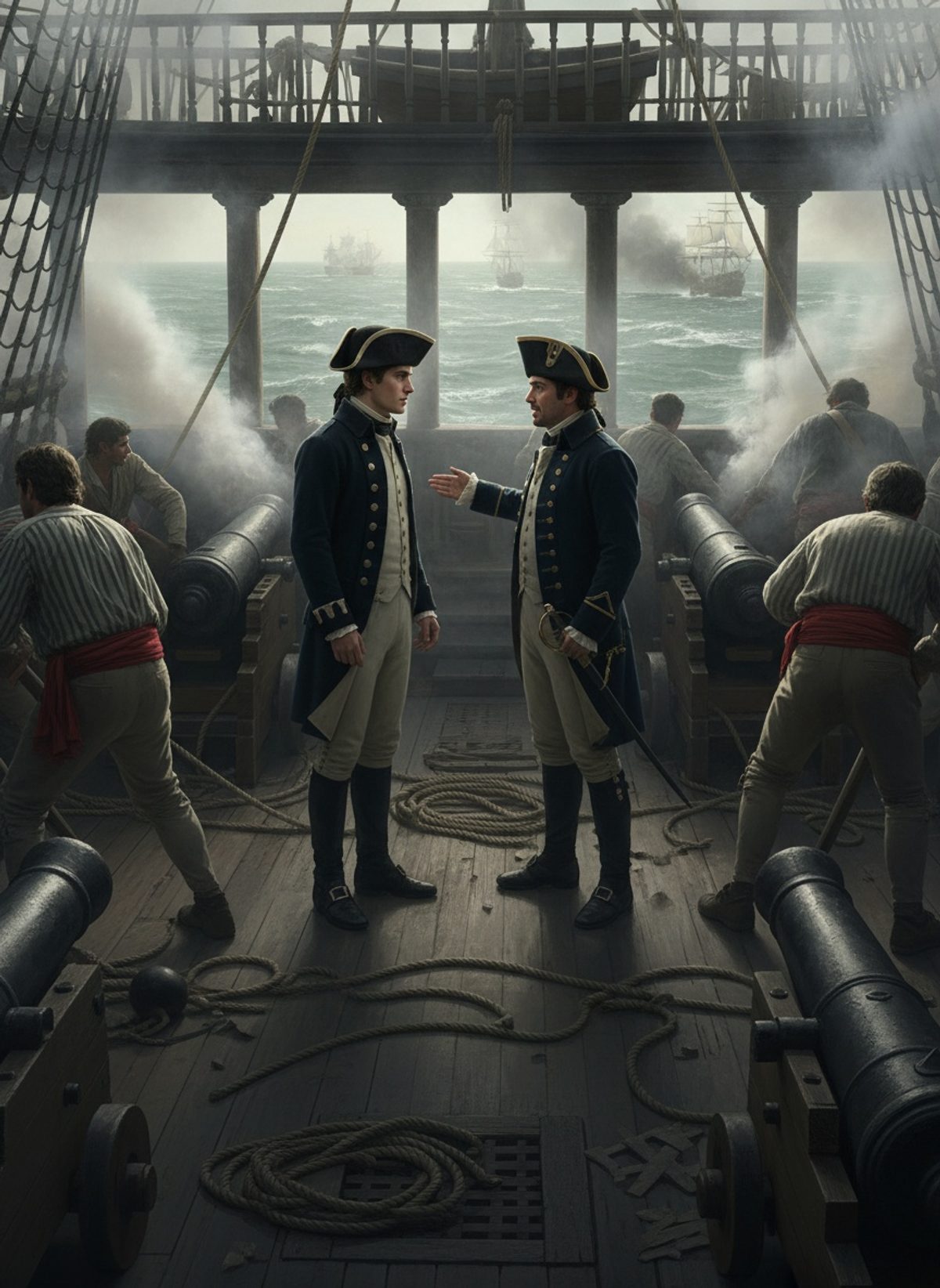
From his vantage, Smith saw what seemed to be a flag of capitulation. In the swirling smoke, amidst the roar of the cannons, signals could easily be misread. But the reverberating sound of cannon fire and cries of battle should have been warning enough. As Smith set foot on the weathered wooden planks of the Spanish vessel’s deck, he entered not as a liberator, but as a solitary figure amidst foes still embroiled in the fight.
Read next: When One Frigate Captain Outran Napoleon's Entire Fleet
Faces of the Foe
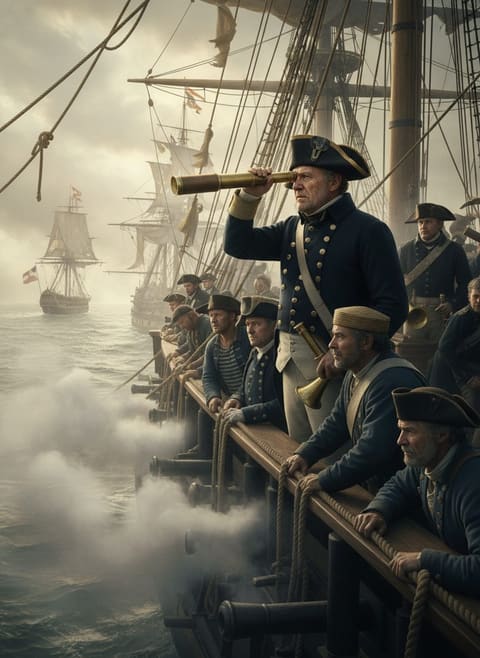
Imagine the quarterdeck, a battleground where sailors danced a grim ballet under billowing sails painted black by gunpowder. Smith, in his crisp British naval uniform, stood stark against the backdrop of grimy crew and polished cannons. Every face he turned to held a mix of surprise and calculation, threat flickering beneath the surface. Silence enveloped him briefly—a tiny pause amid the raging storm of battle—as both sides registered the staggering mistake.
For these Spanish sailors, this unexpected guest was neither a friend nor honored guest. They eyed Smith cautiously, their thoughts likely torn between adhering to war’s courtesies and capitalizing on sheer opportunity.
While Lieutenant Smith might have been a threat under different circumstances, here he was a lone Brit in the heart of a Spanish leviathan. The decision to seize or spare him hung in the balance, a choice dictated by the unspoken codes of honor among the naval warriors of the day.
A Dance with Danger
As the wind carried the acrid smoke of battle, Smith’s situation was precarious. He stood, unafraid to engage and yet aware of his fragile position. The Spaniards, bound by complicated codes of honor, still viewed gentlemanly conduct as an emblem of their status. This shared language of warfare, more than the clashing arms around them, defined the bizarre encounter.
Read next: The Day a Crippled Sailor Held the Line at Trafalgar
No order restrained Smith, no weapon secured his liberty, only the invisible thread of understanding woven into the fabric of naval life. Without surrender, without negotiation, the ship had not yielded. Yet the motley crew hesitated, parted by uncertainty and the peculiar decorum that sometimes paused even the most ferocious fight. This unspoken honor kept Smith’s fate in delicate balance.
Reason Amidst Ruin
Realizing his predicament, Smith made the decision few would have dared. He calmly addressed the stunned crew, his presence a curious twist in the theater of war. Somewhere within this charged exchange, reason pierced through the cacophony. Whether it was honor, amusement, or a strategic pause that stayed their hands, the Spaniards refrained from making Smith a casualty of the battle’s fury.
Smith returned to his boat, rowed back under the shadow of cannons, astonished but unharmed. In those fleeting moments, he glimpsed a truth underlying warfare that textbooks often neglect—its human element. The Battle of Trafalgar, with its chaos and courage, etched itself into history, yet that uncertain moment, shrouded in civility, revealed the strange courtesies even relentless foes sometimes extended.
This story of one lieutenant’s misadventure offers a window into the myriad nuances of naval combat. It underscores a simple truth: amid the deafening clangor of war, humanity finds ways to endure. Smith’s walk on the enemy’s deck imparts lessons less about tactics and more about the unpredictable nature of human interaction, at once noble and absurd. A reminder that even in the depths of conflict, understanding sometimes rides alongside survival.