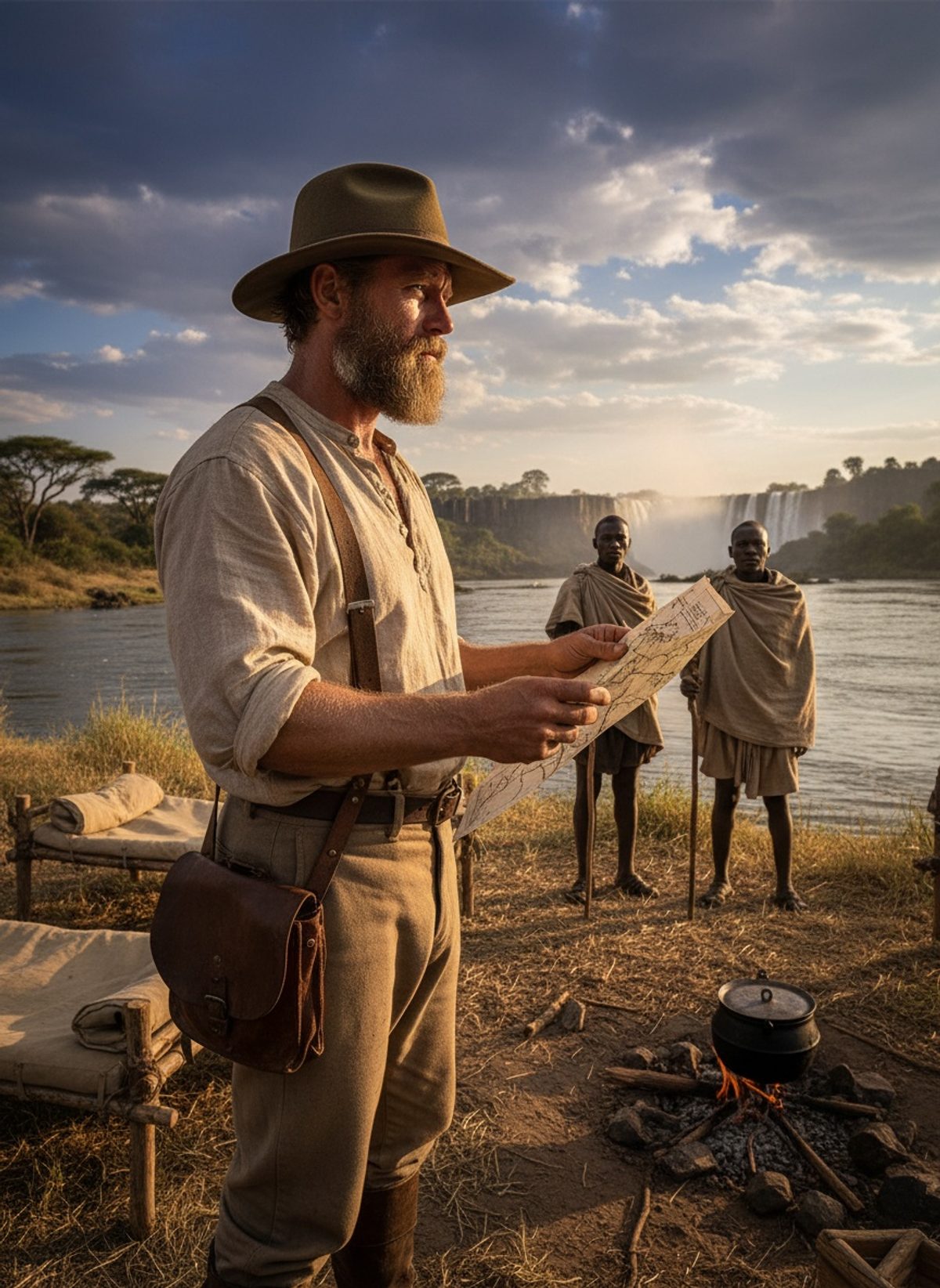
November 1888. The roar of the Zambezi River echoed like a canon, reverberating through the wild terrain surrounding Victoria Falls.
Frederick Courteney Selous stood at the precipice. Before him stretched one of nature's masterpieces, a vibrant tapestry of cascading water that split the land with an unforgettable roar. It was raw, untamed, mesmerizing. As he took in the vista, Selous was not merely a tourist in this wild expanse; he was an explorer, a pioneer in the often treacherous but infinitely fascinating journey through Africa's heart.
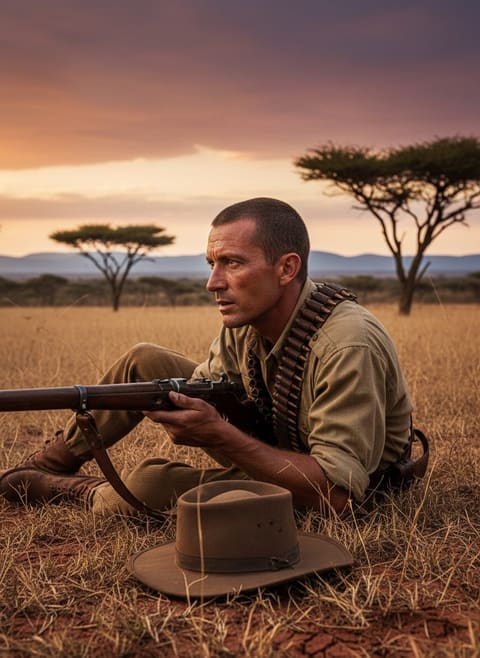
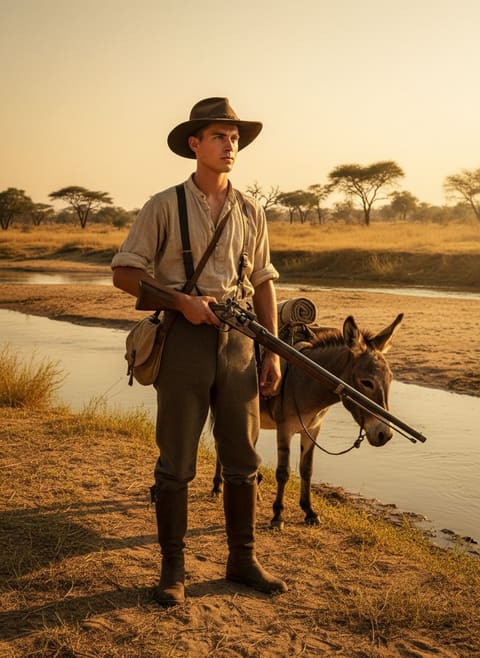
Ivorian mist rising from the plunging falls mixed with the heat to create an almost ephemeral ambiance. Selous, with his worn leather boots and rugged clothing, was marked by the many expeditions he had undertaken into the uncharted blankets of southern Africa. For thirty daring years, he had plunged into the wilderness, armed simply with a rifle, a notebook, and an unquenchable thirst for discovery.
Selous was a hunter by trade, but he also took meticulous notes, sketching the landscapes and noting down details of the geography, flora, and fauna he encountered. He was not just charting a map but unraveling an enigma. Every line he drew, every report he penned, contributed to a broader tapestry emerging from the colonial era's voracious quest for knowledge and power. Under his steady hand, the daunting and mysterious southern African interior gradually revealed itself to the Western World.
Read next: When Frederick Lugard Marched Into Buganda Alone, 1890
Without an official mandate from London, Selous operated largely of his own volition. Yet, the information he collected was of paramount importance to the British South Africa Company. They understood the value of his solitary journeys across the Zambezi, knowing that in his sketches and scribbles lay the potential blueprint of empire. Roads drawn on Selous’ maps would pave paths for traders, missionaries, and eventually, settlers striving to carve out a slice of prosperity from the African wilderness.
Upon reaching the falls in 1888, Selous' accomplishment was nothing short of monumental. No Englishman alive had penetrated the interior of this vast expanse as far as he had. It was an age when lands and lives were molded by the pencil, the mapmaker's tool as essential as any weapon. Victoria Falls, known locally as Mosi-oa-Tunya or "The Smoke That Thunders," marked a boundary of sorts; beyond lay potential, mystery, and undiscovered value. For it was within these maps and routes that the seeds were planted, germinating into Rhodesia, a territory named for the imperial vision of Cecil Rhodes but standing on the foundational geography that Selous painstakingly outlined.
His journey was not only about land; it was about understanding the intricate mesh of its ecosystems. Today, Selous is far better remembered as a namesake of the great game reserves, a tribute to his expertise and passion for conservation before it was ever en vogue. Yet in 1888, his advocacy for wildlife was born of necessity, understanding not just the majesty of the animals but the pragmatic root of sustainable hunting practices.
The scars of travel and the endless days under the African sun had burned themselves into his skin. He had befriended locals, hiring guides, learning languages, absorbing the myths and wisdom that ran through the tribal narratives like threads through a loom. It was a connection to the land deeper than any colonial claims of authority.
Read next: When Samuel Baker Knelt Before the Khedive, 1869
When Selous submitted his maps to the British South Africa Company, he might have understood, in the quiet moments grasped between the thunder of the falls and the rustle of the dense underbrush, that his work would outlive him. Borders were drawn, not always respecting the natural nor the societal lines that existed long before any European boots trampled over them. Yet, his maps extended far beyond the physical; they marked the beginning of a meld that would shape political and cultural landscapes for centuries to come.
Alandscape born of independence and colonial ambition, defined by a single hunter who walked alone, leveled the land with his sights, and in doing so, drew the bones of a nation. In that November of 1888, when Selous stood at nature's brim, he not only charted the territory but chronicled a moment in history where exploration turned to colonization, where untouched wilderness became mapped land.
Although Selous lacked the titles and power of statesmen, his compositions architected an unintended legacy. The Scramble for Africa was in full fever, an era that reshaped the continent, its borders, its people. As we stand far removed from those treacherous days of exploration and conflict, we find ourselves peering back into history’s iridescent past. Selous's journey continues to offer a mirror to our present, reflecting on the paths drawn by intrepid explorers in a world just beginning to grapple with the consequences of its divided geology and woven narratives.