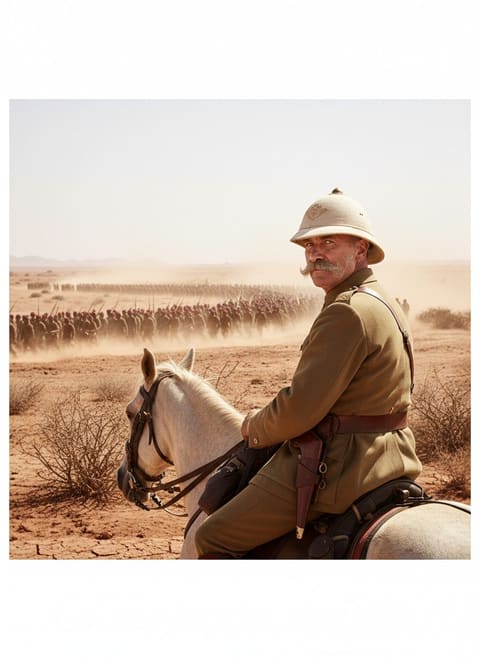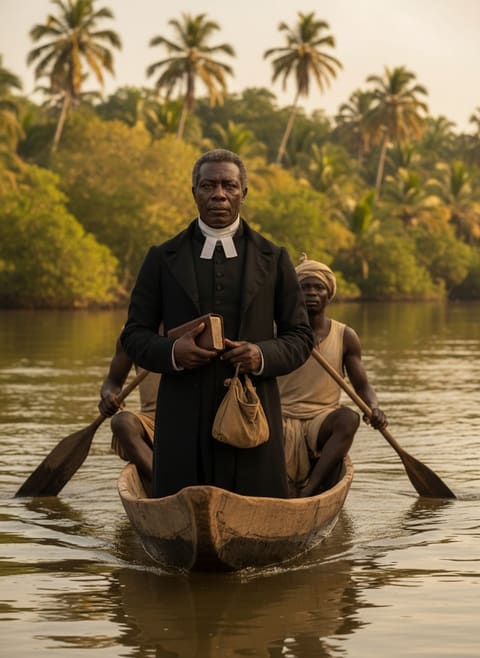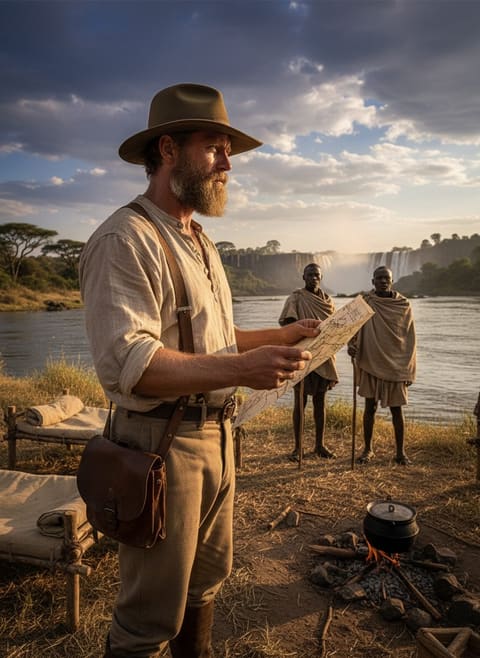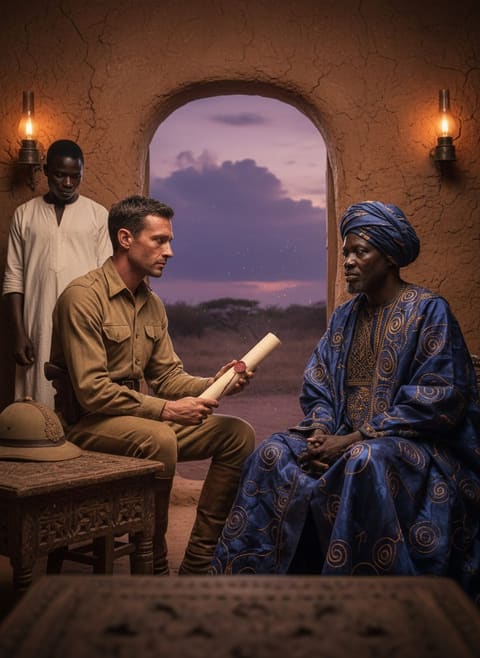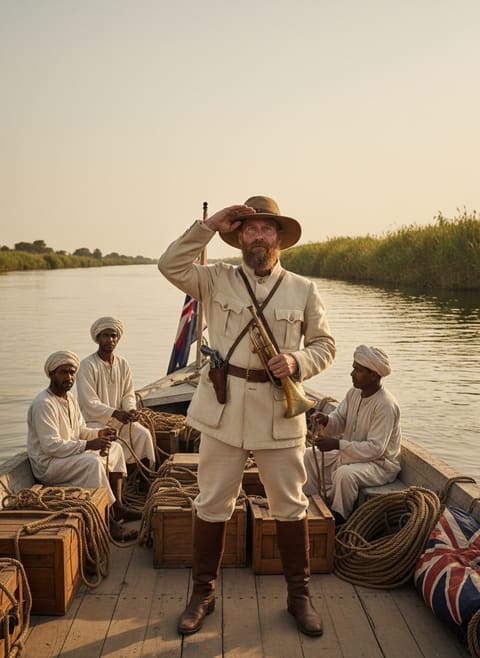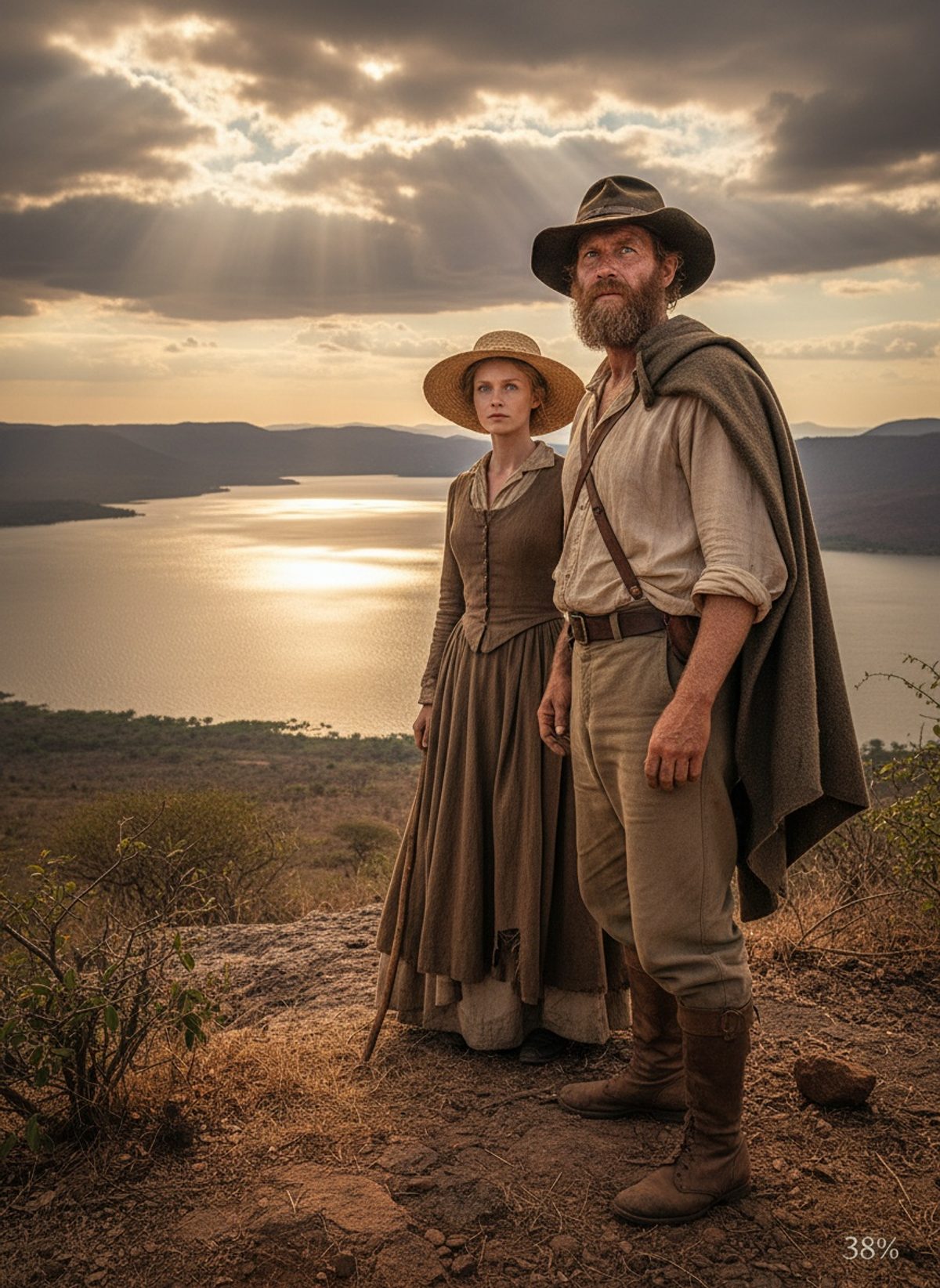
March 1864. The sun blazed mercilessly, casting wavering shadows across the rocky terrain.
The Unwavering Quest Across Unknown Lands
For two arduous years, Samuel Baker and his wife Florence had traveled across the unforgiving expanses of Africa, a continent still largely mysterious and unmapped by Europeans of their time. Their journey, fraught with dangers that included rampant disease, treacherous terrain, and oftentimes hostile encounters, was driven by a singular, bold ambition — to uncover the source of the Nile, the lifeblood of ancient and modern civilizations. Yet this expedition from which many might have turned away was not one that Samuel Baker had undertaken alone. Beside him walked his remarkable companion, Florence. Together, they carved their path through what Europeans then described as "The Dark Continent", facing adversities that tested the limits of their resolve.
The Moment Discovery Gleamed On the Horizon
Their path had brought them to a ridge unlike any other, where the land dropped dramatically to reveal a sight so unexpected, so monumental, that it halted them in their tracks. Before them stretched an immense body of water glistening under the equatorial sun. It was an inland sea that none from their world had laid eyes upon. In that moment that linked their past struggles to an unimaginable achievement, Samuel Baker shed tears — overwhelmed by the magnitude of their discovery. To the world, it would become known as Lake Albert, a name bestowed upon it by Baker himself in honor of Prince Albert, the consort of Queen Victoria. This inland sea was more than a geographical wonder; it represented the second great source of the Nile, further unravelling the mysteries of Africa’s greatest river.
Florence: The Uncelebrated Strength Behind the Triumph
Florence Baker was no mere shadow in this grand expedition; she was a partner, an equal who stood alongside Samuel with unwavering determination. Her presence on such a perilous journey was a testament to her character and resilience. Captured initially in the anarchical edges of Eastern Europe, Florence’s journey had taken her from the brutal confines of an Ottoman slave market to the parched terrains of Africa, at Samuel’s side. Her ability to navigate complex social terrains and her innate strength were pivotal to their successful navigation of both physical and diplomatic obstacles on their path. While the histories often focus solely on Samuel, it was Florence’s bravery that also shaped their incredible journey.
Read next: When Hector Macdonald Rose From the Ranks to Save Sudan
The Course of Empires Influenced by a Distant Shore
The discovery of Lake Albert not only added to the geographical understanding of Africa but also held far-reaching implications for the European powers of the era. As the Victorian era propelled Europe into an age of exploration and empire building, new discoveries such as this fueled colonial ambitions. Land not only meant resources but strategic power. The revelation of such a vast inland water body redefined boundaries and laid new stripes on the proverbial map of Africa. It was a catalyst that intensified the race among European powers to lay claim to African territories, tilting the balance of colonial interests and precipitating the so-called 'Scramble for Africa'.
Beyond the Boundaries of Discovery
Samuel and Florence Baker's uncovering of Lake Albert resonates not only as an achievement of exploration but as a metaphor for human perseverance and partnership. This tale from the heart of Africa offers glimpses into the complexities of exploration beyond mere cartography, reflecting the intertwined human narratives that often go unrecorded. As Samuel stood upon the precipice, overlooking the water that lay like a mirror to the sky, he beheld far more than geography; he witnessed a confluence of destinies, where human tenacity met the magnitudes of nature. It is a reminder that history is filled with stories of human resilience, of moments when worlds both collide and uncover each other. This is the essence of exploration—eternal vigilance upon the beholder’s path.