On 29 November 1929, four men in a Ford trimotor flew over the South Pole. The aeroplane was named for a friend who was not aboard. He had died the year before.
A plane for Floyd Bennett
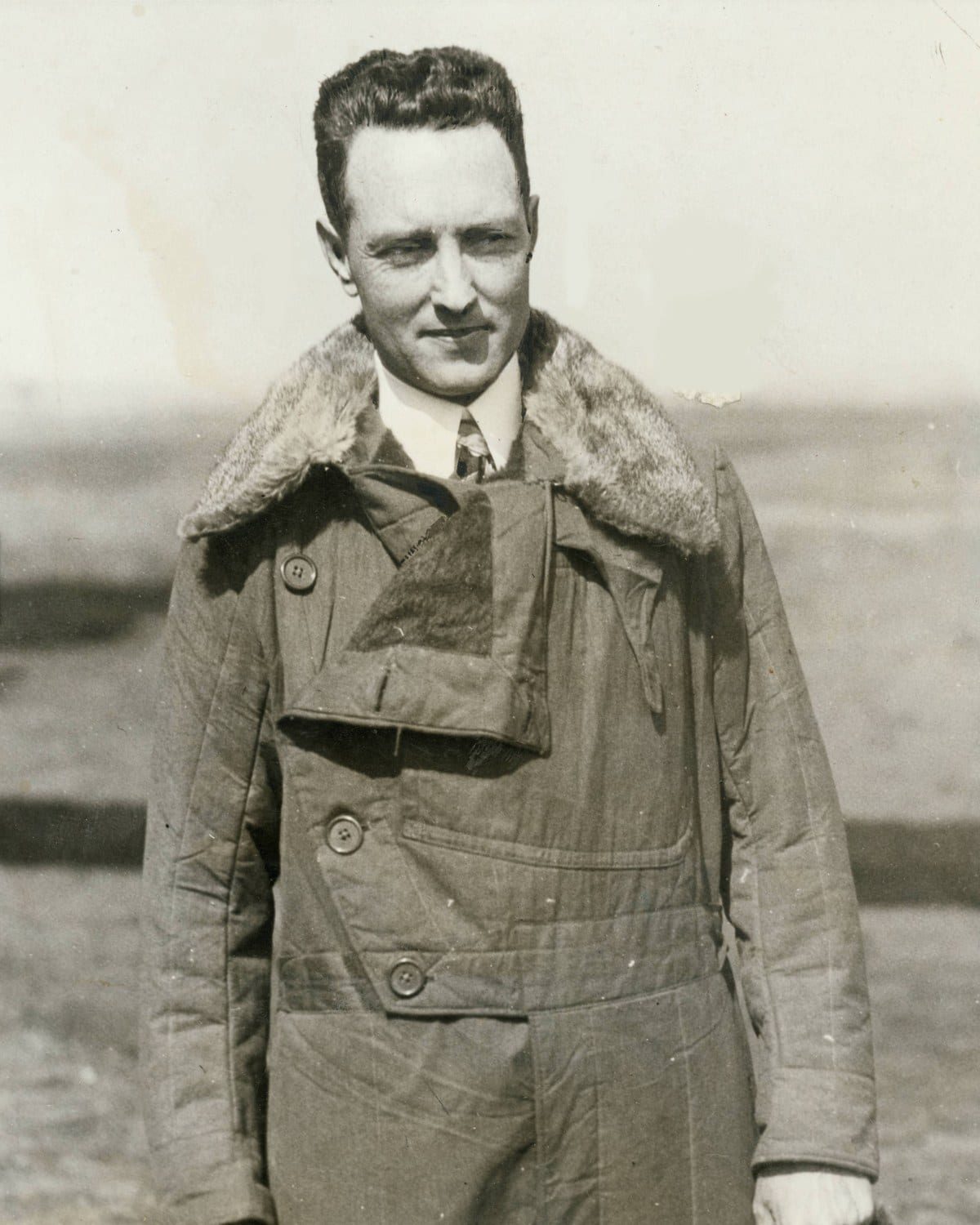
Air & Space Forces Magazine says Richard Byrd's pilot on his 1926 flight, which was said to have reached the North Pole, was the Navy man Floyd Bennett. When Byrd began planning a South Pole flight, Bennett was to have been on the crew.
In 1928 Bennett joined a rescue effort for a German aircraft that had crash-landed near Newfoundland. He caught pneumonia and died in a Canadian hospital. With Bennett dead, Byrd chose the Norwegian pilot Bernt Balchen.
Four pilots
The magazine says all four men on the flight were pilots. Balchen took the controls. Harold June was co-pilot and radio operator. Ashley McKinley, a former Army captain, was the aerial photographer. Byrd was flight leader and navigator.
Read next: Ludwig Guttmann Handed Paralysed Veterans Javelins and Rewired Sport
Their base was Little America, on the Ross Ice Shelf. The expedition's geologist, Laurence Gould, had gone ahead with a small party and 42 sled dogs to check the weather. On 27 November he radioed that it was good.
Too heavy
Balchen weighed the cargo and balanced it with care. At the last minute, the magazine says, Byrd ordered two more 150-pound sacks of emergency food aboard, which left the plane dangerously heavy.
The aeroplane could not carry enough fuel for a non-stop round trip. According to the Byrd website, Byrd had flown out ahead of time and laid a fuel cache at the foot of the Transantarctic Mountains, so that the plane could refuel on the way back.
Over the mountains
The route lay over the Queen Maud Mountains, and as the plane approached them Balchen shouted that it could go no higher. Ohio State University Libraries says the choice was food or fuel, and Byrd decided that the food would go. They dumped one bag, then another.
The Byrd website says 250 pounds of food went overboard, and that McKinley photographed the plane barely clearing the pass above the Liv Glacier. Then the plane was over the flat polar plateau.
At the pole
The magazine says Byrd and McKinley each wrote an article for National Geographic in the early 1930s, and that Balchen told his version in his 1958 autobiography. Byrd and Balchen each put themselves at the centre of the action. Ohio State says the engines were so loud that the men passed notes.
At 1:14 a.m., according to the magazine, Byrd handed June a message for Little America. It read: "My calculations indicate we have reached the vicinity of the South Pole. Flying high for survey. Soon turn north."
The Byrd website says Balchen flew a circle around the imaginary point while Byrd took several sextant observations. Byrd dropped an American flag, weighted with a stone from Bennett's grave.
How near was it?
Ohio State reproduces a note from a National Geographic Society committee that studied Byrd's route. It says the committee was convinced that a course within 4 nautical miles of the pole was made good, and that the party went "to, and probably beyond" it.
Read next: Eratosthenes Measured the Earth's Circumference With a Stick
Byrd's own radio message said only that they had reached "the vicinity" of the pole.
Home again
The return was easier, the Byrd website says. The plane was lighter and had a tail wind. It landed at the fuel cache, took on more fuel, and reached Little America after an 18 hour flight. Wikipedia gives the round trip as 18 hours 41 minutes.
Byrd got a hero's welcome at home, the Byrd website says. The magazine says he was promoted to rear admiral on the retired list.
First by air
The Byrd website recalls that Roald Amundsen had reached the pole with sled dogs in December 1911. The magazine calls it a well-established fact that on 29 November 1929 Byrd and Balchen, with two other crew members, became the first men in an aircraft to reach it.
Byrd's 1926 North Pole claim is a separate matter. Wikipedia says there is some controversy about it, and the magazine says Balchen later contended that Byrd never got there.