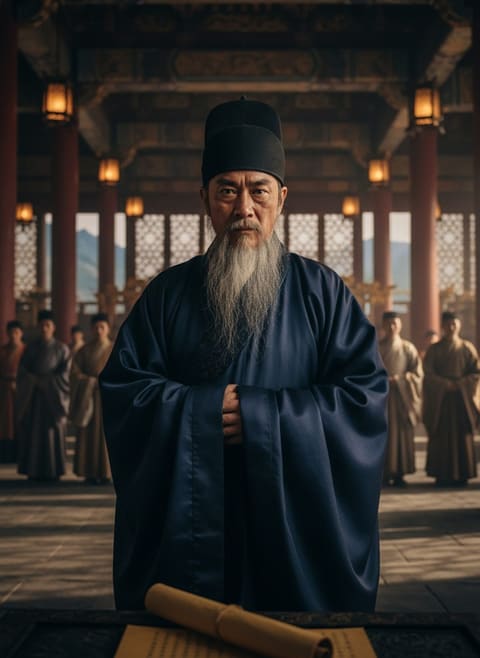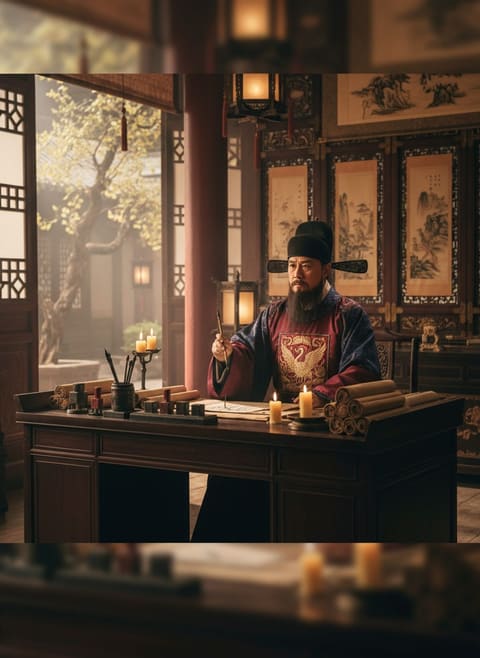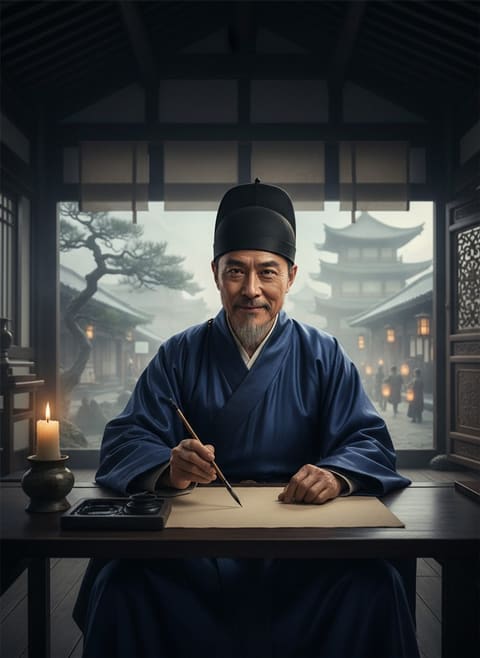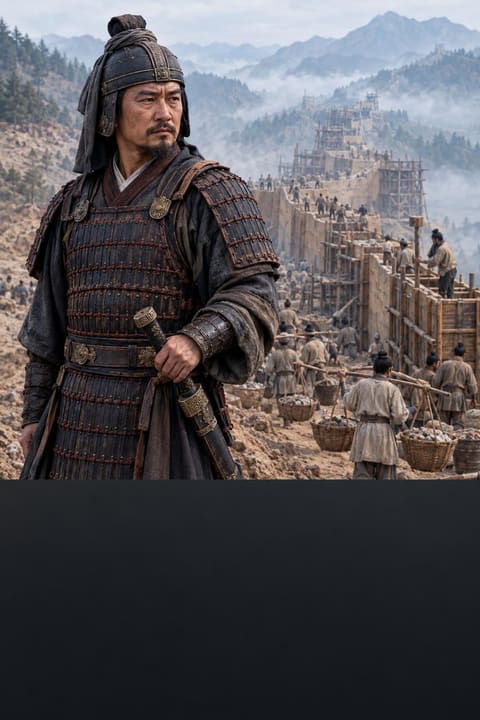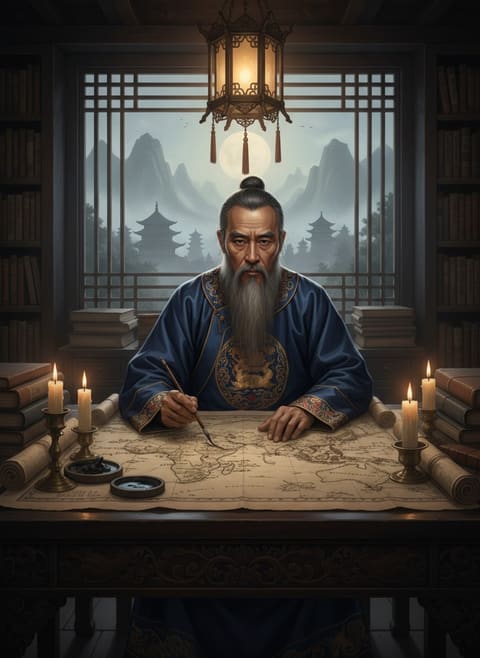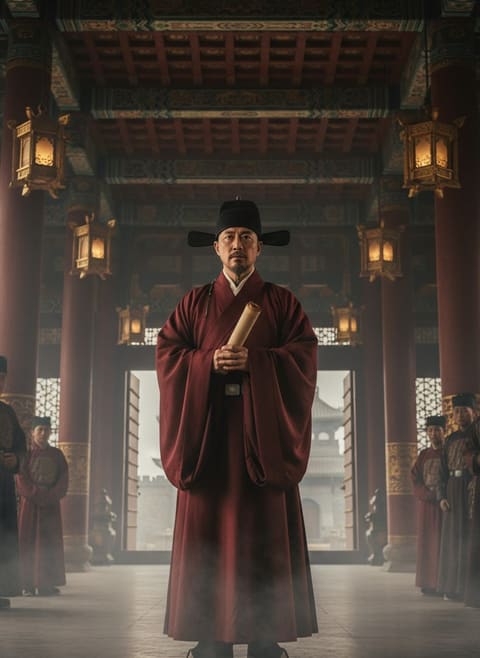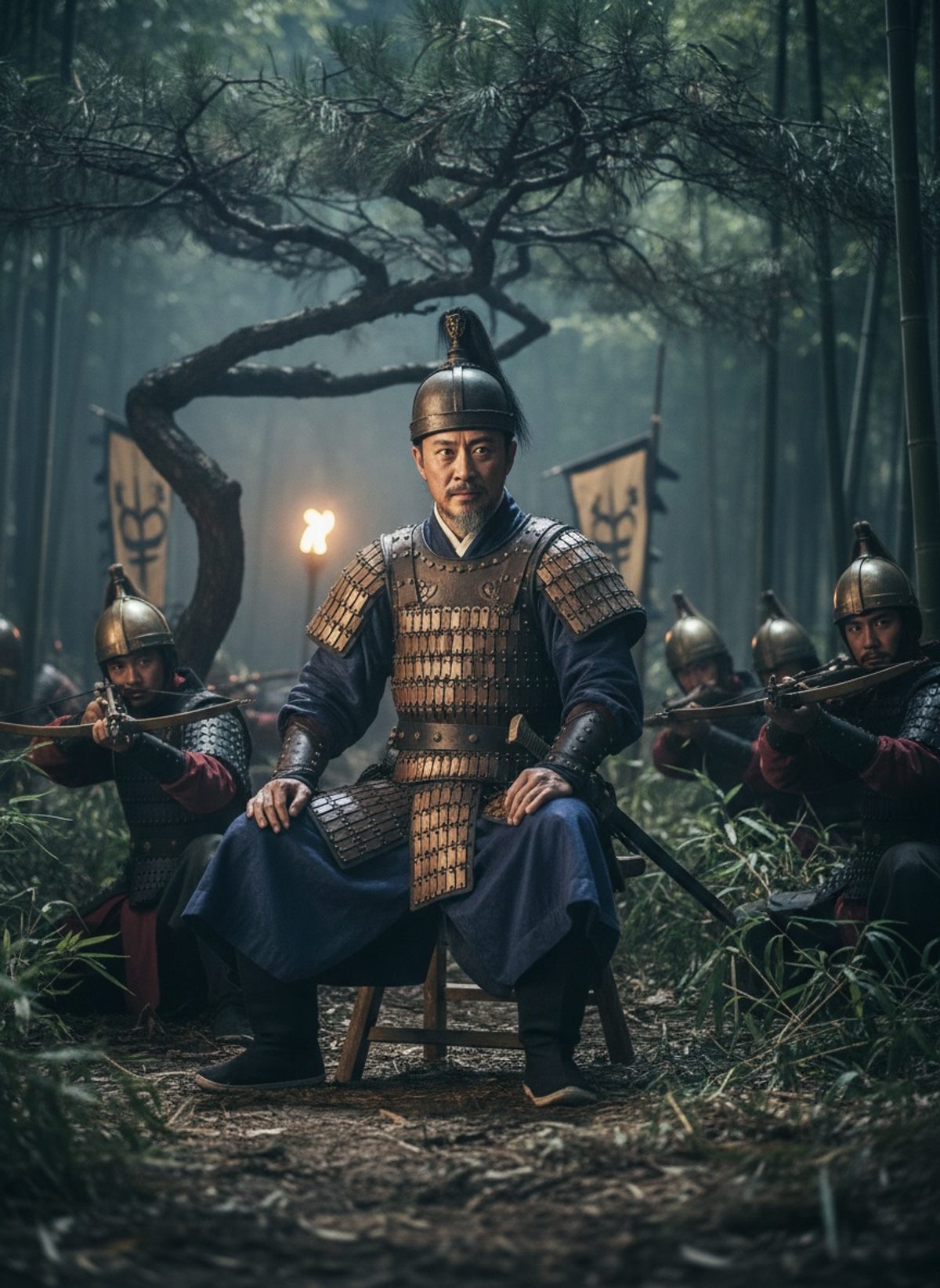
The mist hung heavy in the narrow valley of Maling, curling through the trees like a living thing, veiling the early evening light and turning the distant cries of night birds into eerie echoes. It was here, amidst the whispering branches and the creeping darkness, that Pang Juan, a once-celebrated general of Wei, found himself at the brink of his first and final confrontation with his greatest rival—his former friend and comrade, Sun Bin.
History does not simply whisper the stakes of the moment; it thunders them. This remote valley was about to become the stage for one of the most cunningly executed acts of tactical vengeance in the chronicles of war.
From Friendship to Betrayal
Both Pang Juan and Sun Bin had once been students of the same master strategist, the fabled hermit Guiguzi. They trained together in the lore of war, forging a bond that transcended mere friendship into the brotherhood. However, the seeds of rivalry were sown early.
As Pang Juan departed from their shared tutelage to serve the Wei state under King Hui, he invited Sun Bin to join him, all the while hiding a simmering jealousy beneath a veneer of camaraderie. Pang held a belief that Sun had absorbed more of their teacher’s wisdom, an insecurity that soon grew toxic.
Read next: Hai Rui Returned His Salary to Condemn the Emperor
Pang's star quickly rose as he led the Wei armies to formidable victories against smaller states, swelling his reputation throughout the region. Despite the facade of brotherhood, his envy toward Sun prompted a heinous scheme. Pang Juan accused Sun of treason, and with treacherous skill, managed to have Sun’s execution ordered by the king.
Yet, feigning mercy, he petitioned to spare Sun’s life, which led to a punishment no less cruel. Sun Bin was mutilated, his face branded and kneecaps removed, a cripple left to languish in the shadow of his former friend’s triumph.
Deceptive kindness quickly turned to sinister duplicity as Pang plotted to exploit Sun’s intellect further. Yet, Sun proved shrewder than anticipated. Warned by loyal servants of Pang's lethal intentions, he feigned madness, an act of desperation that allowed him to escape to the Qi state. A genius in adversity, Sun Bin was to reemerge as a pivotal strategist in Qi, poised to enact a carefully-wrought reprisal that stood twelve long years in the making.
The Trap at Maling
The Warring States period was marked by constant strife, a landscape dominated by the cutthroat politics of survival. Within this turbulent theatre, Pang Juan and Sun Bin's destinies were irrevocably intertwined once more. Pang's ambitions led the Wei to press an assault on the Zhao state. In response, Zhao appealed to Qi for salvation, and Sun found himself positioned as the instrument of Zhao's deliverance.
Sun Bin deployed a strategy hauntingly known as "besieging Wei to rescue Zhao." Instead of engaging directly, he assaulted the Wei heartland, wrenching Pang away from his siege to face an unexpected incursion. It worked flawlessly, Pang’s forces met with disastrous ambush at the Battle of Guiling. Yet the thirst for dominance was unabated; Pang would lead another campaign against Han, where Sun had laid his ultimate trap.
Emulating the timeless art of deception, Sun engineered his campaign to appear beaten. Pang Juan, blinded by the pursuit of glory and haunted by a decade of rivalry, gave chase with ferocious intent. As the Qi army retreated, intentionally shrinking its visible size, Pang's confidence swelled. He eagerly led his troops deeper into the unfamiliar terrain of Maling.
It was under the cloaking trees of this valley that Sun Bin orchestrated his masterpiece. With Pang's forces thinned and weary from pursuit, Sun calculated the precise moment when his rival would stumble upon his reckoning. The path culminated at a solitary tree, beneath which Sun had carved the ultimate taunt: "Pang Juan dies under this tree."
Read next: Guo Shoujing Built China's Most Accurate Calendar in 1280
The Fateful Night
Driven by a potent mix of indignation and curiosity, Pang Juan approached, torch in hand, to scrutinize the defiant inscription among the bark’s grooves. The quiet around him was a web woven by Sun's patient archers, arrows poised to unleash vengeance. The valley that night became an arena of betrayal, a chilling silence broken only by the whispers of the Qi waiting in the shadows.
As the illumination cast by Pang's torch flickered over the dark hieroglyphics, realization washed over him too late. The Qi army descended, executing a perfectly timed ambush that scattered the Wei forces, leaving them defenseless. Moral deterrence collapsed with Pang Juan’s resolve.
As his legion crumbled under the relentless tide, Pang faced the bitter fruit of his own seed of envy. In the depth of despair and defeat, Pang Juan ended his life beneath the very tree that had borne Sun Bin’s premonition.
Capturing Pang Juan’s story compels us to reflect on the destructive duality of ambition and jealousy in human character. It’s a saga that extends beyond the ancient Chinese battlefields, echoing through the corridors of power across eras and cultures. In Pang's downfall lies a cautionary tale about the ruin that can arise from envy unbridled—a vivid reminder that history, like those old trees, is inscribed with the downfall of those who allow personal vendettas to govern their art of war.