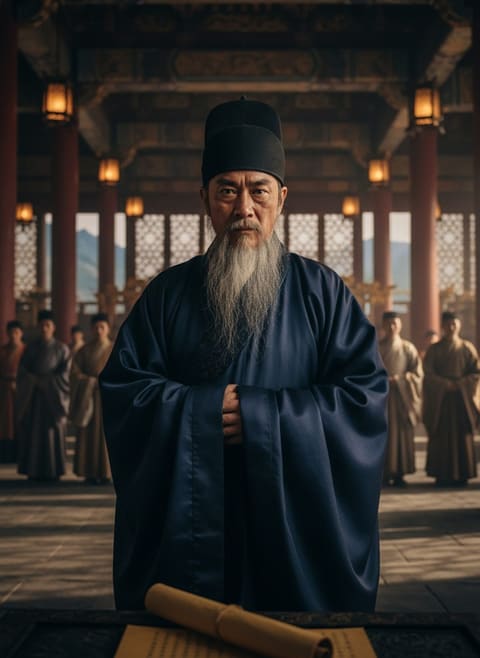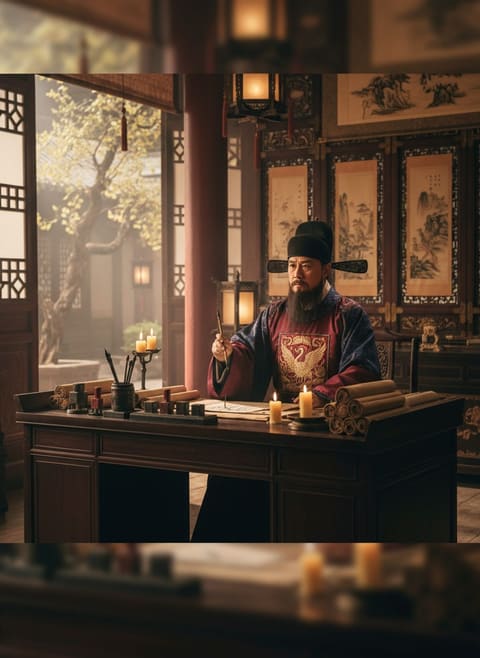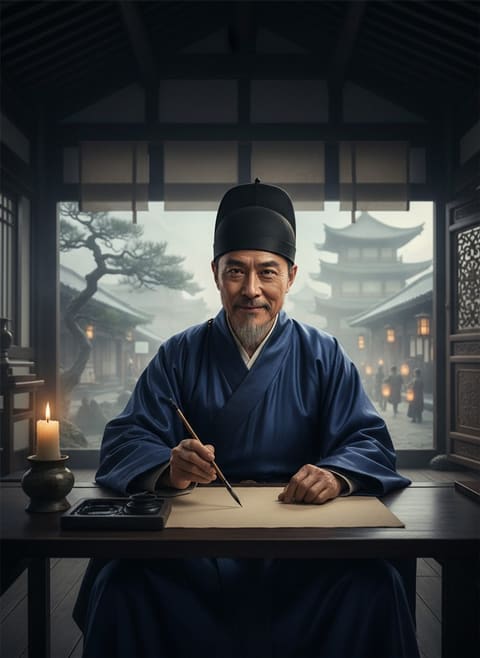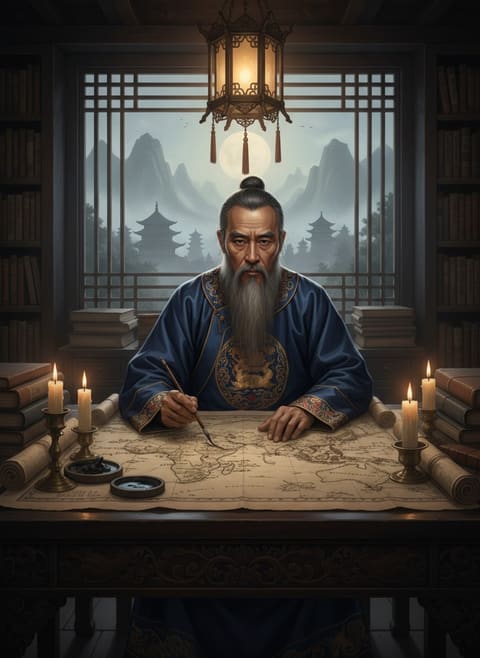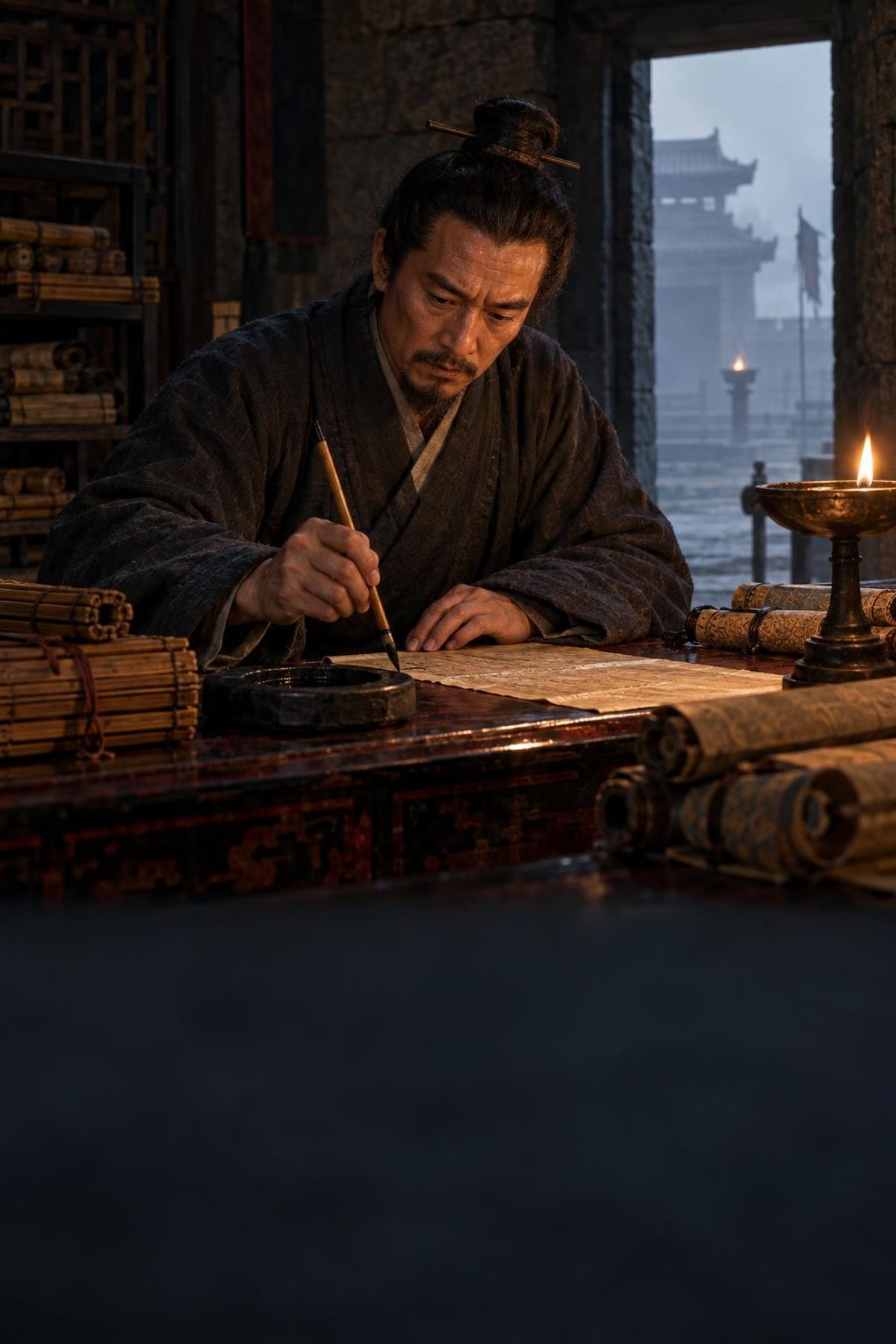
The clang of metal on stone echoed through the dim corridors of the prison cell, a stark reminder to Sima Qian of his grim reality. Darkness loomed around him, yet in the glow of his oil lamp, he saw the ink spread over paper like veins of history coming to life. This confined space, a cell meant to erase dignity, had become the unlikely cradle for one of the most ambitious literary accomplishments in the annals of history.
The Pen and the Sword
It was a fateful day in 99 BC when Sima Qian found himself in the imperial court, his words the catalyst for a seismic shift in his life. Emperor Wu had been displeased when the Han general, Li Ling, was captured during a campaign against the Xiongnu.
Many in the court clamored that Li Ling’s capture was treasonous, but Sima, compelled by truth and fairness, defended the general’s honor. The room was charged with tension, the air thick as Sima’s words crossed the volatile emperor.
The response was swift and brutal. To defy the emperor was sacrilege, an act punishable by death. But the fall of Sima's fate took a different turn; he faced a choice: execution or castration.
Read next: Wen Tianxiang Refused Kublai Khan's Pardon and Chose Death
He chose the latter, grasping fiercely to his life’s purpose above his own body’s dignity. In an era where such punishment was designed to erase a man's honor, Sima’s decision to endure spoke volumes of his dedication to his father's legacy and his unwavering belief in the power of history yet unwritten.
From Father's Vision to History’s Script
Long before his imprisonment, the seeds of Sima Qian’s grand quest were sown. Born around 145 BC in the turbulent heart of the Han Dynasty, Sima was the son of Sima Tan, the court’s grand historian. In his youth, Sima was steeped in the rich traditions of Confucianism, a philosophy emphasizing respect for history and moral rectitude. These early influences shaped his view of historical scholarship as an act of filial piety.
Sima’s father dreamt of a complete history of China, an ambition left unfulfilled at his death. Inheriting this monumental task, Sima Qian embarked on travels across the land.
From the bustling capital of Chang'an to the southern reaches of the Miluo River, he retraced the legacies of past heroes and the tragedies of fallen men. It was during these travels that his perspective on the continuum of history matured — an understanding captured succinctly in what would become his masterpiece, the Shiji or Records of the Grand Historian.
This work, a sweeping canvas of China’s past, stretched over two thousand years of history from the mythical Yellow Emperor through the establishment of the Han Dynasty. It was the first of its kind, a foundational text that charted the political, social, and moral currents that shaped Chinese civilization. It laid the groundwork for future historiographies, making Sima Qian the father of Chinese historiography.
The Prison Cell as a Crucible
Though imprisoned and mutilated, Sima’s spirit was unyielding. Within those cold walls, he continued to write, transforming adversities into startling momentum. Laboring under circumstances that would crush many, his pen was guided by a conviction as sharp as any sword. He saw his work not merely as a chronicle but as a living testimony to perseverance against oppression.
To Sima, history was not just a record of events but a means of understanding the philosophical and moral dilemmas faced by rulers and commoners alike. He believed in capturing the raw, unfiltered truth, putting his own life’s misfortune into context with those of ancient writers he revered. In the postface of his Records, he likened his tribulations to those endured by notable writers like Qu Yuan, whose own struggles added depth to their literary gems.
Read next: Hai Rui Returned His Salary to Condemn the Emperor
Each brushstroke was driven by an acute awareness that he was sculpting a narrative that would transcend his lifetime. His chronicles, even before their completion, began to reshape how history was viewed, moving the emperor's relationship with history from the subject of veneration to that of deep scrutiny and insight.
A Legacy Etched in Ink
Through Sima Qian’s tribulations, Records of the Grand Historian emerged as a timeless literary beacon. The breadth and depth of its narrative exceeded any previous historical works and established a precedent for historical literature that would influence Chinese historiography for centuries. Despite society's brutal attempt to silence him through dishonor, Sima's voice resonated powerfully across generations.
The ripple effects of his work extended well beyond the borders of his cell or his era. Future historians, scholars, and leaders did not merely read Sima Qian but engaged with his insights as a crucial lens into humanity's intertwined destinies. His story underscores the indomitable spirit of those who, even from the darkest shadows of history, strive toward truth and knowledge.
Sima Qian's life and work remind us that even when the world seems intent on breaking us, our contributions and voices can shape the course of history. His steadfast dedication to recording the truth, even at great personal cost, offers an enduring lesson in resilience and vision.
Where emperors ruled with power, Sima countered with a far mightier legacy: the pen — a tool through which the soul of a civilization was forever captured. Such is the true power of words, transcending time and altering the very fabric of history itself.