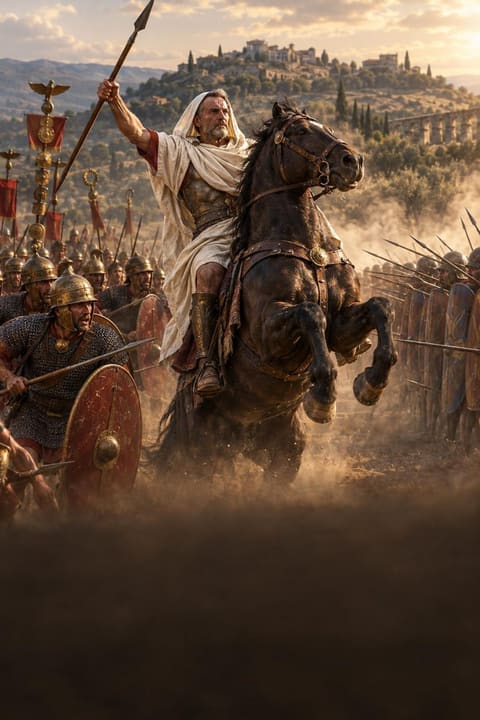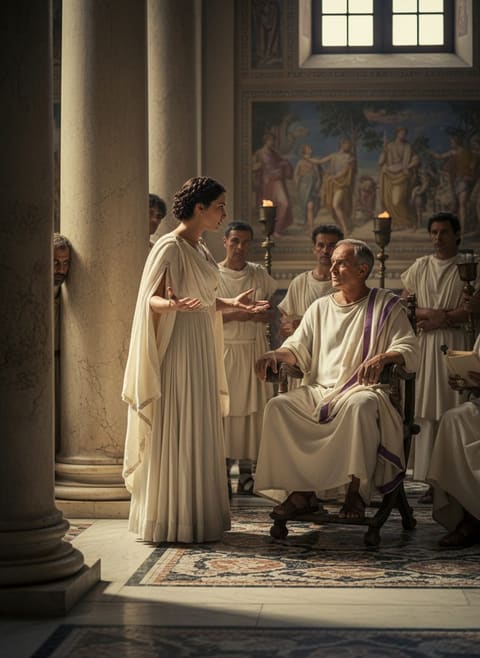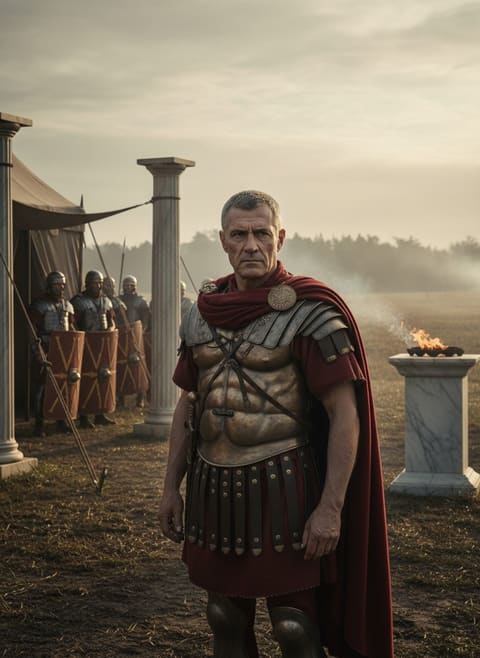
Gaius Fabricius Luscinus strolled into the camp of Pyrrhus of Epirus, a man who had bested Rome's might on the battlefield. But Pyrrhus was about to learn that some battles aren't fought with swords alone.
The Unyielding Integrity of Gaius Fabricius Luscinus
Gaius Fabricius Luscinus was a figure whose Spartan lifestyle was as renowned as his military acumen. Earning his place in Roman lore not through wealth or flamboyance but through an unshakeable character, Fabricius stood as a beacon of rectitude. In 284 BC, he was part of a diplomatic mission to Tarentum, skillfully diffusing tensions and later, in 282 BC, relieving the siege of Thurii as consul.
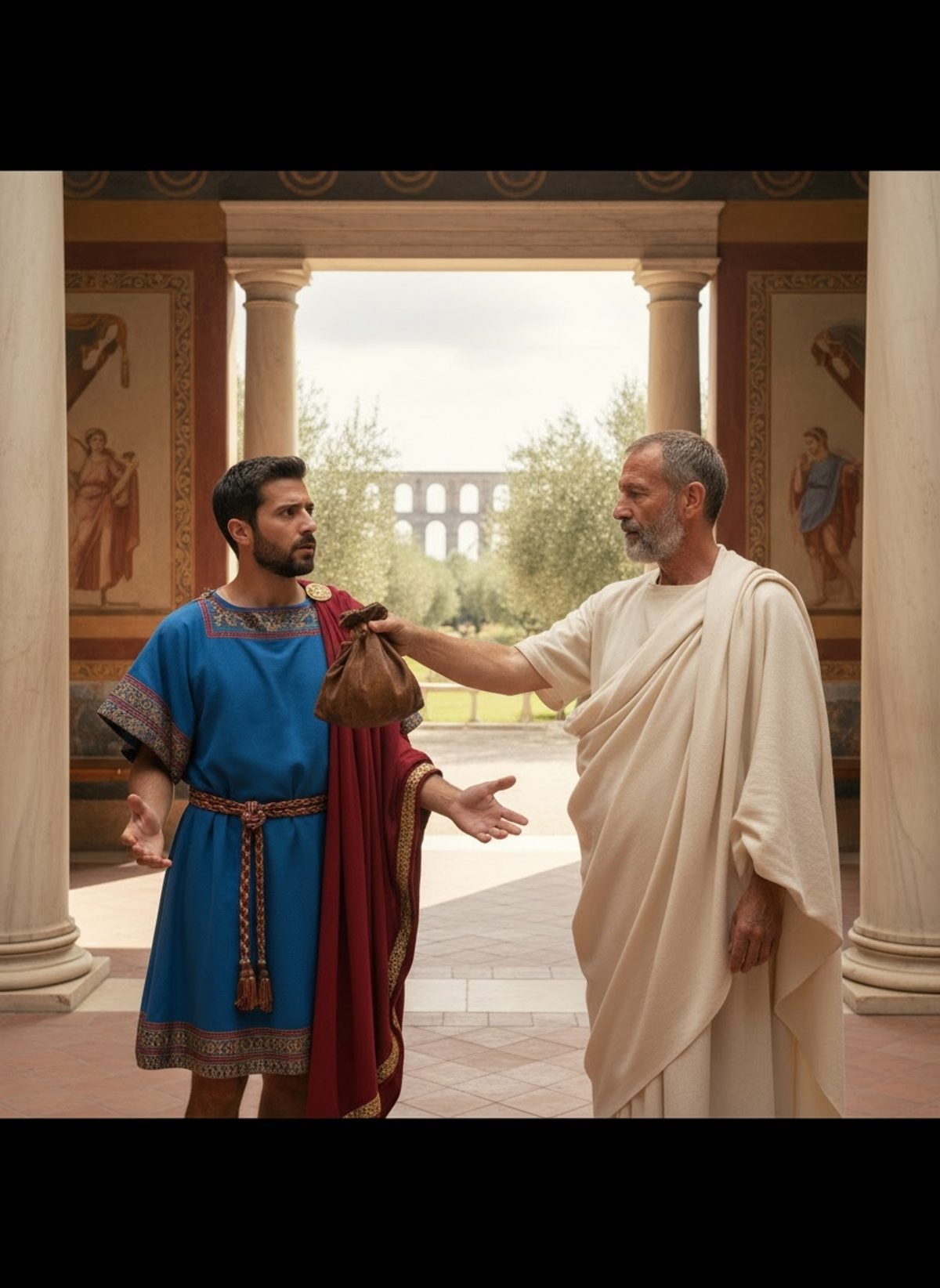
His dealings with Pyrrhus started after the Roman defeat at Heraclea in 280 BC. The phalanx had overwhelmed the Roman legions, and Pyrrhus, king of Epirus and a descendent of Alexander, fancied his chances to dominate Italy using not just arms, but wealth. Pyrrhus envisioned Fabricius, an illustrious statesman with a reputation of integrity, as a potential defect to his cause. However, Pyrrhus underestimated the fabric of Fabricius' virtue.
As Plutarch recounts, despite the richness of the offer, Fabricius found the notion of betrayal laughable. Having his principles firmly cast in stone, he declined the bribe. The refusal, however, spurred even greater respect from Pyrrhus, who decided to release the prisoners without a ransom—a testament to Fabricius' unrelenting moral compass.
Read next: Lucius Quinctius Cincinnatus: The Dictator Who Returned to His Plow
They say that throughout his public service, Fabricius held modest possessions: a dish for the gods, a salt cellar, and a small horn pedestal. Valerius Maximus noted these possessions, underscoring how Fabricius embraced simplicity as a badge of honor.
In an era where corruption could ease one's burdens, Fabricius remained committed to the state. His actions not only evoked the admiration of a rival king but solidified the Roman ethos that virtue, not vice or valuables, forged the backbone of a great republic.
Warning of Betrayal and Winning the King's Respect
The narrative of Fabricius' unwavering integrity reached its zenith with a magnanimous act that transcended familial loyalty or personal gain. During another bout of negotiations with Pyrrhus, Fabricius was informed of a secret plot to poison the Epirote king. It would have been an opportunity for the Romans to eliminate a formidable foe—and indeed, some in Rome might have considered such outcomes fortuitous—but not Fabricius.
He disclosed the plot to Pyrrhus, demonstrating a profound understanding of honor and solemn foreign relations. It was not Roman valor to kill in shadow what they couldn't on the battlefield, and such subterfuge was never part of Fabricius' creed. Pyrrhus, moved by this unimaginable act of loyalty from a rival, reportedly wept. The gravity of Fabricius' character shone through every tear Pyrrhus shed, redefining his perceptions of his Roman adversaries.
This instance, nestled at the crux of a brutal conflict, became a pivot where Rome turned not on its enemies but on its integrity. The vulnerability of Rome in the aftermath of military defeats did not compel her most stalwart generals to sacrifice their moral compass.
For Pyrrhus, this revelation may have seemed a perilous paradox—the very men he fought with furor had the utmost respect for his own life. His tributes belong to a man whose humanity transcended the frays of war.
Read next: Sertorius Held Roman Spain With an Army of Exiles for Eight Years
The Echo of Honor Through History
Fabricius' example is celebrated to this day. From the rugged landscapes of Roman territories to the refined scripts of literature, his unwavering integrity echoes across time. As a man of action and conviction, Fabricius imbued his contemporaries and posterity with a poignant understanding that power and influence do not overshadow virtue. His stance, in the backdrop of adversity, became a moral beacon and a testament to the uprightness in an era oft-marred by deception and ambition.
His actions were immortalized in Dante's *The Divine Comedy*, a nod to the synergy between virtue and simplicity. In Canto XX of *Purgatorio*, Fabricius stands atop virtue's pedestal, a symbol against avarice. His legacy was to choose poverty over precarity, prioritizing integrity—choices often left at the fringes of ambitious pursuits. To Fabricius, integrity was not a facet of convenience but a core imperative, guiding him beyond the confines of material gain.
The tale of Gaius Fabricius Luscinus is one that resonates with any who marvel at the resilience of human ethics when faced with insurmountable odds. His refusal to yield to opulence when all around him swayed and conformed taught an invaluable lesson in prioritizing the soul's integrity over a fleeting shimmer of wealth.
As contemporary observers of history, we find in Fabricius a timeless reminder that the firmest victories are not carved on the war-torn fields but won within one's unyielding conscience.