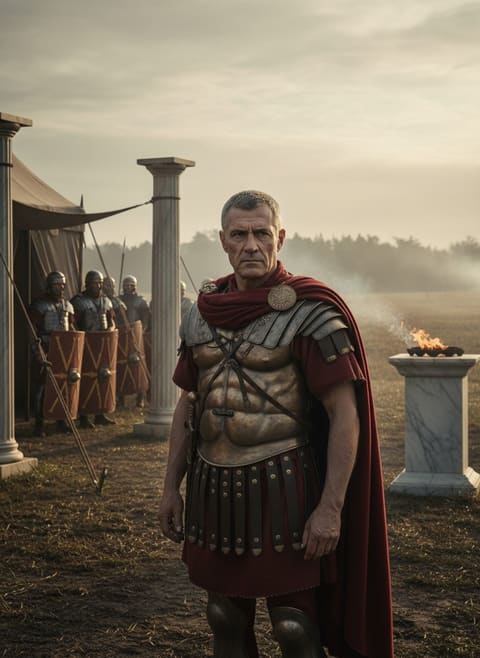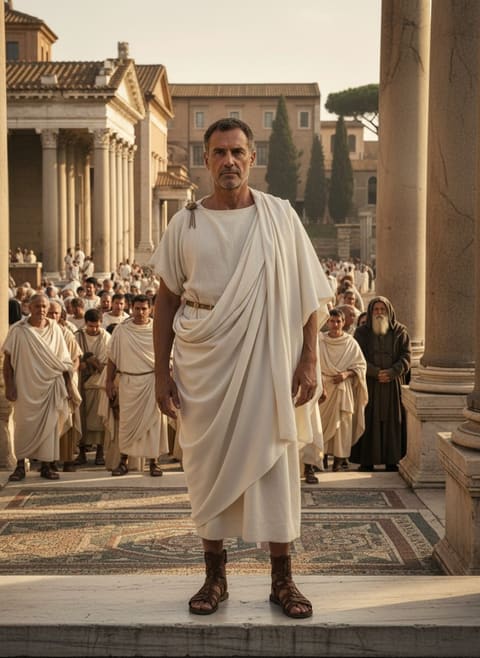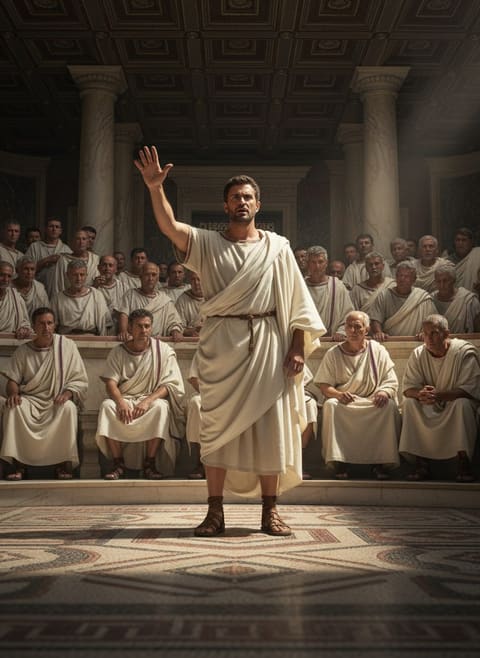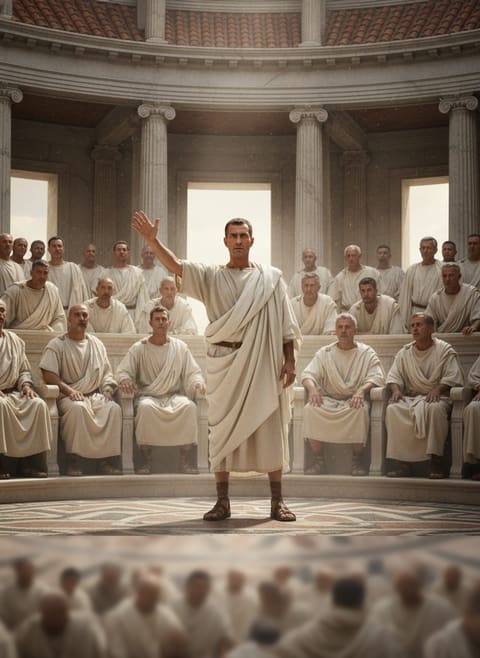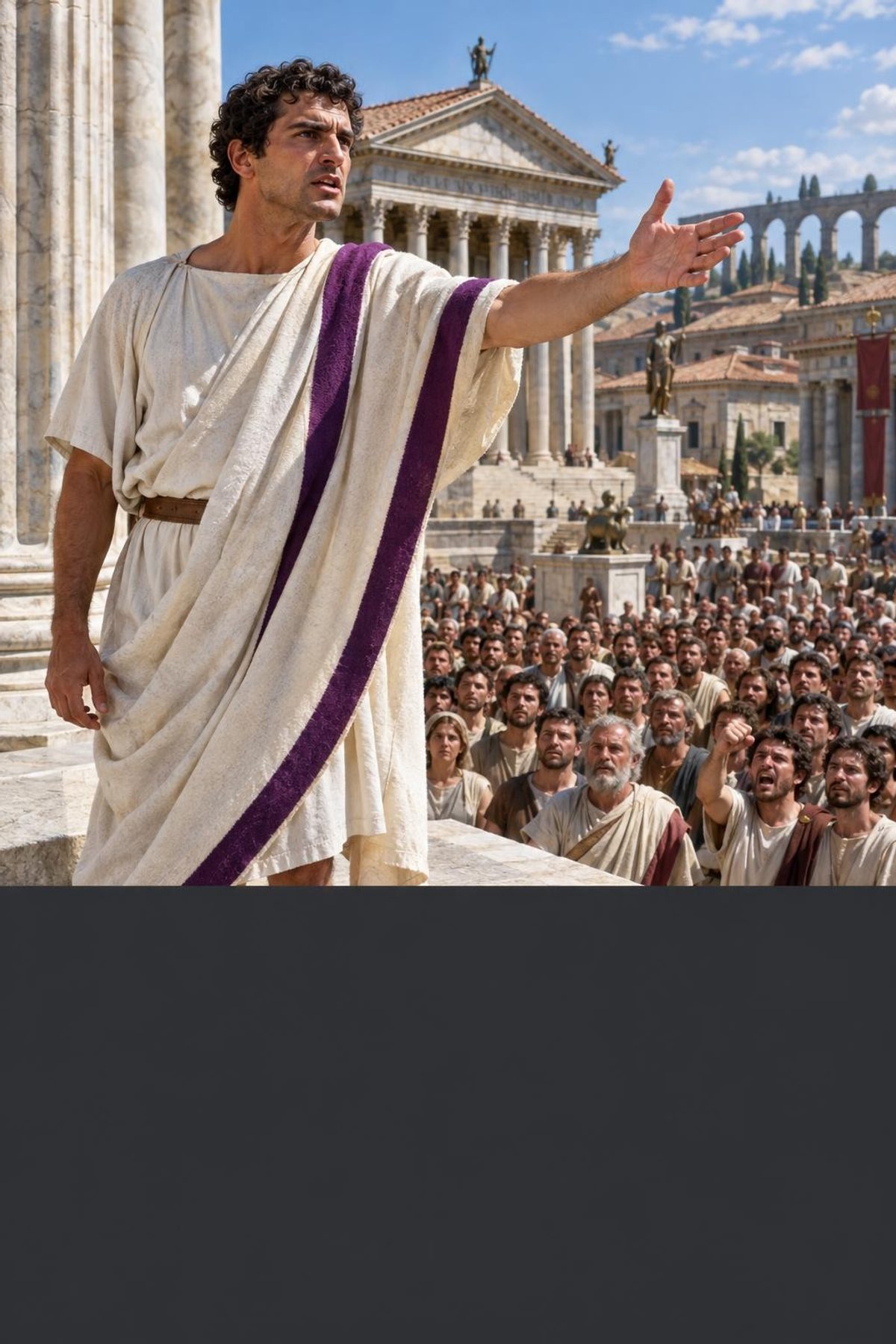
The senate chamber's murmur filled the air like the distant roar of an untamable beast. Rome's most powerful men fidgeted in their togas, their eyes locked on the wooden rostra where Tiberius Gracchus stood. His voice rang clear, each word a challenge hurled at their hearts as he laid bare the brutal truth: the city was choking with veterans who had fought for Rome but returned to find themselves dispossessed. He proposed an audacious remedy, one that would provoke hostility and ultimately violence — the redistribution of land.
A Vision for Land and Legacy
Rome in 133 BC was a city teetering on the brink of transformation. Tiberius Sempronius Gracchus, born to one of Rome's most esteemed families, had a vantage point few could claim. His father, a twice-consul and censor known for securing peace in Spain, gave Tiberius a rich heritage of civic duty. His mother, Cornelia, the daughter of the legendary Scipio Africanus, ensured that his education was unparalleled. From an early age, Tiberius was immersed in politics and strategy, traits that would define his turbulent career.
Tiberius' insight into the republic's failings was sharpened on the battlefields of Africa and Spain. During the Third Punic War, he was among those who scaled the walls of Carthage, carving a young soldier’s tale into the annals of Roman valor. As a quaestor during the Numantine War, he tasted defeat and humility, forced to negotiate a surrender that tarnished his military repute but illuminated a stark reality: the mighty Rome faltered when its people faltered. The rich gobbled lands at the poor's expense, and thousands of veterans returned home to find nothing. The republic was bleeding from within.
The Senate's indifference was palpable. They were a body ensconced in privilege, far removed from the rustling fields of Italy where soldiers-turned-farmers once toiled. Tiberius wielded the tribune's power like a torch in a cave, revealing the rot. His proposal to enforce the ancient Licinian law, capping land ownership and redistributing the surplus to the poor, was a radical blow to Roman aristocracy. This was not just a policy; it was a declaration of war on the status quo.
Read next: Turia Pleaded for Her Husband's Life and Saved Him
The Betrayal and the Breakdown
Tiberius' strategy was as daring as it was unprecedented. He bypassed the Senate, appealing directly to the plebeian assembly, who could see the justice in his words as plainly as the land they walked upon. The opposition struck swiftly. A fellow tribune, Marcus Octavius, was the Senate's counterstroke, wielding his veto like a sword to cut Tiberius' plan down before it took root.
With determination that bordered on desperation, Tiberius removed Octavius from office, the first time such a measure was employed. This brazen act left an indelible mark on the Republic, shattering unwritten norms and setting a dangerous precedent. Tiberius knew the stakes, but his vision of a Rome for the many, not the few, clouded the risks. With Octavius out of the way, the ambush came not from debate floors but the marketplace, where whispers of revolution brewed among the oblivious elite.
The Senate, seeing their grip loosen, resorted to fearmongering, branding Tiberius a tyrant aiming for monarchy. The Senate's support crumbled, but the resolve of the people solidified into action. The bill passed, a slow groan of victory echoing through the streets of Rome as land like golden waves was promised to lift the burdened back to dignity. Each step forward deepened the rift between Tiberius and Rome's upper echelons, their traditional mantles slipping beneath their fingers.
The Death of Tiberius and the Dawn of Decline
Tiberius realized that survival itself was political. He announced his candidacy for a consecutive term as tribune, a move plastered with accusations of ambition and usurpation. Rome simmered, the tension like an unbearable summer heat, oppressive and inescapable. On the fateful day of the election, Tiberius entered the political arena with courage written in his step, fully aware that this might be his last battle.
Read next: Cornelia, Mother of the Gracchi, Refused a Crown to Raise Two Reformers
The Senate's enmity blossomed into violence under the direction of Scipio Nasica, the pontifex maximus, who whipped the conspirators into a frenzy. Armed with clubs and stones, they surged into the assembly, the air thick with shouted threats and the visceral brutality of politics turned to bloodlust. Tiberius and his supporters were hacked down in a riot that was less a skirmish and more a sinister exorcism, cleansing the republic of its integrity in the process.
In death, Tiberius achieved what he could not in life — attention. His land reforms, led by his allies and brother Gaius, transformed the landscape of Roman policy for years. But his death marked more than just policy change; it drew the line that signaled the erosion of republican ideals. It set Rome on a trajectory toward civil discord and eventual imperial rule, where power concentrated in fewer hands, ignored the murmurs of its people.
The body of Tiberius laid unceremoniously by the Tiber, but his spirit rose with whispered hopes and echoed through decades of reform and revolt. The Senate may have silenced his voice, but they fanned the flames he ignited. Tiberius Gracchus did more than stand before the Senate — he stood against an entire system and, in doing so, forced Rome to reckon with itself. The republic would never be the same, its future permanently altered by a single man's defiance and a voice that spoke for the landless. The shadow of the Gracchi brothers lingers, a chilling reminder that voices silenced by violence only stir with greater force in the annals of history.