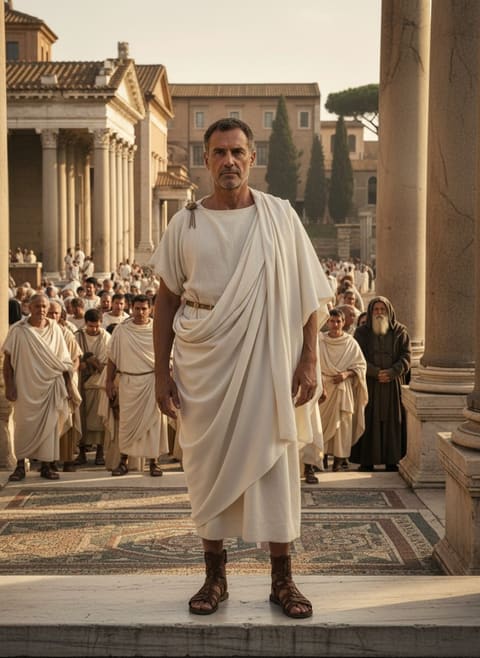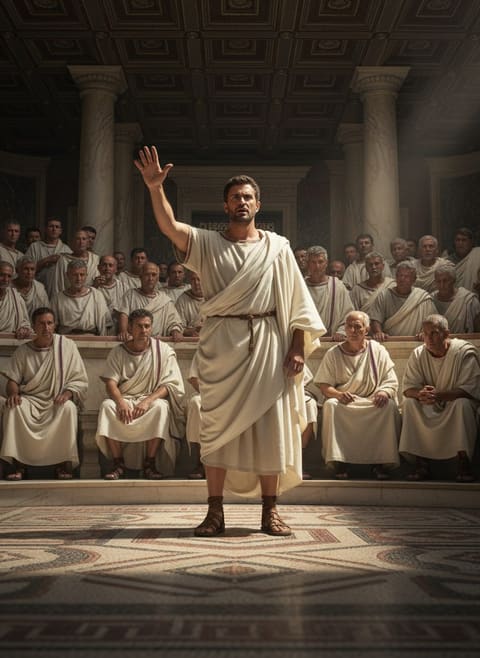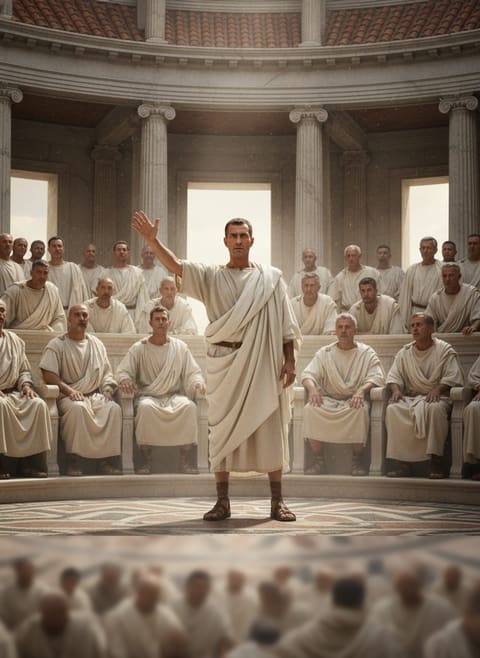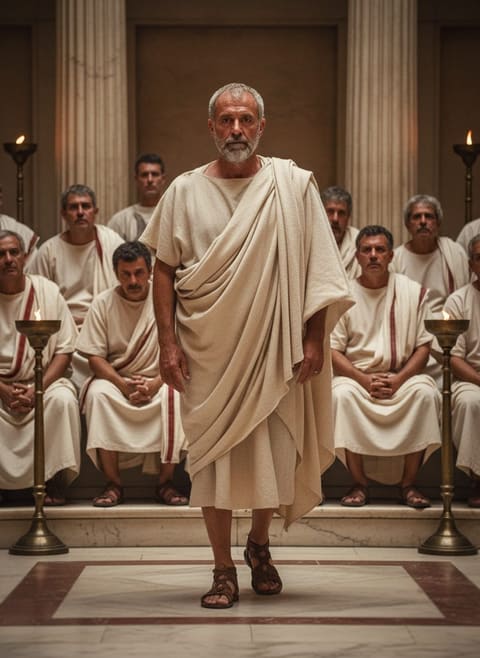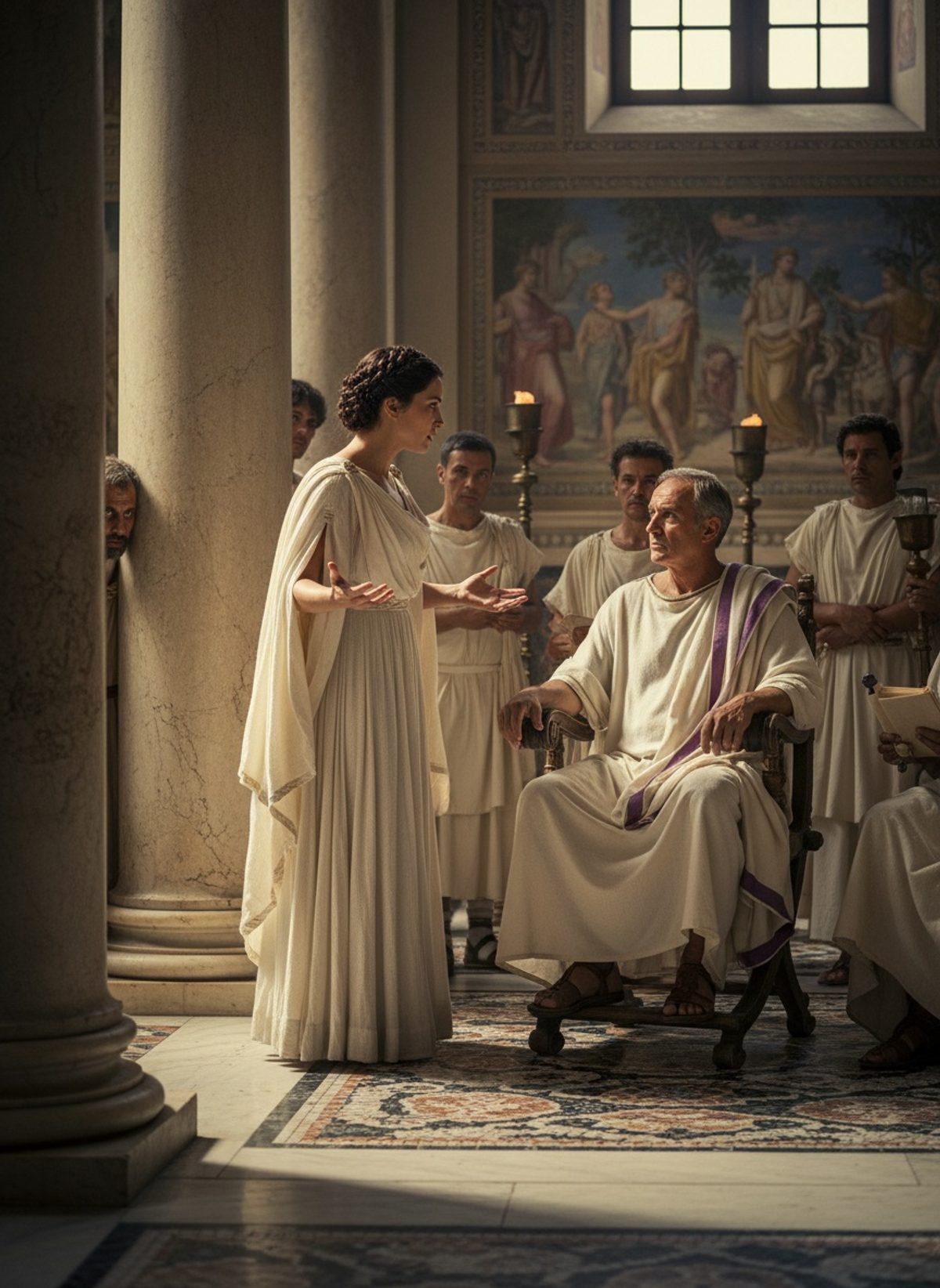
In the oppressive silence of a Roman afternoon, the sun blazed down, drenching the city in a relentless heat. Dust hung heavy in the air, settling into the crevices of towering stone edifices lining the winding streets of Rome. During this stifling period of political chaos, the very survival of many hinged on a precarious balance of loyalty and betrayal, where neighbors whispered secrets and alliances crumbled like the dry earth beneath a ravenous sun. It was 43 BC, and amidst the power struggles and blood-soaked roads of the Roman Republic's decline, a woman's act of defiance would etch her name into the annals of time.
A Dreaded List
The proscriptions had begun, a brutal political tool wielded by the Second Triumvirate. Mark Antony, along with Octavian and Lepidus, used these proscriptions to eliminate their perceived enemies, confiscating property and spilling the blood of many, from senators to ordinary citizens. Quintus Lucretius Vespillo, a respected senator, was among those condemned to die. This wasn’t just a list; it was a death sentence that could snatch lives without warning, where allies became enemies and trust was as rare as relief from the sweltering heat. Vespillo’s fate seemed sealed, his name inked in the blood of Rome’s political purge, until his wife, Turia, emerged from the shadows of customary silence to fight a battle of her own.
Turia was not merely a faithful spouse; she was a force of will, her courage kindled by desperation and love. While the chaos outside her door threatened to consume them both, she concocted a plan as audacious as it was dangerous. Vespillo's life depended on her cunning and resilience, and she would not fail him. But saving him meant confronting not just their enemies, but also their own vulnerable position within the treacherous political landscape of Rome.
The Refuge
Amidst the veneer of domesticity, Turia transformed her home into a labyrinth of secrets. She hid Vespillo in their bedroom roof for months, a precarious refuge where the constant fear of discovery only intensified as the days turned to weeks, and weeks to months. Every creak of the floorboards, every echo of heavy footsteps outside, was a reminder of the peril lurking just beyond their walls. Yet in the face of anxiety that gnawed at the edges of her resolve, Turia maintained her husband's hiding place with unwavering fortitude. Her resilience was a quiet rebellion in an era where women's voices were often hushed, her actions a testament to the power of determination rooted in love and loyalty.
Read next: Publius Clodius Albinus: The Governor Who Declared Himself Emperor
As Vespillo lay hidden in his makeshift sanctuary, the couple’s fate intertwined with every rumor of discovery, every new name added to the proscription lists. It was a gruelling test of endurance and trust, where each passing moment could mean salvation or doom. Their desperation, however, only stoked Turia’s indomitable spirit, shaping her resolve to confront one of Rome’s most formidable figures.
A Bold Confrontation
Turia's journey to Mark Antony was not just a physical passage through tumultuous Rome; it was a bold march into the lair of a man as volatile as the power he wielded. Antony, a central force in the political upheaval following Caesar’s assassination, bore the weight of an empire in flux. He had seen the Republic’s bloodied rise through internal strife, and now stood among its architects of fear through the Triumvirate’s proscriptions. Yet as Turia approached him, she did not see the shaper of destiny but the destroyer of her world.
Read next: Calpurnia Begged Him Not to Go. He Went Anyway.
In the presence of the man who had effectively signed her husband’s death warrant, Turia did the unthinkable. She knelt before Antony, her pleas a raw amalgamation of despair and hope. Her words were not just an appeal for her husband’s life; they were an assertion of dignity, a refusal to accept the whims of fate dictated by the ambition of men. Turia’s heartfelt plea was met with brutal rebuke; she was beaten, her body bearing testimony to the physical expression of Antony’s unchecked authority. But no bruise could break her resolve. She continued, undeterred by the overpowering specter of rejection and brutality, her voice a persistent echo of determination against the clamor of tyranny.
Victory of Spirit
The sprawling reach of Antony’s authority wavered against the might of Turia’s fervor. Her tenacity was infectious; even in the shadow of his own ambitions, Antony was swayed by the relentless drive of a Roman matron’s bravery. Moved by her relentless pursuit and perhaps glimpsing the fractured humanity lying beneath the callous armor of politics, Antony relented. Vespillo’s name was removed from the deadly list, a rare concession marked not by the force of legions but by the fervor of love and devotion.
With her husband’s life secured, Turia’s triumph was not just a personal victory but a brief illumination within Rome’s dark ambit of power. Her story is a reminder that even in an age sculpted by the iron wills of men who reshaped empires, the quiet, steadfast defiance of an individual could alter the course of destiny. Turia's courage did not change the inevitable fall of a Republic, but it highlighted the strength of the human spirit against the loom of historical machinery. Her legacy endures as a testament not simply to personal love, but to the enduring possibility of change wrought by unwavering perseverance, whispering through the ages that even amidst the tyranny of power, there exists hope in the constancy of human resilience.