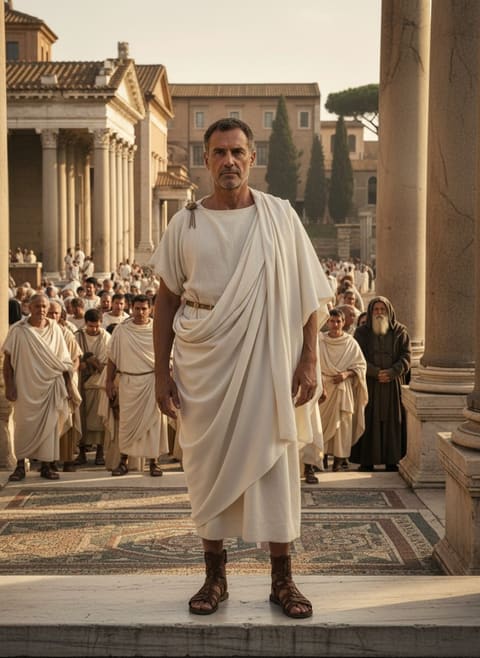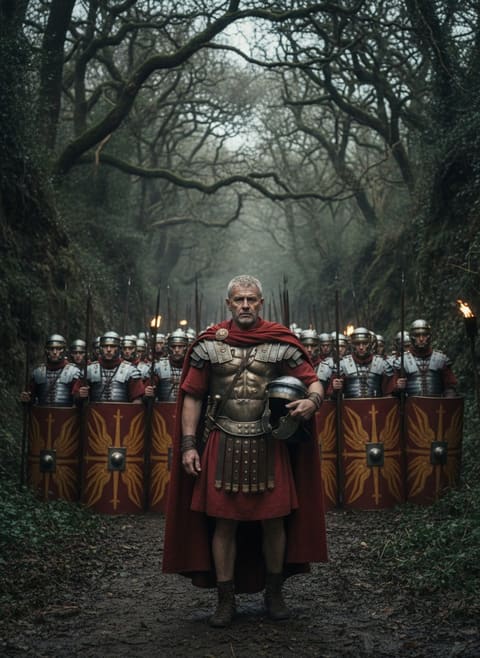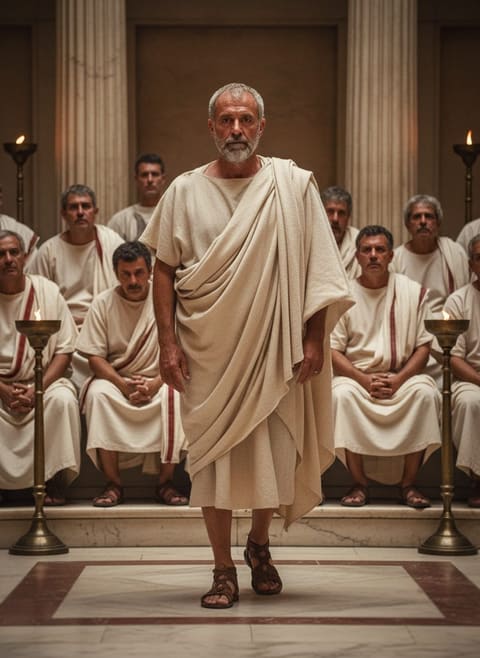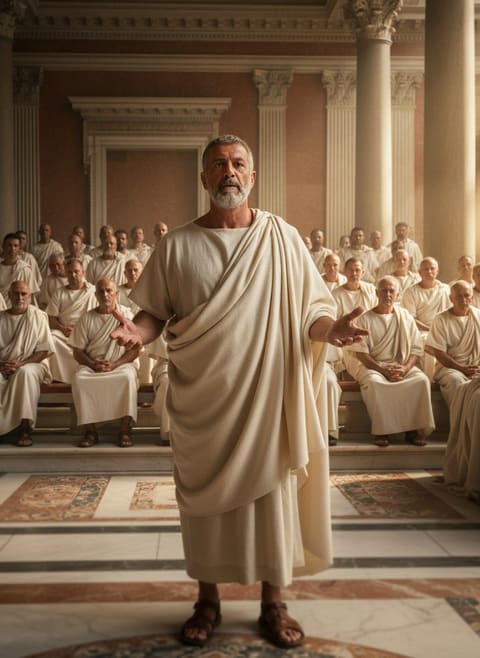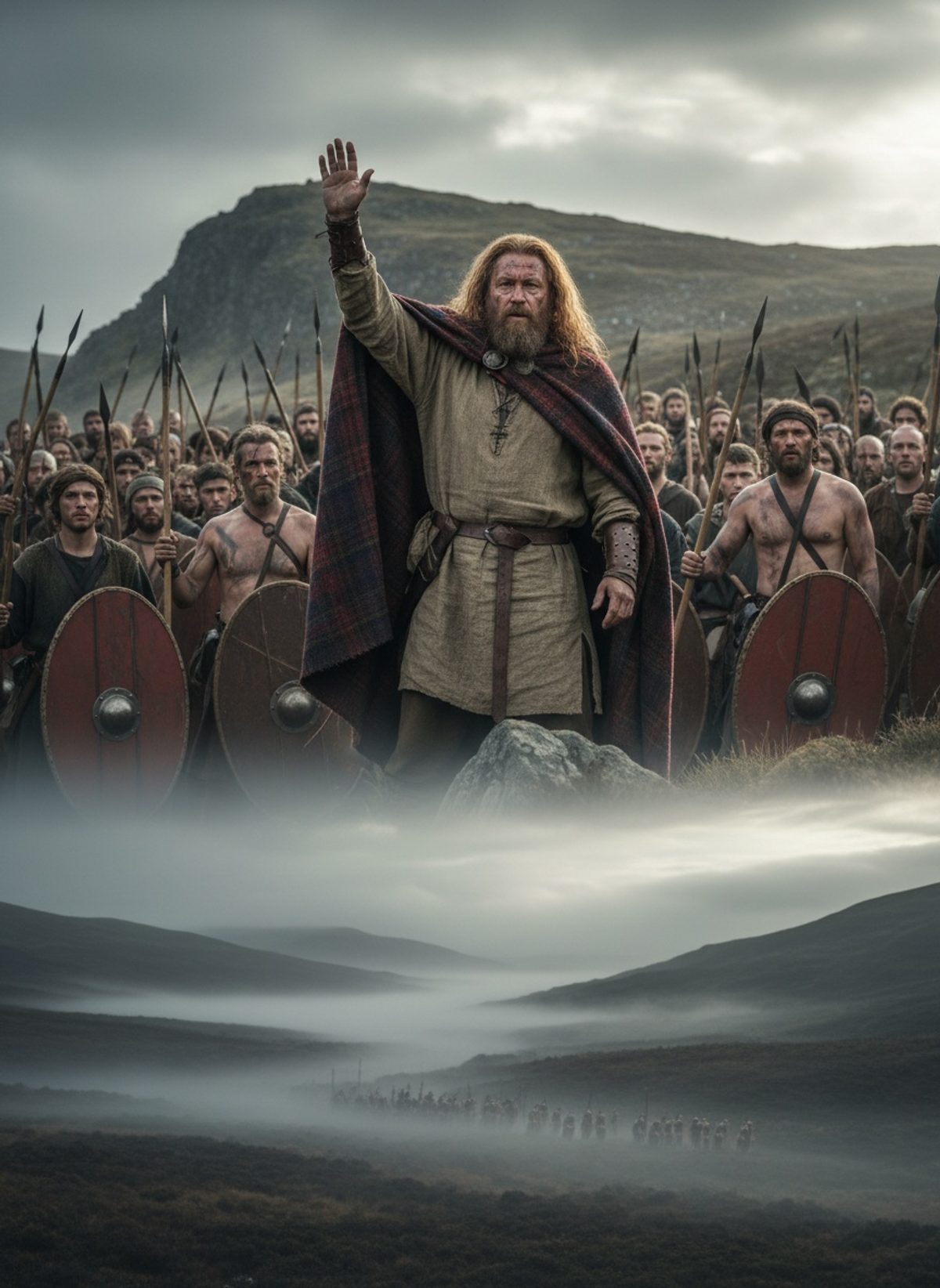
He was a phantom of resistance, unconfirmed by the annals of his enemies yet forever shadowing their empire. The words his adversaries etched in stone immortalized him above any victory he could have claimed through sword and shield alone.
It was the year 83 AD, and the Roman Empire had stretched its tendrils to the furthest edges of the known world, pressing ever northward into the mist-shrouded lands of Caledonia — what we know today as Scotland. Seated at the helm of the legions was Gnaeus Julius Agricola, a tenacious general bent on subduing these wild territories. Here, in the rugged highlands, a defiance was brewing among the Caledonian tribes, uniting under a chieftain called Calgacus. Much of what we know of Calgacus comes not from his own people but from the Roman historian Tacitus, the son-in-law of Agricola, who would inscribe his legacy in a speech that has echoed through the ages.
The name Calgacus, possibly derived from a Celtic word meaning “swordsman,” is draped with the mystery of whether it was a personal moniker or a formidable epithet. Though we possess scant details of his early life, Tacitus painted him as the "most distinguished for birth and valor among the chieftains." This could suggest that Calgacus held a significant position within the tribal hierarchy, commanding both respect and allegiance as he rallied the Caledonian Confederacy — a coalition of tribes rooted in fierce autonomy and ancestral lands considered sacred.
The Romans had already proven a formidable force by this point in their campaign, navigating foreign terrains and clashing culturally and militarily with Britons. Yet, in the expansive heaths and dense forests of Caledonia, they faced not just an army but a defiance emblematic of all tribes unwilling to submit to imperial rule. The climax awaited at Mons Graupius, a contested location wrapped in historical ambiguity, yet believed to be somewhere in northern Scotland. Here, as the terrain tapered into a natural amphitheater, Calgacus gathered his warriors to prepare them for what might well be their ultimate stand.
Read next: Publius Clodius Albinus: The Governor Who Declared Himself Emperor
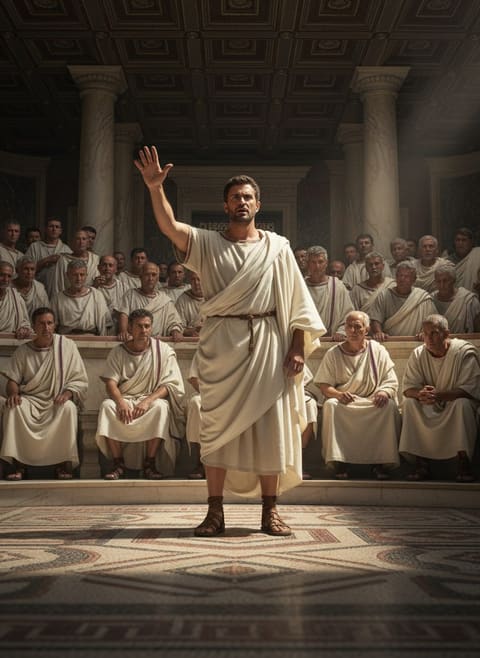
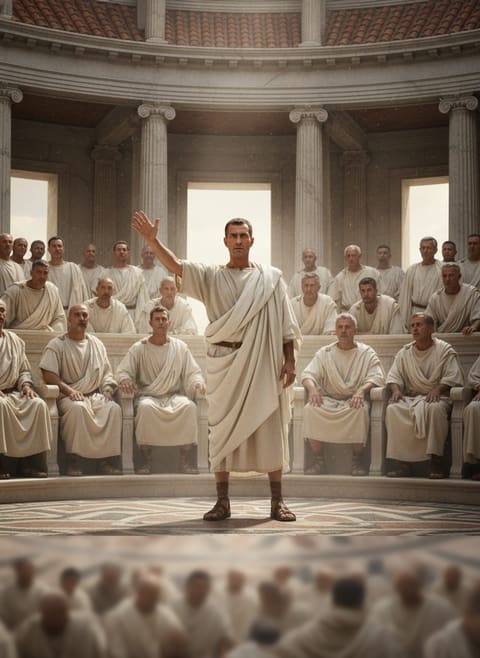
It was here that Tacitus attributed to Calgacus a speech embodying raw defiance and moral clarity, a rhetoric not just meant to steel the nerves of warriors but to castigate the very nature of Roman imperialism. Calgacus spoke of freedom as something yet untarnished by Roman dominion, ardently indifferent to the storied civilization of conquerors armed with glistening shields and gladius swords. His impassioned plea described Rome as a blight, an insatiable force insistent on robbing the world in the guise of delivering peace — a forensic dissection of the empire. "Robbers of the world, having by their universal plunder exhausted the land, they rifle the deep," his speech proclaimed, concluding with the devastating realization that the Romans "make a solitude and call it peace."
Such words were rendered immortal by the pen of Tacitus, yet the truth of their authorship remains a curious scholarly debate. Many historians suggest Tacitus used Calgacus as a mouthpiece to channel his critique of Roman expansionism, possibly reflecting his own philosophical inclinations more than those of a real Caledonian chief. Indeed, Tacitus' father-in-law stood on the opposing slopes during that fateful encounter, adding a layer of intrigue to his rendition of events, where objectivity withered under familial loyalty.
The clash at Mons Graupius unfolded under the shroud of Caledonia's cloudy skies, with Agricola's forces mounting a calculated assault against Calgacus's men, whose bravery could not outweigh the Romans' martial supremacy. According to Tacitus, the Roman tactics proved decisive, their cavalry routing the pseudo-barbarian ranks, draped not in crafted armor but determined resilience. Agricola's legions triumphed, pushing the Caledonian warriors into retreat, their resistance fracturing like a crenellated shore yielding to the ever-crashing tide.
Read next: Calpurnia Begged Him Not to Go. He Went Anyway.
The aftermath bespoke victory for Rome but not without a toll: history does not record Calgacus among the captives taken by Agricola, leaving lingering questions about his fate. Did he fall like so many of his warriors, or did he meld into the shadows, an enigmatic leader destined to be as elusive as the mountains that sheltered him? With Roman order secured, Agricola retreated into the annals of history, his campaigns chronicled but ultimately unfinished, for the Roman presence in Scotland would wane, never fully cemented as it was elsewhere in Britannia.
Calgacus, or at least the words attributed to him, outlasted physical defeat, preserved in Tacitus' "Agricola" for generations that would wrestle with imperial legacies and the truths they concealed. The speech stands as a timeless lens through which to scrutinize empire not just as a testament to sovereignty but as a paradox of civilization — where order is sometimes built on oppression, and peace can emerge from conquest's desolation.
This story of Calgacus is more than just an insight into a forgotten battle; it is a reflection on voice and power. It’s about how history is remembered, sometimes not by those who live it but by those who write it. As Tacitus breathed life into this Caledonian chieftain, his narrative speaks to the influence of historiography and the potency of words that could shape centuries of discourse on empire and its costs. The speech remains relevant, a provocative reminder that amidst the silence of monuments and ruins, echoes of dissent may endure longer than any empire stands.