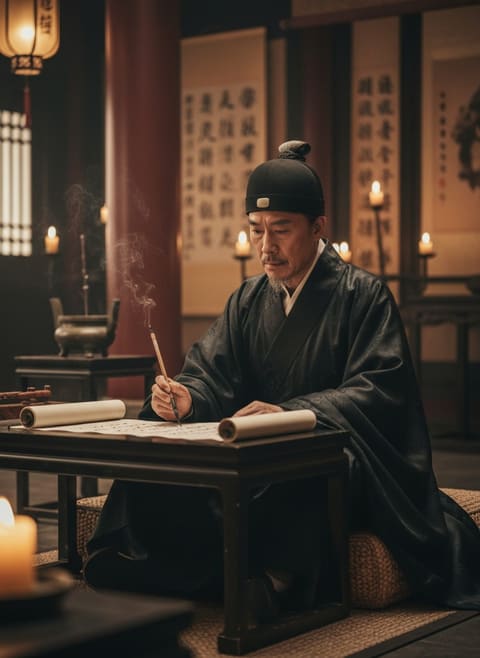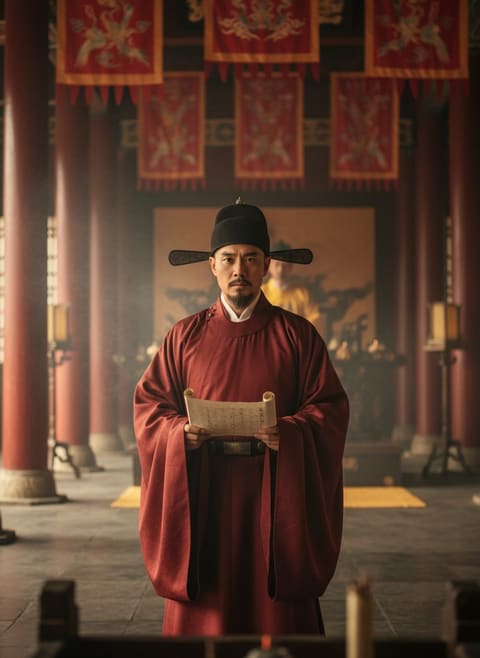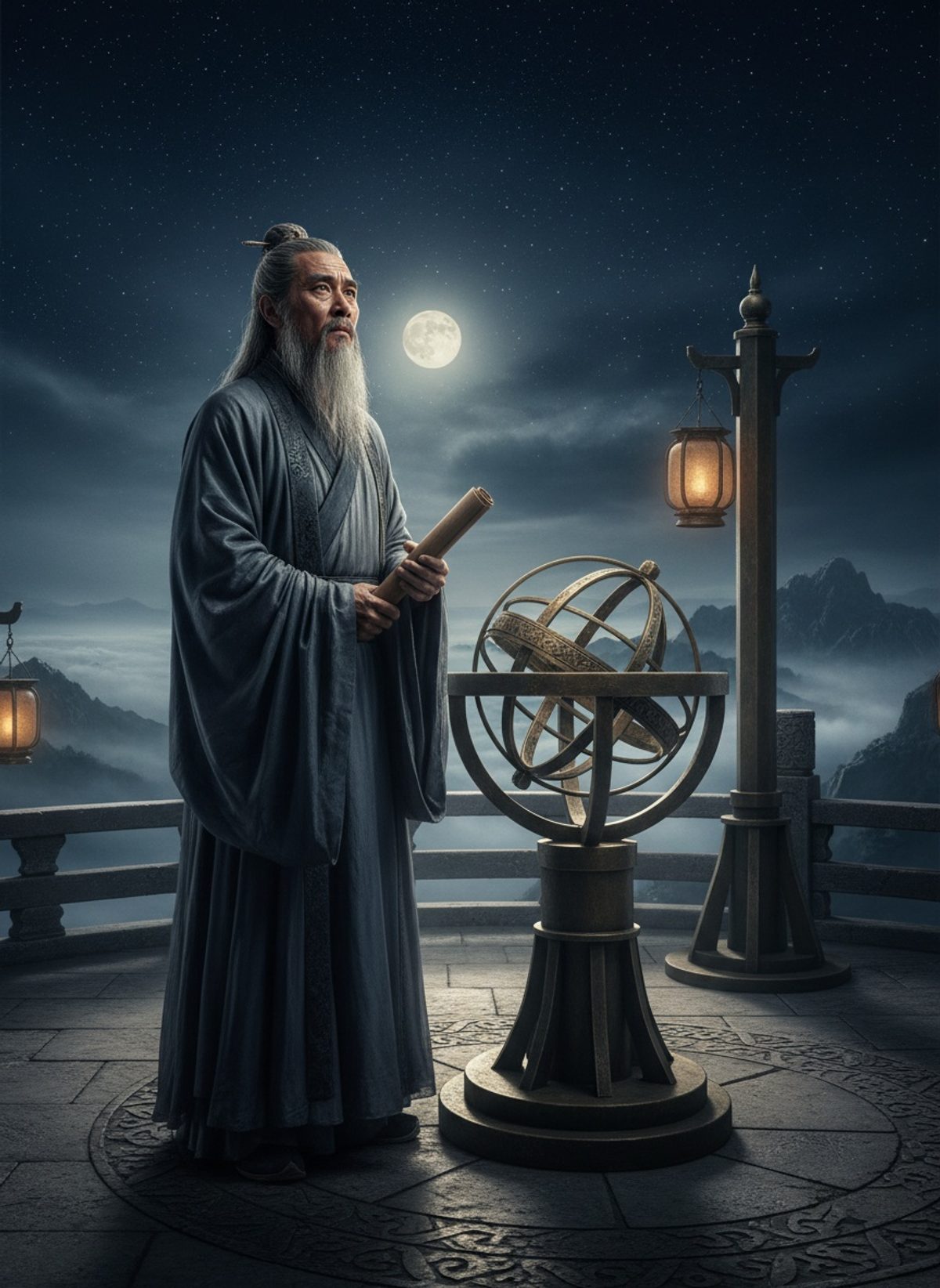
Guo Shoujing? Most people haven't heard of him. Yet for centuries, his ingenuity held the cosmos close.
The Rise of a Prodigy
It all began in Xingtai, Hebei province, in 1231, when a boy named Guo Shoujing took his first breaths. Raised under the keen and knowledgeable guidance of his grandfather, Guo Yong, he emerged into a world brimming with potential and challenges. His grandfather, a respected scholar, instructed him in a plethora of subjects that spanned from the revered Five Classics to the practical disciplines of astronomy, mathematics, and hydraulics.
From an early age, it was clear Guo Shoujing was no ordinary child. His mind danced with numbers and patterns, his attention captivated by the heavens. By his teens, he had stumbled upon a blueprint of a water clock, a device his grandfather was tirelessly perfecting. Most would have glanced and moved on, but Guo, with the curiosity that would define his life's work, not only understood its principles but enhanced the design, creating a more efficient lotus clepsydra. This small victory ignited his passion for mathematics and firmly set his sights on a future intertwined with the laws of nature.
Master of Earth and Sky
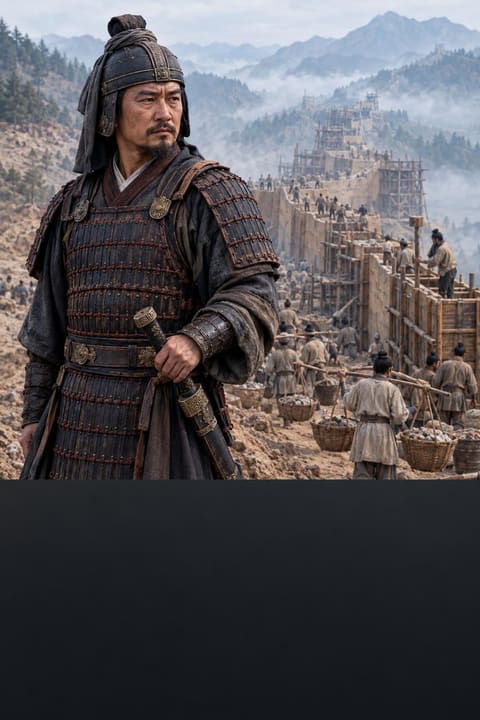
Fast forward to 1251, when a youthful yet determined Guo Shoujing took on his first significant role as a hydraulic engineer amidst the mighty Mongol Empire under the rule of Kublai Khan. Rivers that defied taming, cities thirsting for water, and landscapes demanding transformation—all these stood before him. And Guo, armed with intellect and ingenuity, reshaped them.
Read next: Zhang Juzheng Reformed China's Tax Code and Fed the Empire
His most famous early work came when Kublai Khan summoned him to solve the water shortages of Dadu, the heart of the Yuan dynasty. Here, Guo Shoujing orchestrated the construction of a 30-kilometer channel from the Baifu spring on Shenshan Mountain to the growing capital. This was no trivial endeavor; it involved crossing river basins and creating sophisticated water management systems, including canals and sluices that still inspire modern engineers. His success not only fed a hungry city but cemented his reputation as a man who could command the elements.
Instruments of the Cosmos
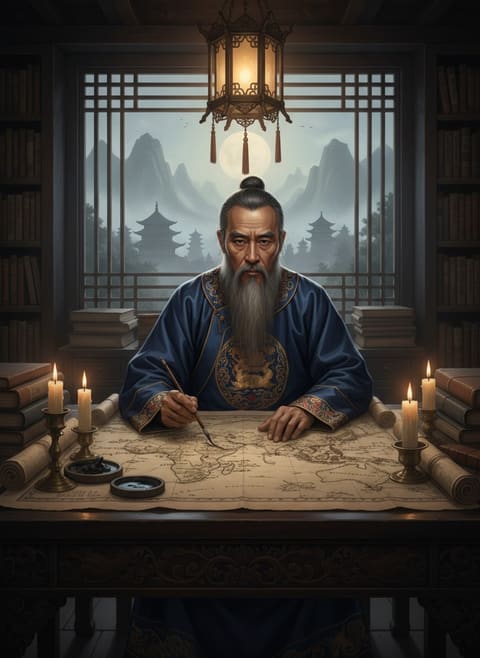
While Guo Shoujing's early work lay in managing Earth's waters, his true legacy reaches beyond the horizon and into the cosmos. Around 1276, Kublai Khan recognized Guo's astronomical talent and tasked him to refine and invent astronomical instruments that were more accurate than anything China had seen before. What followed was a series of ingenious creations that marked a new era of celestial observation.
Among his groundbreaking inventions was an improved gnomon for measuring the sun's movement, and a water-powered armillary sphere known as the Ling Long Yi. This device was a marvel of its time, offering accurate readings of celestial bodies. Guo's simplified armilla also achieved this with remarkable precision, enabling astronomers to calculate the sun's position and even the azimuth of stars. These tools not only served their purpose but exemplified the ingenuity of Yuan-era science.
With these devices, a universe of celestial motion was brought within Earth's reach, each new observation a crucial piece in the puzzles of time and space unraveling before Guo Shoujing's eyes.
Reforming Time Itself
The 13th century was marked by a growing conundrum—a calendar that no longer aligned with the heavens. The traditional Chinese lunar calendar, intricate as it was, had drifted out of time with the celestial events it was supposed to prophesying. An empire like Yuan, expansive and thirsting for control, could not afford such disarray.
Read next: Meng Jiao Failed the Exam Twice. He Wrote the Poem That Lived
In 1280, Guo Shoujing, now recognized as the preeminent astronomer of his era, embarked on a monumental project alongside colleagues Zhang and Wang Xun, as arduous as any he had undertaken. Kublai Khan's orders were clear: recalibrate time. This endeavor required an extensive network of 27 observatories spread throughout the empire, from the heart of Dadu to its most peripheries. These observation posts were more than mere scaffolding; they were temples of inquiry, where the cosmos was scrutinized with an unparalleled precision.
After years of meticulous recording and calculating, Guo completed what would be known as the Shoushi Calendar. He calculated the length of the year to be an astonishingly precise 365.2425 days, matching the value adopted in the Gregorian reform centuries later. The Shoushi Calendar boasted an accuracy within 26 seconds of the modern solar year—a feat unmatched for the next 300 years. His algorithmic deductions and methodologies firmly reshaped the Chinese astronomical perspective and maintained order across the sprawling lands of the empire.
Why Guo Matters Today
The tales of history often overlook the minds like Guo Shoujing—the quiet thinkers who move stars closer to Earth and order to chaos. In a realm dominated by force and conquest, Guo's triumph was one of precision and intellect. His life and accomplishments remind us of the timeless importance of science and exploration. It teaches us that the fabric of human knowledge is woven by those who dared to look beyond the ordinary, into the mechanics of water, the mysteries of numbers, and the dance of the celestial bodies above.
Guo's impact, though underappreciated by the global narrative, reflects an unyielding dedication to understanding the universe. It's a lesson in humility and the power of intellectual pursuit, reminding us that sometimes, the most profound changes come not from the clashing of swords, but from the quiet shift of a clock's hand.