The early morning light cascaded gently over the necropolis of Deir el-Medina in Thebes, painting the landscape in warm hues. Silence hung thick in the air, broken only by the occasional rustle of wind through the papyrus reeds. On an otherwise unremarkable day in 1906, Italian Egyptologist Ernesto Schiaparelli and his team were about to make a discovery that would echo through the corridors of history like the ripples of the Nile.
The Architect’s Rest: An Unbroken Seal
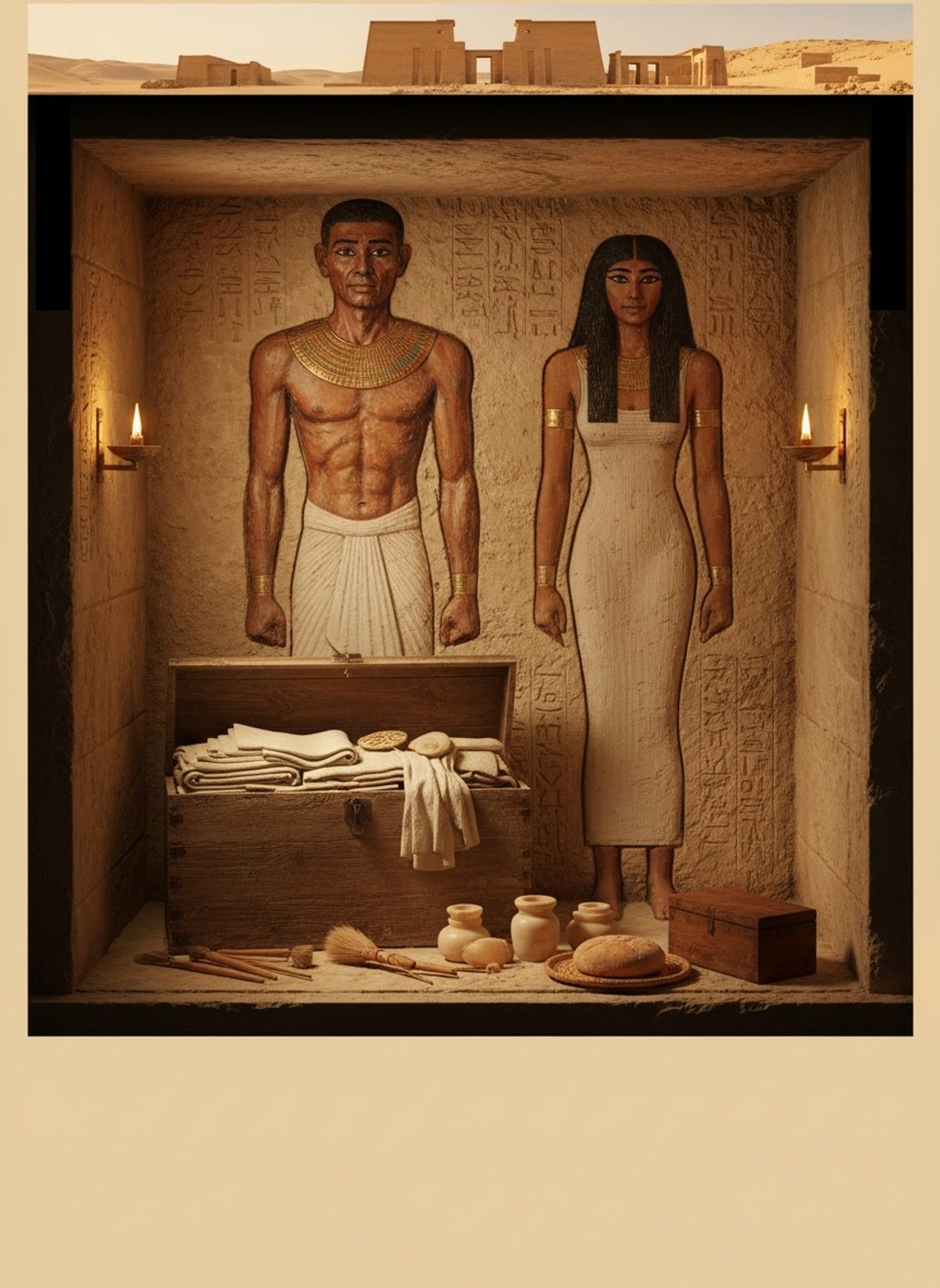
As Schiaparelli cautiously removed the last layer of sand and stone, the quietness was replaced by a hush of anticipation. Behind this wall lay the resting place of Kha, a royal architect from the 18th Dynasty, and his wife, Merit. For 3,400 years, their tomb had remained untouched, a snapshot of life perfectly preserved from around 1400 BCE.
In an era where tombs were frequently plundered for their riches, finding an untouched burial site was more akin to finding gold in the earth. Schiaparelli and his team knew they had stumbled upon something unique—an intact tomb not of a pharaoh or general but of a royal architect and his wife, offering an unparalleled glimpse into everyday Egyptian life.
Windows to the Past: Riches Beyond Gold
Entering the tomb, a profound sense of awe enveloped the team. The air felt dense with history, thick with the echoes of lives lived millennia ago. Here was a world left exactly as it had been, untouched by time or human intervention.
Read next: Senenmut Built Hatshepsut's Temple Into a Cliff Face in 15 Years
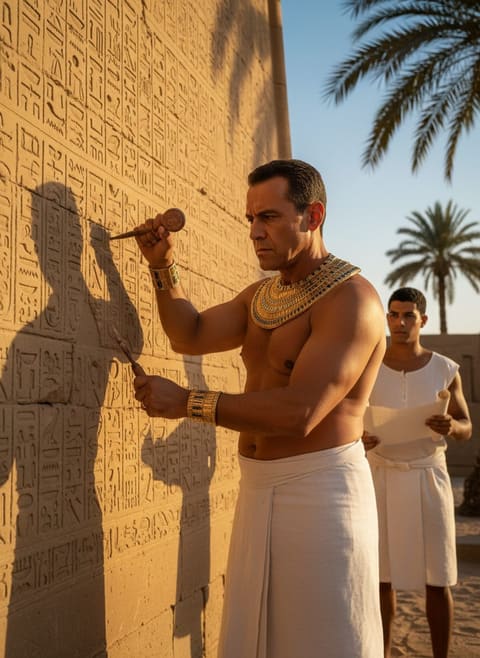
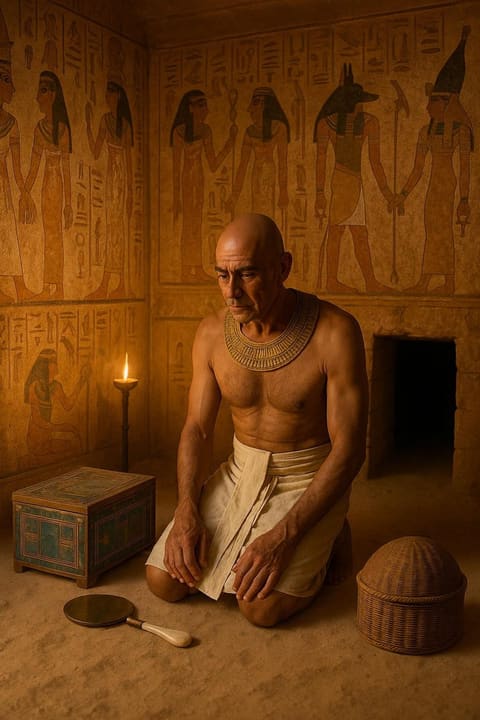
Walls inscribed with hieroglyphics narrated stories of Kha’s achievements as an architect. In an astonishing feat of preservation, linen garments lay folded as if newly laundered, and loaves of bread still rested on the table, a final meal attentive to every detail.
Among the personal effects lay Kha’s tools of trade: sets of reed brushes and a carpenter’s square—a direct link to the craftsmanship responsible for shaping Egypt’s monumental landscape. For Merit, her wig and the box of cosmetics were artifacts of a life of beauty and care, underscoring a personal narrative more intimate than royal treasures might suggest.
This tomb was more than a burial chamber; it was a surviving piece of ancient human endeavor and domesticity. It held not just artifacts but glimpses into the lives of people who once walked the sun-baked streets of a thriving civilization.
A Discovery By Design: The Italian Connection
For Ernesto Schiaparelli, the discovery in 1906 was the culmination of years of dedicated excavation. Known for his methodical and respectful excavation strategies, Schiaparelli was not a mere treasure hunter.
Born near Biella in 1856 and raised in a family of illustrious scholars, Schiaparelli brought a scholar’s reverence to the tomb of Kha. His work at the Museo Egizio in Turin, which he transformed into one of the world’s most significant Egyptian museums, ensured that this astonishing find would be preserved and shared with generations to come.
Schiaparelli’s investment went beyond the physical excavation. His deeper interest lay in cultural preservation, a relationship dating back to his time with Franciscan missionaries in Luxor. But his contributions to Egyptology were not only in physical excavations but also in the numerous scholarly works he penned, such as “La Tomba Intatta Dell'architetto Kha Nella Necropoli Di Tebe.” Through these works, he brought the stories of Egypt’s vibrant past to a European audience eager to understand ancient wonders.
Read next: Amenhotep Son of Hapu Planned Karnak's Third Pylon at Age 80
A Life Through Artifacts: The Human Element
Among the artifacts left by Kha and Merit were signs of daily life that lifted the abstract notion of history into something palpably human. Their tomb revealed their preferences, their daily routines, and, strikingly poignant, their aspirations. Kha’s professional insignia was dominated by images of architectural virtuosity, silent witnesses to not just his skills but also his ambition. Meanwhile, Merit’s choice of cosmetics and personal items suggested an appreciation for refinement and beauty that transcended her earthly existence.
What was most revealing, perhaps, was not what was present, but what was absent. The tomb housed none of the grand, opulent treasures associated with pharaohs. Instead, it offered something more enduring: a story. This narrative echoed across millennia, speaking of love, livelihood, and legacy. In those silent corridors, Kha and Merit spoke of the joys and mundanities that connect all humans, across cultures and time.
Preservation and Perspective: Why Kha and Merit Matter
The stories of Kha and Merit remind us that history is not just about rulers and empires but about the people who lived within their shadows. In our exploration of ancient Egypt, Kha and Merit's tomb serves as a vibrant reminder of the diverse tapestry of human experience, illuminating lives that would have otherwise faded into obscurity.
In the preserved whispers of two people living in the reign of Amenhotep III, we are offered a brief audience with the past. These glimpses compel us to recognize the humanity in our history, long after the sun has set on the age of the Pharaohs. As time rolls inexorably onward, balancing between the now and the then, it’s these intimate, interwoven stories that weave the rich fabric of human history together.