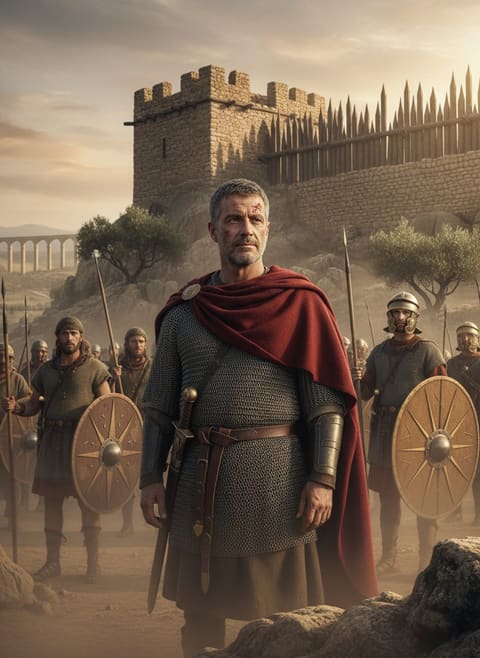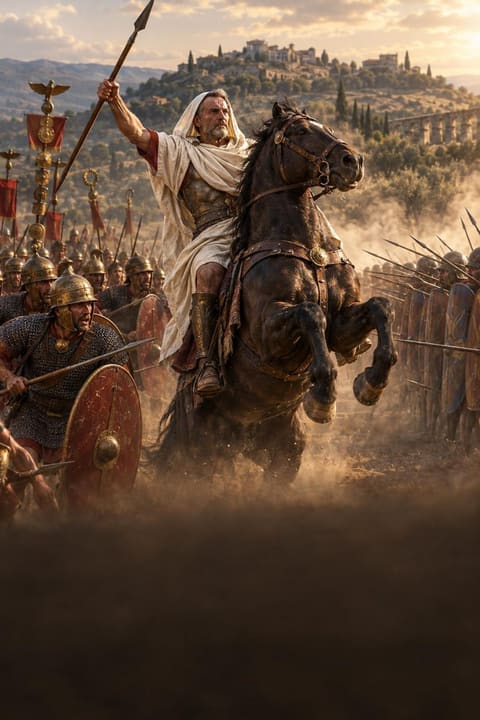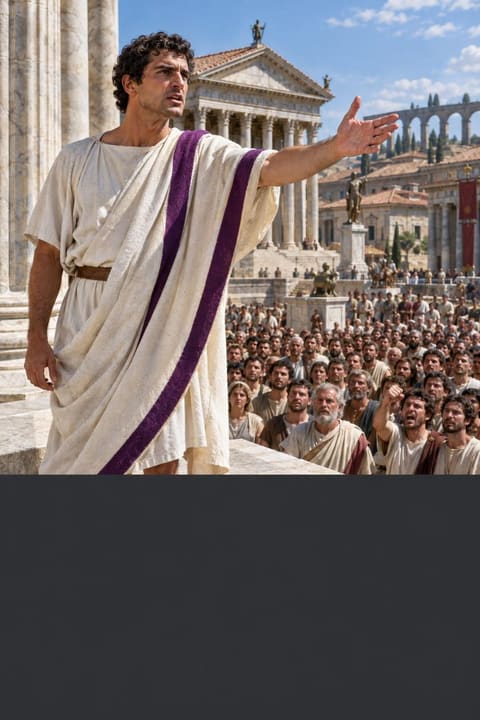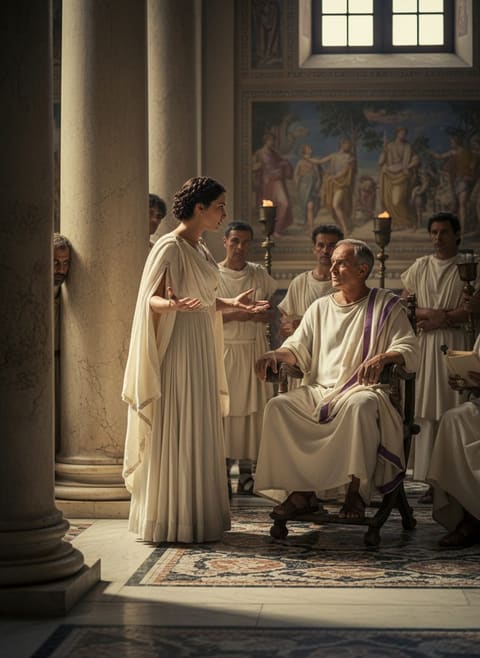
Marcus Licinius Crassus was the richest man in Rome. Yet that wealth was not inherited.
A City Without Firefighters
The city of Rome in 70 BC was a vibrant metropolis of over a million inhabitants, yet it lacked a fundamental public service that today we consider essential: a fire brigade. When the flicker of bright flames unexpectedly illuminated the night sky, the threat of ruin was real for the city's residents.
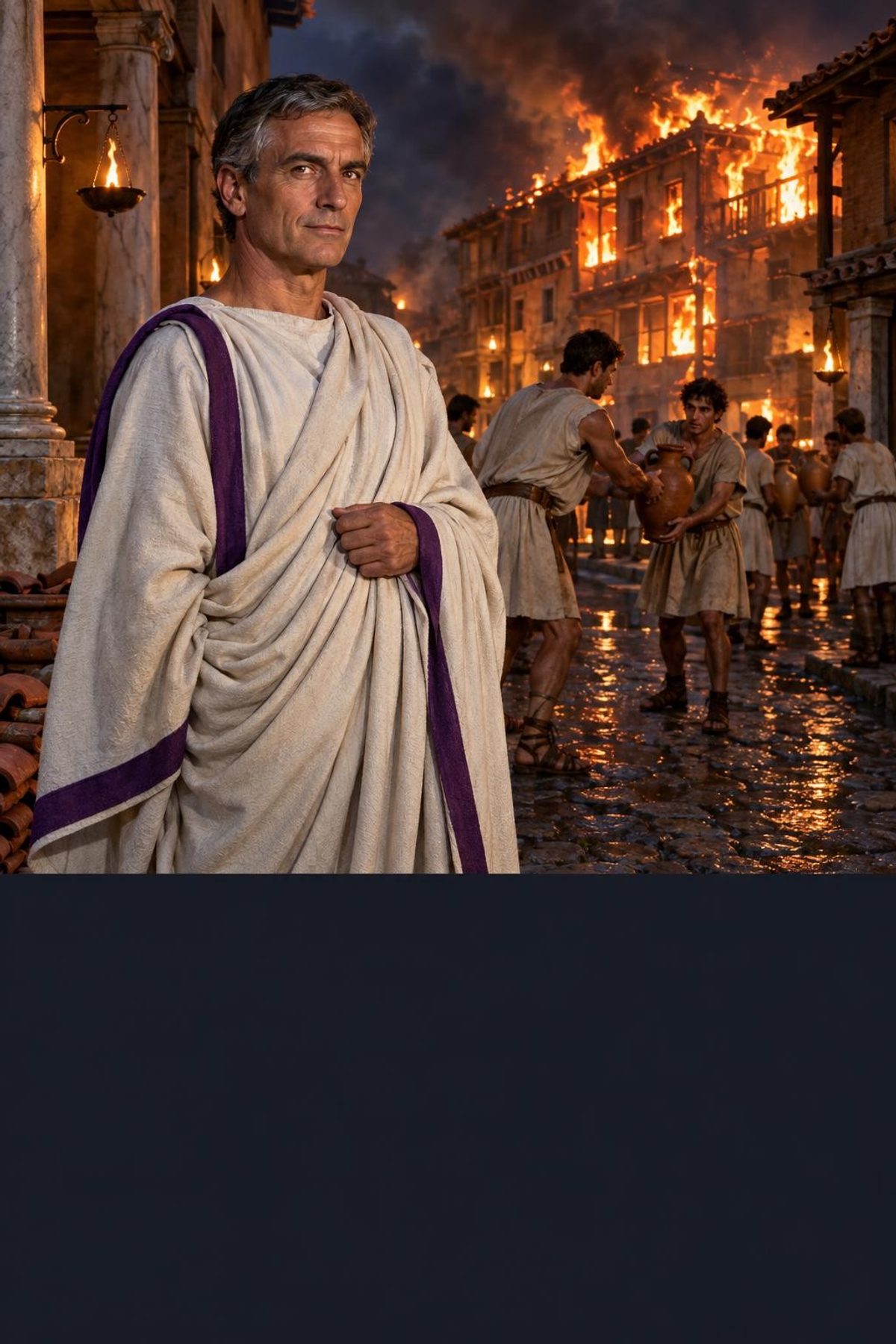
Wooden structures and tightly packed buildings made fire an ever-present danger, prone to leaping from house to house with an insatiable hunger. It was into this chaotic environment that Marcus Licinius Crassus found his peculiar niche.
In a city where fire could spell financial devastation, Crassus recognized opportunity. He had amassed a group of 500 slaves trained specifically for firefighting. When a blaze broke out, Crassus and his men would hurry to the scene, though not with altruistic intentions. While the building owners watched helplessly, Crassus offered to buy their burning properties at rock-bottom prices. With no other options and time ticking away, many accepted his offer, desperate to salvage at least some of their investment.
Read next: Hortensia Argued Before the Triumvirs and Won Their Tax Back
The Fire Business Model
Once the ink dried on these desperate deals, Crassus' slaves leapt into action with precision and speed, dousing the flames and salvaging whatever remained. This "firefighting" strategy allowed Crassus to acquire valuable real estate across the city at a fraction of its worth. It was ruthless, ingeniously pragmatic, and perfectly legal in a society with minimal public protections against private predation.
Crassus' climb to wealth wasn't solely through property acquisition; he was savvy in trading across multiple sectors, expanding his holdings into mines and other businesses. However, the fire-driven purchases were key in establishing his status. Walls still blackened from recent flames became indicators of opportunistic profits, transforming disaster into a windfall. It's a story seldom told in history classes—a portrayal of the exploitative intersection between wealth and manipulation in ancient Rome.
From Properties to Politics
With riches came influence, and for a man like Crassus, influence meant political power. His wealth gave him leverage and allies, one notable being Julius Caesar, whom he supported as a political patron. The sheer magnitude of his fortune played a pivotal role, creating ripples through the Senate and beyond. Crassus, alongside his rival Pompey the Great, held the consulship, showcasing his growing stature within the Roman Republic.
His role in the First Triumvirate, an unofficial alliance with Caesar and Pompey, is perhaps most telling of his political ambitions. While their collaboration aimed at consolidating power, their mutual suspicions and ambitions eventually strained the bond. Wealth had raised Crassus to the heights of influence, but it also sowed the seeds of discord among Rome's elite.
Risk and Repercussion
The zenith of Crassus' career came as he sought to expand his influence beyond the politics of Rome. Appointed as the governor of Roman Syria after his second consulship, he set his sights on the Parthian Empire.
Read next: Lucius Quinctius Cincinnatus: The Dictator Who Returned to His Plow
He envisioned military glory akin to Caesar's exploits in Gaul but found only catastrophe. The campaign ended disastrously at the Battle of Carrhae in 53 BC, where his forces were defeated, and he met his death. Crassus' fall unspooled the delicate balance of the Triumvirate, ultimately leading to civil upheaval.
Some might argue Crassus paid dearly for his hubris on the battlefield, but not before cementing his legacy as a man who transformed peril into prosperity. His life is colored differently, depending on where one stands: an opportunist who exploited urban misfortune or a strategic genius who wielded his acumen to masterfully play the game.
A Legacy Through the Flames
For those who study history, Marcus Licinius Crassus offers a crucial lesson: wealth changes, and with it, the structures of power. His resourcefulness and unabashed opportunism in the face of Rome's vulnerabilities reveal an intersection of ambition and monopoly that resonates even today. That the richest man in Rome neither inherited his immense fortune nor rested on the laurels of his ancestors speaks to a distinctive kind of historical impact—one born not of noble deeds, but calculated risks amid chaos.
His story is a stark reminder of what can happen in systems where public welfare lags behind personal ambition. It forces us to question how society gauges success and what we are willing to countenance to achieve it. This narrative of Crassus, wrapped in ash and smoke, continues to smolder in the annals of history, urging us to seek equity in the conflagration of human progress.