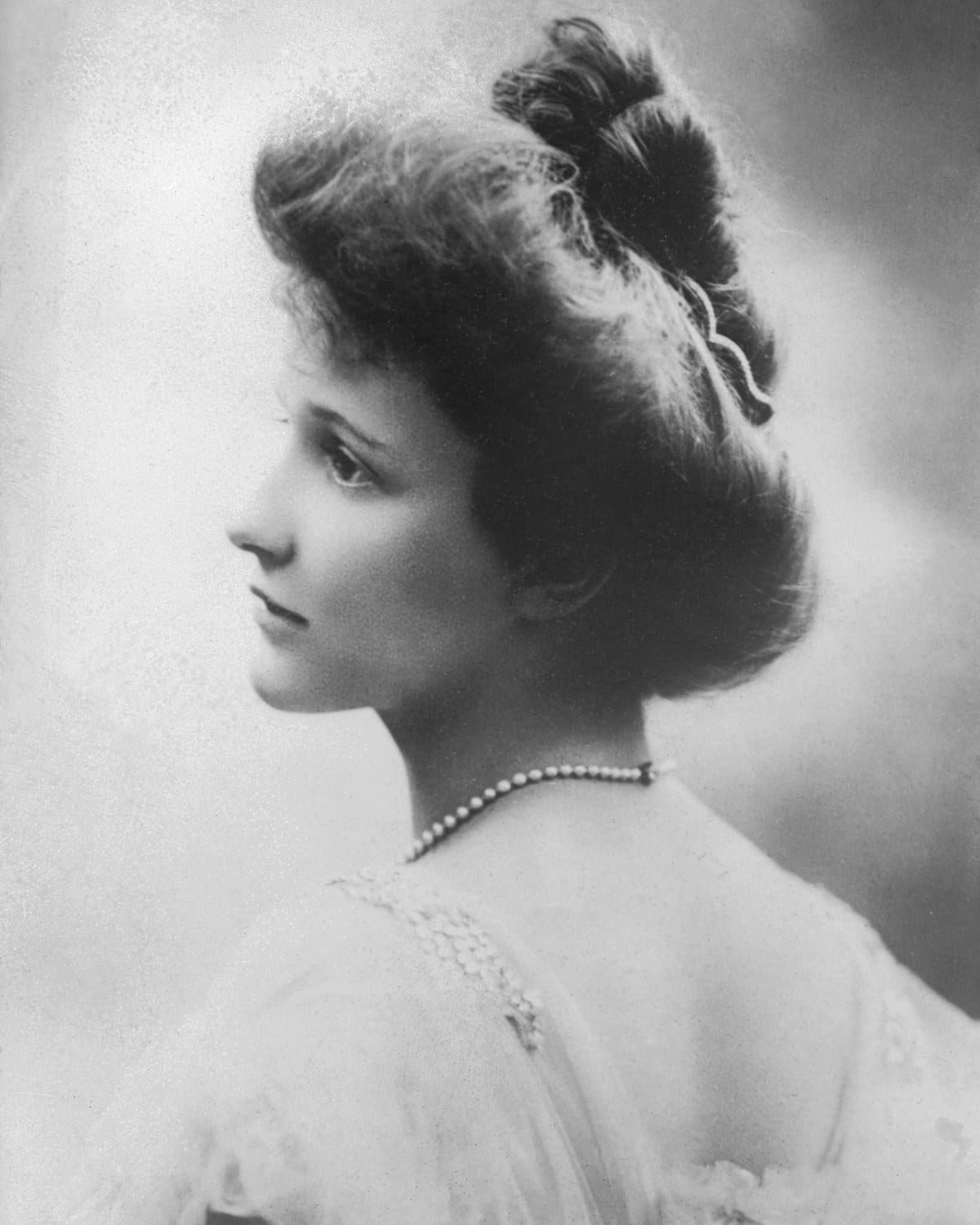
On 1 December 1919, Nancy Astor walked into the House of Commons accompanied by David Lloyd George and Arthur Balfour. She was the first woman to take a seat there. She was not the first woman elected.
The woman who stayed away
The Reading University Astor 100 project says it was not the 1918 Representation of the People Act that let women become MPs. That came months later, with the Parliament (Qualification of Women) Act of 21 November 1918, one of the shortest acts in British parliamentary history. It contained just 28 words.
Seventeen women stood in the 1918 general election. Constance Markievicz of Sinn Féin was elected, but did not take her seat. Wikipedia says she was in Holloway prison for Sinn Féin activities during the election, and as an Irish republican she refused to sit.
A seat in the family
Wikipedia says Waldorf Astor had held Plymouth Sutton since the 1918 general election. His father died on 18 October 1919, and Waldorf succeeded to the peerage as the 2nd Viscount Astor. That took him into the House of Lords and forced him to give up his Commons seat.
Read next: Sarah Hale Wrote to Lincoln and Thanksgiving Became a National Day
His wife stood in his place. Wikipedia says the Conservatives chose her, and that she was also the candidate of the Coalition Government. Astor's project says she was well known and popular in Plymouth.
The campaign
Wikipedia describes a candidate with some handicaps. It says her published and at times vocal teetotalism, and her ignorance of current political issues, hampered her. She appealed to voters instead on her wartime work with Canadian soldiers, her charitable work, her money and her ability to improvise.
Her audiences, Wikipedia says, enjoyed her wit and her skill at turning the tables on hecklers.
The result
The by-election was held on 28 November 1919. Wikipedia gives Astor 14,495 votes, 51.9 per cent. The Labour candidate, William Gay, came second, and the Liberal Isaac Foot came third. Her majority was 5,203.
The turnout was 72.5 per cent of 38,539 registered electors. Astor's project notes that turnout in the 1918 general election had been 59.6 per cent.
The first day
Wikipedia says she was met at Paddington station the day after her election by a crowd of suffragettes, including women who had been imprisoned and on hunger strike.
She took her oath and her seat on 1 December. The Reading timeline says The Times reported it as a "breach of parliamentary tradition". It says she wore a plain suit and hat to avoid comment on her clothing. Wikipedia says that on her first day she was called to order for chatting with a fellow member.
A maiden speech
Her maiden speech came on 24 February 1920. According to the Reading timeline, she told the House: "Hon. Members, however, should not be frightened of what Plymouth sends out into the world."
Read next: Ludwig Guttmann Handed Paralysed Veterans Javelins and Rewired Sport
Wikipedia says she was an advocate for temperance, welfare, education reform and women's rights. The Reading timeline credits her with the first private member's bill passed by a woman, the Intoxicating Liquor (Sale to Persons Under Eighteen) Bill of 1923.
The other record
Wikipedia says she was also an ardent anti-Catholic and anti-communist, and that she received criticism for her antisemitism and her sympathetic view of Nazism. The Reading timeline is more cautious. It says evidence that she was strongly antisemitic is often circumstantial, but that by modern standards she held views that are "difficult to swallow".
The Reading timeline says she won seven elections between 1919 and 1945. She retired reluctantly, influenced by her family and an ageing local party, and Lucy Middleton of Labour succeeded her.
A first
She was not the first woman elected, and she had not come up through the suffrage movement. Wikipedia says that when she arrived, Astor was sometimes erroneously called the first woman MP. She was the first woman MP to take her seat.
She took it on 1 December 1919, as a Unionist, and the seat stayed hers until 1945.