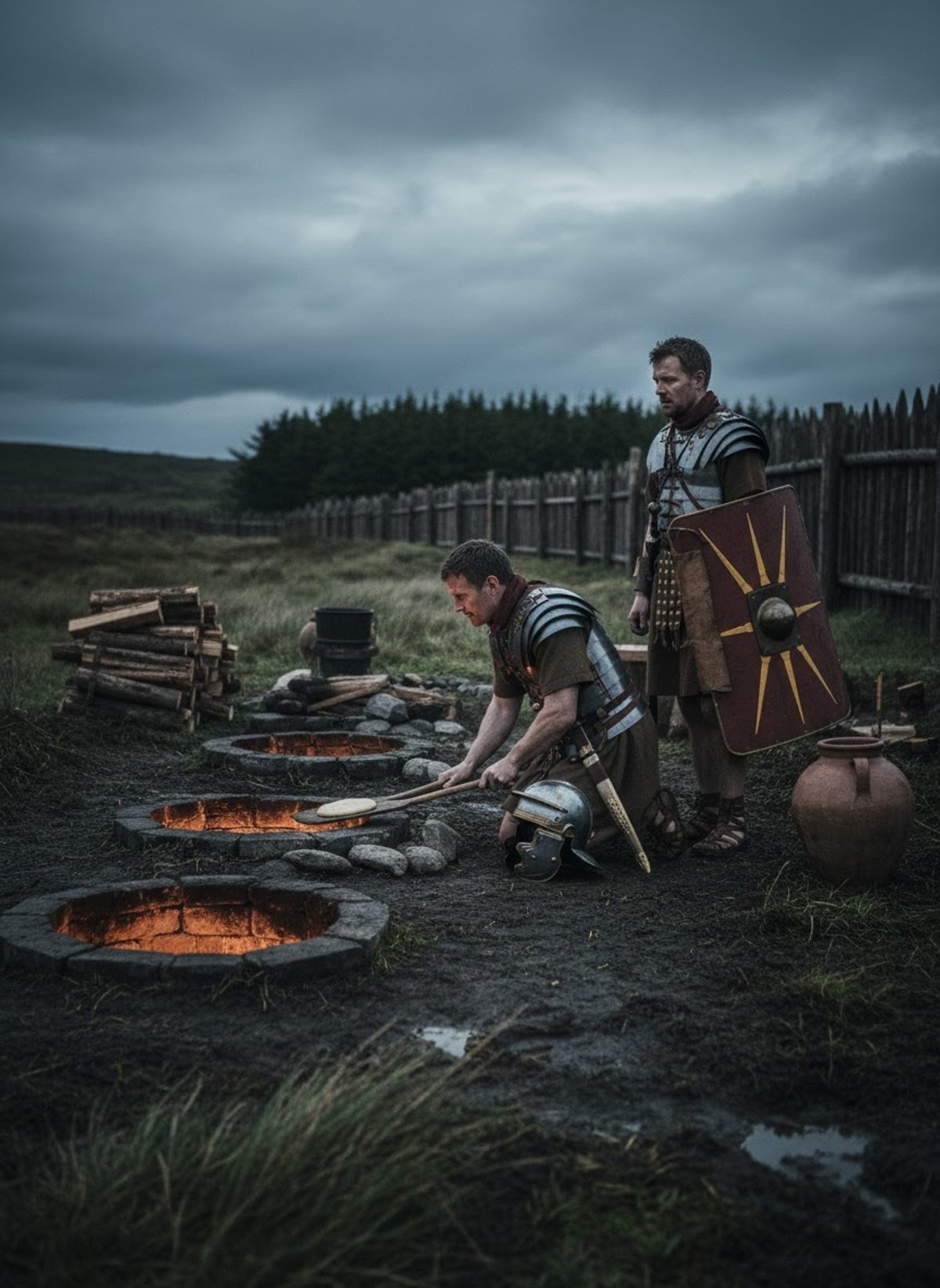
Smoke curled up into the brisk Scottish air, carrying with it a comforting scent of freshly baked bread. Beneath a thick canopy of trees, the stone-encased oven, laboriously crafted by Roman soldiers, radiated warmth. Nerves were taut with anticipation as legionaries queued, each hoping to seize a coveted piece of bread to fuel the arduous march ahead. It was more than sustenance; it was silent testimony to Rome's reach into the untamed lands of Caledonia.
Forging Conquest on the Edge of the Empire
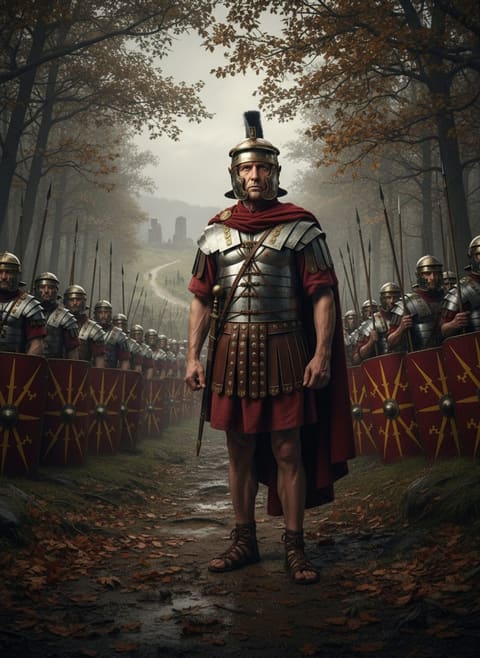
The campaign led by Gnaeus Julius Agricola was more than a military operation; it was an audacious endeavor into the unknown northern territories of modern-day Scotland, areas the Romans ominously dubbed "Caledonia." Between AD 79 and 83, Agricola pushed his legions further than any Roman general before him, culminating in the strategic conquest at Mons Graupius. Yet, this invasion's success rested as heavily on logistical prowess as it did on battle formations.
Every soldier's daily ration included a fundamental staple: bread. The Romans understood that an army marches on its stomach, literally and metaphorically. The ingenuity of Roman military logistics manifested itself not just in supply lines crossing treacherous terrain but also in the culinary architecture buried in the earth — stone ovens constructed at every camp.
These ovens, unearthed by archaeologists centuries later, revealed how the Romans planned for sustained campaigns. Carved into the landscape, these stone ovens were sturdy and efficient, allowing the army to produce hundreds of loaves in a single baking session. This self-reliant food production was vital in a land where logistical support from Rome was constrained by distance and terrain.
Read next: The British King Who Walked Into Rome in Chains — and Won
Beyond merely feeding the troops, these ovens were harbingers of Roman civilization, symbols of the empire’s intent to imprint its culture even in the most remote corners of the empire. Each warm loaf tugged at the soldiers' memories of home, grounding them amidst foreign landscapes and heightening the tangible impact of Rome’s expansion.
The Taste of Victory
The bread ovens were a piece of a larger strategic tapestry. Agricola's campaign was not just a series of battles but an intense interaction with the geography, culture, and climate of Scotland. The Roman army meticulously mapped and calculated every move, integrating local knowledge wherever possible — a strategic necessity for an empire reliant on calculated precision.
The culmination of these efforts emerged in the form of a decisive clash at Mons Graupius. According to Roman sources, more than 10,000 Caledonian warriors fell. While skewed by the empire's triumphant lens, this account underscores the scale of the confrontation. Behind this martial prowess lay the discipline of administrative support, a key factor often overshadowed by battle exploits.
As legionaries forged forward post-battle, the bread from these ovens quite literally formed the foundation of their advance. The ovens epitomized the iron will of Rome to press its presence into every conquered territory like a legion stamp impressed on clay. Though often invisible on the battlefield, these humble utilitarian structures were critical gears in the empire's relentless machine.
The ovens, therefore, were more than bread makers. They were emblems of imperial ambition and the unsung legends of strategic warfare, underscoring the importance of sustenance as much as strategy. Each loaf provided not just calories but the psychological sustenance necessary for soldiers stationed on the edge of the world.
Read next: The Day a Roman Legionary Wrote Home From the Edge of the World
A Crusty Legacy
As Agricola withdrew from Scotland, leaving behind a network of carefully constructed roads and fortifications, those stone ovens stood witness to a fleeting moment when Rome’s northernmost aspirations blazed bright. Over the centuries, these ovens vanished under layers of dirt and dust, only to be rediscovered and analyzed much later. Their simple yet profound presence offered a tactile link to another era.
The impact of these bread ovens transcends the mere functionality of feeding troops. They reveal the depth of Roman military infrastructure, the foresight of their logistical planning, and the often-unnoticed complexities in the story of Roman Britain. They offer a glimpse into the lives of ordinary soldiers tasked with extraordinary conquests—when civilization and savagery were separated not just by swords, but also by something as mundane yet crucial as a loaf of bread.
Today, these archaeological finds challenge us to rethink the past, reminding us of human ingenuity in the face of adversity. They illustrate how the most impressive victories were not just won in grandiose battles but were nurtured in ovens deep in enemy territory.
With each archaeological discovery comes a reminder that history’s greatest stories often start with its most humble elements. In the case of Rome’s campaign into Scotland, those elements are baked into the crusty foundations of empire-building. The legacy of these bread ovens lies in their testament to the sustenance of ambition, nourishing a tiny outpost on civilization’s edge.