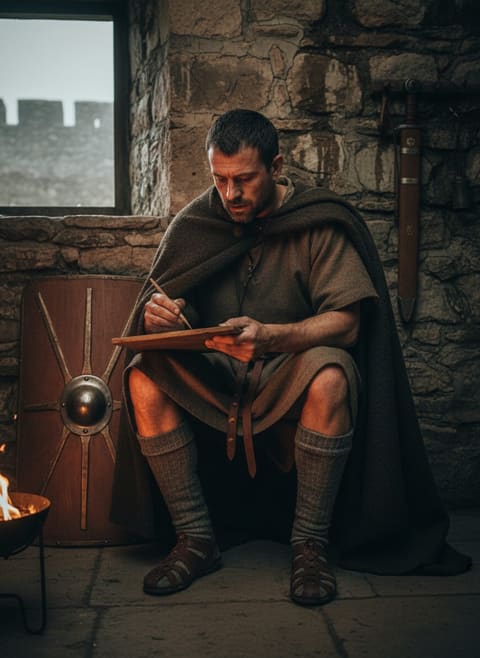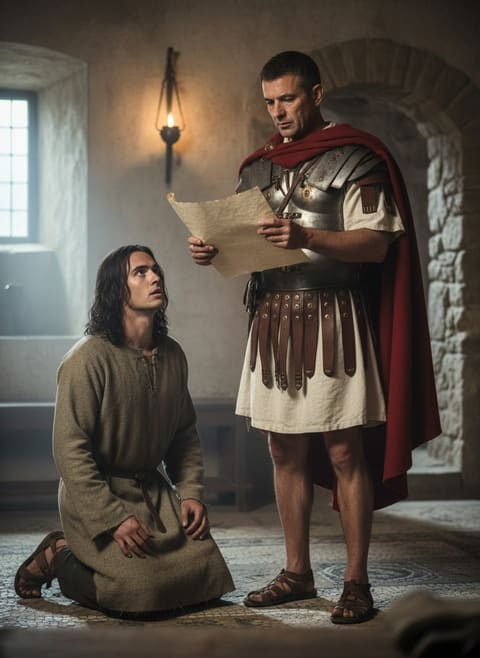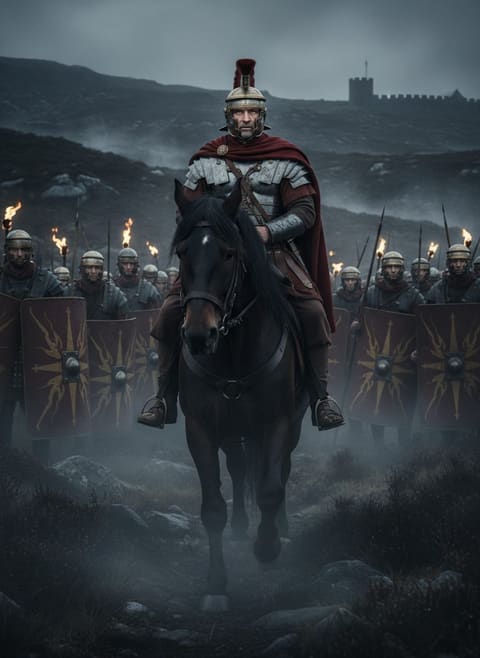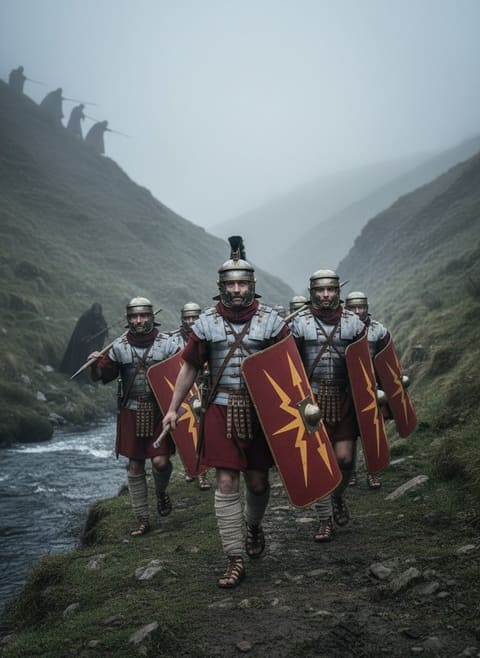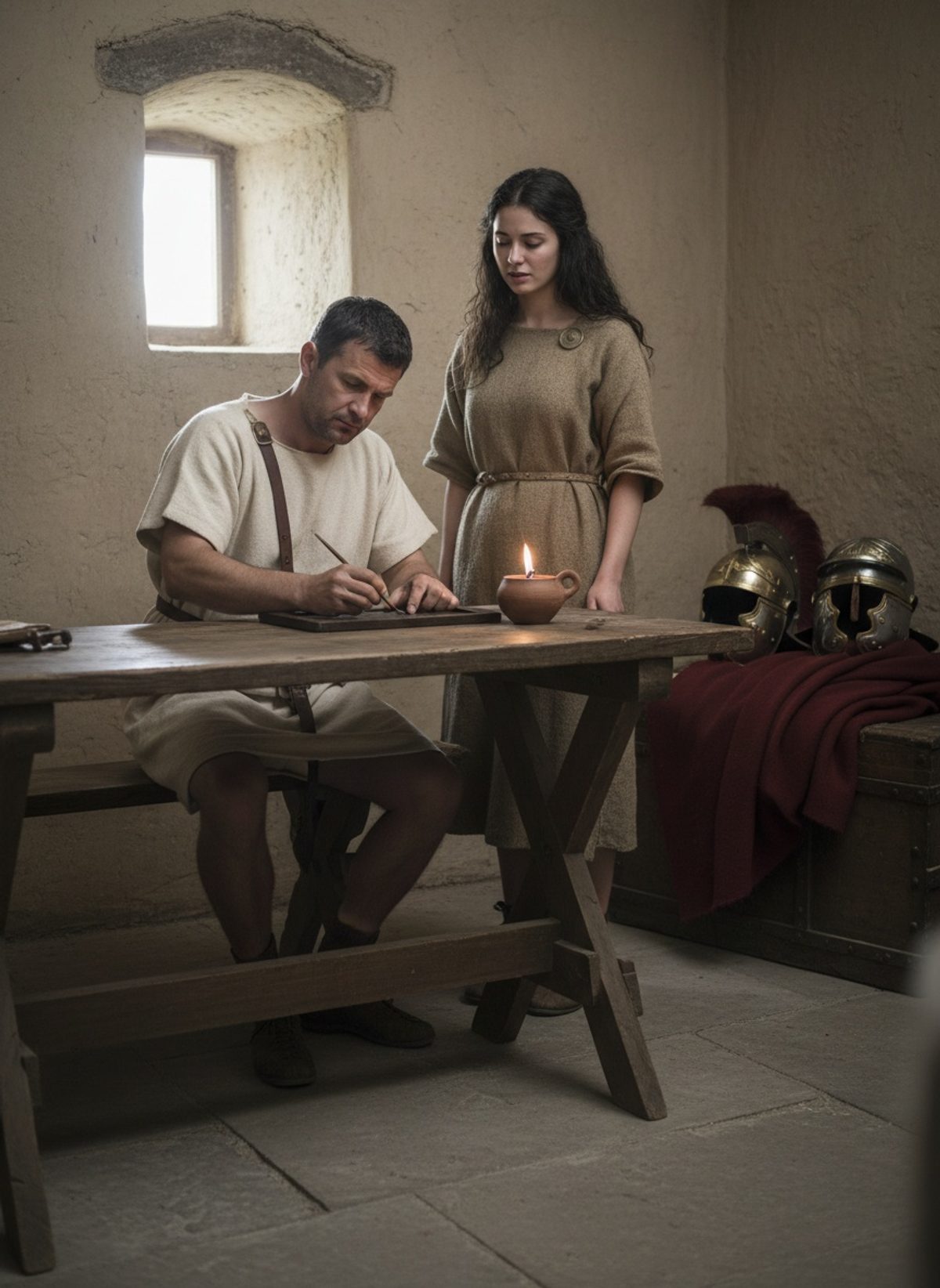
The wind carried the sharp scent of pine and damp moss to the rugged outpost of Vindolanda as a Roman soldier unfurled a papyrus scroll. The quill in his hand seemed to pause at the brink of history, suspended in a moment no textbook would ever catch—until now. He glanced at the young woman before him, a British slave with eyes shadowed by uncertainty, and then dipped the quill into the ink pot beside him.
The Frontier Where Stories Meet Histories
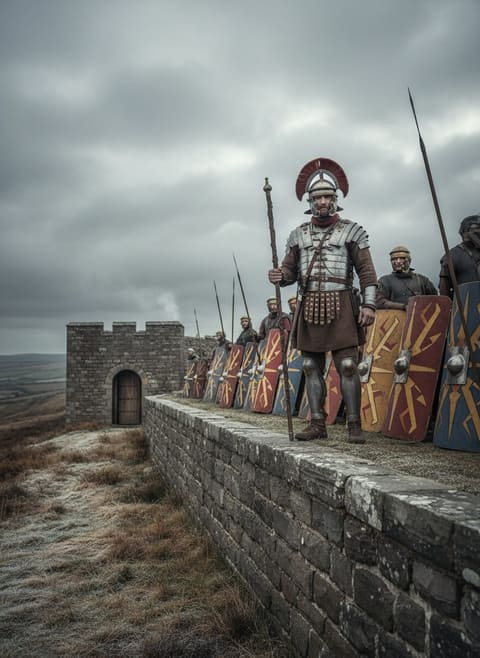
Vindolanda was no ordinary Roman fort. Situated just south of what would famously become Hadrian's Wall, it was a vibrant hub of military life and culture mingling on the edge of the known world. Traders, legionaries, slaves, and artisans bustled through its wooden gates, their stories whispered on the wind drifting down from Britain’s myth-draped hills.
Amidst this melting pot of languages and lives, the fort became a crucible for unexpected alliances and heart-rending decisions. In the 3rd century AD, Roman Britain bore witness to such an extraordinary tale—a testament not to the might of Rome’s opulent cities, but to the quiet defiance of an individual turning rigid fate on its head.
To Own and To Let Go: A Soldier's Choice
The sounds of training drills and shouted commands belied the inner turmoil of our anonymous legionary. Roman law set the status of slaves as commodities, yet here he was, risking judgment from his peers and spending his own coin on an unimaginable act—freeing his British slave.
Read next: The Day a Roman Slave Left a Message That Outlasted an Empire
His motivation remains locked in the shrouded recesses of the past, like a puzzle with pieces missing. Was it love or duty? Conviction or an impulsive act of conscience? Whatever the reason, the soldier gave up a tangible asset in a society where ownership was power. Crafted into parchment, his decision would cut against the grain of time, providing a glimpse into the lesser-known fabric of Roman life at the borders.
Ink and Intent: The Written Record
The act, memorialized in ink that survived the millennia enveloped by the damp, anaerobic earth, is more than a mere slip of the reed's end. This document, discovered amid Vindolanda’s rich archaeological strata, presents structured lines of Roman cursive that formalized the unfathomable. It is the ink-and-parchment emancipation—Britain's earliest artifact of such an act—an outwardly ordinary assertion of freedom.
The soldier's decision to record the emancipation speaks volumes of legal and personal gravity. Fragmentary yet potent, this document serves as testament to the voices that never deserved to be silenced, a whisper caught through the threads of time into the modern era’s ear. They crafted and signed it in the presence of witnesses, ensuring it was irreversible and undeniable. In that moment, the British slave was unbound from the Roman chains—a paper-thin yet monumental shift in destiny.
Freedom in the Shadows of Empire
The world beyond Vindolanda's palisades was teeming with transition. Rome, while still formidable, was beginning to show its cracks. Amidst the swirling tides of change, the act of freeing a slave might seem as ephemeral as the wind stirring the heather. Yet, it is in the routines, the minor acts of rebellion, that the undercurrents of history find their rhythm.
Read next: The Day a Roman Officer Freed His Captive and Walked Away
While names and exact motivations are lost, the ripples of this gesture expand. How did this newly freed woman fare, we are left to wonder, stepping into a society that oscillated between empire and individuality, Roman order and Celtic chaos? Her journey continues in the collective imagination, an evocative mirror reflecting a world both fractured and whole.
The Unwritten Legacy
In the artifacts we unearth and the parchments we unroll, moments of both grandeur and humility rise to challenge textbook tropes. This quiet rebellion against the socio-political norms of Roman Britain touches the threads of morality, agency, and hope interwoven within the annals of time.
Through the act of one soldier and the agency of one British woman, we are reminded of the narratives our history books often overlook. The parchment, a bridge across 1,800 years, calls upon us to listen to those caught between empires, dangling their possibilities by the ink of their own making. Vindolanda and its hidden voices reveal not just a freedom won, but the courage to write one's place into existence.