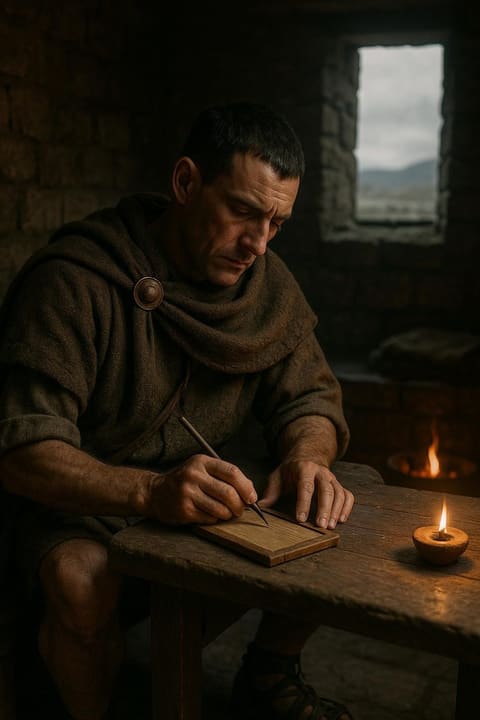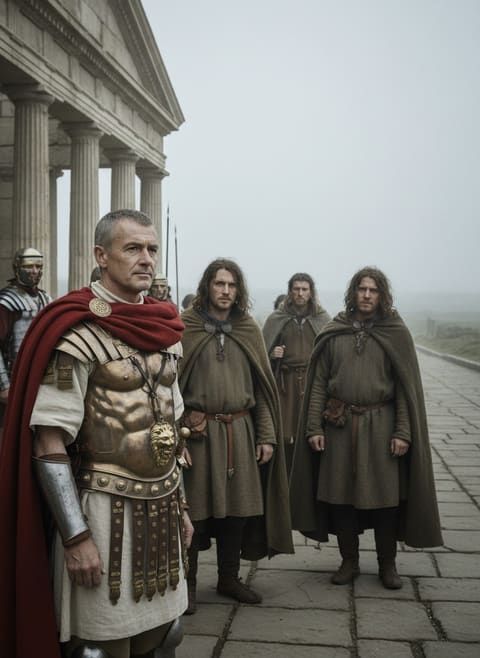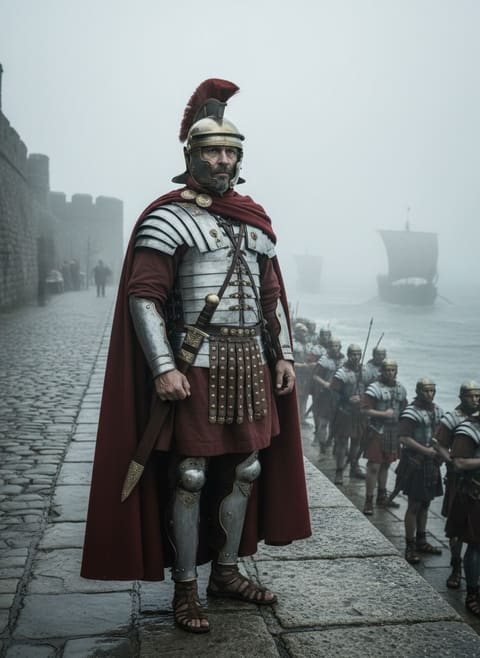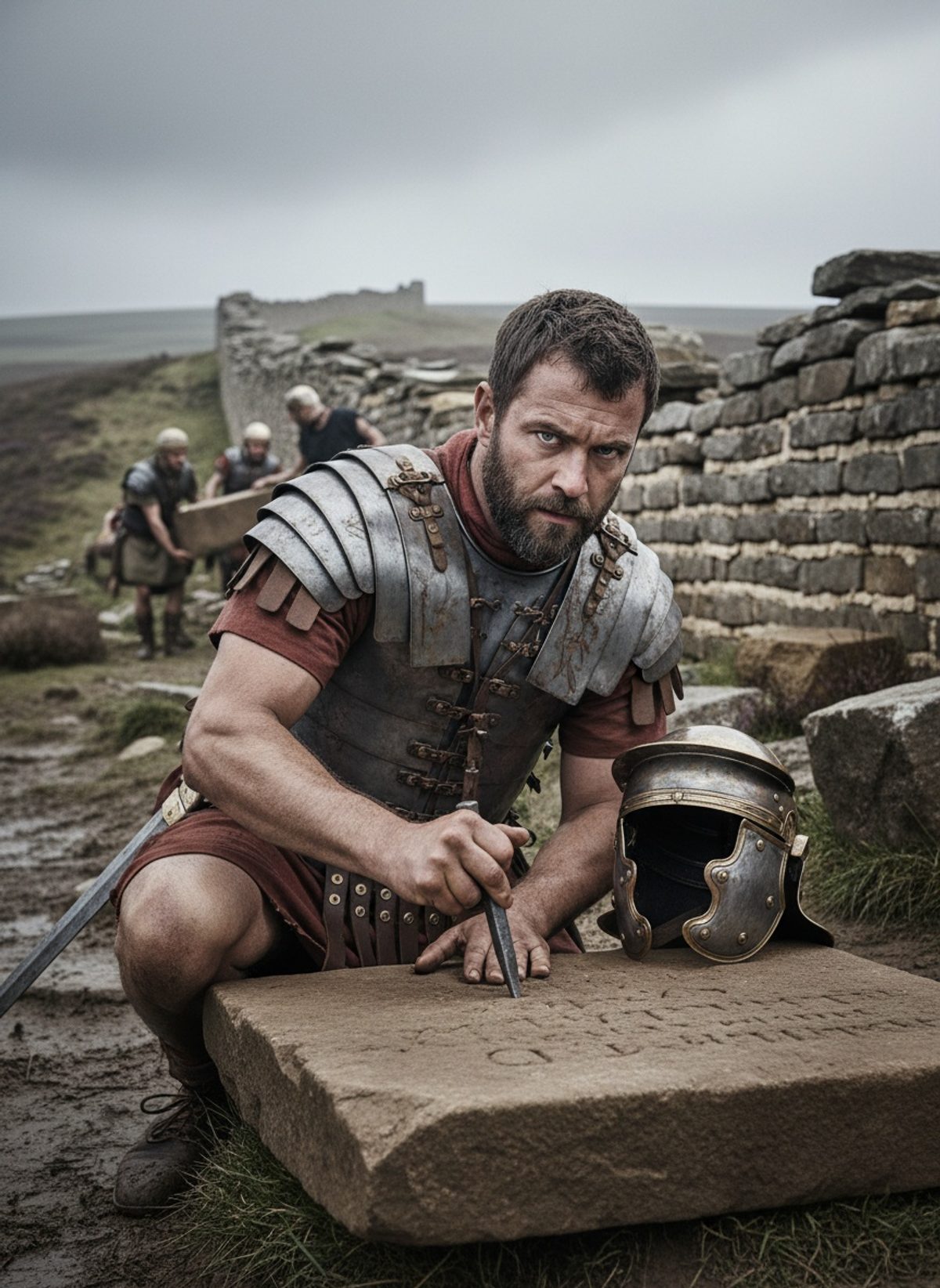
The chiseled edge dug into the stone with a satisfying crunch, as shards fell to the ground like brittle autumn leaves. Standing atop Hadrian’s Wall-in-progress, his breath visible in the crisp northern air, a Roman soldier painstakingly chipped away to carve his legacy into the hard face of Britannia.
His fingers—stiff from the cold and years of combat—did not hesitate, driven by the certainty that impermanence was the only enemy he could defeat here. This was more than just leaving a name; it was marking a moment when the land he altered would speak of him centuries later.
The Emperor’s Vision—and His Command
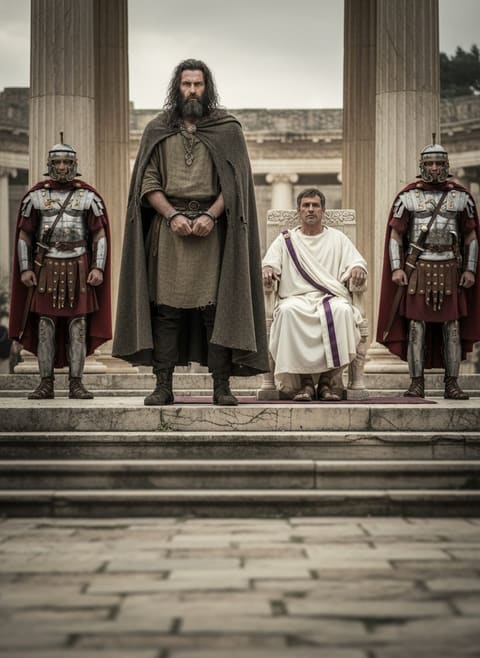
It was around 122 AD when the Roman Emperor Hadrian decreed the construction of a wall to stretch across the wilds of northern Britannia. Designated to keep out the tribes and solidify the empire's northern frontier, this barrier was to be more than a mere fortification.
For Hadrian, it symbolized the order brought by Rome—a line drawn by authority and ambition. But behind the emperor’s grand vision lay the dedication of the soldiers who would turn this dream into a tangible monument of both military strength and human stamina.
Read next: The Roman Governor Who Faced Down His Own Emperor
The project began, and with it came scores of legionaries, disciplined and battle-ready, each belonging to cohorts specially dispatched to realize the emperor’s plan. They moved with rhythmic precision, each man assuming his role in a grand choreography that unfolded over the rugged landscape. These soldiers were no strangers to construction, having honed such skills erecting fortifications throughout the expansive Roman Empire.
Tools, Stones, and Sweat
The wall stretched for approximately 73 miles, constructed primarily from stone in the east and turf in its western reaches. As they labored, each group of legionaries—his century among them—encountered not just the physical challenges of their task, but also the psychological ones. Building under uncertain skies often drenched in rain and fog, they had to keep every stone plumb and true even when visibility was low, and their fingers sought solace from the cold stones they placed.
Yet amid these hardships, they discovered a unique solace in their camaraderie. Their shared sufferings melded their identifications—the tribulations of construction uprooted seeds of pride in their achievement. Somewhere between toil and triumph, they carved their identities into the stonework they raised, accompanied by inscriptions that assigned each stretch to the centuries that toiled over them. Not mere graffiti, these markings became a permanent testament to a once-transient presence.
Etchings of Time
These inscriptions—known as centurial stones—soon became placeholders of historical continuity. With every etching, there was a promise held within the earth’s endurance—a hope that as long as the land remained adorned by the wall, the chiselled names would sing of Rome’s enduring influence on this distant island.
Deciphering these marks, modern historians can trace the movements of legions, gaining insights into military organization, recruitment, and even the cultural exchange that accompanied such enterprises. While names on rag-strewn papyrus may have vanished into the annals of obscurity, those incised into Hadrian’s Wall have survived tempest and tyranny alike—their rugged permanence a rebuke to oblivion.
An Ode to Unknown Builders
Beyond their stark factuality, these centurial stones evoke curiosity about the souls behind the chisels. The legions were more than impersonal entities; they were individuals whose sweat and calloused hands erected something monumental. From leather-clad officers barking orders to young recruits embracing Roman discipline, each etching captures fragments of their collective story—layers buried in the wall like sedimentary records.
Read next: The Day a Roman Soldier Carved His Freedom Into Stone
In chronicling this tale, history nods to the humility beneath grandeur: the unheralded builders, encircling the emperor’s dream, whose aspirations weathered alongside their creations. It’s a potent reminder that even while history canonizes leaders and victors, the anonymous hands that hold those leaders aloft sing an enduring chorus, timeless in their anonymity.
The Everlasting Rubble
As we stand today amidst the remnants of Hadrian’s Wall, our gaze is met by a mosaic crafted from Rome’s ambition and Britain’s landscapes. Each stone tells a story of alliance and conflict, of unity and division, whispering the soldier's tale from its jagged surface.
In etching their identities into these stones, these soldiers ensured that they and their comrades were more than mere smoke swept away by the winds of time. They remain, defying their own mortality, their stories etched into the sandstone—a sentient testimony of endurance.
What speaks most profoundly is this defining truth: the notion that while walls can divide and protect, they can also communicate and connect, serving as rituals of remembrance. Hadrian's Wall stands not just as a barrier of stone but as a shared history of mankind’s desire for legacy, revealing our age-old quest to leave marks that defy the erasure of time.