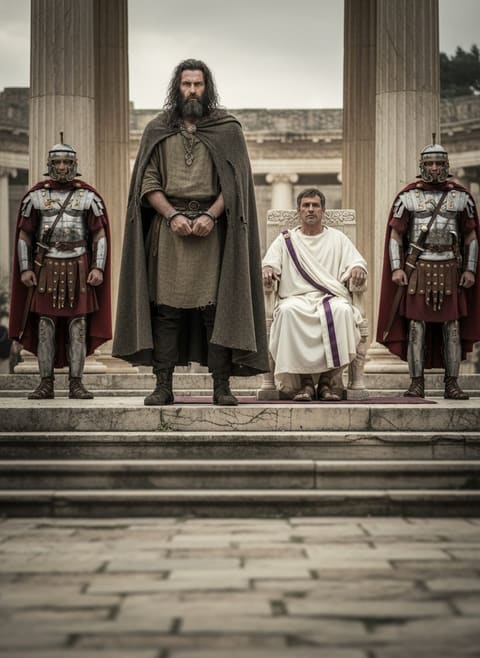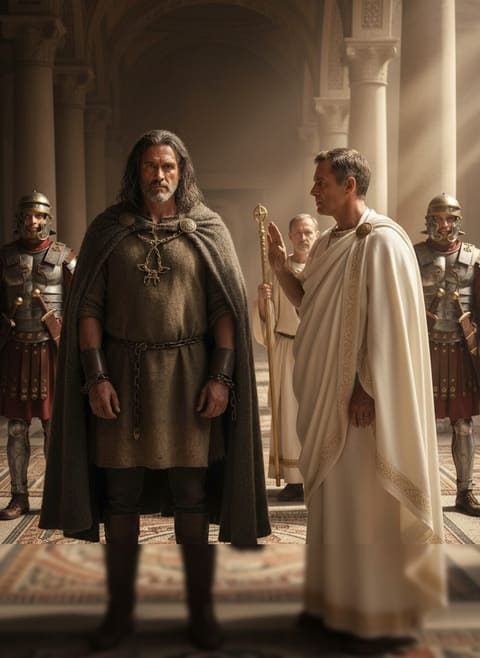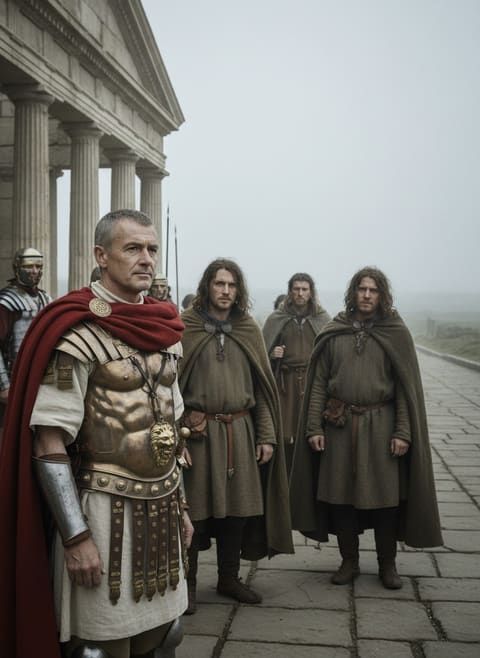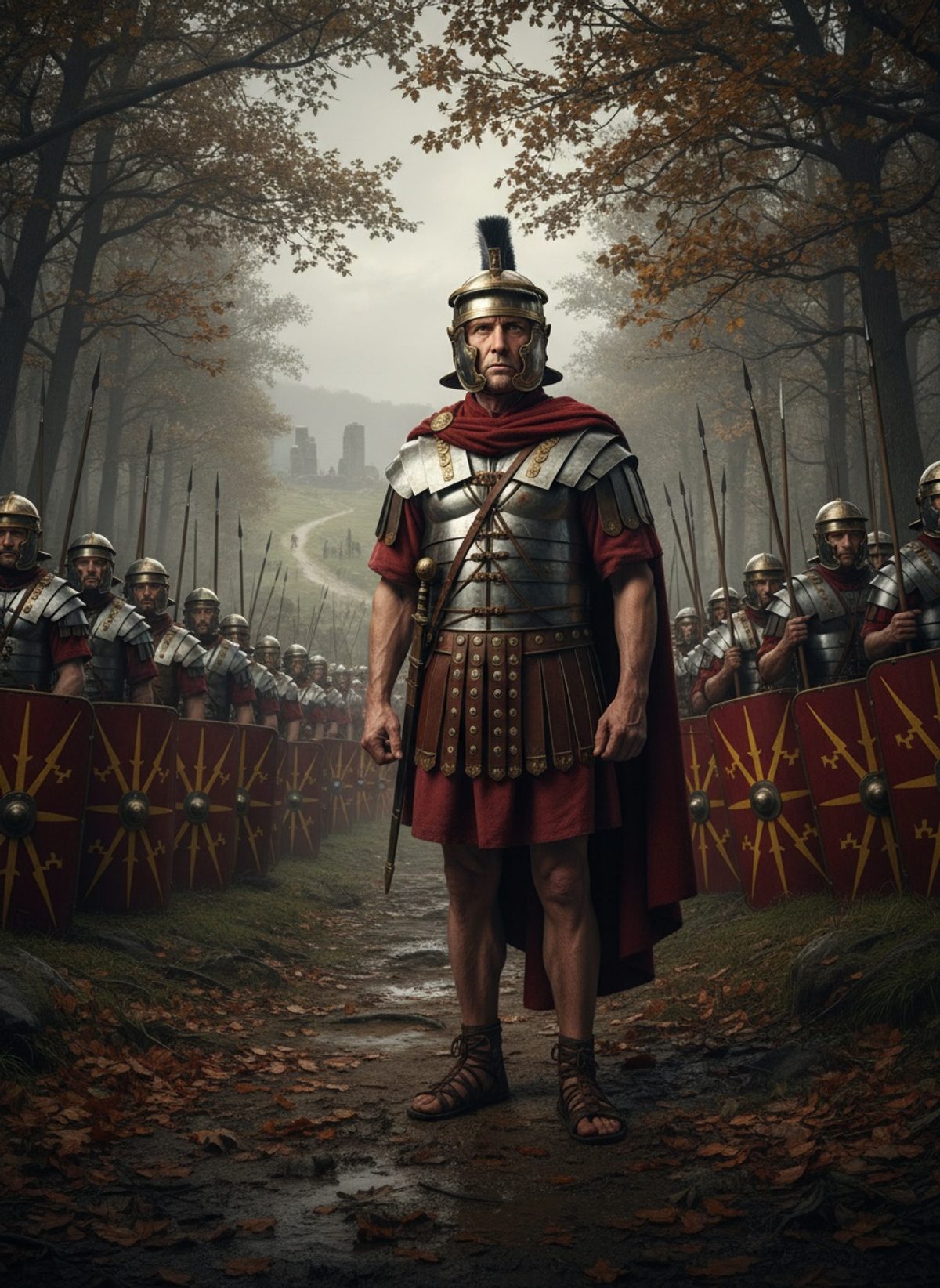
61 AD. The air was thick with the acrid scent of burning thatched roofs as columns of smoke ascended into the leaden Essex sky. Yet, amidst the chaos of a Roman Britain set ablaze by rebellion, Gaius Suetonius Paulinus stood resolute.
His responsibilities as the Roman governor of Britain had never felt more burdensome. Boudicca's fury had left Roman forces reeling, with Camulodunum, Londinium, and Verulamium reduced to nothing more than charred ruins. It was not only a revolt but a slaughter, and Suetonius knew it. And yet, in this dire moment, he recalled the core doctrine of Roman military strategy, honed through centuries of warfare: every retreat invites pursuit, every retreat risks annihilation. Suetonius was a veteran of the mountainous Mauritanian campaigns, where the enemy's barbarity and the treacherous terrain conditioned him to endure and anticipate the unexpected. His experience had taught him that, at times, the boldest decision was to hold the line. Here, in the shadow of a nascent empire showing signs of weakness, he determined not to shrink but to rise.
The horizon was rippling with the approach of Boudicca’s forces, a multi-tribal coalition seething with the rancor of decades under Roman yoke. Boudicca, herself an incarnation of vengeance, rode at their head. Her chariot, its polished iron scythes shimmering in the brittle morning sun, was a fearsome sight. Such was her resolve, that she had kindled the flames of rebellion with her caustic oration, wielding rhetoric like the sharpest gladius. Rome, she declared, was not welcome on British shores, and she had summoned a force some historians count as a staggering 100,000, determined to make Her point.
In stark contrast, Suetonius had marshaled fewer than 10,000 men. His options were limited and stark. He had no possibility of reinforcements, no hope of negotiation. What he had was the discipline and training of the legionaries at his command, and a terrain that might level the odds. The battle would take place in a narrow gorge, its entrance flanked by dense woodland while its exits offered no easy egress. Suetonius ordered his men to make ready their piled arms and shields. It was in this valley, with their backs to the sandy embankments, that they would meet the warriors of the Iceni.
Read next: The Day a Roman Soldier Wrote Home and Called Britain Home
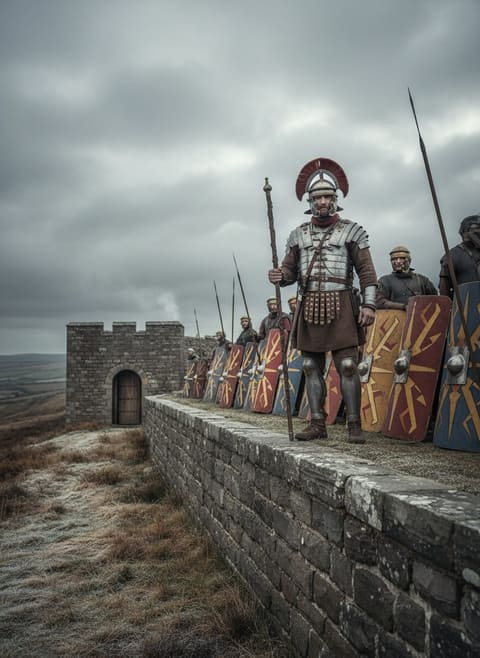
It was a fortress of nature’s own making. Suetonius knew that even the most ferocious charge would quickly lose momentum, as numbers alone would count for little where flanking moves were impossible. With the flanks protected, his men formed the classic “triplex acies” – three lines designed for cumulative impact on the foe. Here, discipline could prove a formidable force multiplier against sheer numbers. His gladiator ranks stood ready, each man grasping shield and pilum, their formations standing as impregnable as the Roman spirit itself.
From across the field came the rolling thunder of the British charge, their battle lust reverberating against the wooded slopes. The cacophony reached its zenith as the Britons closed the distance, only to crash against the wall of Roman shields like waves breaking upon a rocky promontory. Suetonius' gamble, his soldierly instinct to hold rather than withdraw, swiftly revealed its merit. With volleys of pila, precise and cold steel rained down upon the rushing Britons—catching them off guard, disorienting, and breaking their charge.
The clash became an exchange of heroics and wits, ancient and brutish. As the first wave recoiled, those who lingered too close to the steadied Roman blades met with grim resolve. Roman swords thrust with deadly precision while shields closed in tight ranks, forming a boundary that the Britons' fury could not breach. Suetonius marshaled reserves strategically, patching gaps, commanding with unyielding poise, directing the battle as a maestro conducts a symphony.
As Roman centurions called for a brutal advance, the legions began to press forward. First slowly, methodically, then with incremental speed and force, driving a fatal wedge through the heart of Boudicca’s line. The discipline of Roman troops was without equal, forged in the fires of conquest, and so they moved inexorably on. The Britons lost unity under the relentless crush, their lines unraveling in the face of a counter-offensive that was both calculated and unstoppable.
Read next: The Day a Roman Soldier Set His British Slave Free
Amidst the horror of the battlefield, the chariot wheels spun furiously. Boudicca, a queen of mythic proportions, gradually saw her coalition disintegrate, their cries mingling with the smoke ablaze on the craggy horizon. Retreat soon turned to rout, and at that critical moment, Suetonius moved for a decisive strike, sending his cavalry upon the flanks. The retreat ceased to be orderly, resulting instead in chaos that devoured whole regiments of her forces. It left the Britons vulnerable to the harrying strikes of the Roman horsemen, their ranks vacuumed by the tides of combat.
Historians differ much on what happened to Boudicca herself. Some traditions suggest she took poison rather than fall into Roman hands, a fittingly dramatic last act in a struggle writ large with tragedy and valor. However, what is consistent across the chronologies is that her uprising was quashed, and henceforward, Roman Britain reshaped itself as it pooled its resources to more fully integrate this far western province into the machinery of Empire.
The battle and its immediate aftermath reshaped the province and marked the zenith and culmination of Suetonius’ military prowess. It was one of those brief, shining instances where the boldness of one figure altered the course of history. By holding firmly in that narrow valley, Suetonius secured not only a military victory but also the place of Roman Imperial power amidst the turmoil of Britain's ancient mists.
The lessons and legacy of Suetonius Paulinus stretch far beyond this epic clash. The episode becomes an archetype of indomitable spirit and strategic audacity, resonating through ages where few ever dared to challenge the might of those sworn to wear the purple. It’s a stark reminder of how leadership, tactical brilliance, and discipline can redefine the boundaries of possible, constructing legends with the barest means against the fiercest odds, and etching one's place in the eternal stone of history. In retrospect, the stand of Suetonius is a reminder that individual valor, rooted in conviction and executed with skill, can pivot the flow of greater events and shape the future. Amidst the folds of time, this story emerges as a testament to those who chose to stand their ground, come what may.