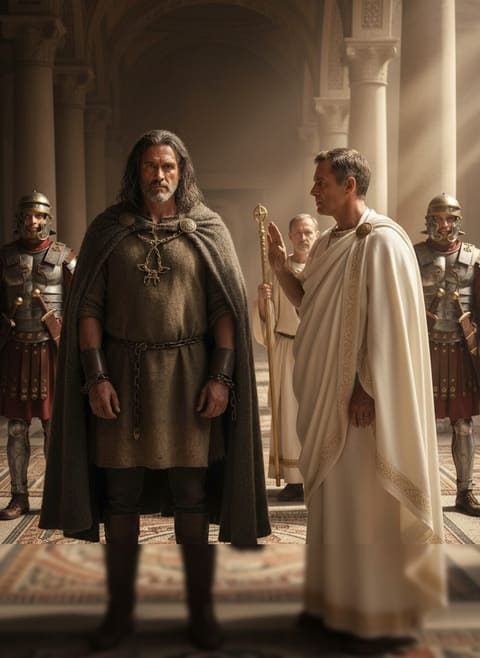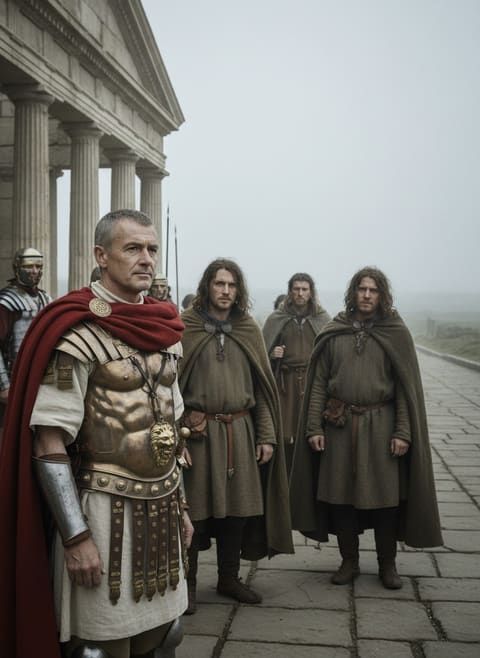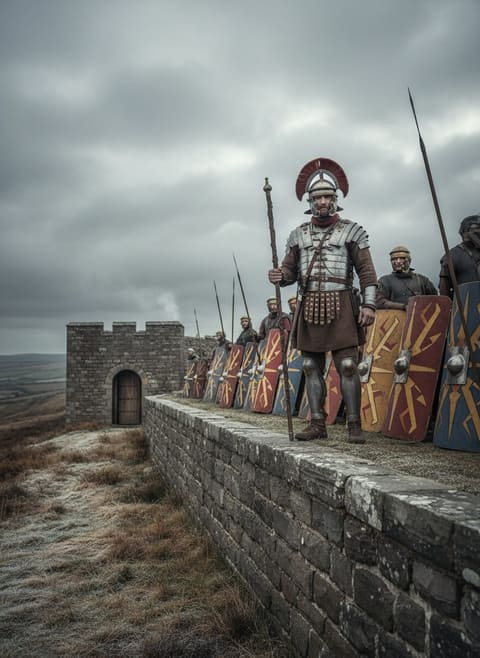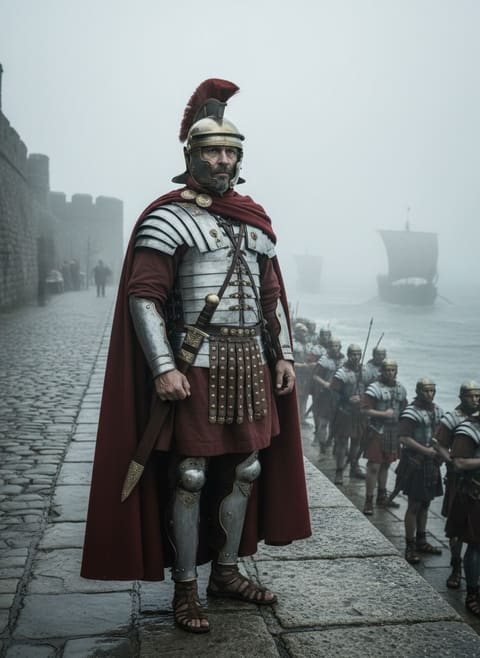
100 AD. A chill wind swept across the rugged plains of northern Britannia.
The Merchant from Palmyra
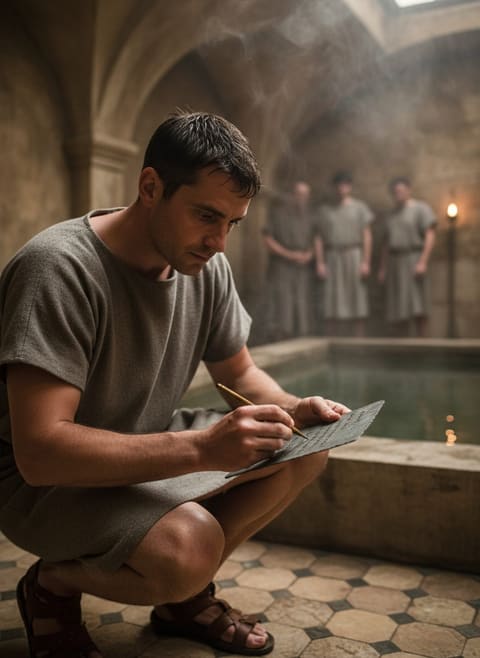
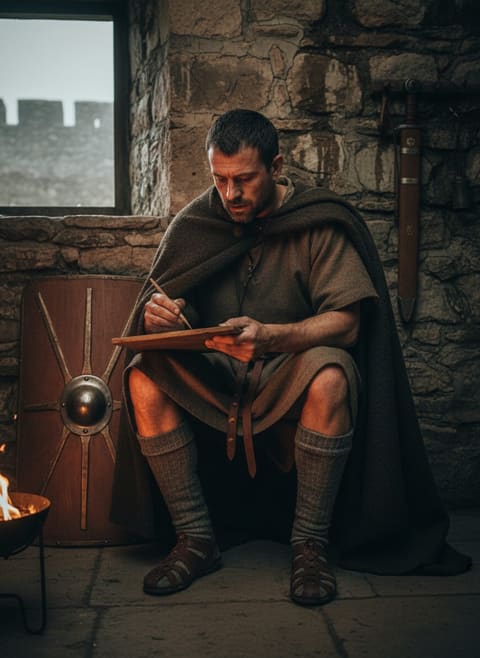
In the bustling markets of ancient Palmyra, a city nestled at the crossroads of trade in modern-day Syria, a man named Barates might have first discovered his adventurous spirit. As a merchant, he thrived in a world of humming markets and vibrant interactions. Voyage carried him to the frontier of the Roman Empire: Britannia. Here, surrounded by rolling hills and foreign tongues, Barates joined the ranks of the Roman auxilia at Vindolanda, a fort poised against the unruly lands beyond Hadrian's Wall. It was a far cry from the fragrant spice markets of his homeland.
In this land of slate-grey skies, Barates was both an outsider and an insider. He wore the armor of Rome, swore fealty to the Empire, yet spoke a language of the East, filled with the warmth of an Aramaic that rolled gently off his tongue. Palmyrene merchants like Barates were rare, braving the distance from a sun-drenched capital to a new world edged in mist and mystery. It was here that he chose to engrave his story not on the papyrus of transitory manuscripts but into cold, enduring stone.
Regina: A Life Transformed
Within the fort at Vindolanda, it was across the cramped quarters and in the frequent exchanges of a bustling camp that Barates met Regina. Little is known about her early life before they crossed paths, except that Regina hailed from the Catuvellauni tribe in what we now call the south-east of England. She was once a slave, but to claim that as her whole identity would miss the story's heart, for she too was transformed by love and freedom.
Read next: The Day a Roman Soldier Set His British Slave Free
Barates, captivated by Regina's resolve and singularity, did the unthinkable: he liberated her. This act of manumission was more than a legal decree; it signified a profound allegiance and affection—a commitment visible to all at the slightest hint of the couple exchanging stories about their disparate, yet intertwined worlds. In marrying Regina, Barates embarked on a journey devoid of the norms expected in such rigid times. His love story was well beyond the simple transactional nature of marriage prevalent back then; it was a partnership forged in mutual respect and shared dreams.
A Testament in Stone
But inevitable time, the patient sculptor of fate, drew them to a somber crossroad. Regina, the former slave who became not only a freewoman but a beloved wife, passed away decades too early. Seeing her succumb to the silent call of nature would have been a moment of palpable pain for Barates. Yet, the depth of his grief and reverence became a light timeless enough to be captured in chiselled rock.
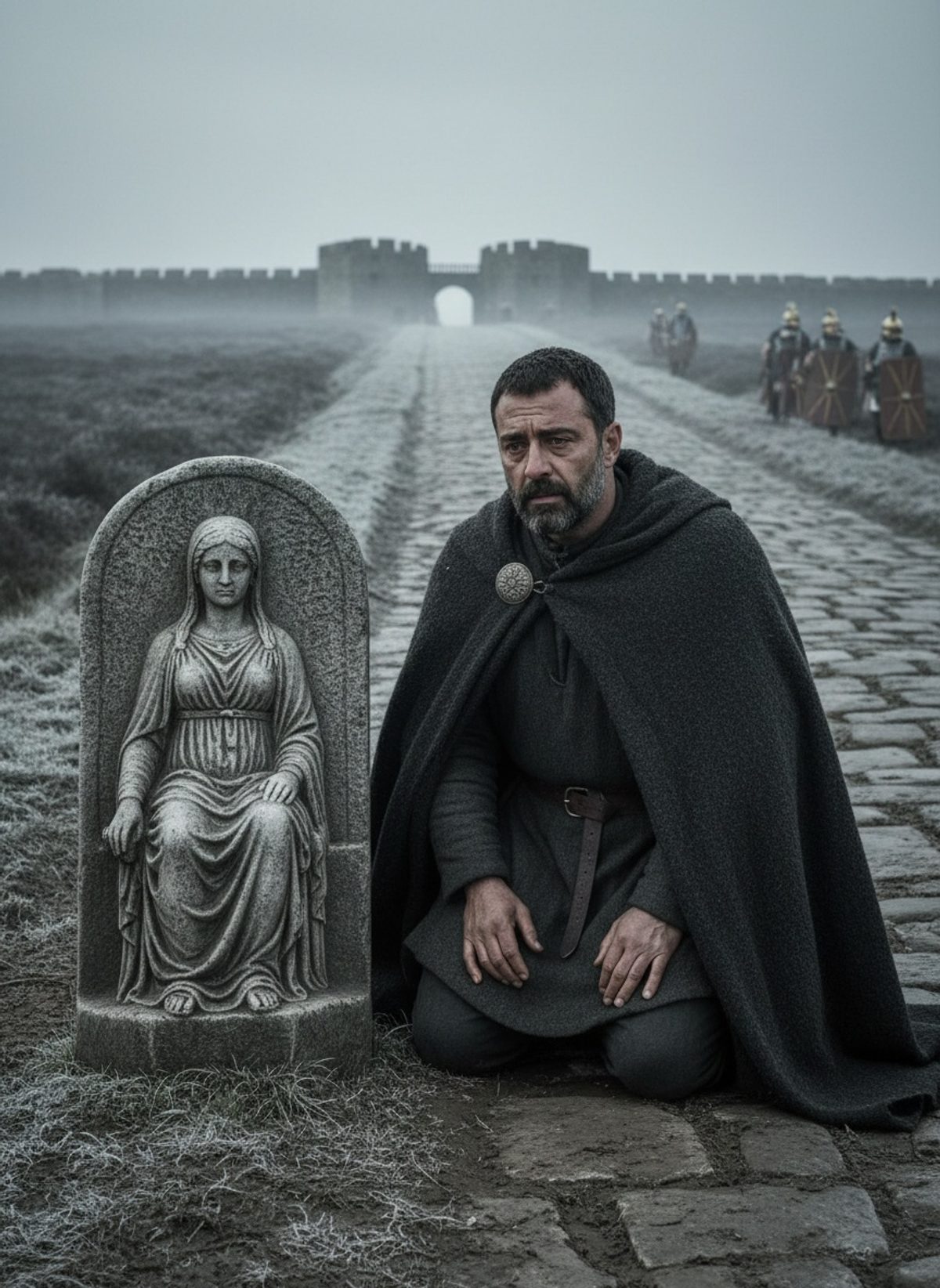
Barates constructed a monument for Regina, and he imbibed upon it his testament, one that would whisper his love across millennia. Standing in South Shields, the stone bore inscriptions in both Latin and Aramaic, attesting to their unity: "To the goddess of the dead, to the spirits of the departed: Regina, freedwoman and wife of Barates, a Catuvellaunian by nations..." It was as if Barates wanted the world to see the many facets of their identities: her tribal roots, her emancipation, her cherished role as his wife.
Here stood a stone that was more than a memorial—it was a shared chronicle. Where most gravestones of the era simply marked mortality, Regina's transcended the conventions. The bilingual text spoke of hybrid identities—a Roman soldier, a Syrian native, a British-born woman—and the integrity of a love that dared to redefine societal boundaries.
Read next: The Day a Roman General Knelt and Spared a British King
The Unheard Voices of Empire
Regina’s memorial also spoke to the often-muted voices beyond Roman Britain's storied might—lives lived not in the grandeur of marble halls but in the flickering shadows of campfires. Many stories are coaxed into the light by chance findings of archaeology, yet they swim just beneath the surface of monumental military histories, overshadowed by the turmoil of conquest and the unyielding will of emperors.
While the roar of Rome sat dominant, the quieter tales like Barates and Regina’s were engraved into the very fabric of Britannia's rich tapestry. Their love was a subtle challenge to the Empire’s usual narratives, illuminating a reality where people of diverse origins and former conditions came together. It understatedly highlighted the complexity and humanity within an often oversimplified historical landscape.
Why Regina's Stone Speaks Still
Centuries after standing witness to Barates' grief and love, Roy's stone endures north of the Empire’s echo. It represents a relic of personal resolve and a dovetail moment of human experience not often recorded in the annals dictated by powerful states. Herein lies a narrative bridge between civilizations—Rome, Syria, and Britannia—all in a mere fragment of carved rock.
Barates and Regina’s story is more than historical curiosity. It is a timeless whisper, a call to not overlook the nuanced identities shaped by history’s margins. Today, as we continue to unearth the past inch by inch, it rightly reminds us that we owe as much attention to the quiet, intimate stories of lives changed, as to the sweeping strokes of empires forged. In a world of walls, the gentle act of carving love into stone allows far-reaching connections to transcend time itself.