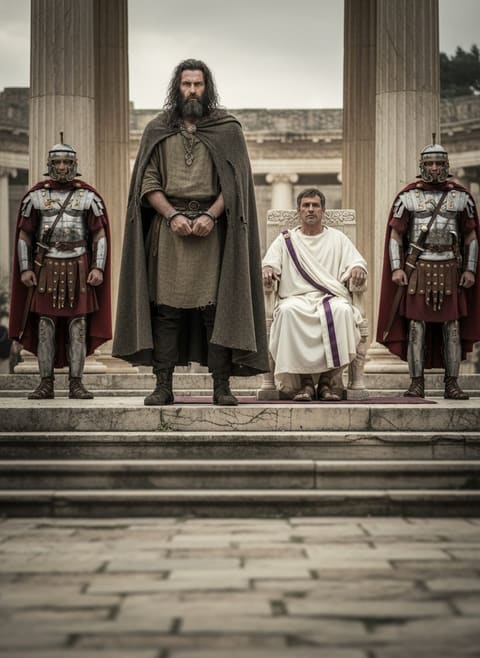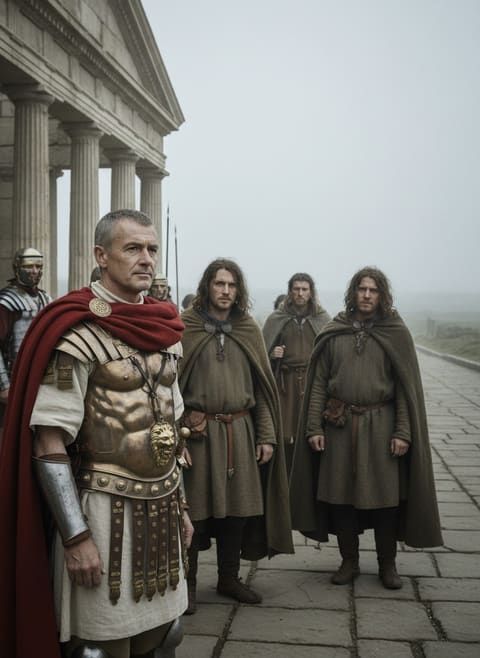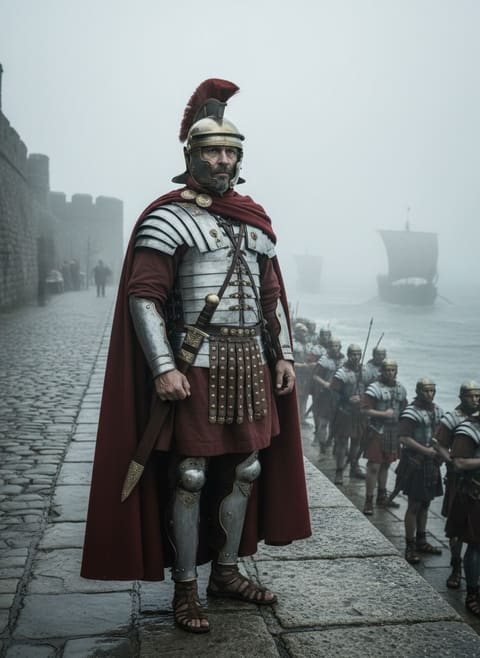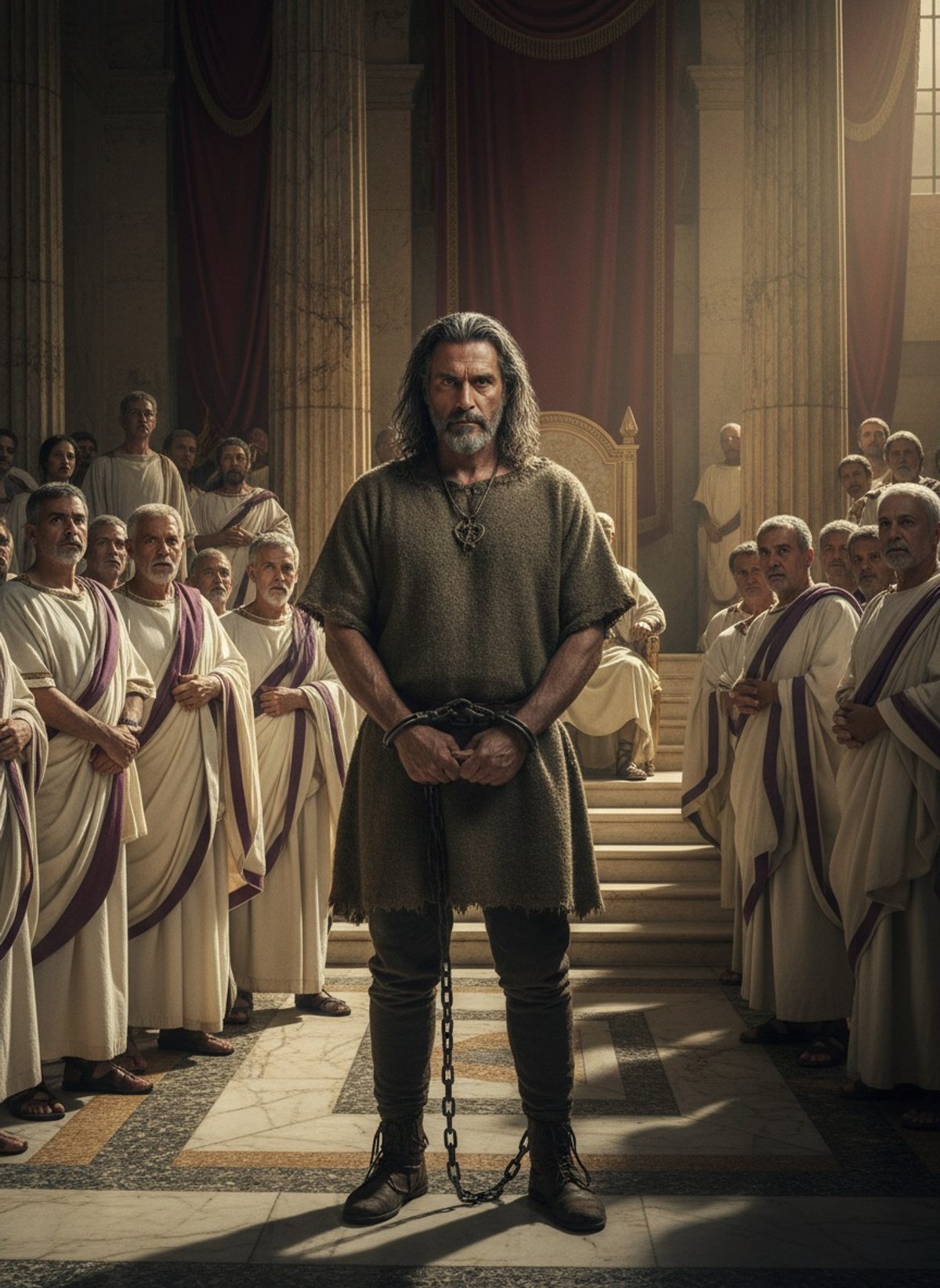
He stood in chains before the emperor of Rome. Yet this was a man who never once begged for his life. Caratacus, a name echoing through the hills and vales of Britain, faced an uncertain fate with the nerve and grace of a true leader. While his future hung precariously on the whims of a conquering civilization, his speech would become legendary, not for its humility, but for its boldness.
The Indomitable Spirit of a Tribal Leader
Caratacus was no typical warrior. Born into the tribe of the Catuvellauni, one of the largest and most formidable tribes in southern Britain, his path was set from the start. With the Romans eyeing Britain as their new frontier, Caratacus's story was woven into the resistance's fabric.
He stepped into the limelight following the death of his father, King Cunobelinus, around 43 AD, quickly forging an alliance against the encroaching legions of Rome. His mission was clear: keep the invaders at bay with every ounce of strength he could muster.
For nearly a decade, from 43 to 51 AD, Caratacus led this defiance with relentless vigor. In his nine-year tussle with the might of Rome, he exemplified a combination of guerilla tactics and strategic brilliance, utilizing Britain's dense forests and rolling hills to his advantage. He and his coalition managed to outsmart and repel four different Roman governors in a streak of victories that astonished his enemies and inspired his people.
Read next: The Roman Governor Who Faced Down His Own Emperor
Yet, the Roman war machine was unyielding. Under the strategic command of Aulus Plautius and later Ostorius Scapula, Rome didn’t relent. The turning point finally came in 51 AD when Caratacus faced defeat at the hands of Roman forces, led by Scapula, near the Severn. Betrayed by Queen Cartimandua of the Brigantes, he found himself in Roman chains, destined for a spectacle in the heart of the empire—Rome itself.
Frozen in Time: The Speech That Echoed Through the Ages
Tradition holds that Caratacus's capture was meant to be a grim spectacle, serving as a somber reminder of Rome's might and the futility of defiance. Paraded through the streets of Rome, Caratacus was destined for an ignoble end. Most prisoners of war met a swift demise, sacrificed to appease the Roman populace. However, Caratacus would turn this scenario on its head, giving a speech that mesmerized and silenced the bustling crowd.
As he stood before Emperor Claudius and the throngs of spectators, the atmosphere charged with anticipation, Caratacus found the perfect moment to make his mark. Instead of pleading, he extolled the achievements of both himself and his adversaries.
He highlighted the glory and honor of being defeated by the grandest empire known to man, subtly reminding them of his warrior's code. His robust words underscored the irony of being so feared and admired that his defeat merited such a grand trial.
Read next: The Day a Roman Soldier Carved His Freedom Into Stone
For a moment, the hushed masses seemed to hang on to his every word. The crowd expectantly looked to the emperor, who after weighing Caratacus's extraordinary display of courage, turned mercy into glory by pardoning him on the spot. Caratacus, in a feat few would forget, walked into the rat's nest of Rome not as another forgotten casualty but as a royal envoy leaving its mark. Claudius's unexpected leniency turned Caratacus into a living testament of bravery and resistance.
A Lesson in Power, Honor, and Humanity
The tale of Caratacus didn't merely end with his release; it resonated long after, providing a lens into the complex interplay of power and respect across cultures. His life as a captive of Rome stands as a unique chapter where the story of a vanquished leader served as a lesson far beyond his homeland. Embraced into the folds of Roman life rather than disappearing into the shadows of obscurity, Caratacus proved that courage sometimes made the victor of the defeated.
But why does this ancient tale matter today? Caratacus's story is not just one of military failure or political spectacle. It's a reflection of leadership—a poignant discussion on character and the power of human dignity. It showcases how even in the face of certain demise, a few choice words have the power to transform fate and alter perceptions. In influencing one of the world's greatest centers of power, Caratacus demonstrated an unexpected diplomacy that reshaped his legacy.
In today’s world, where power dynamics often involve invisible battles of influence and rhetoric, Caratacus speaks across the ages, reminding us of the gravity and finesse held in words. His story, largely left out of conventional history books, defies the notion that history is only written by the victors. It is written by those who dared to stand proud, even in chains, and chose a path true to their spirit.