He was barely a month old, yet his life had already been charted with grandeur. Prince Charles, as he lay swaddled in Buckingham Palace, was unwittingly preparing for a momentous occasion that would ripple through royal history.
The Making of a Royal Event
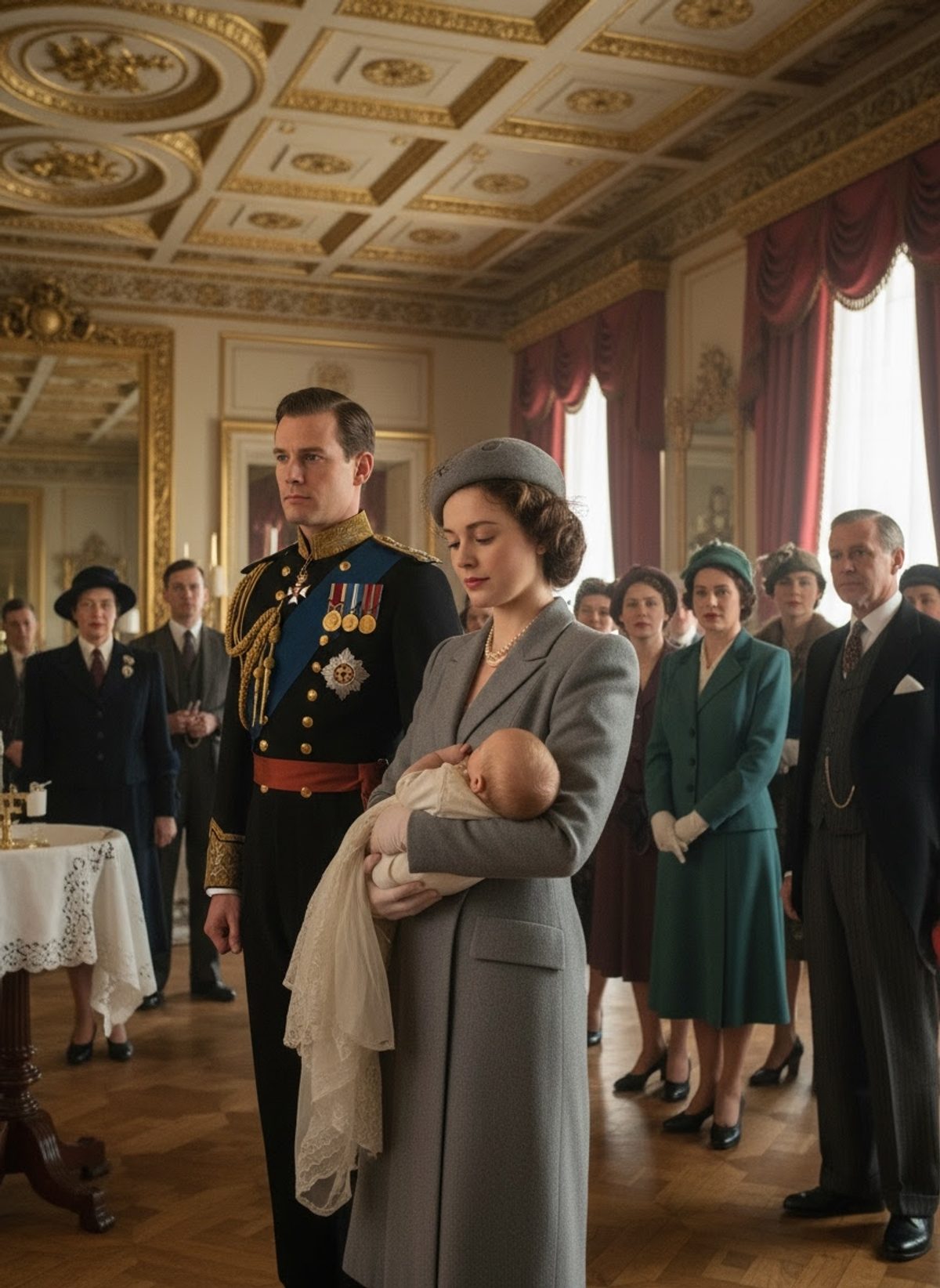
The scene at Buckingham Palace on December 15, 1948, was one of regal opulence. Inside the grandiose Music Room, an illustrious assembly was gathered. The atmosphere was suffused with the fragrance of roses and camellias, carefully arranged to accentuate the room's ornate Georgian splendor. The air buzzed with a palpable sense of history in the making, as courtly whispers filled the space, resonating with the tune of age-old traditions.
Eight godparents, each symbolizing a link in the complex web of European royalty, were poised around the font. Among them was King Haakon VII of Norway, a monarch whose resilience had seen him through the turmoil of World War II.
Princess Margaret, the young and vivacious sister of Charles's mother, added a touch of familial warmth to the assembly. For these individuals, standing as godparents was not merely ceremonial; it was a living testament to a network of alliances, friendships, and shared destinies.
Read next: The Grave That Had No Name: Royal Earlswood's Hidden Story
King George VI, the grandfather of the tiny prince, had meticulously chosen these eight figures, balancing the royal and familial links that stretched across continents. Naming the child was a task undertaken with a seriousness befitting a future king: Charles Philip Arthur George. Each name was a stitch in the fabric of monarchy, nodding to history and tradition, promising continuity while subtly signaling modernity.
The christening marked a poignant moment — the meeting of old and new, ages interwoven by the passage of time. As the Archbishop of Canterbury officiated the ceremony, basking in the glow of royal indulgence, the future of the British monarchy lay silently in the arms of an era yet to unfold.
More Than a Ceremony
To outsiders, the event might have appeared as a simple rite of passage. Yet, it was a carefully curated blending of tradition and future aspirations, encapsulating the essence of British monarchy. As King George VI looked on, pride mingled with what might have been an inkling of foreboding. His health had been waning, a quiet truth known only to the inner circle, shrouding the occasion in a patina of vulnerability.
The symbolism of the ceremony was layered, drawing not only from the present but projecting hopes onto the canvas of an uncertain future. Each godparent represented an affirmation of shared royal duties and expectations, a reminder that Charles was not solely born to lead but to embody the institutional heft of the British Crown.
Yet, beneath the grandeur and splendour lay an undercurrent of change. The Britain that Charles would eventually lead was evolving, emerging tentatively from the shadows of war towards a society more attuned to equality and openness. The christening, though steeped in age-old customs, was set against a backdrop of a nation rebuilding itself, reshaping its identity in a post-war world.
As the ceremony concluded, fortified by tradition and promises, the assembly dispersed, aware of the brevity that defines royal events. Little did they know that within a few years, the face of monarchy would change irrevocably, marking the end of George VI's reign and heralding a new Elizabethan era.
A Nation in Waiting
By February 1952, fate had unwound the remaining days of King George VI. His death left a void, bringing to the fore a young queen and an infant prince whose life had been marked from the very beginning by expectations and obligations. George's exemplary dedication to duty had underscored the ethos that would guide Charles as he grew, casting a long shadow over the prince's formative years.
Read next: She Left for the Abbey Without Her Wedding Bouquet
However, the christening of Prince Charles held deeper implications, drawn from the wellspring of international unity and royal continuity. It was a rare moment where borders blurred, interlinked by shared histories and mutual respect, with each godparent rooting the young prince firmly in the interconnected lineage of European royalty.
The choice of godparents was strategic, drawing on both blood and bonds forged through mutual understanding. It was a bid to solidify alliances and plant the seeds for future collaboration between nations. These carefully chosen figures stood not just as guides but as guardians of an emergent legacy, pledging their support to the child who would someday hold the weight of sovereignty.
In an era where the ebb and flow of empire were giving way to new global realities, the christening was more than a royal milestone; it envisioned a future where monarchy could adapt and endure.
Looking back, it serves as a poignant reminder of the intertwining of public duty and private life, reinforcing the idea that the crown is both a heritage and a hope. As Prince Charles matured into King Charles III, those early moments continued to reverberate, shaping the path of a monarch groomed by destiny.