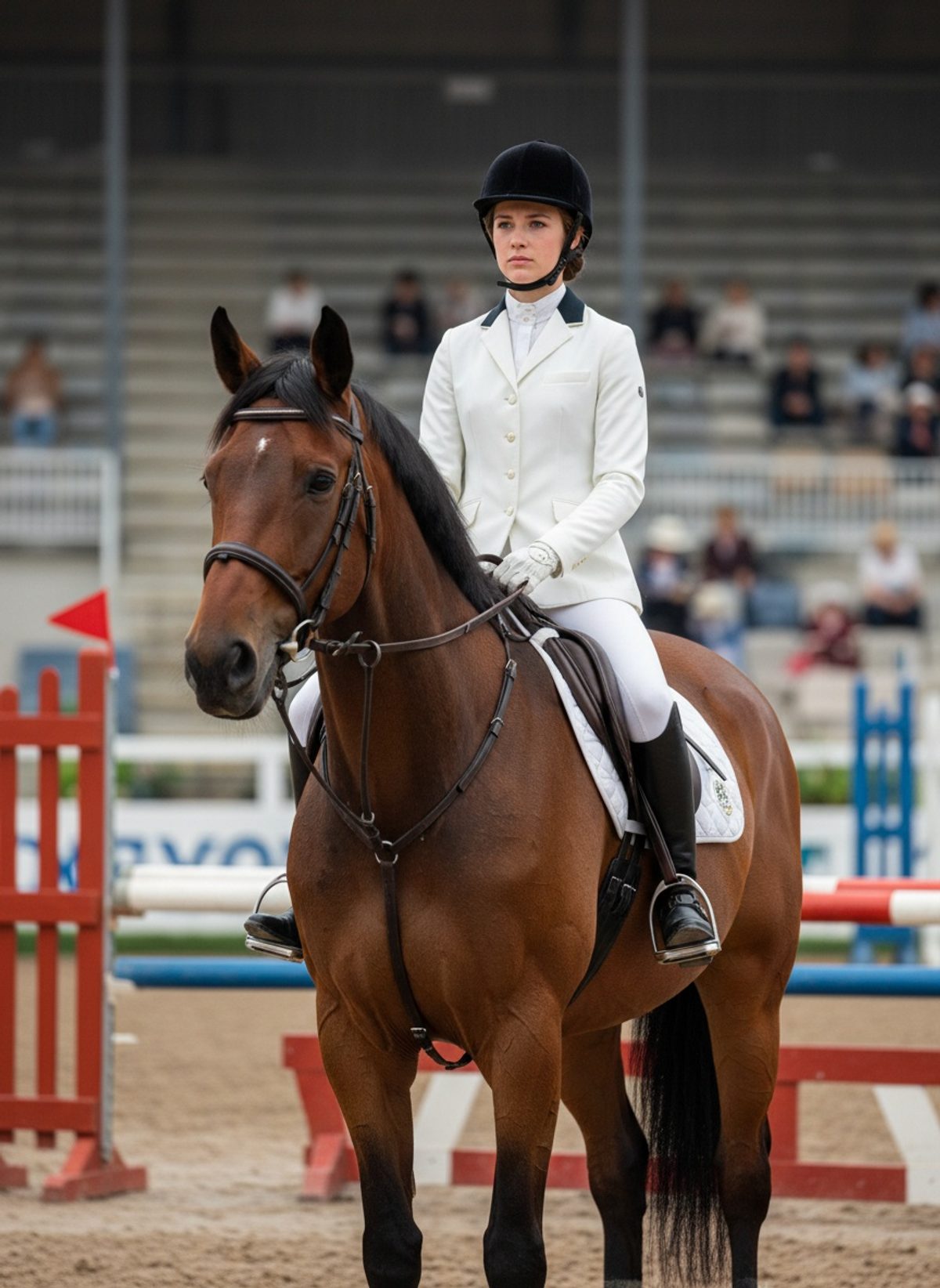
The crowd's murmur barely registered above the pounding of hooves, each thud echoing like a heartbeat in Anne's ears. The scent of freshly cut grass mingled with the adrenaline coursing through her veins as she sailed over the jump. Underneath the sweat and determination there was no crown, just a sturdy hard hat, just as she had insisted. In this moment, she was not the Princess Royal, but simply Anne, an athlete among athletes.
The Road to Montreal
Long before she faced the Olympic crowds in 1976, Anne seized the reins of self-determination. Born into the British royal family, she was burdened—or some might say blessed—with a life path seemingly carved in stone. But Anne had other plans.
She chose a path of her own, a path lined not with red carpets, but with muddy fields and the earthy scent of stables. Horses were Anne's passion, a lifelong love that began in her childhood. But for her, they were more than companions; they were the ticket to a world where her abilities would count more than her lineage.
Anne's competitive spirit found its perfect outlet in equestrianism, a sport demanding both physical and strategic prowess. She began competing in eventing, a triad of disciplines requiring a meticulous blend of dressage's discipline, cross-country's daring, and show jumping's precision.
Read next: The Day a Tudor Noblewoman Outwitted a King's Executioner
As she trained behind the scenes, few outside her team knew of her royal status. Striving for excellence, she mastered each event methodically. It was this dedication that propelled her to the British eventing team, a cadre of athletes as skilled as they were unostentatious.
The Montreal Olympics presented a new challenge. She would not ride on the coattails of royal privilege. Despite attempts to enhance her anonymity, the press was abuzz, speculating if the Princess Royal could compete on such a prestigious and demanding stage. Anne remained undeterred.
She instructed officials to omit her title from documentation, demanding to be listed simply as "A. Windsor." The equestrian community embraced her as an equal, her fellow competitors respecting her skill over her station. Anne was ready, focused, unswervingly committed to the opportunity that lay ahead in Montreal.
A Royal Ride
The atmosphere at the Montreal Olympics was electric with anticipation. Among athletes who had spent lifetimes preparing for this moment, Anne was unusual. Her presence blurred lines typically drawn in glossy magazines' pages. Entering the Olympic ring, she was both a competitor under immense pressure and a symbol of something rarer: royalty choosing to stand shoulder to shoulder with those who toil, not for public acclaim, but for the sport itself.
Her horse, a steely partner in the journey, bore the regal affection usually reserved for those who understood Anne deeply. Here, amid international eyes that watched her every stride, Anne made no missteps. The sound of hoofbeats marked a synchrony of rhythmic precision and competitive zeal. Each jump executed was a quiet rebellion against expectations and societal norms, a testament to her commitment to forge a different narrative.
During the events, Anne's fall from her horse could have underscored vulnerability in another story. For Anne, it became a turning point, not a setback. She remounted swiftly, refusing to let the moment hinder her pursuit. In the crowd, gasps turned to cheers, admiration swelling with each obstacle she overcame. In the ring, Anne transcended the limitations of her title, eclipsing it with the persona of an athlete whose resolve was as sturdy as the steel helm protecting her head.
Read next: The Last Hours Before Britain Lost Its Princess
Beyond the Arena
Montreal left an indelible mark, not just on Anne's personal journey but also within the broader discourse on what constitutes legacy. She returned to Britain not just as a royal, but as a competitor who had earned her peers' respect through her own merits. It was an accomplishment that spoke volumes beyond medals or accolades. Anne's story reverberated, nudging perceptions about roles, responsibilities, and what it truly means to belong.
More than four decades later, Anne continues to be a stalwart advocate for the Olympic spirit, representing not an idealized past but a vibrant, living inspiration. Her life stands as proof that it is possible to balance privilege with purpose, finding fulfillment not solely in titles but in talents honed through perseverance.
The Princess Royal's choice to don a hard hat, to step onto the world stage, was an emblem of self-definition. In doing so, she reminded the world that courage and determination know no rank.
Anne's journey matters because it exemplifies the triumph of personal ambition over the confines of traditional expectations. It tells a story familiar to anyone striving for personal excellence, no matter their background. A royal figure put her own skills to the test on equal ground with others—an invaluable reminder that one's heart carries the true crown, far beyond any lineage or title.