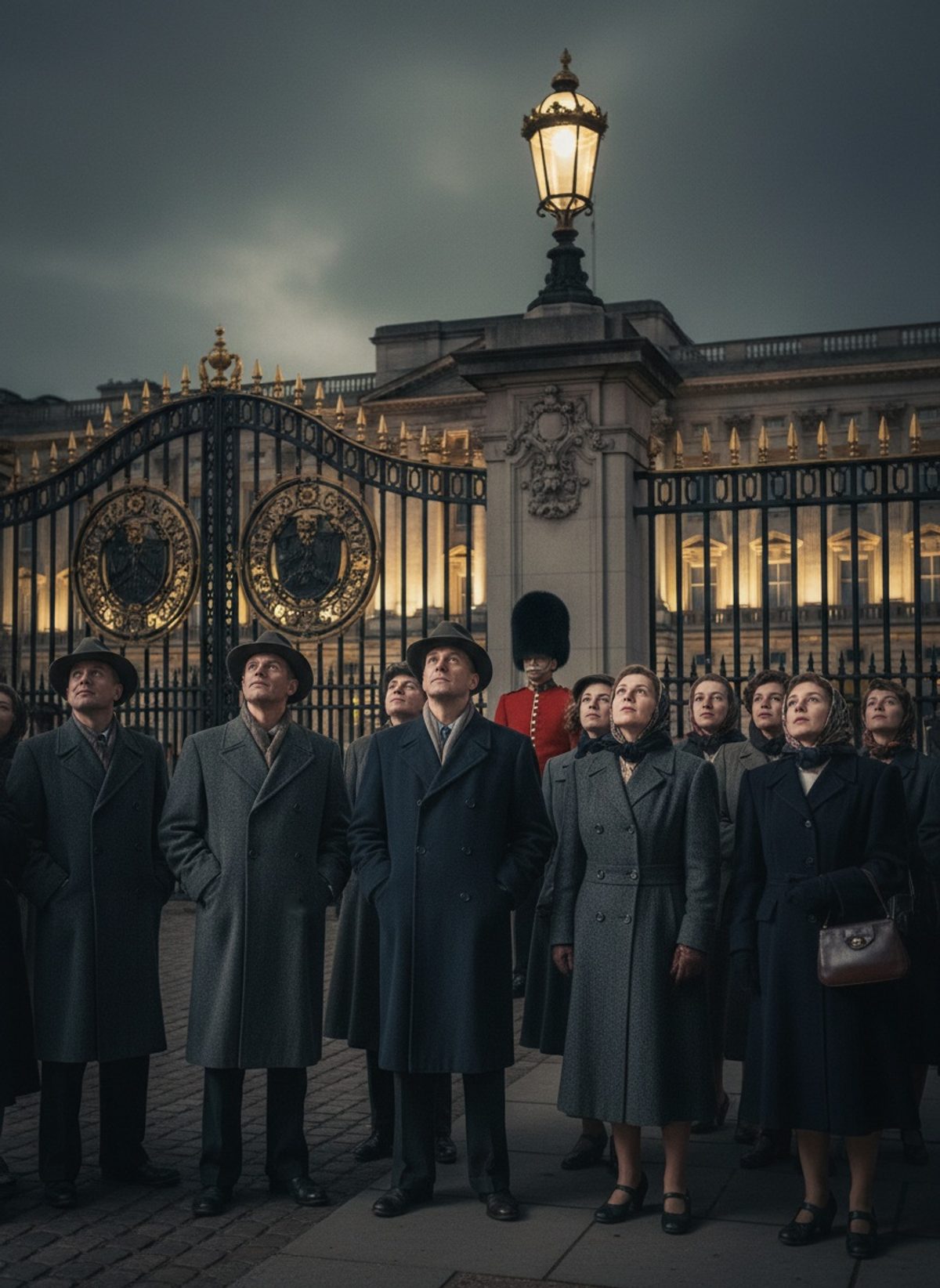
The resounding echoes of the 41-gun salute reverberated down the damp, fog-choked streets of London, each report a herald of new beginnings. November chill seeped through the cracks of a city still marked by the scars of war, yet the burst of salutes from Green Park lifted British spirits skyward. Inside the grand, gilded walls of Buckingham Palace, history was in the making, unbeknownst to the world that held its breath in anticipation.
The Birth of a Future Heir
As the clock ticked over to the evening of November 14, 1948, a hush enveloped Buckingham Palace's Lindo Wing. A serenity belied the significance of the life about to begin its journey here. Charles Philip Arthur George entered the world amid the tensions and hopes of post-war Britain, his tiny cries signaling the arrival of the boy who was destined for the weight of a crown.
The atmosphere inside the palace was a blend of joy and solemnity. Court officials and family members gathered with bated anticipation, as if conscious of the enormity of the occasion. Outside, the gathering crowds cheered, eager for a glimpse of the newborn prince whose life would intertwine with the rebirth of a nation striving to redefine itself.
Buckingham Palace, a beacon of continuity amidst change, witnessed a legacy in the making. While the world slumbered, blissfully unaware of the drama that unfolded beyond the palace's stately facade, history etched its tentative lines, promising evolution and continuity in equal measure.
Read next: The Princess Who Walked Into the Ward Without Warning
The Long Wait
Charles was just three years old when his mother was crowned Queen Elizabeth II in 1952. His early childhood, spent under the watchful eyes of a doting family, soon gave way to the rigorous grooming befitting an heir to the throne. His formative years were a fluid mix of tradition and innovation, carefully crafted to prepare him for the day he would become king—though the daunting length of that road remained a mystery to all.
The Prince of Wales' education was a study in contrasts, melding the pageantry and privilege of royal life with a modern sensibility. With dedication, he embraced his roles, carving a niche where he could advocate for causes ranging from architecture to environmental conservation. His journey was marked by a depth of character that emerged over six decades as the longest-serving heir apparent in British history.
Yet, even as Britain evolved through tumultuous decades, the promise of Charles’ ascension often felt like a perpetual presence without realization. The country, its colonies, and later the Commonwealth watched with unwavering patience, accepting the paradox of modern monarchy—a waiting game without clear timelines.
The Resilient City and Its People
The echoes of the gun salute that heralded Charles's birth were reminders of a city in the throes of resilience and recovery. London remained a patchwork of post-war reconstruction efforts and nascent optimism, striving to unify its past and future. Streets once darkened by conflict began to hum with life, populated by the spirited populace that epitomized British stoicism.
Charles's own resilience mirrored that of the city. Through the lens of public duty, he cultivated roles beyond the confines of tradition, fostering dialogue with diverse communities, and championing causes vital to the zeitgeist of modern Britain.
Read next: The Day a Dying King Knelt and Made a Boy England's Shield
For the people of Britain, Charles became a symbol of continuity, tangible and real, yet suspended in time. His life—a study not just in patience but resolve—became a metaphor for a nation looking inward while reaching out to shape its destiny.
The Day Finally Arrives
As the twilight of his mother's reign continued to lengthen, Charles's era felt perpetually on the cusp. Yet, the assurances of time and monarchy, unwavering in their promise, held steadfast. And so, on that much-anticipated day seventy-four years post his birth, the waiting heir's time arrived.
He stepped into a role long-awaiting him, no longer overshadowed by the filial predecessor who was both queen and mother. His ascension was not merely a transition of titles but the realization of a lifelong apprenticeship—each brief public appearance, and each whisper of policy, slowly forging a monarch ready to wear the crown.
In Charles's story lies a reflection of a nation and its evolving identity, tethered to tradition yet propelled toward modernity. His journey is an exploration of fate and perseverance evolving under watchful eyes, echoing the universal quest for purpose and the certainty of change. It serves as a compelling reminder of the history that quietly shapes us, waiting patiently for the moment to step into the light.