August 31, 1997. The flicker of city lights danced across the Seine as Paris settled into the stillness of the night.
Midnight in Paris
In the opulence of the Ritz Hotel, nestled in the heart of Paris, a sense of urgency filled the air. A black Mercedes S280 idled quietly, waiting to whisk away its high-profile passengers.
Britain's beloved princess, Diana, and her companion, Dodi Fayed, emerged into the cool night with their bodyguards. In an attempt to evade pursuing paparazzi, the couple had opted for a swift, less conspicuous exit from the back of the hotel. This decision would lead to a heart-wrenching moment in history.
The plan was meant to be simple: exit undetected, take a short drive to Fayed’s apartment near the Champs-Élysées, and secure a momentary reprieve from the merciless camera flashes. However, as the clock approached midnight, the bustling life of the city had already sensed the presence of its royal subject. Paparazzi swarmed the vicinity, filling the surrounding streets with their anticipation.
Read next: The Day a Dying King Knelt and Made a Boy England's Shield
By midnight, with the engine humming softly and Henri Paul, the acting head of security at the Ritz, at the wheel, the Mercedes sped into the Parisian night. The allure of royalty had sent the media into a frenzy—a desperation to capture a new angle of Diana’s life. Paris seemed to shrink under the pressure of the relentless pursuit, its venerable landmarks becoming specters in the periphery of the chase.
Beneath the dancing lights of the emboldened Eiffel Tower, the car headed toward the Pont de l'Alma tunnel. In its metallic walls, destiny was waiting, hidden in the dimly lit path ahead. For the world outside, these moments were just beginning to unfold, but inside the Mercedes, they would pause forever in silence.
The Crash That Silenced the World
At 12:23 AM, the awful metallic scream of collision echoed through the tunnel. The Mercedes had crashed into a pillar, obliterating the airy anticipation of that summer night. As dust settled, the severity of the disruption became apparent, pulling an immediate and aching silence into the echoing space.
Within moments, the calm chaos of the post-midnight streets had been quashed by the urgency of responders. The flashbulbs of cameras flashed furiously, documenting tragedy rather than celebrity.
Diana, unscathed by physical harm at first glance, lay in gray silence, the gravity of the moment soaking into every heartbeat around her. A tangled web of steel and broken glass surrounded her in the twisted remains of the vehicle. Firefighters and medical personnel acted with desperate haste, extricating her from the confines of the crash. Time, though unyieldingly linear, felt frozen in the hushed disarray.
As the forces of urgency moved, news drifted across seas and borders. In Britain, television screens clicked to life, bringing images of sirens and solemnity to the pre-dawn quiet of countless homes. The British people, initially dazed, struggled to reconcile the footage with the Queen of Hearts known for her warmth, empathy, and human connection.
The events in Paris struck a nation at its core. This was not merely the end of an era but the dissolution of hope tied to a singular figure of public inspiration.
Read next: The Day a Dying King Pressed England's Future Into a Boy's Hands
A Nation's Grief
Through the empty hours before twilight, the news continued to unfold with precise, cold inevitability. Echoes of Diana's altruism clashed with the stark reality of her fate. British radio and television channels plunged into immediate retrospectives, coughing up fragments of memory like a whole lifetime cascading backward.
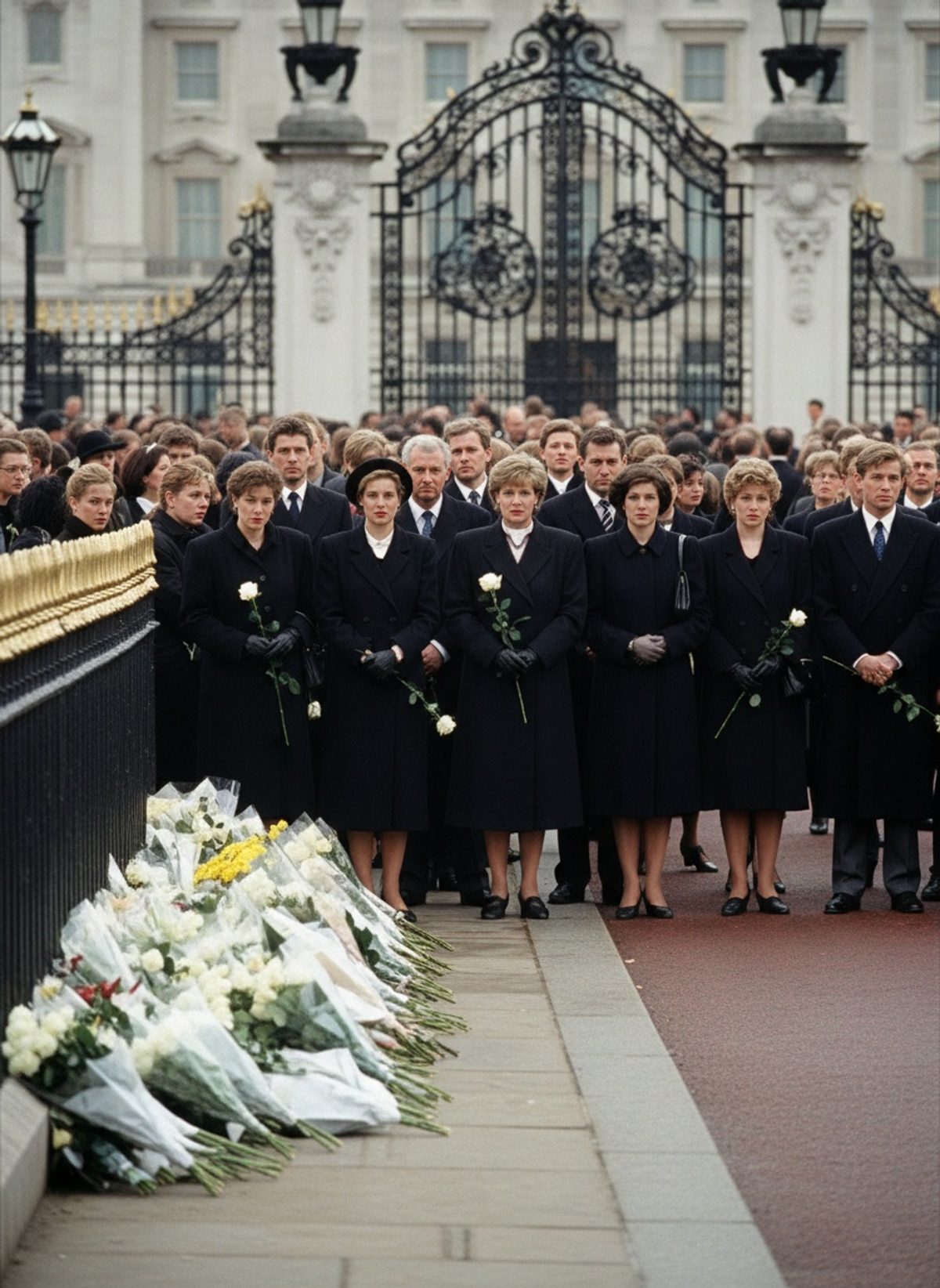
By morning, as the cold light of day illuminated London, the magnitude of Diana's loss became visceral. The floral tributes began to accumulate outside Kensington Palace, swelling like an ocean with an unrestrained tide. Strangers united in grief and disbelief, their solidarity manifesting in arrangements that climbed walls and covered pavements.
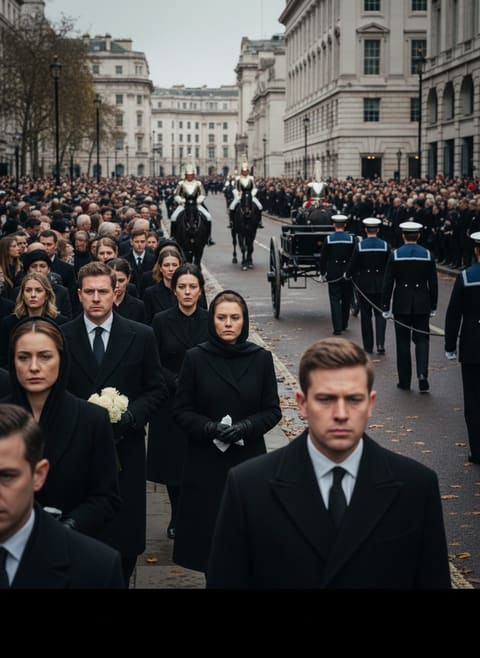
As the days grew, silence and resolve permeated the air, deepening with every footstep of the grief-stricken gathering to witness her funeral on September 6th. Over a million people silently crowded the streets, forming a solemn, unbroken line of final homage to a woman they felt they had known though most had never met.
Disparate fragments of Diana’s life and legacy were drawn into a cohesive narrative that shared a universal impact. She had not merely existed upon the world’s stage but had subtly reshaped it through understated acts of compassion and an indomitable spirit. This was what the flowers blanketing London symbolized—an homage to the beauty of empathetic humanity.
The nation’s mourning left an indelible mark. It was not the departure of royalty that echoed through those early September days, but the loss of a cherished voice that had called out for empathy in chaotic undertones, resonating deeply and unforgettably.
The story of Princess Diana's final hours is not merely a recounting of lost opportunity and potential. Instead, it serves as a lingering reminder of the powerful bond between a public figure and the populace. It challenges us to reflect on how one person's voice—and their ability to touch others' lives—can leave a legacy woven through society itself. Even in the silence following those chaotic moments in Paris, Diana's influence proved undiminished and eternally illuminating.