The morning of March 9th, 1946, revealed itself cautiously, the chilly air clinging to Bolton with a stubbornness unique to early spring in the north of England. As the half-hearted sunlight crept over the horizon, a quiet buzz spread through the town—a consequence of tens of thousands gearing up for a day of excitement in the post-war routine. The promise of an FA Cup tie between Bolton Wanderers and Stoke City injected life into Burnden Park, drawing spectators to its weathered wooden gates like moths to a flickering lantern. But beneath the palpable excitement lay an unsuspected peril—one that would transform the euphoric roar of football into a haunting echo of tragedy.
Tensions Rise as the Crowd Swells
From early morning, they came—mothers and fathers, children and old-timers, all bound for Burnden Park, their hearts beating not just for the game but for the camaraderie it signified. Wartime's shadow still lingered heavily over Britain, and any semblance of normalcy—a chance to cheer, to hope—was a golden beacon cutting through the fog of recent memories. But as throngs converged upon the stadium, anticipation turned into unease. The ground, designed to comfortably hold 70,000, struggled under the weight of over 85,000 eager souls.
Every entrance was a battleground of pushing and shoving, the crowd an organic force, moving as a singular entity in pursuit of a vantage point inside. The turnstiles groaned under the assault, a metallic whimper swallowed by the relentless tide of voices and increasing chaos. Above it all, a brittle sun climbed higher, throwing long shadows across the heaving mass. The game was a beacon—a momentary salvation from the trials that had battered both body and spirit during the war years—but here, at the edges of the ground where brick met earth, excitement teetered precariously toward calamity.
Outside, the soundscape shifted from laughter to the grunts of discomfort, and something more sinister began to brew. Within the ceaseless swell, the vulnerable edges of the crowd—children, the elderly—became bound by circumstance, trapped between an unwavering sea of humanity and cold, unyielding barriers. It was a tension that could not hold—barriers would soon snap like dry twigs underfoot, heralding disaster.
Read next: The Day a Cornish Surgeon Walked Into a Condemned Cell
The Collapse and The Aftermath
The fatal collapse came not with the ferocity of an explosion but the subtle, terrifying knowledge of impending doom. It began with a shudder—an unsettling realization rippling outward from the epicenter. Metal barriers, long treated with the indifferent embrace of time, gave way under insurmountable pressure. In that instant, the air filled with a cacophony—a choir of steel and cries of alarm merging into a symphony of tragedy.
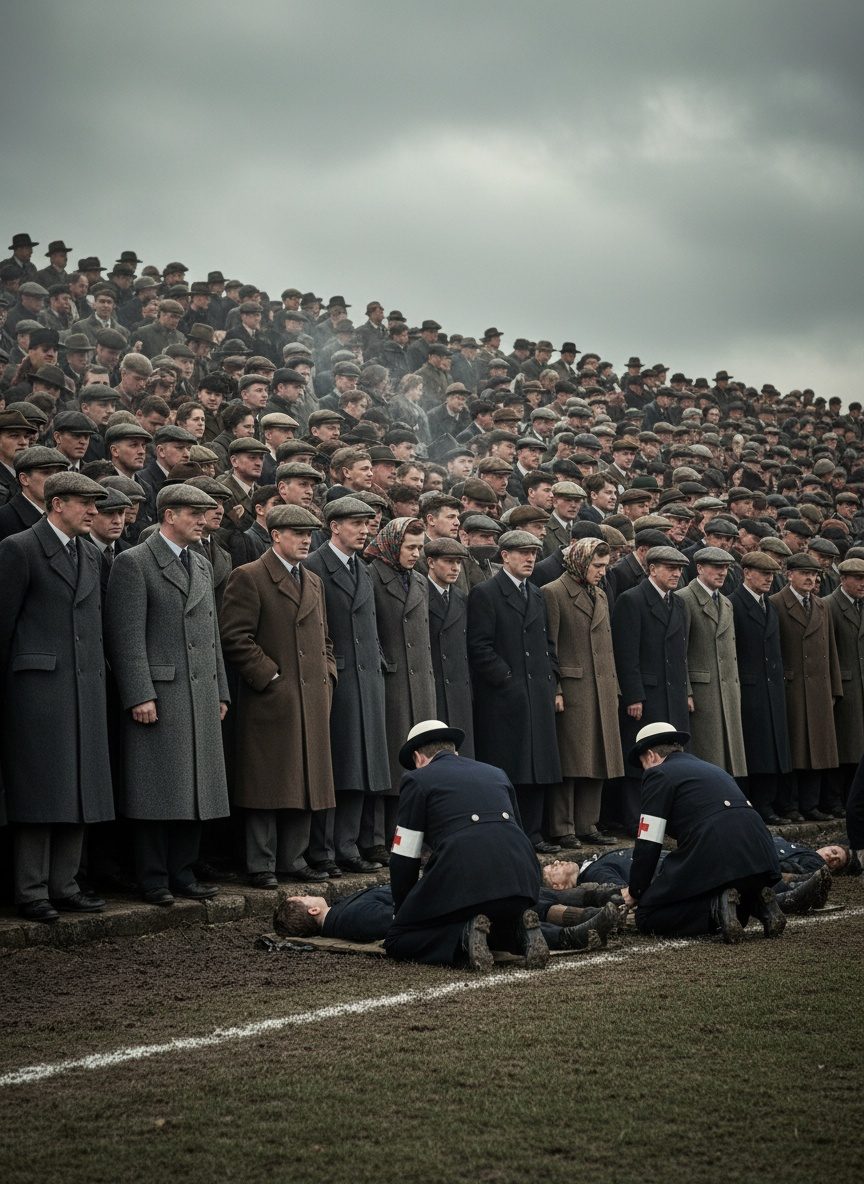
The scene was not instantaneous chaos but a slow descent into realization. Bodies collided in the surge, tumbling onto the pitch, their expressions a mixture of shock and horror. From above, the stands—now silent—became mere observers of an unfolding nightmare. The vibrant patchwork quilt of team colors scattered among them now seemed like ghosts haunting the periphery of the scene.
For the 33 who lost their lives, their dreams of a joyous afternoon were extinguished with heart-wrenching swiftness. Strangers found themselves guardians of the dead and wounded, laying coats over the lifeless where the turf met touchline. With each minute, the irreversible became simultaneously clearer and more absurd. Doctors and first responders attended swiftly, yet beneath the surface, questions of 'why' and 'how' bubbled without solace.
The Unfathomable Decision to Play On
As the dust settled, logic warred with tradition. The dead lay hidden beneath crude shrouds of cloth, caked soil mingling with the solemn hush that fell over the park. Amidst it, the referee blew his relentless whistle. Impassively, incredibly, the game was ordered to continue—a decision cloaked in controversy but largely, at the time, an effort to manage the burgeoning crowd and prevent panic.
Read next: The Day a Vicar's Son Walked Into a Debtor's Cell and Freed Them All
The juxtaposition of life and death—a world rendered surreal as players skated close to the bodies of fans whose elation had turned into mourning. Spectators, now frozen with guilt and disbelief, watched the match unfold with unsettling disquiet. The players, caught in a dance of respect and duty, navigated each pass and tackle with the bleak knowledge that jubilation had given way to one of post-war Britain's darkest sporting tragedies.
Why, then, did the game continue? A question rich in moral quandary but sparse in comfort. Perhaps it speaks to the resilience of a nation not yet ready to release its grip on a semblance of normality, even when confronted by the unfathomable. Those who walked away from Burnden Park that day carried with them more than memories of a match; they bore witness to humanity’s fragile bond and the curious nature of collective consciousness in the face of overwhelming loss.
In the years that followed, the story of those 33 who never returned from a football match would be woven into the tapestry of post-war Britain—a reminder of vulnerability amidst resilience, and the price paid in the pursuit of joy. As fans, we rest our faith in barriers, physical and metaphorical, that hold back chaos and tragedy. That day in Bolton, they failed, leaving a legacy measured not in goals but in the silent courages shared between strangers and the knowledge that, sometimes, we are as fragile as the fabric between life and loss.