The British sky hung heavy with low-hanging clouds, creating an ethereal gloom across Windsor Castle as a slight drizzle washed the cobbled pathways clean. The air was perfumed with the scent of damp earth, and a gentle breeze rustled through the ancient oak trees standing sentinel around the palace, whispering the remnants of age-old secrets. It was amidst this somber atmosphere that a small, unassuming figure emerged, his presence as unexpected as sunlight breaking through a thunderous sky. This was London in 1779, and twelve-year-old John Parry was about to change the course of his life—and touch the heart of a queen.
Born in a modest Welsh village, John Parry's world was one of darkness, owing not only to his humble beginnings but also to the blindness he had known since birth. His life had been a tapestry woven with challenges few could fathom. Yet, amidst the adversity, music became his haven, his means of painting the vibrant pictures denied to him by sight. Each pluck of the harp's strings was a brushstroke, each note a hue in his auditory canvas. The villagers of his small community often remarked on the magic that seemed to emanate from his fingers, his touch capable of conjuring emotions as vivid as any visual masterpiece.
On that fateful day in Windsor, the palace grounds were abuzz with anticipation. Queen Charlotte, known for her discerning ear, was to host an array of supremely talented musicians, each performance a crescendo meant to captivate the audience. But there was an unexpected addition to the schedule—a blind Welsh boy whose reputation as a harp prodigy had traveled far beyond the confines of his village.
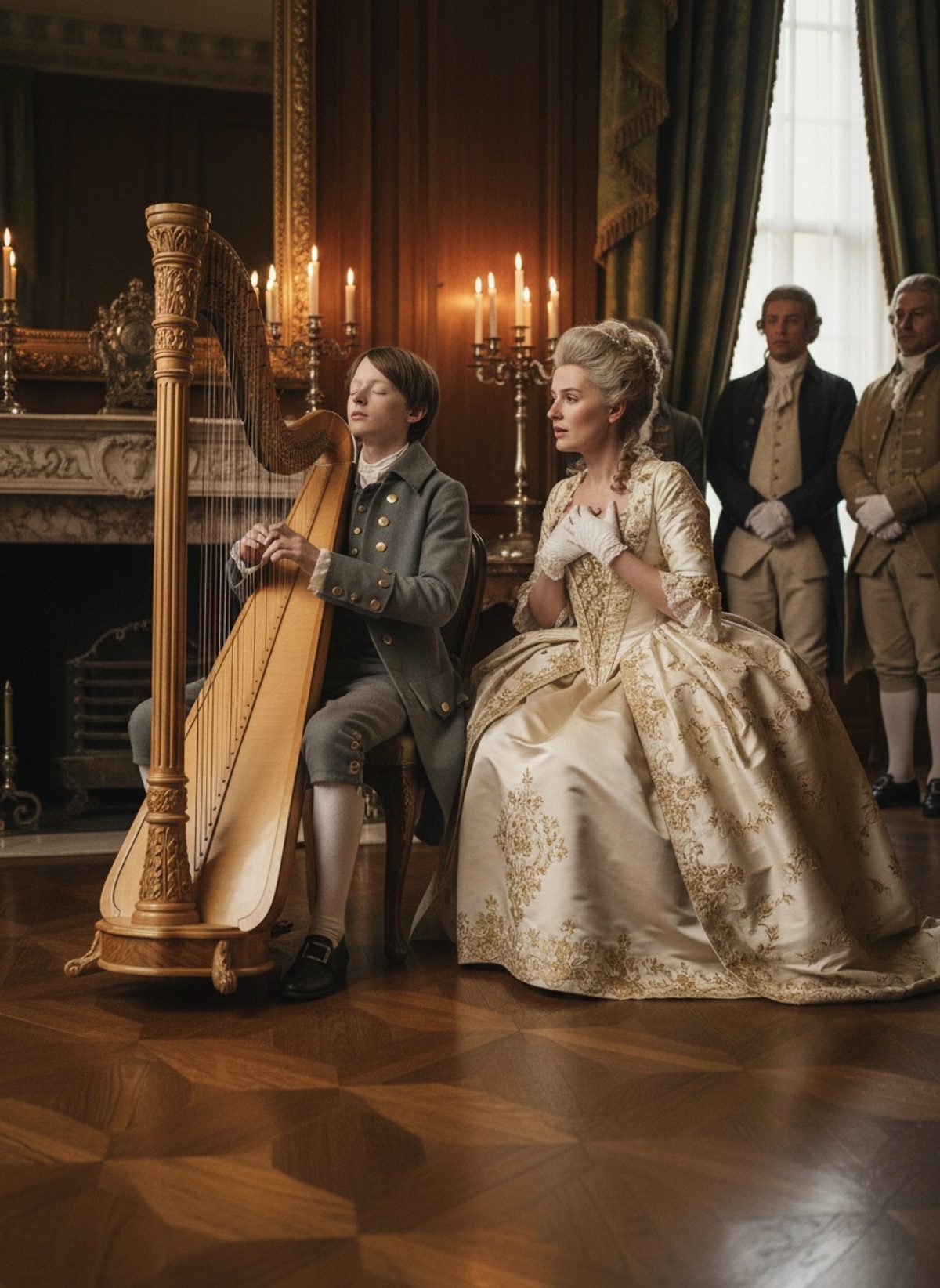
As John stepped onto the platform, his small frame dwarfed by the opulent surroundings, a hush fell over the audience. The room was steeped in expectation, the faint rustle of silk dresses and the crinkle of starched cravats the only sounds breaking the silence. He was guided gently to the harp, an instrument both his companion and confidante, its strings his second voice. With a quiet intake of breath, he began to play, and the castle walls seemed to shimmer with the echo of his music.
Read next: The Day a Cornish Vicar Stood Between Wreckers and the Dying
To witness the transformation in the room was to understand the true power of art. John Parry’s fingers danced effortlessly across the harp strings, weaving harmonies that soared and dipped, each note a testament to his mastery. Music flowed like a river, enveloping the audience in waves of emotion, teeming with the kind of purity only a child could impart. It was said that in that moment, Queen Charlotte’s regal composure melted away, her eyes brimming with tears as the boy's music reached into the depths of her soul. A queen who had heard the finest musicians of Europe, yet here she sat, transfixed, moved by the simplicity and sincerity of a blind boy's song.
When the final note lingered and faded into the air, there was a moment of breathless silence—a reverent pause before the room erupted in applause. The sound was a thunderous approval, a recognition not only of John's talent but of his indomitable spirit. Yet, for Queen Charlotte, mere applause would not suffice. Stories circulated from that day, of how she rose from her seat, approached the young musician, and with a voice laden with emotion, promised him a future free from want. Her patronage was more than charity; it was an acknowledgment of the profound impact he had made upon her.
The years that followed saw John Parry flourish under the queen's patronage. He was afforded opportunities denied to many, his path illuminated by the kindness of the monarch who had once sat entranced by his harp. His influence extended beyond the confines of royal palaces; his performances became symbols of hope, embodying the belief that talent and heart have the power to transcend the limitations of sight, status, and circumstance.
John Parry’s extraordinary encounter with Queen Charlotte at Windsor remains more than a historical anecdote; it is a poignant reminder of everyday heroes who, through sheer talent and perseverance, transcend their circumstances. In a world often divided by status and standing, his story highlights the universal language of music—a form of communication that requires no sight to understand and no wealth to appreciate. The blind pauper boy from a modest Welsh village found his place in history through the strings of his harp, proving that even in the harshest of conditions, beauty and grace can emerge. It's a lesson that resonates through the ages: the simplest acts, the quietest voices, can stir the deepest emotions, challenging us to look beyond the surface and find the extraordinary within the ordinary.