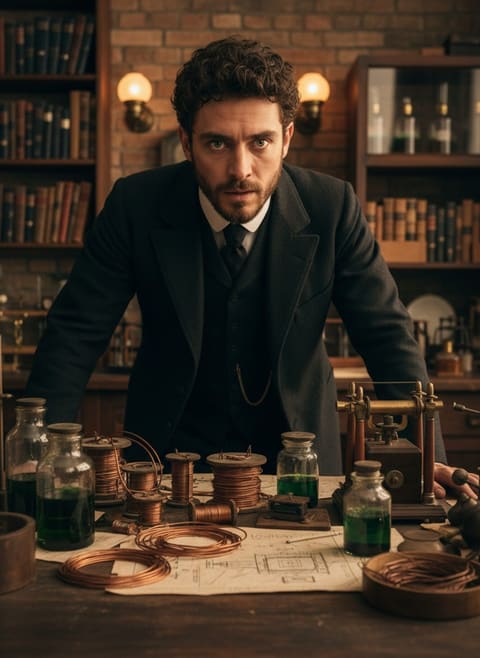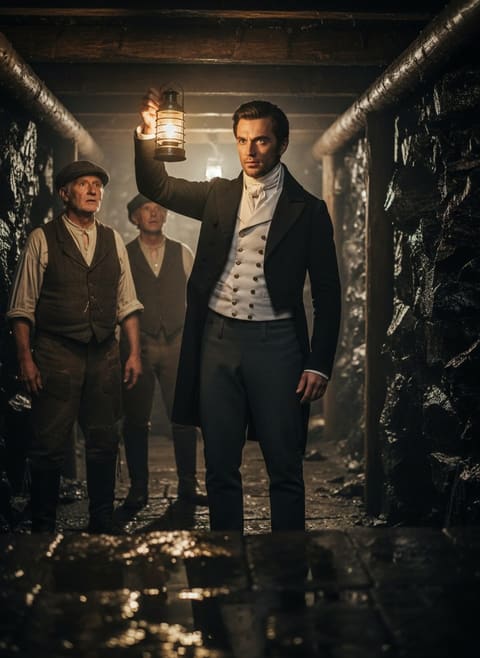
He had never attended a university science class. Yet he would illuminate the world.
The Unlikely Scholar
In the bustling heart of early 19th century London, a young boy named Michael Faraday, the son of a blacksmith, navigated the chaos with a keen eye and a mind that nagged relentlessly with questions. Born into a family of modest means in 1791, Faraday's future seemed predetermined—an existence marked by manual labor and struggle. But destiny had tethered him to books, not as a reader or a thinker, but as a bookbinder at George Riebau's shop. Here, Faraday's hands tirelessly crafted books, yet his mind devoured their contents, an autodidact collecting the knowledge that would ignite a revolution.
Faraday's education was unconventional and scarce. He lacked prestigious mentors or influential patrons. Nevertheless, young Michael was relentless in his thirst for knowledge. He consumed every scientific work he could bind, most notably the Encyclopedia Britannica and Jane Marcet's Conversations on Chemistry. Faraday's peculiar pathway to enlightenment wasn't marked by formal academia; instead, it was fueled by a relentless curiosity that refused to bow down to social class or limited access to traditional education.
The Laboratory in the Basement
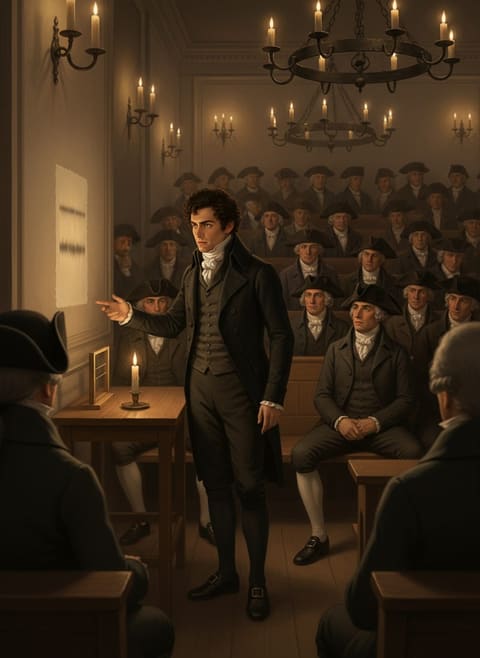
In 1812, serendipity intervened when a customer rewarded Faraday's diligence with tickets to see lectures by the eminent Sir Humphry Davy at the Royal Institution. For someone who had never stepped foot in a classroom, this was a revelation. Davy was a star of the scientific world, and his lectures were nothing short of mesmerizing. Faraday meticulously took notes, later rebinding them into a beautifully crafted volume and sending it as an unsolicited application to work with Davy. The young man's boldness and attention to detail did not go unnoticed. Davy, impressed by Faraday's persistence and craftsmanship, offered him a humble position as a laboratory assistant in 1813.
Read next: The Day a Weaver's Son Mapped the Invisible World
Hidden in the basement of the Royal Institution, Faraday transformed from a bookbinder into a self-taught scientist. His humble beginnings and lack of formal education were no match for the opportunities he uncovered while wielding lab instruments. Under Davy's tutelage, he honed his skills and refined his intuitive understanding of science. Everyday discoveries fed his insatiable curiosity and laid the groundwork for the momentous revelation that would be his own.
A Discovery that Defied the Odds
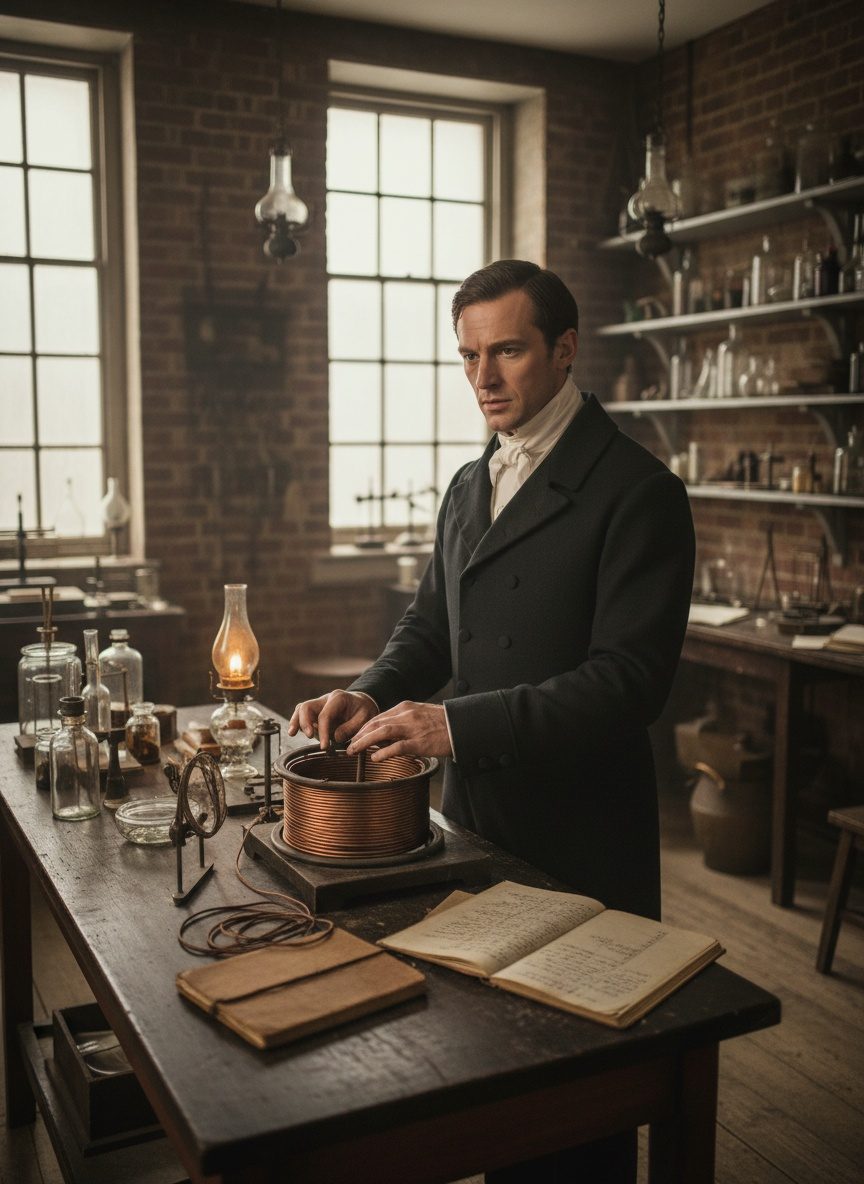
As the Industrial Revolution gathered steam, the scientific community buzzed with the promise of a new world powered by electricity. Yet, the concept was largely theoretical, as no viable method of harnessing and deploying electricity for practical use had been devised. On a day much like any other in 1831, Faraday found himself amidst a mess of wires, magnets, and copper coils. What he discovered in that cluttered Dublin Street basement would alter history's course and propel humanity into an electrified era.
It was Faraday's unyielding experimentations that brought forth the principle of electromagnetic induction—the process of generating an electric current from a changing magnetic field. This discovery was not a sudden stroke of genius but a crescendo of trial, error, and a relentless habit of questioning. By moving a magnet through a coil of wire, Faraday demonstrated for the first time that mechanical movement could be converted into electricity. This principle would later become the foundation for electric generators, transformers, and the very power stations that light up our world today.
Beyond the Laboratory Walls
Faraday's genius did not stop at electromagnetic induction. He passionately communicated scientific knowledge, sharing his insights not just with contemporaries, but with the curious laymen of Victorian London. Through a series of accessible public lectures at the Royal Institution, notably the still-running “Christmas Lectures” inaugurated in 1825, Faraday demystified science for the masses. His ability to transform complex scientific ideas into engaging and understandable concepts was as revolutionary as his scientific discoveries.
Read next: The Day a Clockmaker's Son Rewired How We See the Stars
Though lacking formal titles or accolades, Faraday's intrinsic teaching talent and captivating presentations brought the principles of science into the lives of ordinary people, sparking curiosity and understanding across the classes. His legacy, thus, is both tangible and philosophical—he demonstrated that science was not the exclusive domain of the elite but an exciting frontier open to anyone with a question and the will to seek answers.
The Light that Continues to Shine
Reflecting on Michael Faraday's journey, one finds a narrative that transcends the individual accomplishments of one brilliant mind. It is a testament to the power of curiosity, the resilience of self-education, and the impact one person can have when circumstances align with opportunity and an unyielding spirit. Faraday's work rewired the world, laying down the very circuits that allow modern society to thrive. But beyond the glowing light bulbs and the hum of electricity, his story resonates in the countless individuals inspired to pursue knowledge despite lacking conventional credentials or pathways.
In a world perpetually seeking innovation, Faraday's tale remains a beacon of possibility, a reminder that world-shattering discoveries can germinate in the most unlikely of hearts, with the simplest of beginnings. His scientific legacy is enduring, but perhaps his greatest contribution lies in his unspoken encouragement to think beyond barriers, question the known, and aspire to illuminate the world—not through privilege, but through passion and persistence.