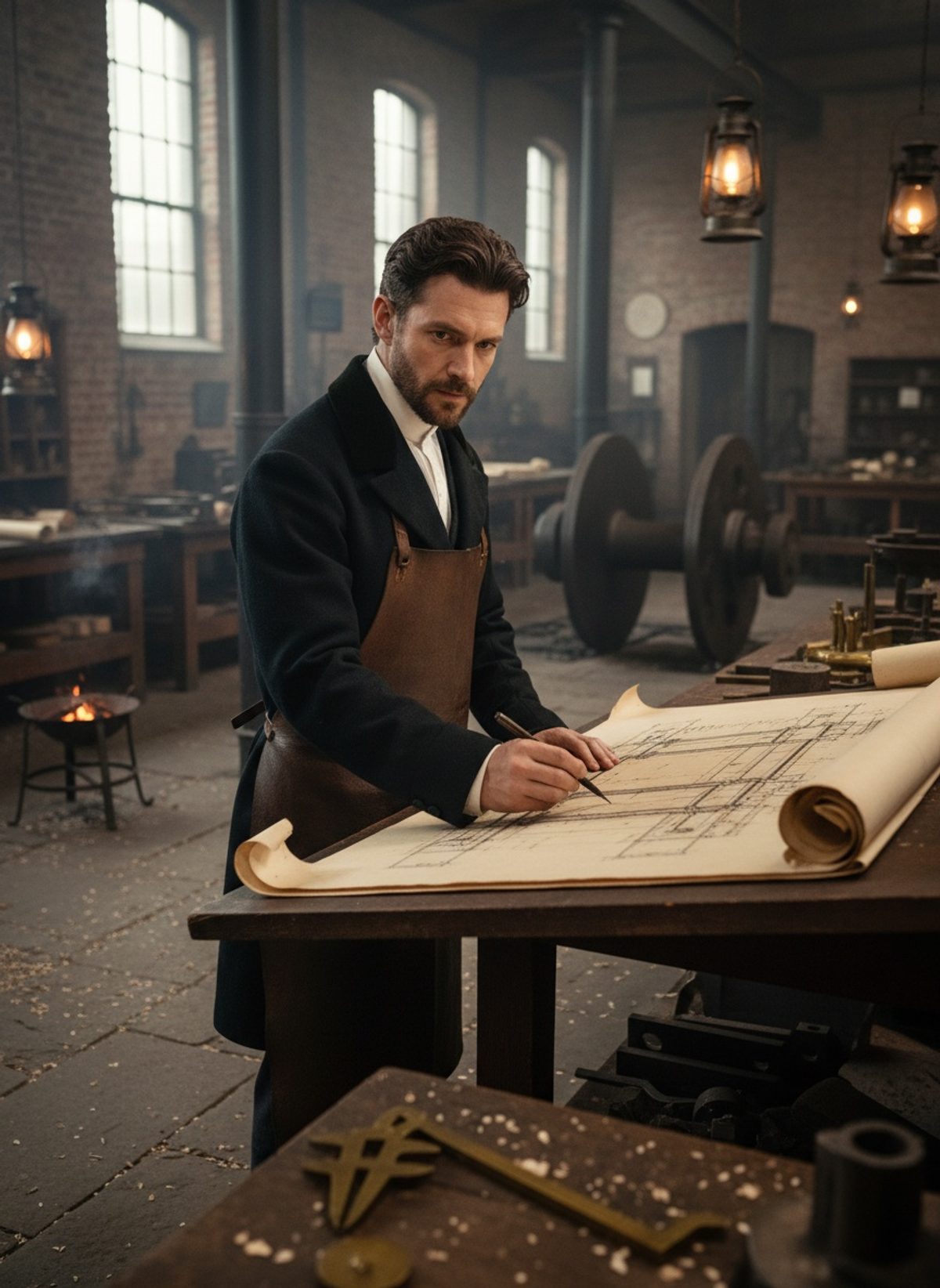
A steam hammer is not something one typically sees in the average museum. Yet, behind its imposing metallic guise lies a story of human ingenuity, born from necessity, that forever altered the course of manufacturing.
The scene is set in the smoke-filled forges of Britain in 1839, at one of the great turning points of the Victorian Era. The Industrial Revolution was in full swing, the gears of progress clinking with every new innovation that emerged from the minds of the daring inventors of the time. Among them was James Nasmyth, a name that might not ring familiar in the way Brunel does, yet one whose modest genius shaped industry's future just as profoundly.
A joiner's son from Scotland, Nasmyth’s fascination with machinery began in the workshops of his childhood, where he learned the art of precision and the value of problem-solving. In these bustling surroundings, aligned with the peppered scent of sawdust and varnish, the seeds of innovation took root. Little did he know then, his handiwork would one day save one of Brunel’s audacious engineering endeavors.
Isambard Kingdom Brunel, the visionary behind the grand steamship known as the SS Great Britain, found himself in a bind. This was to be the largest ship ever built, its engineering demanding in every regard. The heart of this behemoth, a crankshaft of unparalleled size, posed an unsolvable problem as it stubbornly refused to be shaped by any available technology. Existing hammers, powered by men’s sweat and iron, simply lacked the force required to forge this colossal piece of machinery.
Read next: The Day a Tanner's Son Gave the World Its First Vaccine
It was under these circumstances that James Nasmyth found himself tasked with a challenge most would consider impossible. With the clock ticking and failure not an option, he retreated to his tools—the same ones that had shaped his early ideas—and began to sketch. In what seemed a mere blink of time, just twenty minutes reportedly, he envisioned a new beast of industry—a steam-powered hammer capable of delivering blows with incredible force and precision, far surpassing anything previously known. This towering machine would marry steam's relentless power with the gentle touch of metalwork mastery, a feat both awe-inspiring and terrifying.
The steam hammer deviated from conventional designs by harnessing steam power to lift a massive hammerhead and then allow gravity to bring it crashing down with consistent, controllable force. Its innovation lay in its ability to maintain power without sacrificing precision. Nasmyth's sketch turned into a working model, and soon enough, this mighty contraption was thundering away, crafting components for Brunel's steamship and beyond.
Suddenly, the vibrant forges of Britain witnessed transformations; steel ingots that once lay immovable and defiant began to yield, forming intricate shapes previously unattainable. Efficiency surged as time and labor were dramatically reduced, opening new possibilities for large-scale manufacturing. Not only did Nasmyth’s invention alleviate Brunel’s immediate crisis, but it also paved the way for advances that would touch virtually every industry, from locomotives to bridges, sparking a wave of innovation that carried the world into the modern industrial age.
The impact of this innovation echoed across continents. Factories embraced this newfound might, transforming the landscape of cities as Britain's grittier, industrious spirit reverberated through iron and steam. What was once relegated to the hard toil of many hands could now be accomplished with the press of a lever and the hiss of steam, offering manufacturers the chance to push boundaries previously considered science fiction.
Despite these achievements, it's curious how little credit reaches the man behind the hammer. Nasmyth, although celebrated in engineering circles, lived relatively outside the spotlight's glare compared to some of his contemporaries, perhaps due to his retiring nature or simply the overwhelming scale of other Victorian geniuses who contemporaneously worked wonders. Yet, within the cadences of industry, his creation sounded like a drumbeat—the quintessential bridge between manual labor and mechanized prowess.
In retracing this journey, one would do well to remember the other forgotten craftspeople whose skills quietly whispered through time, influencing Nasmyth and others like him. Their unheralded mastery provided both inspiration and practicality, guiding the finest hands in achieving what seemed insurmountable. History cherishes the giants of invention, but it's in the quieter stories of joiners' sons and humble workshops that the pulse of innovation truly thumps.
We are left pondering the significance of the steam hammer, a creation that on the surface seems little more than a mechanical marvel but at its core holds a valuable lesson. It teaches us about the power of perspective, how an insurmountable problem for one era becomes a mere stepping stone for the next. It challenges us to consider what apparent impossibilities of today might soon give way to tomorrow’s breakthroughs, inching us ever closer to the futures we haven't yet dared to dream.