Grace Darling is not a household name. But her courage changed lives forever.
The Brewing Storm
On the night of September 6, 1838, the North Sea, known for its temperamental nature, stirred with an ominous energy. The Farne Islands, a remote and rugged archipelago off England’s northeastern coast, bore witness to howling winds and furious waves. As dawn broke on the 7th, the storm’s ferocity showed no sign of relenting. In the heart of this chaos stood Longstone Lighthouse, the beacon designed to guide mariners safely, now itself battered by the tempestuous sea.
From the window of the lighthouse, 22-year-old Grace Darling, the lighthouse keeper's daughter, observed the turbulent waters with acute senses honed by years of living within earshot of crashing waves. Her eyes caught sight of a distressing tableau—a severely damaged vessel, the steamship Forfarshire, grounded on the jagged rocks of Big Harcar. Cloaked in desperation, figures clung tenaciously to the wreck, caught in a grim battle between human frailty and nature’s wrath.
A Stirring of Defiance
Grace’s heart raced as she took in the scene. The ship, en route from Hull to Dundee, had succumbed to the storm's savagery, its back broken by the relentless assault of wind and wave. Her father, William Darling, a seasoned lighthouse keeper well aware of the sea’s capricious moods, assessed the situation with caution. He knew the ten-foot swells posed a deadly threat to any rescue attempt.
Read next: The Day a Cornish Surgeon Walked Into a Condemned Cell
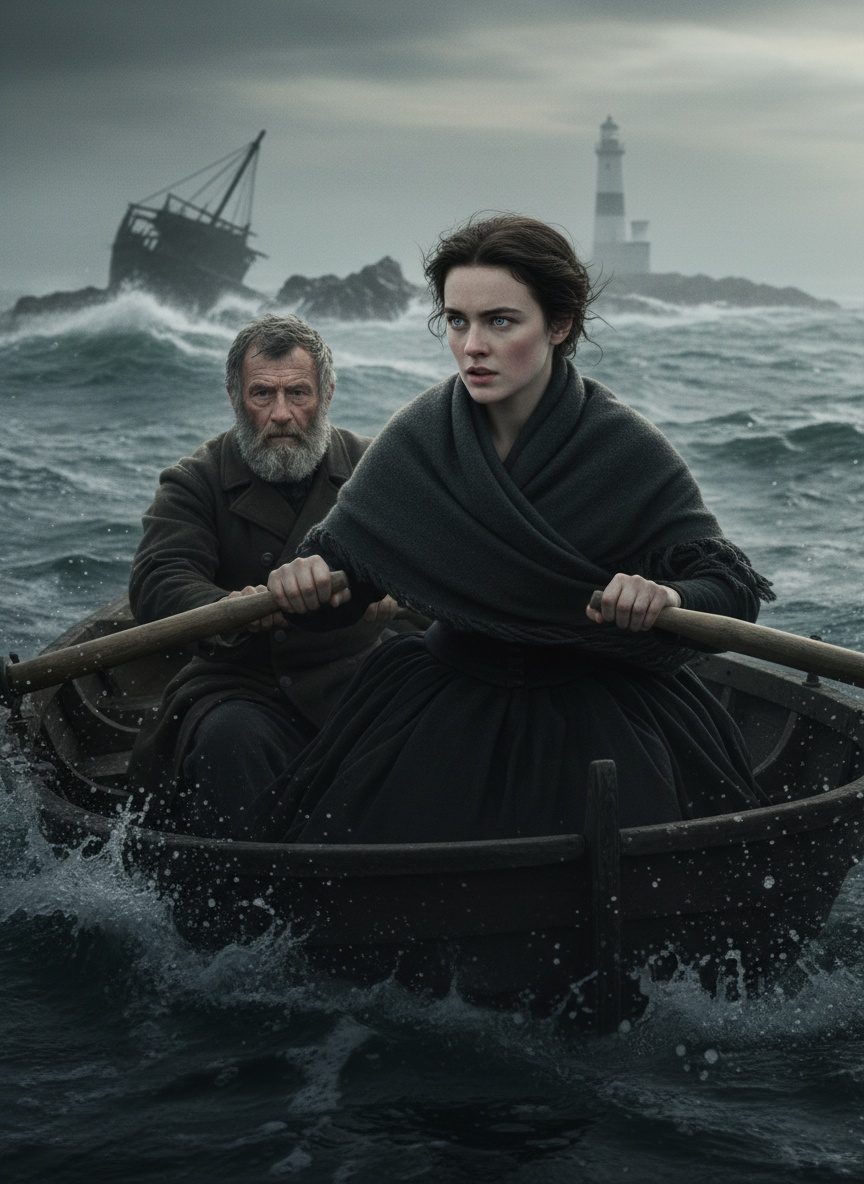
Despite his misgivings, something in Grace ignited—a blend of empathy and resolve. Against her father’s urging patience, she reached for the oars. Escorting her father to the boat as dawn broke, Grace’s determination shone through the mist and salt spray. Her decision was as fearless as it was extraordinary, given the seemingly insurmountable odds they faced.
Into the Roaring Abyss
The small rowing boat they manned stood insignificant against the backdrop of the thundering storm. Yet, driven by an indomitable spirit, Grace and her father navigated the treacherous waters, rowing with a primal focus shared by those propelled by necessity. Each stroke was a testament to human tenacity, the oars slicing through the brine, pulling the boat toward the marooned souls on Big Harcar.
Read next: The Day a Vicar's Son Walked Into a Debtor's Cell and Freed Them All
Upon reaching the wreckage, Grace’s sharp instincts and unwavering resolve came to the fore. She held the boat steady against the surging swell as William helped nine survivors—a mix of crew and passengers, including an injured mother and her two children—into their humble vessel. In that heart-stopping moment, the boundaries of human resilience were redrawn. The return journey, hazardous and fraught with peril, played out against the relentless percussion of the storm.
An Unspoken Legacy
Once safely back at the lighthouse, the rescued were offered shelter and warmth as kindling for their battered spirits. News of the daring rescue spread across England like wildfire, and Grace was lauded as a heroine nationwide. As accolades flowed, the true essence of her act transcended the realm of mere bravery. It spoke of deeper truths about the human spirit’s capacity for compassion and courage in the direst circumstances.
The tale of Grace Darling retrieves from the annals of history a moment when selflessness prevailed over self-preservation—a narrative significant not because it was performed under the media’s gaze but precisely because it was carried out in a most genuine human capacity. This Victorian-era episode, although eclipsed by larger historical narratives, serves to remind us that history is sculpted as much by the grandiose as the humble, the famed as the overlooked. It is a narrative of enduring relevance—a prompt to realize that our actions, no matter how small, hold the potential to change the course of lives.