Grace Darling was a 19th-century lighthouse keeper's daughter. Few know she became a heroic legend on a stormy night in 1838.
Grace and the Tempest
To understand the night that would etch Grace Darling into the annals of maritime heroism, one must first look to the horizon of the Farne Islands. Positioned off the rugged Northumberland coast, these islands are a collection of stone sentinels. It was here, at Longstone Lighthouse, that 22-year-old Grace lived with her family. Her father, William Darling, was the lighthouse keeper—a post demanding unyielded vigilance, especially in the face of the tempestuous North Sea.
On the night of September 7, 1838, the Forfarshire, a paddle steamer built for speed and burdened with eager travelers, found itself at the mercy of the sea. Bound for Dundee from Hull, the ship carried 62 souls, hoping to reach their destination by morning light. But as the storm drew in, the ship was seen battling the elemental wrath just off Harcar Rock. Powerless against a leaking boiler and rampant winds, the Forfarshire met its fate, splitting in two upon the unforgiving rocks. While the crew and passengers scrambled for salvation, the chaos seemed insurmountable.
As dawn broke on September 8, the situation was desperate. Survivors huddled on the rocky islets, clinging to life amidst the wreckage. It was at this crucial moment that Grace Darling, peering out from the window of the lighthouse, spotted the remnants of what must have been a calamitous night. Most people would have turned away—both from fear and impossibility. Yet Grace did not. The treacherous conditions had kept even seasoned rescue crews ashore, deeming any attempt at rescue suicidal.
Read next: The Day a Cornish Surgeon Walked Into a Condemned Cell
The Daring Act
Stepping beyond the comfort of expectation, Grace approached her father with a resolve that could not be denied. Despite her father’s initial protests—the sea was too violent, the distance too great—Grace remained steadfast. Her perception of the scene, heightened perhaps by the intimate relationship forged with nature through years at the lighthouse, allowed her to see what many could not: the urgency, the humanity desperately in need.
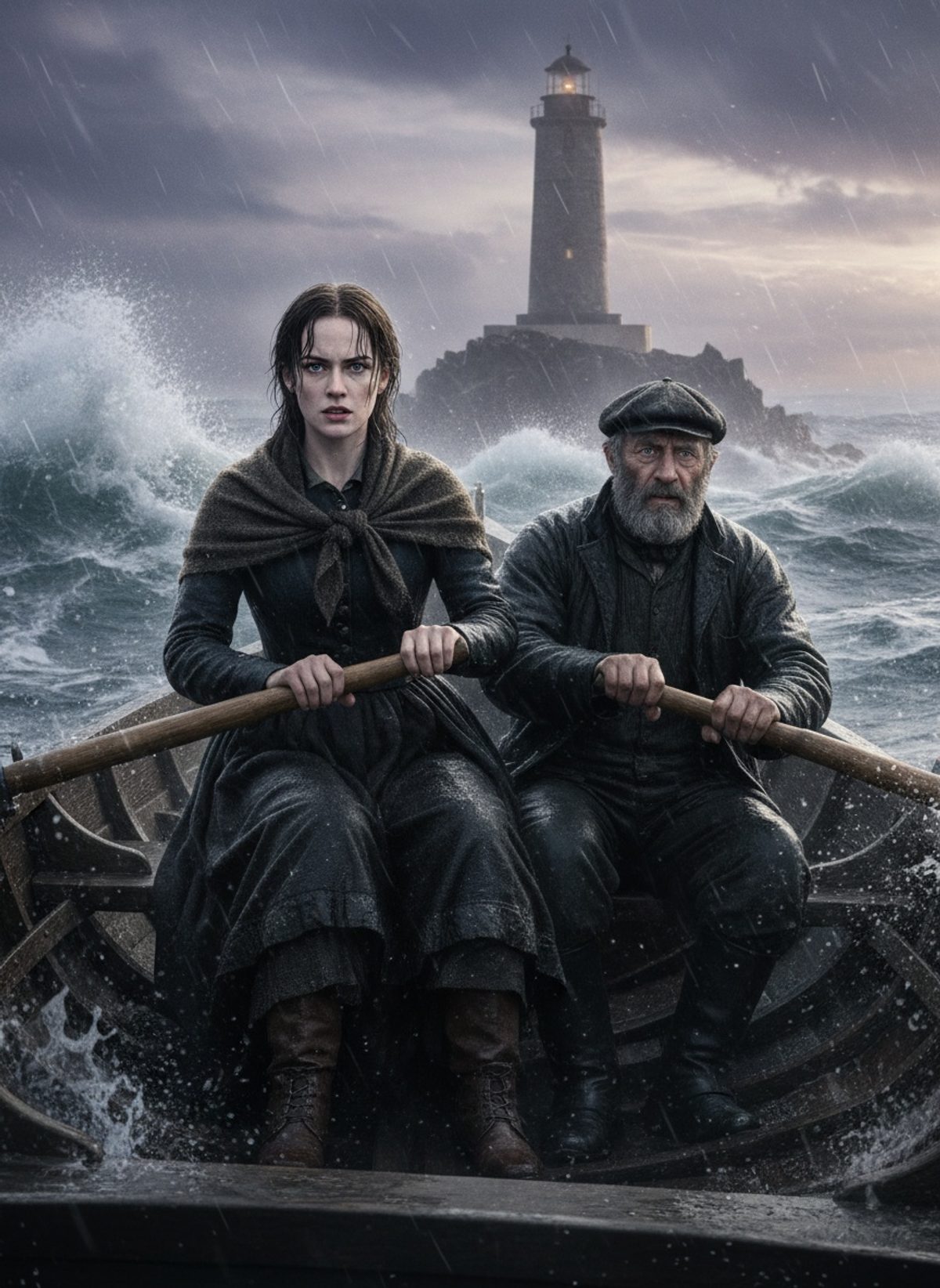
Driven by something deeper—a sense of duty others were too cautious to heed—Grace and William launched a rowing boat into the storm. Her strength, seldom needed beyond turning lighthouse machinery and tending to domestic duties, coupled with a bravery that belied her slight figure, became a fierce testament to human resilience. With her father beside her, Grace steered through waves that threatened to swallow them whole, each stroke laden with the hope of a life found.
Their destination was clear; the Farne Islands’ inner reefs harbored survivors caught between hope and despair. With unyielding determination, the Darlings reached survivors surrounded by icy water, numbed by both the chill and fear that had settled upon them. Amongst the stranded were a family of five and four crew members—each one a shadow of vitality yet clinging to life. Grace, embodying the compassion and resolve of one who had gazed into the abyss, swung the boat around, easing the survivors into fragile safety.
Read next: The Day a Vicar's Son Walked Into a Debtor's Cell and Freed Them All
A Lifeboat That Brought Hope
With each pull of the oar, Grace and her father carried not only the weight of nine souls but the silent admiration of all who watched. The return trip to the lighthouse was wrought with exhaustion, each movement a battle against nature's relentless fury. Upon reaching the haven of Longstone Lighthouse, the survivors were ushered into warmth and refuge. The storm that had lashed at their fates now softened around the guiding light—a symbol beaten by weather yet unbroken by time.
Once the storm quieted, the story of Grace Darling’s unmatched heroism swept through the country, casting her into an unanticipated spotlight. Her actions, almost mythic in courage, reminded a nation of the often-unnoticed strength lurking in the margins of civilization—highlighting the contrast with those who had stood idly by onshore.
Grace Darling lived in the firmament of public consciousness not as a glorified sailor but as a beacon of human capacity to intervene with valor when faced with the ferocious edge of nature’s spite. Her story transcends the historical moment of heroism, posing questions that ripple through time: What compels us to act when others hesitate? And in what manner do we remain custodians of each other's survival?