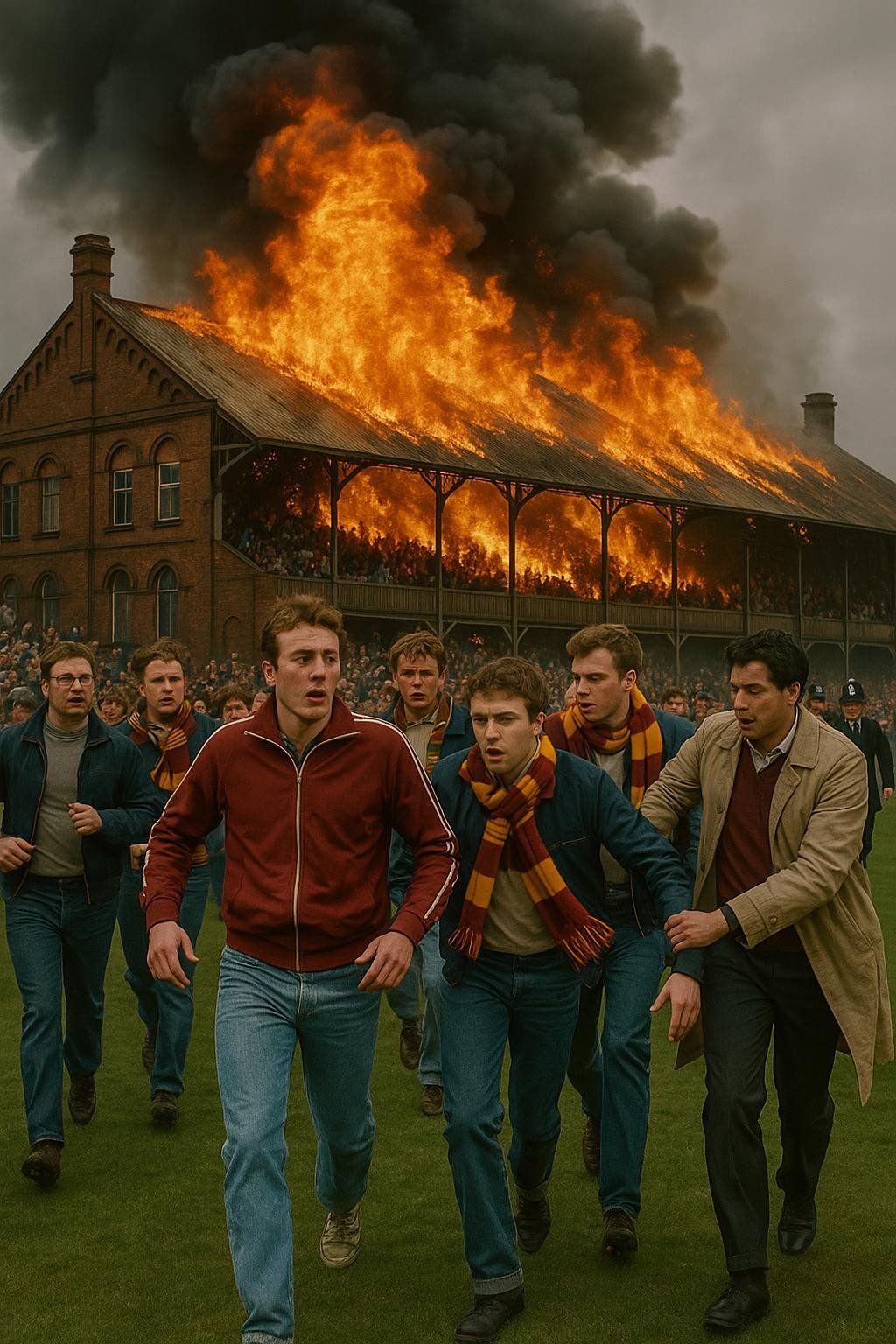
He was there to celebrate, not to mourn. Yet in four minutes, the tide of fate turned the joyous occasion into a horrific nightmare.
A Day Meant for Celebration
The morning of May 11, 1985, dawned with a sense of anticipation and joy for the supporters of Bradford City. Their football club had just clinched the Third Division title, and excitement buzzed through the air at Valley Parade. This was no ordinary match day; it was a festival of achievement, where fans flooded the stadium to honor their team’s success. More than 11,000 supporters arrived, their hearts filled with hopes of seeing their beloved team lifted aloft in victory. None anticipated the day would mark a page in history marred by the smell of smoke and screams of panic.
Hidden Hazards Beneath the Surface
Little did the jubilant crowd know the danger that lay beneath their feet, invisible but insidiously present. The main stand, a wooden Victorian structure, was emblematic of an earlier era of stadium design. Beneath the seats, decades of accumulated rubbish—papers, wrappers, and refuse amassed from previous matches—waited unknowingly as a perilous kindling. This buildup, long overlooked, became the ignition for catastrophe.
The stark reality was that the structure, timeless and venerable, was a firetrap masked by its regal exterior. The Victorian stand's charm presented an unassuming facade, lulling spectators into a sense of comfort and security. The overlooked debris beneath would become the fuel for one of football's darkest days.
Read next: The Day a Cornish Surgeon Walked Into a Condemned Cell
Four Minutes of Chaos
It took less than four minutes for elation to transform into despair. Just before half-time, at approximately 3:40 PM, a match or cigarette found its way through a gap in the wooden floorboards. The latent danger became manifest as the garbage beneath the stand caught fire. Flames erupted, spreading with alarming rapidity, accelerated by the bracing wind that swept across Valley Parade. Witnesses described the fire as a monstrous beast—a voracious furnace devouring its wooden prey.
Panic ensued as smoke billowed and the crackling heat of the blaze grew intense. Fans scrambled for safety, their cheers replaced by cries of terror and confusion. At the time, safety measures were minimal, with exits few and far between and emergency services unprepared for such an unforeseen disaster. The conflagration consumed the stand, leaving a path of destruction and despair. The rescue effort was heroic but overwhelmed; many found themselves trapped by the unyielding flames.
Britain Watches in Horror
Though tragedies often strike unexpectedly, the Bradford City stadium fire unfolded in a way unseen before—a disaster broadcast live. On what was anticipated as a day of triumph, viewers across Britain were faced with live footage of the tragedy, witnessing the terrifying speed and ferocity of the fire from the comfort and helplessness of their homes. The images were visceral and raw, the kind that etch themselves into memory with chilling permanence. The world saw not only the flames but the humanity—the spectators’ fear, the futile struggle, the collective endeavor to escape the inferno.
Read next: The Day a Vicar's Son Walked Into a Debtor's Cell and Freed Them All
In its aftermath, the fire drew attention to hidden hazards many never pondered in their love for the game. It surfaced hard questions about stadium safety and the inherent perils woven into the very designs meant to harbor joy and unity in sport.
The Flame's Lasting Shadow
The specter of that fateful day in 1985 remains, casting its shadow over the sport and stadiums alike. It prompted sweeping changes in stadium safety regulations, with wooden structures deemed relics of the past, unsuitable for the modern era's needs. The Bradford tragedy became a catalyst, urging reforms that echoed through football clubs and stadiums across the United Kingdom, setting new standards for safety that would protect the future generations of fans.
Yet, what transpired on May 11 serves as more than just a lesson in regulation. It embodies the fragility of human life and the unpredictable gear changes between life's moments of celebration and devastation. The fire at Valley Parade reminds us continually of the hidden perils in our shared environments—encouraging vigilance, remembrance, and the pursuit of safety, even amidst our most joyous occasions. Such stories from the annals of history, while steeped in tragedy, guide and mold a safer course for tomorrow.