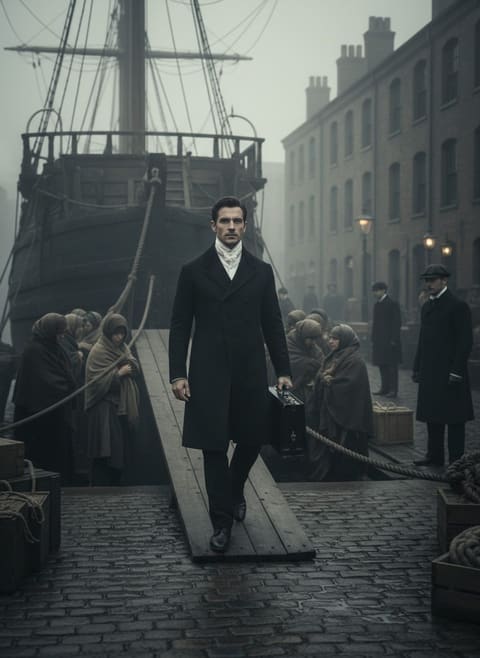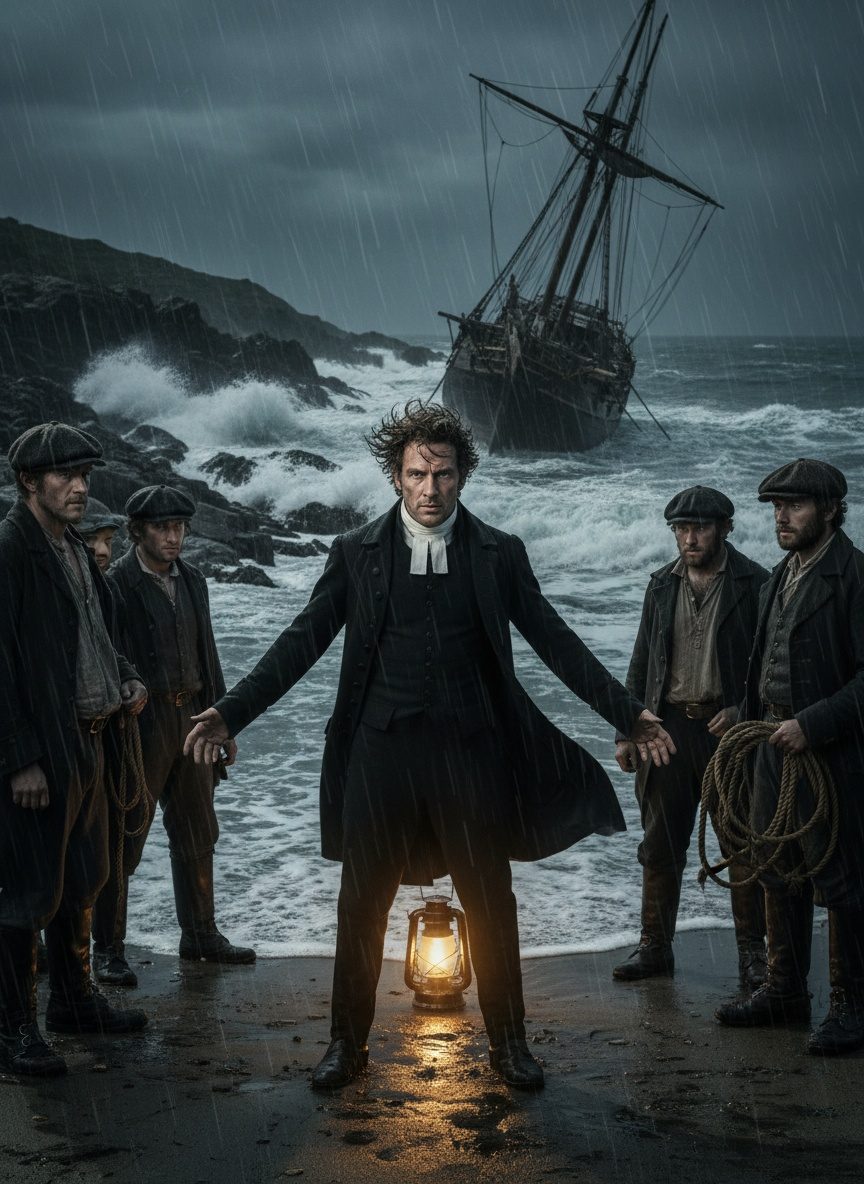
The salty air was thick with tension as waves crashed violently against the jagged Cornish coastline. In this storm-lashed tableau, a solitary figure emerged from the fog, his silhouette stark against the swirling chaos. Reverend Robert Hawker, resolute and unyielding, advanced towards an approaching throng of determined men. The mood was electric with the sea’s wrath and the palpable anticipation of a confrontation that would ripple through local lore for generations.
Whispers of the Wreckers
Cornwall, at the beginning of the nineteenth century, was a land of striking beauty and perilous livelihood. The coast was pockmarked with rugged cliffs and rocky outcrops, claiming ships that strayed too close in storms. It was here, on one tempestuous day in 1807, that the drama unfolded. A ship had foundered on the rocks, its fate sealed by nature's inexorable might. Yet, the danger for its crew was far from over.
Among the coastal communities, certain men were known as "wreckers," drawn to the peril of the sea by a macabre incentive: the promise of treasure. Shipwrecks meant bounty in the form of precious cargo and, sometimes, grimly, the possessions of the ill-fated crew. The act of wrecking was a spectral dance between survival and morality, played out on these haunted shores.
As the news of the stricken vessel spread, men abandoned their firesides and fishing nets, converging upon the beach with an urgency that spoke volumes of their intent. Robert Hawker knew them, his parishioners among the throng, eyes alight with desperation and greed. Yet Hawker, the vicar of Morwenstow, believed that the sanctity of human life held more worth than any sunken cargo.
Read next: The Day a Cornish Surgeon Walked Into a Condemned Cell
The Clergyman's Stand
The wind whipped Hawker’s cassock around him, a defiant flag as he planted himself firmly in the path of the advancing crowd. His voice rang out—not with the fire and brimstone of a pulpit sermon but with a quiet, unwavering authority. He spoke of scriptures, morality, human decency, appealing not to laws of men but to the law of God.
This was the moment that would define Hawker in the annals of Cornish history; not as an ecclesiastical authority wielding power, but as a solitary man making a stand for what was right. His presence alone seemed to fracture the mob’s resolve. The sea roared its approval, crashing against the rocks with thunderous applause as one by one, the wreckers lowered their makeshift weapons, shame mingling with the storm's mist upon their cheeks.
The specter of greed dissipated in the face of Hawker’s unwavering conviction. The crowd broke, slinking back into the mists, leaving the broken ship and its occupants in peace. It was an act not born of rules or fear of punishment, but of an innate belief in the inherent good within his fellow man.
Beneath the Cornish Skies
Cornwall's coastline was no stranger to violence or valor. The Cornish people, known for their stoic endurance and rugged independence, had weathered both the elements and history's many tides. Yet, Hawker’s stand became woven into the cultural tapestry, a tale shared in hushed tones around fires on stormy nights. It was a legend, an act of silent rebellion against a practice that blurred the lines between survival and morality.
Read next: The Day a Vicar's Son Walked Into a Debtor's Cell and Freed Them All
The natural beauty and treacherous waters of Cornwall were partners in many a maritime tragedy, yet the human stories of courage such as Hawker’s injected a powerful counter-narrative to the cold calculus of survival. The storm, in time, abated, unveiling the stark reality of life on this edge of England, where each wave might bring new tumult on its crest.
The Legacy of a Simple Stand
The day Reverend Robert Hawker stood between a vengeful sea and the struggling humanity it threatened is not just a footnote in Cornish history. It serves as a reminder of the impact one person’s conviction can have on a community, altering its morals, and steering its course through quiet strength and unyielding faith.
In a world where actions often speak louder than words, Hawker’s resolution resonates still. Though many years have passed, the story serves as a chilling reminder of the duality of human nature—capable of both avarice and altruism. This moment in 1807 stands as a light against the darkness of desperation, one man’s stand illuminating the path toward empathy and humanity, much like the beacons that shone from Cornwall's lighthouses, guiding sailors safely home across unforgiving seas.