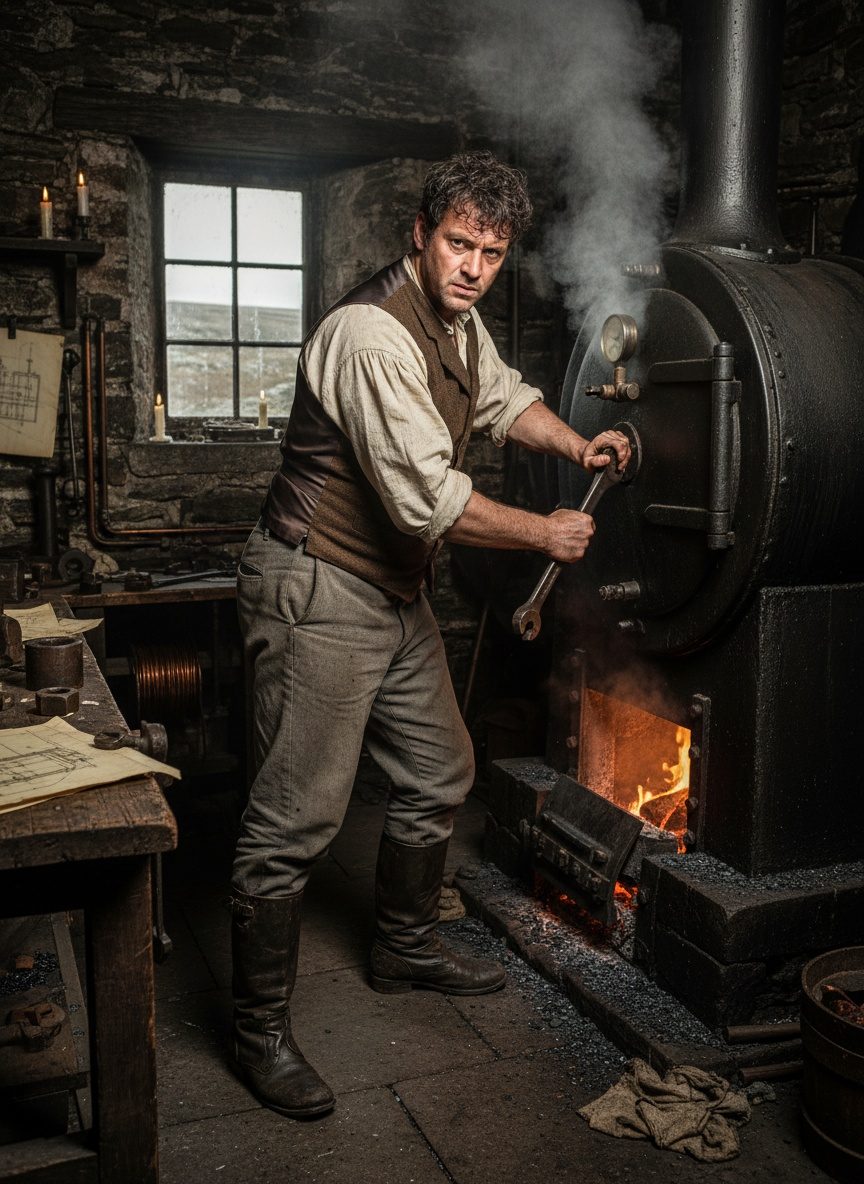
The Cornish moorlands at dawn are a spectacle of muted colours and melodic silence. As the sun peeks over the horizon, its golden fingers stretch across the grey stone and green heather, turning them to shades of honey and emerald. Early morning mist coils through the hollows, shrouding the landscape in an eerie calm that’s occasionally broken by the distant toll of a village bell. It’s in this rugged terrain, in the year 1769, that a young Cornishman gazed out from an engine house window. His name was Richard Trevithick, and his mind vibrated with a vision that would bend the industrial age to his will.
The Cry from the Depths
In Trevithick's Cornwall, the earth’s contents were pulled reluctantly from the stubborn grounds by soiled, weary miners. Engine houses were a common sight, looming like sentinels guarding their charge. They hummed with the sounds of puffing steam engines, their low, persistent throb a constant backdrop to the miners’ toil. These engines, stalwart devices of necessity, were driven by the modest power of low-pressure steam—a cautious and restrained force, deemed safe within the confines of their cast iron shells.
Beneath the surface, though, lay treachery. Water seeped into the tunnels of Cornwall’s mines like a creeping plague, overwhelming the pumps and reducing hopes of riches to damp disappointments. Miners knew all too well that their lives were often in the balance, tested by both water and air in these stony graves. Watching this daily struggle, Trevithick envisioned a radical solution, inspired not by tradition but by raw ambition.
The Reckless Visionary
Standing taller than most, with a defiant air and an unquenchable curiosity, Richard Trevithick was no ordinary cornishman. The son of a blacksmith, he possessed an instinctual understanding of metal and its capabilities. To Trevithick, the low-pressure engines seemed timid, almost apologetic in their operation. He advocated for something more daring: high-pressure steam. It was an idea many deemed reckless, a potential annihilation of men and machinery.
Read next: The Day a Weaver's Son Mapped the Invisible World
The scientific community feared the violent potential of high pressures, predicting catastrophic explosions. Yet, Trevithick saw in the boiler’s iron a promise and in steam’s force a future. The young man dedicated himself to the cause of steam power, championing it with a resolve that bordered on the fanatical, much to the dismay of cautious peers. For him, the power to transform these iron giants existed in the heart of that untapped energy.
The Birth of a Giant
Inventive sparks flew amid the clanging of hammers as Trevithick labored in his Cornish shed, a humble forge filled with the acrid scent of coal ash and sweat. It was here, under his restless gaze, that the high-pressure engine took form. Each rivet placed with precision, each joint sealed against the pressures most feared to acknowledge. Engine parts stood stacked like battlefield relics waiting to come alive.
The engine’s very presence defied all convention. Compact yet powerful, it roared to life with a ferocity that belied its size. This iron beast would no longer be tethered to static duties. Trevithick had dreams of moving his engines beyond the moors to new horizons. Soon, steam would not only pump water but turn wheels, carrying both goods and souls across lands.
The Quaking Earth
With immense pressure building inside its iron heart, the first test shook the ground beneath Trevithick’s feet. The fledgling noises of steam and metal working in harmony echoed off the stone walls, signaling something unprecedented. To skeptics, this machine was a ticking time bomb. To Trevithick, it was the drumbeat of progress.
Read next: The Day a Clockmaker's Son Rewired How We See the Stars
As word spread of Trevithick’s creation, a mixture of fear and fascination ignited among the townsfolk. There were wary glances, whispered warnings, and wide-eyed wonder. Yet, slowly, murmurs of madness began to transform into declarations of marvel as the engine proved its worth, ushering mineral wealth more efficiently to the surface, overturning old ways and birthing new possibilities.
The Steam-Driven Future
Richard Trevithick’s work forged a profound shift. His insistence on pushing limits redefined what steam power could achieve. Subsequent machines inspired by his inventions whispered across railway tracks, trundled along dirt paths, and sailed over seas, reshaping industry and paving paths for tomorrow’s innovations. What started in the Cornish moors had grown into a worldwide phenomenon.
Where once there was risk, now there was respect. Trevithick, with his tempestuous steam and indomitable resolve, had shown that with audacity came progress. The lesson here, from a man unafraid of breaking conventions, echoes into our present age of relentless advancement. In looking back at Trevithick’s high-pressure engines, we see the awe-inspiring ability of human ingenuity to rise against the odds, much like steam rising from boilers, ready to power the rise of the world.