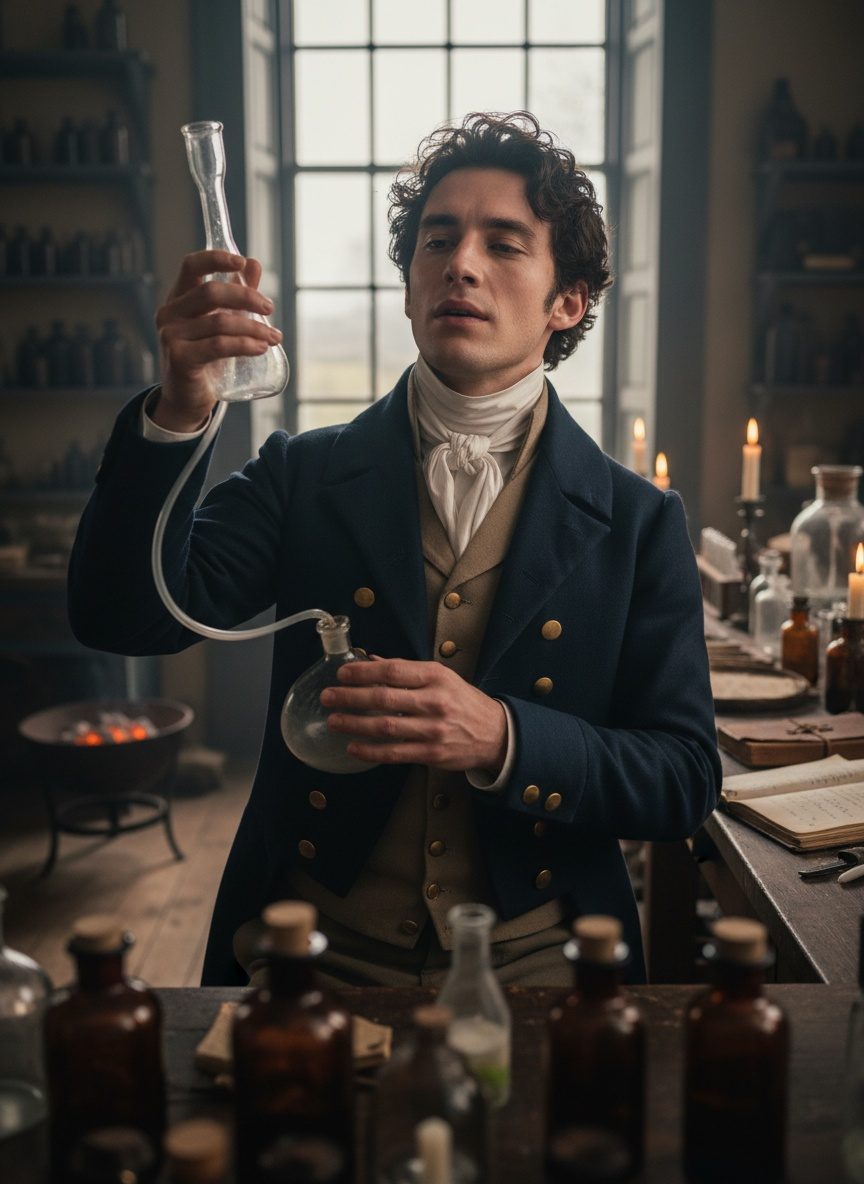
The dim light filtered through the dusty windows of a modest laboratory in Bristol, casting long shadows on the cluttered workbenches. The morning air was crisp, carrying a hint of the sea, mingling uneasily with the acrid scent of chemicals. It was a quiet autumn day in 1800, but an aura of expectation simmered beneath the surface. Here, within these walls, the young Cornish surgeon Humphry Davy was about to change the trajectory of medical history. He had been experimenting with a curious substance known as nitrous oxide, a gas recently isolated by chemists yet poorly understood. Testing cautiously, Davy filled a container and brought it to his lips, ready to take a daring leap into the unknown.
The Alchemy of Air
In the midst of the Regency Era, the medical world was a grueling theater of unmediated anguish. Surgery, in its raw essence, meant enduring unbearable pain, with only raw resolve to soothe the fraying nerves. For the youthful Davy, a natural philosopher at heart, the alchemy of gases offered a tantalizing whisper of something transformative. His work was ensconced within the Pneumatic Institution in Bristol, a center established for the exploration of the curative powers of airs and gases.
The science of air was still in its infancy. Elements like oxygen were being studied for their potential effects on the human body. Here, under the guidance of Thomas Beddoes, a physician intrigued by the therapeutic potential of gases, Davy began inhaling various gases to study their effects. One such gas was nitrous oxide, a compound that would later be immortalized as "laughing gas" for its euphoric effects.
With caution borne of curiosity, Davy administered the gas to himself, documenting his observations with scholarly diligence. As the gas descended into his lungs, the world around him shifted. The stern walls of the laboratory dissolved into a symphony of dreams and reverie. He wrote with exhilaration of the unique sensations cascading through him — a tingling warmth, a lightness both inside and out, and a peculiar hilarity that bubbled up uncontrollably. Most importantly, there was a profound absence where there should have been pain.
Read next: The Day a Weaver's Son Mapped the Invisible World
Revelations in Euphoria
The implications of Davy’s audacious experiment went beyond mere self-experimentation. In meticulously annotated journals, he speculated that nitrous oxide could be used to mitigate the horrific pain of surgical procedures. He penned with foresight that "as nitrous oxide…appears capable of destroying physical pain, it may probably be used with advantage during surgical operations." Despite his breakthrough, Davy’s notion met with skepticism and was initially relegated to a scientific curiosity — a novelty rather than a necessity.
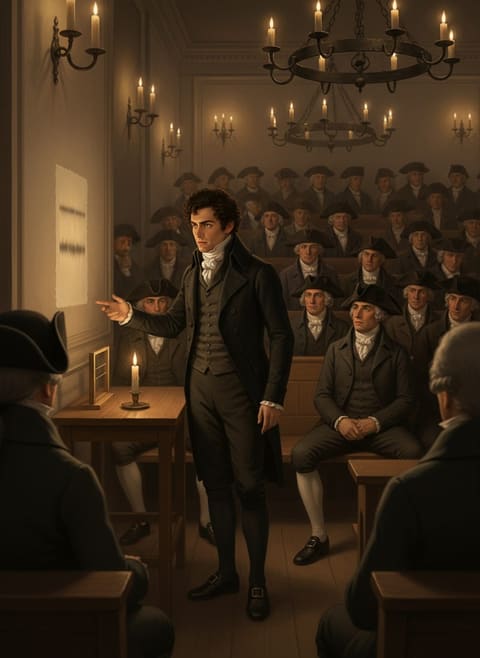
Nevertheless, Davy continued his investigations, inviting others to partake in the gas's effects. The rarefied circles of Bristol intellectuals, including poets like Samuel Taylor Coleridge, found themselves subject to these ebullient experiments, elevating the gas to an object of both scientific wonder and social entertainment. Despite their dazzle, it would take nearly half a century for the medical community to recognize the full gravity of Davy's claims.
The reluctance to rapidly embrace nitrous oxide as a medical tool demonstrates an age struggling with the conflict between novelty and necessity. Medicine, shackled by tradition and the lethargy of skepticism, took its time to incorporate what Davy had envisioned in one breath. Surgeons labored on, the screams of patients echoing as grim reminders of an anaesthesia-free era, their plight impervious to the breakthrough that lay meekly written in Davy’s notes.
Read next: The Day a Clockmaker's Son Rewired How We See the Stars
The Awakening
The slow journey from Davy’s laboratory to widespread surgical practice mirrors the tectonic shift in medical science and philosophy. It wasn’t until the mid-19th century that the anesthetic properties of nitrous oxide were explored comprehensively, leading to the burgeoning field of anaesthesia. By then, the medical community could no longer hold back the tide of change. With the successful public demonstrations of painless dentistry through nitrous oxide, the world gradually accepted what Davy had once discovered in solitude — the power to alleviate pain.
With this new understanding, surgery became humane, a miracle of the modern age. The once-agonizing procedures now unfolded in silence, the horror supplanted by serene oblivion. Davy’s bold inquiry laid the groundwork for advancements that would redefine medical practices, shifting paradigms from pain to preservation, from dread to healing.
Reflecting on Davy’s audacity underlines a crucial element of progress: vision — the courage to look beyond the immediate, to perceive potential where others see folly. The dim confines of that Bristol laboratory may at first seem distant, yet they echo loudly in every operating theater where surgical agony has been nullified. Davy's unbidden moment of laughter carved a path to a world where relief from pain was a realization, not just a reverie. Though originally omitted from common teachings, this chapter of history reminds us that the foresight of a lone experimenter can indeed echo through the ages, altering human existence forever.