The stormy skies of Sussex in 1822 brooded over the winding country roads, the rich scent of damp earth rising into the cool air. Mary's footsteps crunched against the pebbly path, the sounds muted by the thick, overhanging foliage. As the rain eased, light pooled through breaks in the clouds, catching something glistening on the roadside. It was here, amid the soggy leaves and rutted mud, that an astonishing discovery was made — a discovery that challenged the very framework of scientific understanding. That gleaming object was a tooth, unlike any other, birthing an era of wonder and skepticism in equal measure.
The Reluctant Rebel of Science
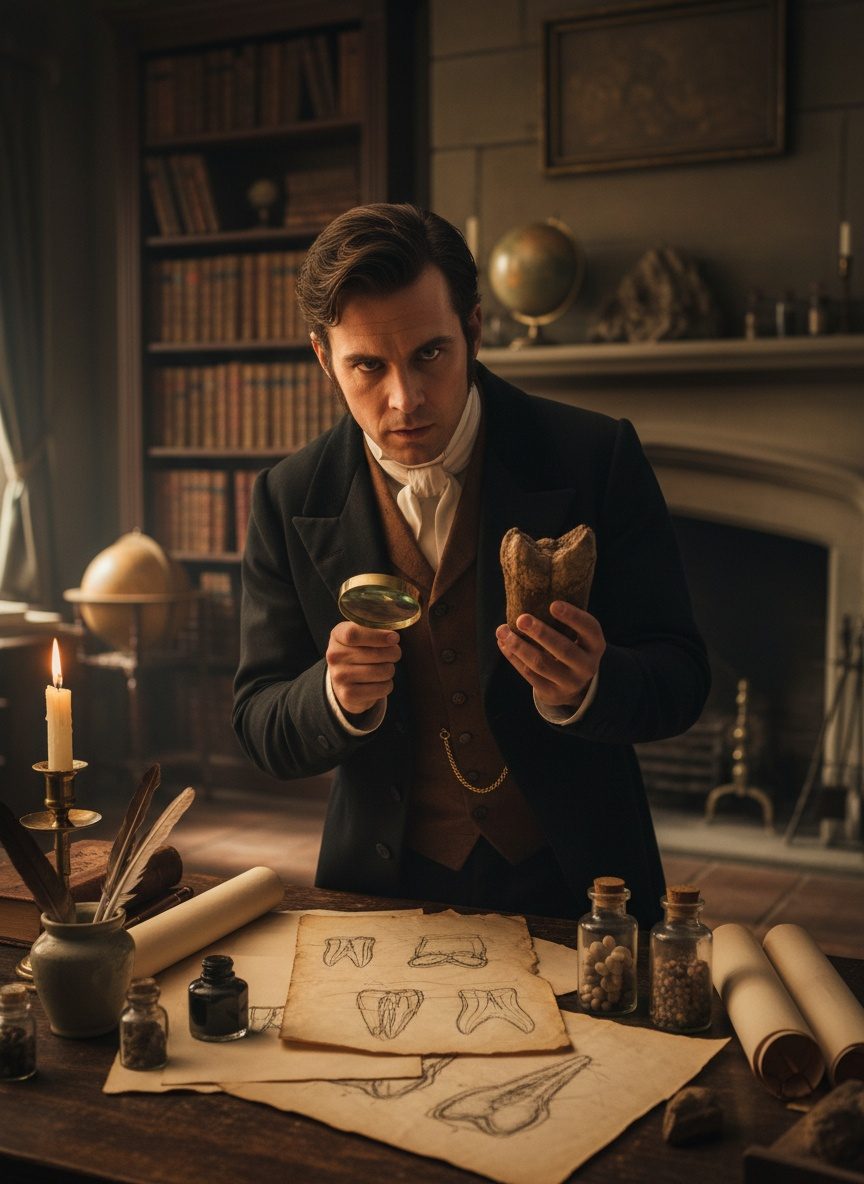
Standing at the cusp of what would become the era of dinosaurs, Gideon Mantell was not one shaped by the academic ivory towers of his time. A country doctor by trade, Mantell’s life in the verdant fields of Sussex might have unfurled with the predictable rhythms of medical practice if not for the tenacity of his pursuit of truth. The fossil his wife, Mary Ann, had found was no ordinary relic. As Mantell cradled the tooth — its size unmistakable, its serrations like the keen edge of a sawblade — he was instantly consumed by a simple yet audacious question: What creature had once wielded such a thing?
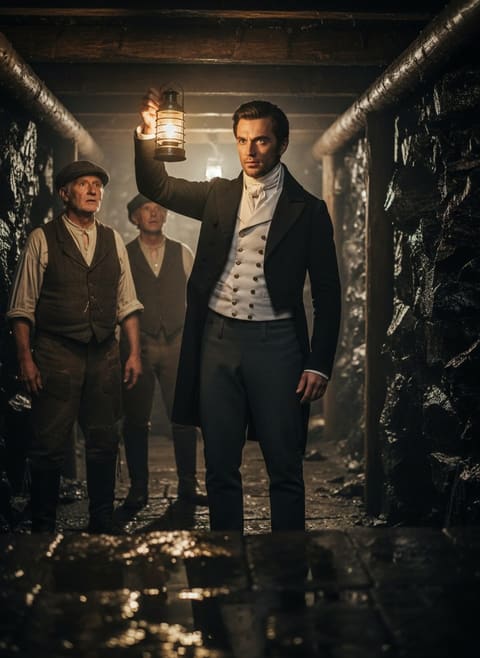
In a time when the Earth's past was thought of in terms measured by the Bible, Mantell stood as both a curious scholar and a reluctant rebel against the scientific orthodoxy. The leading minds of the era, such as Richard Owen, were convinced of a more static nature of creation, one laid out in an age-old divine blueprint. Yet, faced with the evidence in hand — along with other vertebrae and fragments he unearthed — Mantell dared to defy the paradigm. This startling tooth, along with other sizable bones retrieved from local quarries, invited controversy as much as it did revelation.
Venturing into the great city, Mantell sought the counsel of renowned geologists of the day. But what he faced was not encouragement but insolence—dismissive attributions to overgrown reptiles or the bones of giant mammals. Yet, even as the gatekeepers of science snubbed his inquiries, Mantell's brilliant deduction began gathering the irrefutable puzzle pieces of history — this was not a creature of modern elegance, but a titan of bygone epochs. As the fading embers of candlelight flickered over anatomical sketches and research journals, determination blazed in Mantell's heart.
Read next: The Day a Weaver's Son Mapped the Invisible World
Giant's Shadow: A Battle of Wills
Marc Bolan’s electric Brit-pop riffs burst from a modern radio, but in Mantell's day, the quiet rural sounds were swept away by lectures staged in crowded London halls. The Ridiculing laughter of esteemed contemporaries reverberated almost as harshly. Yet, Mantell’s perseverance began attracting allies to his cause. Fossil hunters and enthusiasts trickled in to witness his burgeoning collection, each item constructing the towering shadow of an animal the world had never known.
This struggle against the dismissive air of respectability would ultimately find its vindication. On an ordinary afternoon, in the flurry of scholarly debates, the name *Iguanodon* emerged — inspired by the similarity to the modern iguana yet on a gigantic scale. By choosing a name, Mantell granted legitimacy, a scientific baptism of sorts, marking the dawn of paleontology as a formal discipline.
The revelation of *Iguanodon* in 1825 veered through the scientific realms much like the creature itself might have stomped through primeval forests. It was a confrontation with time, challenging the accepted understanding of the Earth's history, from temporal depths few could comprehend. This was not just a discovery of bones, but an assertion of the fossil as an interpreter of epochs. The reception was mixed — embraced with excitement by the burgeoning scientific circles, yet still dripped with skepticism from the traditionalists.
For Mantell, it was a triumph tinged with bittersweet sentiment. His steadfastness had torn a rift through the placid maps of Earth’s past, though it came at the expense of professional friction and ridicule. The scientific community was steered towards a more fluid narrative of natural history, a narrative where change — evidenced by these massive creatures of a forgotten age — was undeniable.
Read next: The Day a Clockmaker's Son Rewired How We See the Stars
Epilogue: The World Awakened
The twilight hours of Mantell’s life echoed with the wistful recollections of battles fought and victories claimed in the name of understanding. By the time of his passing, the foundations of paleontology had been securely laid, the seeds of innovation rooted in the public consciousness. It was a change unavoidable, irreversibly setting the stage for the age of dinosaurs that would fascinate generations.
Why should we remember the story of Gideon Mantell and the long-obscured giants he brought into the light? Because it is a testament to the power of relentless curiosity in the face of adversity. Mantell's work is a beacon for all who search for truth amid prevailing doubt, a narrative as relevant today as it was in the scholarly halls and dusty back-roads of Victorian England.
In challenging the authoritative voice of his peers, Mantell did more than prove the existence of dinosaurs. He underscored an enduring belief that the earth itself is a living testimony to wonders and mysteries waiting to be carved out from stones on quiet Sussex roads.