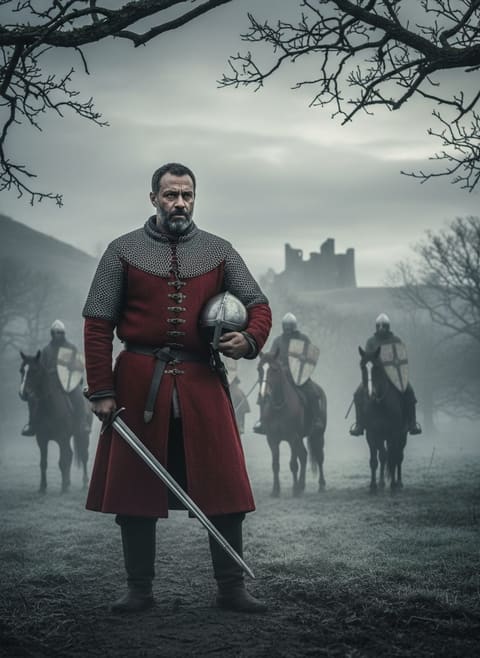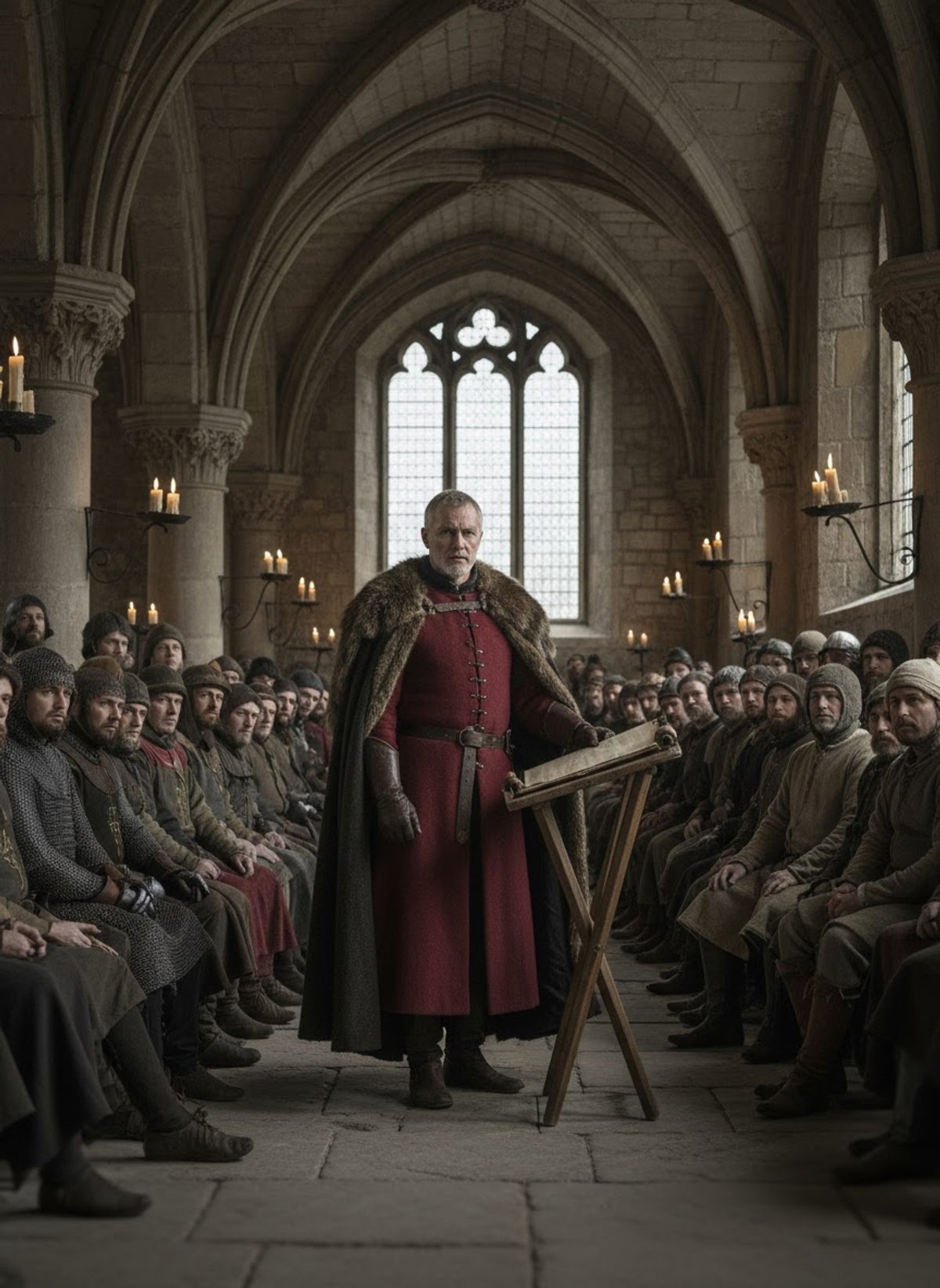
Simon de Montfort was a visionary but not a man of the masses. Born into French nobility, he was a rebel who had only recently learned to embrace common cause with common men. Yet, when he summoned the first true Parliament of England in 1265, he planted a seed that grew beyond his wildest ambitions.
The Unexpected Gathering
The winter chill of January 1265 wrapped around the shoulders of the rough-hewn assembly in Westminster. Knights and burgesses, faces etched with the weather and toil of distant shires, found themselves seated alongside England’s great barons. It was an unprecedented gathering, a notion unthinkable before Simon de Montfort, a reformer with an eye beyond tradition.
In this assembly, knights rose from every shire, their calluses a testament to both warfare and governance. The burgesses from towns across England, merchants and tradesmen who normally shouted their haggles in bustling marketplaces, now murmured in hushed incredulity as they took their seats in the hallowed halls of power.
The idea, hatched by de Montfort during a time of turmoil, was radical but astonishingly simple: England’s destiny should be shaped not just by the sword of nobles but also by the hands that built it. By drawing these disparate threads into a single tapestry, de Montfort sought to weave a new fabric for governance, one in which more voices could be heard in determining the laws of the land.
Read next: The Day a Hostage Boy Grew Up to Save England
This well-intentioned rebellion did not escape the ire of King Henry III. For Henry, a monarch uncomfortable with his crown resting on uneasy heads, this was yet another affront to his authority, a gauntlet thrown into the Parliament hall. He saw in Simon not merely a rival but a foe who dared to dilute royal power with the people's will.
A Dream Clipped Short
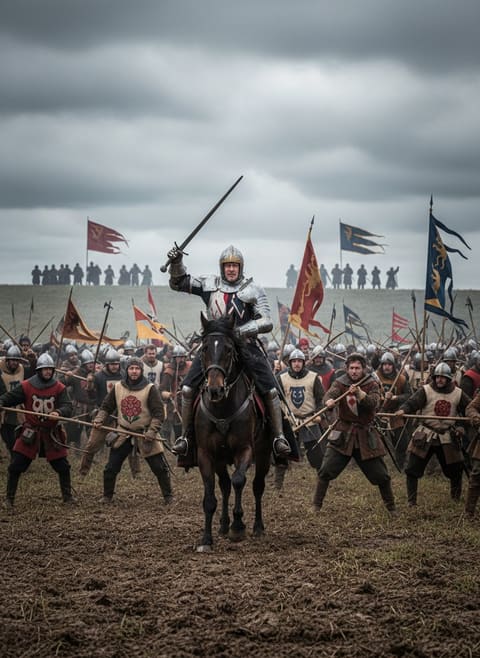
By the balmy days of summer, the fate of this audacious vision faced the crucible of war. Under a sun-streaked sky, the gathered children of Parliament watched their sanctuary transform into a field of impending battle. The summer of 1265 bore witness to blood and betrayals.
De Montfort met his end at the Battle of Evesham, the grass still damp underfoot as swords clashed and arrows fell like wooden rain. Exiled to a cover of chaos, his dreams seemingly died with his lifeless form on the battlefield, leaving behind a narrative of both noble aspiration and noble failure.
But sometimes, ideas have a curious way of enduring. The smoke of Evesham had barely settled when whispers began to elevate de Montfort's Parliament from a fleeting experiment to a lasting legacy. Those who sat in that assembly would not easily relinquish the taste of influence, nor its feel — tangible and intoxicating.
The assemblies that followed de Montfort's trailblazing 1265 gathering bore witness to an emerging consciousness among the English populace. While England reeled from its monarchic machinations, the nation's nascent vision of collective governance stayed steadfast, securing its roots deep into the soil of history.
Enduring Ideals
The chapters of history often present us with questions of "what if." What if Simon de Montfort had lived? Would the wheels of English governance have turned more swiftly towards reform? In medieval England, de Montfort's council became not a symbol of forgotten defiance but a beacon toward an unwritten future.
Read next: The London Workshop That Printed a Revolution in 1476
In the years that followed, kings and their courts intermittently called upon Parliaments, sometimes out of necessity and sometimes out of emerging recognition of their importance. Knights and burgesses became not merely guests within England's legislative chambers but eventual architects of their passage.
Simon de Montfort's fight was never alone, transcending the man and becoming an ideal — one in which a single voice is powerful, and collective voices are unstoppable. England’s Parliament evolved, growing from hesitant whispers to the authoritative clamor of reform, building a legacy that honored its past rebellion with paths to peaceful change.
Today, we look back from an age where representative democracy is the norm in much of the world, and we recognize the fearless audacity of de Montfort’s gamble.
His Parliament was more than the sum of its seats; it was the genesis of a bold proposition: that power, once merely inherited or seized, could also be earned and entrusted by the will of the governed. This vision remains a cornerstone of English and global democratic ideals, a timeless lesson of how noble events echo beyond the life of a single man.